
















How to Get a Puppy to Stop Barking Fast
The puppy has been barking at the window since breakfast. You've tried saying “quiet,” raised your voice, and offered a treat during the brief pause, yet the next passerby starts the cycle again. Meanwhile, you're exhausted, the neighbors are unhappy, and your puppy still doesn't know what you want instead.
The fastest reliable route isn't to suppress every sound. It's to identify why the puppy is barking, prevent repeated practice of the behavior, and teach a calm response that can replace it. Barking is communication, not a single obedience failure, so the solution must match the cause.
Table of Contents
- Why Puppies Bark and How to Identify Triggers
- Managing the Environment Before Training Begins
- Teaching Quiet Through Desensitization and Rewards
- Common Training Mistakes That Make Barking Worse
- Supporting Calm Behavior with Routine and Supplements
- When to Consult a Veterinarian or Behavior Professional
Why Puppies Bark and How to Identify Triggers
Excessive barking is common, but the trigger matters. In a survey of 2,050 dogs, barking at noises inside the home troubled owners of 843 dogs, or 41.1%, while barking at unfamiliar visitors affected 787 dogs, or 38.4%. The same review found that veterinary behavioral practices evaluated 3.2% to 7% of dogs for excessive barking, while owner surveys estimated a broader prevalence of 11% to 17%. These figures come from the peer-reviewed review of canine barking behavior, and they support one practical conclusion: don't treat every bark as the same problem.
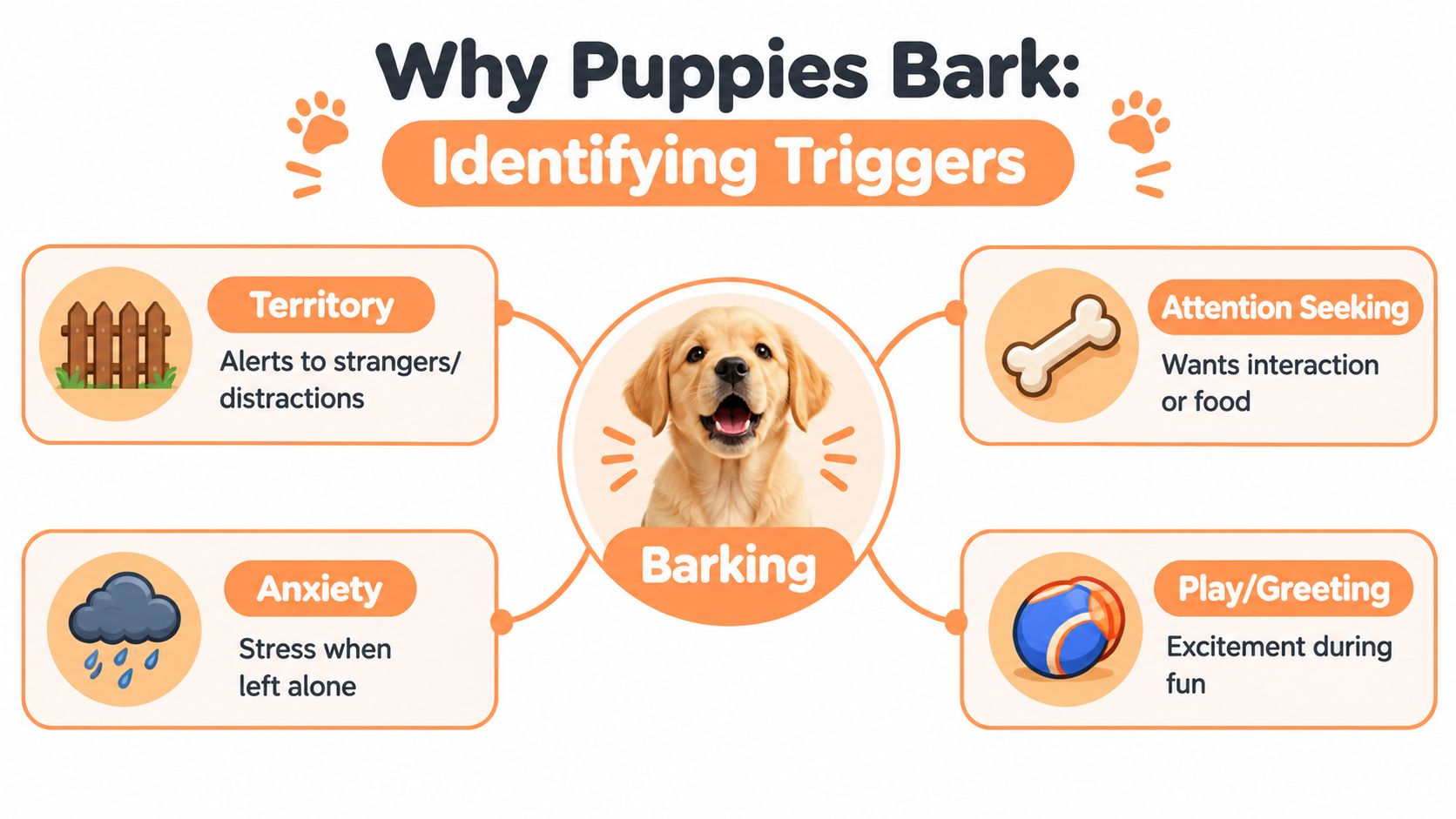
A puppy may bark because of alarm, frustration, fear, separation-related distress, boredom, play, or attention seeking. The sound alone won't tell you which explanation is correct. Watch the puppy's body language and the event immediately before and after the barking.
Build a useful barking log
For several days, record each significant episode rather than relying on memory. Include:
- Trigger: Note the doorbell, visitor, window movement, food preparation, play, departure, or outside noise.
- Distance and intensity: Write how close the trigger was and whether it was quiet, distant, sudden, or moving.
- Body language: Look for loose excitement, stiff posture, tucked tail, lip licking, pacing, hiding, or attempts to escape.
- Responsiveness: Record whether your puppy can eat, look at you, follow a familiar cue, or settle.
- Consequence: Note what happened next. Did you open the door, provide attention, lift the puppy, end the separation, or allow access to the yard?
A puppy who barks at a passerby, then relaxes when the person disappears, needs a different plan from one who panics when left alone. The first may involve visual alerting or territorial arousal. The second may indicate distress and deserves careful escalation, not louder obedience cues.
For breed-specific ownership planning, the PetCostEngine beagle cost guide can also help prospective owners think about daily needs, enrichment, and household preparation before vocal habits become established. If anxiety is part of the pattern, PetScy's guidance on how to calm an anxious dog offers related calming considerations.
Managing the Environment Before Training Begins
You can't train effectively while your puppy is already barking hard at the window, fence, or hallway noise. At that point, learning drops and arousal takes over. The first job is to stop repeated practice of the barking pattern so the puppy is not rehearsing it all day.
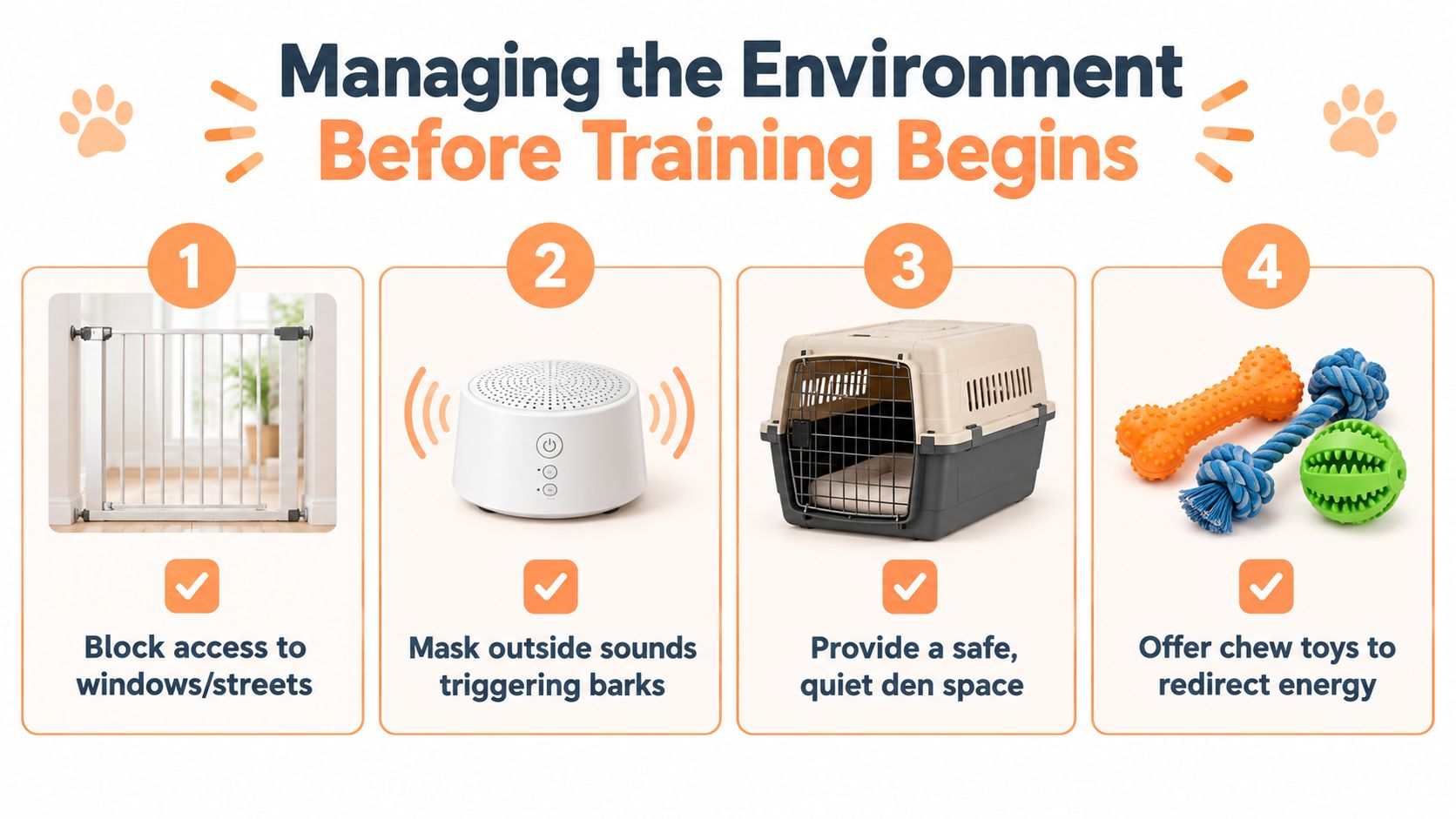
Start with what your log already showed you. If barking spikes at visual movement, block the view with blinds, window film, or furniture placement. If sound sets your puppy off, add white noise, close the room off, or move rest areas away from the front of the home. If the yard itself triggers scanning and barking, shorten outdoor time, supervise it, and bring the puppy back in before arousal builds.
Use the barking log as a decision tree
Ask one question first: “What happens if I reduce this trigger right now?” That question keeps owners focused on cause before correction.
- The puppy notices the trigger, stays loose, and can still eat: You are usually dealing with alerting or excitement. Lower the intensity, prevent long barking sequences, and save the active skill work for controlled sessions.
- The puppy barks when attention shifts away from them: Change the consequence. Keep your response brief and calm, then reinforce a quiet sit, mat settle, or another appropriate way to ask.
- The puppy gets noisy after too little activity or too much chaotic activity: Adjust the day. Use sniff walks, food toys, chew time, short training, and planned naps instead of waiting for barking to tell you the puppy is overloaded.
- The puppy vocalizes when alone, paces, scratches at exits, or refuses food: Treat that as possible distress, not stubbornness. Pause ordinary barking advice and get professional help.
Management has trade-offs. Covering windows may reduce barking fast, but it also limits passive exposure, so you still need planned practice later. Gates and crates can help some puppies settle, but for a puppy who panics in confinement, they can make noise worse. Match the setup to the dog in front of you.
Outdoor access needs the same kind of thinking. A puppy left outside for long stretches often finds plenty to react to, and each repetition strengthens the habit. If you are planning a space that is easier to supervise and maintain, for a durable yard trust Modern Yard.
Management rule: If your puppy can keep barking at the same spot every day, the environment is still making the behavior easy to repeat.
Teaching Quiet Through Desensitization and Rewards
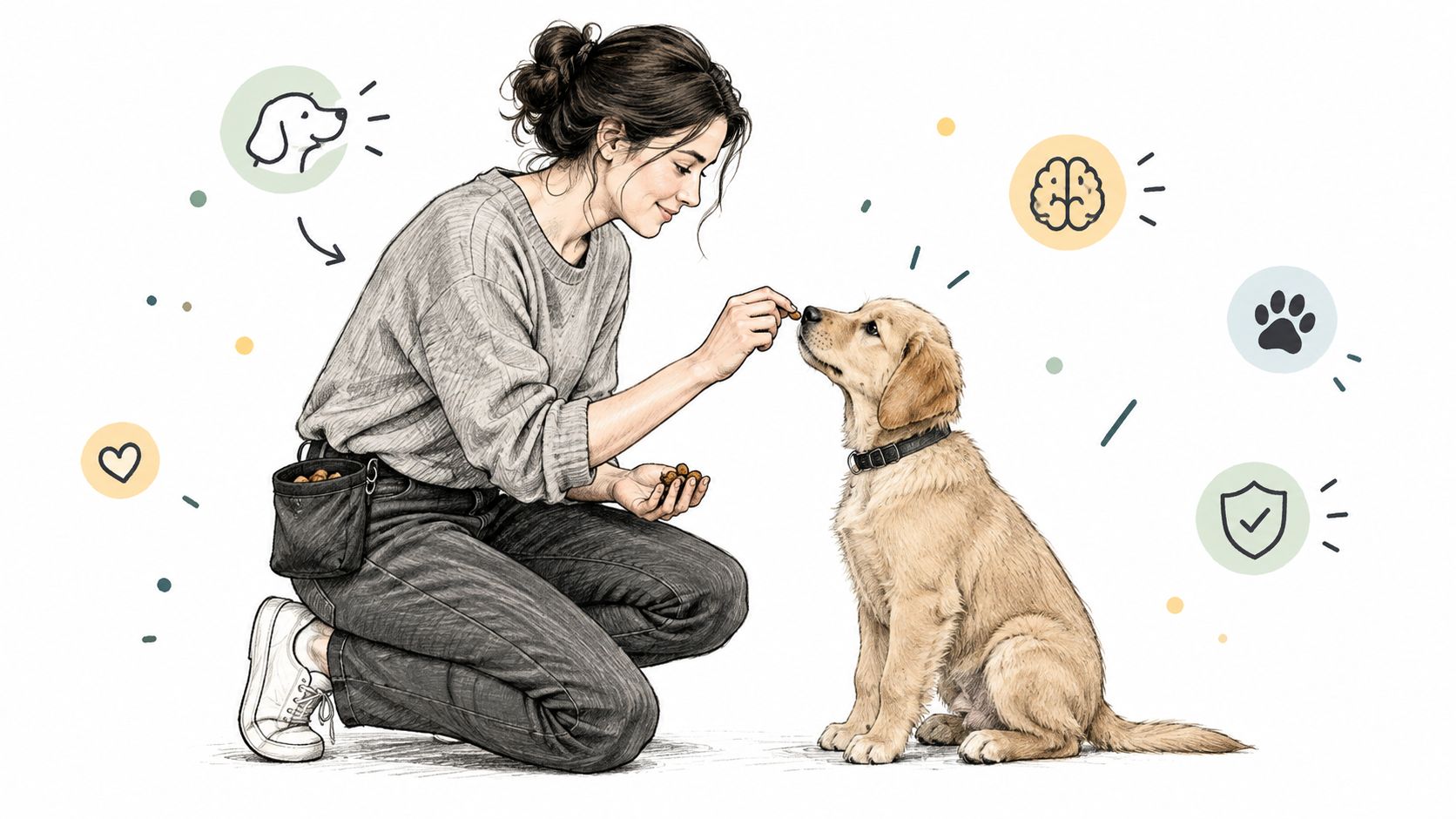
Once the environment is calmer, teach the puppy what to do when the trigger appears. The central technique is desensitization paired with differential reinforcement. Present the trigger at a level the puppy can notice without barking, then reward the calm response immediately.
Start below the barking threshold
Choose one trigger and control its intensity. A helper might stand far from the house, play a doorbell recording at a low volume, or appear only briefly at a distance. The moment your puppy notices the trigger while remaining quiet, mark the behavior with a consistent word or click and deliver a high-value food reward.
Repeat the same easy version several times. If the puppy barks, freezes, lunges, stops eating, or can't look back at you, the setup is too difficult. Increase distance, lower the sound, shorten the exposure, or end the repetition and reset.
After calm success becomes consistent, change only one variable. You might reduce distance while keeping the duration and movement unchanged, or increase sound intensity while keeping the puppy stationary. Changing everything at once makes it impossible to know what caused the setback.
Reinforce an incompatible behavior
Silence alone is fragile. A puppy may pause briefly, then return to barking because no alternative has been taught. Reinforce behaviors that compete with barking, such as:
- Looking at you: Mark the instant the puppy turns away from the trigger.
- Going to a mat: Reward each step toward the mat, then quiet standing, then a relaxed down.
- Settling: Deliver rewards during calm breathing, loose muscles, and a soft gaze.
- Requesting politely: For attention barking, wait for silence, then reinforce a sit or eye contact.
Keep sessions short, around one to three minutes for a young puppy, with easy repetitions and a clear finish. Extend the quiet interval in small increments rather than expecting a long settle immediately. Reward timing matters more than dramatic praise. Deliver the food while the puppy is still calm, not after barking has restarted.
This guide to choosing the right type of training can help you compare training approaches when the pattern requires more structure.
Watch the practical sequence in action before practicing with a difficult trigger:
A small separation-related behavior study reported reductions ranging from 50% to 100%, with six dogs showing almost complete elimination at a three-month follow-up. The sample was very small and focused on separation-related behavior, so it isn't a general puppy success rate. It does reinforce the value of gradual exposure, careful timing, and addressing the emotional reason behind the barking.
Common Training Mistakes That Make Barking Worse
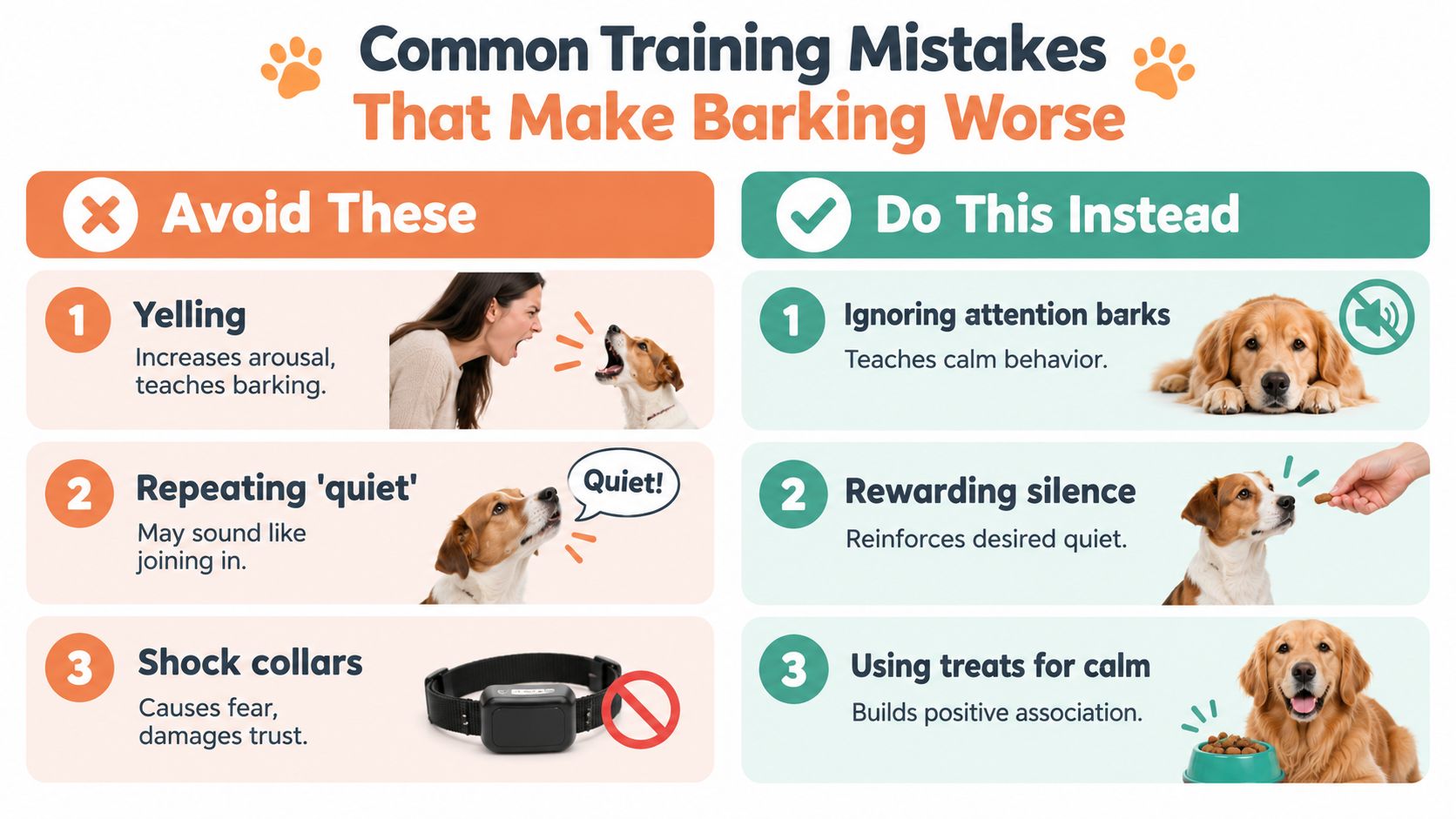
Yelling feels understandable at two in the morning, but it often adds noise and attention to the scene. Your puppy may interpret your raised voice as participation, or the extra intensity may increase arousal. Repeating “quiet” while the puppy continues barking also teaches little unless the word has been carefully paired with a calm pause and followed by reinforcement.
Punishment is especially risky when barking comes from fear, anxiety, or territorial distress. A correction may interrupt the sound without making the puppy feel safer, leaving the underlying emotional response intact. The American Veterinary Society of Animal Behavior recommends reward-based methods and advises against aversive tools such as shock, prong, choke, intimidation, shouting, and physical corrections.
Why anti-bark collars are a poor first choice
Anti-bark collars can make the noise stop temporarily, but that isn't the same as teaching emotional regulation or communication. Studies reported an initial 76% reduction with a citronella collar, yet durable effects were lacking and barking increased over time in some cases as the underlying distress remained unresolved, according to this review of canine training methods and welfare.
The trade-off is serious. A puppy that associates a visitor, noise, or owner departure with an unpleasant consequence may become more worried around that trigger. Fear can also redirect toward people or other animals, while repeated corrections can weaken trust and reduce the puppy's willingness to engage with you.
For attention barking, become briefly boring instead. Turn away, avoid conversation, and wait for the first moment of silence. Then calmly reward the quiet and cue a known alternative. For fear barking, create distance and safety rather than withholding help. The correct response depends on the log, the body language, and the puppy's ability to recover.
If the puppy is barking because something feels threatening, adding a threat doesn't teach confidence.
Supporting Calm Behavior with Routine and Supplements
Training works better when the puppy's daily life provides regular opportunities to rest, explore, chew, and think. A predictable rhythm can reduce frantic transitions, while supervised sniffing and food-based enrichment give the puppy appropriate outlets for investigation. Chewing and licking can also support calmer activity, but enrichment should complement sleep and not keep an overtired puppy constantly stimulated.
Build calm into ordinary moments. Reward the puppy for lying on a mat while you prepare food, hearing a mild household sound, or watching activity from behind a barrier. Use short play periods followed by a quiet decompression routine, and avoid turning every pause into an exciting interaction.
Veterinary-formulated calming aids may be useful as an adjunct for situational stress, but they shouldn't replace trigger management, gradual training, or medical assessment. PetScy's Calming Aid Chews are one option formulated to support relaxation and stress management in dogs. Discuss any supplement with your veterinarian, especially for a young puppy, a dog taking medication, or a puppy whose barking is linked to panic or illness.
For a broader look at how calming products fit into behavior support, see PetScy's guide to calming treats for anxious dogs. The useful question isn't whether a product can silence the puppy. It's whether the puppy is calm enough to eat, learn, recover from a trigger, and practice a safer alternative.
When to Consult a Veterinarian or Behavior Professional
Some barking needs more than a treat pouch and a closed blind. Arrange a veterinary assessment if the barking starts suddenly, becomes intense without an obvious change, or appears alongside signs of pain, illness, panic, or a major change in behavior. A medical contributor can make ordinary training unusually difficult, and punishment can conceal the warning without resolving the problem.
Seek qualified behavior support when your puppy shows any of these patterns:
- Separation distress: Barking occurs when you leave and includes panic, destructive escape attempts, or an inability to settle.
- Fear or aggression: The puppy stiffens, retreats, lunges, snaps, or cannot take food around the trigger.
- Poor recovery: The puppy remains highly aroused long after the sound, person, or event has ended.
- Repeated failure below threshold: Careful management and easy practice still produce escalating reactions.
- Compulsive or unexplained vocalization: The barking has no clear trigger or appears linked to repetitive behavior.
A veterinarian can check for health problems and help determine whether referral to a veterinary behaviorist or qualified reward-based professional is appropriate. Bring your barking log and safe video clips when possible. Clear records of triggers, body language, duration, and recovery give the professional far more to work with than the label “bad barking.”
Start today by logging the next few episodes, blocking the most predictable trigger, and rewarding one calm response before your puppy reaches the point of explosion. For veterinarian-formulated products that can complement a broader canine wellness plan, visit PetScy and explore options such as calming support alongside humane training and professional care.