











Best Probiotics for Dogs with Diarrhea: Vet-Backed Picks
Your dog has diarrhea, the clock is ticking, and the cleanup has already become part of your routine. You search for the best probiotics for dogs with diarrhea, find dozens of chews and powders, and face a confusing choice between huge CFU claims, long strain lists, and vague promises about “total gut health.”
Don't choose by the biggest number or the most familiar label. Diarrhea is a symptom, not a diagnosis, and a probiotic that makes sense for mild stress-related loose stool may be a poor answer for bloody diarrhea, persistent illness, or a dog with vomiting and pain. The right product depends on the likely scenario, the strain or strain combination, the dog's condition, and whether veterinary care is needed now.
Table of Contents
- Why Your Dog's Diarrhea Needs the Right Probiotic Approach
- Understanding Probiotic Strains and CFU Counts for Canine Diarrhea
- When to Use Probiotics Versus When to Call Your Vet
- Comparing Top Probiotic Options for Different Diarrhea Scenarios
- Proper Dosing and Administration for Maximum Effectiveness
- Building Your Dog's Digestive Recovery Plan
Why Your Dog's Diarrhea Needs the Right Probiotic Approach
A dog with loose stool after boarding is not the same case as one affected after antibiotics. Stress may have disrupted the first dog's digestion. The second may be experiencing changes in its intestinal microbial community. A dog that raided the trash may need a different evaluation, while bloody stool can signal illness that a probiotic cannot treat.
That distinction matters more than the product's marketing. Veterinary evidence supports probiotics mainly for mild, acute, uncomplicated diarrhea in otherwise healthy dogs, rather than every digestive complaint (veterinary evidence on canine probiotics). A probiotic may support recovery, but it cannot remove a foreign object, treat every parasite, or identify an infection.
Practical rule: Match the probiotic to the situation, not to the loudest marketing claim.
CFU, or colony-forming units, has a place on the label, but the count does not answer the clinical question by itself. CFU alone doesn't tell you whether the organisms are appropriate, alive through storage, or studied in dogs with the same problem. A named strain with relevant canine evidence may be more useful than a long proprietary blend that conceals its contents.
The scenario changes the recommendation
For mild, temporary diarrhea, choose a dog-specific product that identifies a strain studied in dogs, and use it alongside hydration, monitoring, and dietary support. Antibiotic-associated loose stool may call for a targeted or multi-strain product, with administration timed according to veterinary instructions. Stress-linked episodes may justify a formulation containing a strain associated with digestive support during stress.
Product labels often sound broader than the evidence. A 2025 canine trial found that a microencapsulated, host-specific probiotic improved stool consistency without changing stool frequency. A 2025 pilot study also reported improvement in 8 of 11 dogs with no adverse events. These findings support targeted use, not the claim that every probiotic suits every dog.
For a broader overview, review this guide to signs your dog may need probiotics. Use it to observe patterns and decide what to discuss with your veterinarian. Do not use a supplement guide in place of an examination when your dog appears ill.
| Diarrhea scenario | Probiotic approach | What it can and can't do |
|---|---|---|
| Mild, acute, uncomplicated diarrhea | Consider a dog-specific, strain-identified product | May support stool consistency, but does not identify the cause |
| Antibiotic-associated loose stool | Consider a targeted or multi-strain product, timed away from the antibiotic | Supports recovery, but does not replace the prescribing veterinarian |
| Stress-related loose stool | Consider a formulation suited to stress-linked digestive disruption | May support the gut during a predictable trigger |
| Bloody, prolonged, or severe diarrhea | Contact a veterinarian instead of relying on probiotics | A supplement is not first aid for serious illness |
Ask one question before choosing a product: “What problem am I trying to support, and is this still appropriate for home care?”
Understanding Probiotic Strains and CFU Counts for Canine Diarrhea
A probiotic label should let you answer three questions: which organisms are included, how much is provided, and how viability is protected. “Proprietary probiotic blend” does not provide enough information to compare products or judge whether the formula matches your dog's problem.
Strain identity matters more than a long ingredient list. Enterococcus faecium SF68 has been studied in dogs and is used in veterinary products for acute digestive upset. Its proposed actions include producing lactic acid and competing with less desirable organisms. The practical recommendation is clear: SF68 is a targeted option for mild acute diarrhea, not a universal daily answer.
Bifidobacterium and Lactobacillus combinations may suit diarrhea associated with antibiotics, stress, or broader digestive disruption. The genus name alone is not enough. Different species and strains can behave differently, so choose evidence tied to the exact organism and formulation rather than trusting a broad marketing claim. Veterinary literature has examined Enterococcus faecium SF68 and canine-derived Lactobacillus and Bifidobacterium combinations, while also exploring microbiome changes as a possible mechanism (veterinary review and trial discussion).

Why strain names matter
“Lactobacillus” identifies a genus, not a complete clinical product. A useful label names the species and, preferably, the strain designation. That detail allows you and your veterinarian to ask whether the exact organism has been evaluated for the type of diarrhea being managed.
A formula can list several familiar species and still offer little practical evidence if it hides strain identifiers or fails to guarantee viable organisms through expiration. Check for:
- Strain-level identification: Prefer organisms named beyond a broad genus or species.
- Guaranteed potency: Confirm whether the CFU claim applies at manufacture or through the expiration date.
- Storage instructions: Follow them closely, particularly when refrigeration is required.
- Dog-specific directions: Canine dosing and ingredients are preferable to adapting a human product.
- Transparent additives: Avoid unclear sweeteners or ingredients that may be unsafe for dogs.
CFU means colony-forming units, an estimate of viable organisms able to form colonies under testing conditions. It does not directly measure clinical effectiveness. A higher count can add cost without improving results when the strain, delivery system, or indication is wrong.
No universal CFU range applies to every dog or product. Follow the manufacturer's canine directions and your veterinarian's advice instead of pursuing a high-count dose without supporting evidence. A smaller, well-identified product stored correctly may be more rational than a high-count blend with no strain transparency.
Formulation affects survival
Freeze-dried powders are common because moisture removal can improve shelf stability when packaging and storage are appropriate. Microencapsulation may help protect organisms from environmental stress and stomach conditions. Research in dogs has evaluated a microencapsulated, host-specific probiotic that improved stool consistency without changing stool frequency. That result supports matching the formulation to the evidence, not treating every probiotic as interchangeable.
Liquid products are not automatically ineffective, and powders are not automatically superior. Assess the label, packaging, expiration guarantee, storage requirements, and evidence for the specific formulation. For practical background on selecting products for digestive support, review probiotic supplements for digestive balance.
When to Use Probiotics Versus When to Call Your Vet
Start with the dog, not the supplement. A bright, hydrated adult dog with mild diarrhea and no other symptoms may be a reasonable candidate for short-term supportive care. A dog that looks sick needs medical assessment, even if the product label promises rapid digestive relief.
Probiotics may fit a mild case
A probiotic is most defensible when the episode is mild, acute, uncomplicated, and occurring in an otherwise healthy dog. Common situations include loose stool after boarding, travel, a stressful event, or a recent dietary change. Antibiotic-associated diarrhea is another scenario where a veterinarian may approve probiotic support.
Use the product according to its canine label. Offer water, monitor appetite and energy, and avoid adding several new supplements or foods at once. If your dog improves, you'll have a clearer idea of what helped and what may have worsened the problem.
Red flags change the plan
Call your veterinarian promptly if your dog has:
- Blood or black, tarry stool: This can indicate bleeding and isn't a routine supplement situation.
- Repeated vomiting: Vomiting alongside diarrhea raises dehydration and illness concerns.
- Marked lethargy, pain, or weakness: A dog that isn't acting normally needs assessment.
- Dehydration concerns: Dry gums, weakness, or inability to keep water down warrant urgent advice.
- Prolonged diarrhea: Diarrhea that continues rather than settling needs investigation.
- A vulnerable patient: Puppies, senior dogs, and dogs with pre-existing disease have less room for trial and error.

Call first when the dog is deteriorating. Probiotics complement treatment. They don't replace examination, testing, fluids, or medication when the underlying illness requires them.
Probiotics cannot resolve every cause of diarrhea. Parasites, parvovirus, hemorrhagic gastrointestinal disease, pancreatitis, toxin exposure, and foreign-body obstruction require different diagnoses and treatments. Waiting while rotating through supplements can delay the care your dog needs.
If your veterinarian recommends home monitoring, keep a simple record of stool appearance, frequency, water intake, appetite, and energy. That information helps the clinic decide whether the dog is improving or needs to be seen.
Comparing Top Probiotic Options for Different Diarrhea Scenarios
A dog with occasional loose stool does not automatically need the same probiotic as a dog with recurrent or antibiotic-associated diarrhea. Product choice should start with the evidence behind the specific strain, then account for the formulation, label transparency, and whether your dog will take it consistently. A convenient chew cannot compensate for missing strain information, while a well-studied capsule is ineffective if your dog refuses it.
The table compares commonly discussed products using details supplied in the research brief. Prices and some product potency claims can change, so check the current package label before buying. When verified information is unavailable, the table says “not provided” rather than supplying an estimate.
| Product | Key strains | CFU per dose | Format | Best for | Price per dose |
|---|---|---|---|---|---|
| Purina FortiFlora | Enterococcus faecium SF68 | 100 million per sachet | Single-serve powder | Mild acute, stress-related, or antibiotic-associated loose stool | Not provided in verified data |
| Proviable-DC | Multi-strain blend including Bifidobacterium and Enterococcus | 5 billion per capsule | Capsule or soft chew | Broader digestive support when a multi-strain product is appropriate | Not provided in verified data |
| Visbiome Vet | High-potency 8-strain blend | Not provided in verified data | Product format varies | A veterinary-directed high-diversity option | Not provided in verified data |
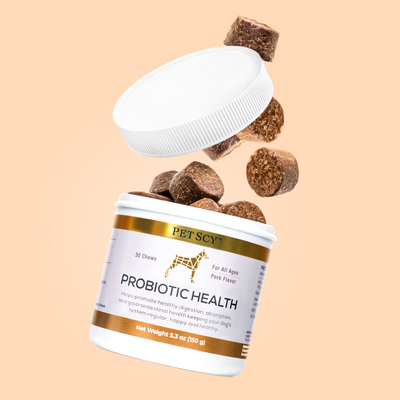
| PetScy Probiotic Health Chews | Probiotic blend | Not provided in verified data | Chew | Owners who need a chewable digestive-support format | Not provided in verified data |
FortiFlora fits a focused use case
Purina FortiFlora uses the identifiable single strain Enterococcus faecium SF68, making its label easier to connect with acute-diarrhea evidence than a product that lists organisms without strain identifiers. Its single-serve sachets also make daily administration straightforward.
That specificity does not make it the right answer for every scenario. Recurrent diarrhea, long-term digestive support, or a complicated illness calls for investigation of the underlying cause instead of repeated sachets without reassessment.
Proviable-DC provides a multi-strain option
Proviable-DC includes Bifidobacterium and Enterococcus in a multi-strain blend, with capsule and soft-chew formats. Multiple strains may suit broader support during antibiotic-associated disruption or recurring sensitivity, yet more strains don't guarantee a better clinical outcome. The formulation still has to match the dog's signs and the veterinarian's plan.
A multi-strain product is not a reason to manage bloody or severe diarrhea at home. The clinical situation determines whether a probiotic belongs in the plan at all.
Visbiome Vet requires close label review
A high-potency eight-strain blend may look persuasive in marketing, but the label needs closer examination. Verify the exact strain identities, viable count through expiration, storage requirements, and veterinary directions. A high count or long strain list does not establish that the product addresses your dog's particular type of diarrhea.
Format affects adherence. Powders mix into food, capsules provide a defined serving, chews may be easier for some dogs, and pastes can help when swallowing is difficult. Choose the form your dog will accept while preserving clear strain and potency information.
Reject products that:
- Hide the organisms: A “proprietary blend” without useful strain information prevents meaningful comparison.
- Make universal promises: Claims about fixing every digestive problem go beyond the narrower evidence.
- Ignore storage: Live cultures require handling that protects product viability.
- Use questionable sweeteners: Check the ingredient list for substances unsafe for dogs.
- Offer no meaningful potency guarantee: A front-label CFU claim is less useful without expiration context.
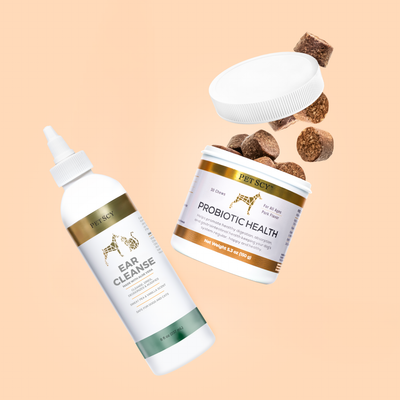
PetScy's Probiotic Health Chews provide another chewable digestive-support option for owners dealing with occasional loose stools. Treat them as one candidate, then compare the current label against strain identity, potency information, storage instructions, and the diarrhea scenario you are trying to address.
Proper Dosing and Administration for Maximum Effectiveness
Dose by the product label, not by a generic internet formula. The verified evidence provided for this article doesn't establish a universal weight-based dosing schedule or prove that escalating to very high CFU amounts improves acute diarrhea. Your veterinarian should set the plan when the dog is young, medically complex, dehydrated, or taking prescription medication.
A practical administration routine
Give the stated canine serving consistently. Sporadic dosing makes it difficult to judge tolerance or response, and changing products every day creates more uncertainty.
Mix powders into cool or room-temperature food rather than hot food. Heat can damage live organisms. Keep refrigerated products cold, protect shelf-stable products from heat and moisture, and don't use a product past its expiration date or outside its storage instructions.
If your dog is taking an antibiotic, ask the prescribing veterinarian about timing. Separating the probiotic from the antibiotic may help avoid direct exposure, but the appropriate interval depends on the medication and the clinical situation. Don't change antibiotic timing without professional guidance.
Pair support with sensible feeding
A probiotic works within a broader recovery plan. If your veterinarian recommends feeding at home, use a bland, digestible option or a prescription gastrointestinal diet, and introduce regular food gradually once stools improve. Avoid fatty treats, table scraps, sudden diet changes, and several new supplements at the same time.
Boiled chicken and rice are commonly used by owners, but they aren't a complete long-term diet. Ask your veterinarian how long to use a home-prepared bland meal and when to transition back to balanced dog food.
Watch for intolerance. Mild gas or a temporary stool change can occur, but worsening diarrhea, vomiting, reduced appetite, weakness, or pain should end the home experiment and prompt veterinary advice.
A useful dosing checklist is:
- Confirm the product: Verify the dog-specific serving, strain names, expiration date, and storage directions.
- Give it consistently: Use the same product and schedule long enough to judge it, unless symptoms worsen.
- Protect viability: Avoid hot food and improper storage.
- Record response: Track stool, appetite, water intake, and energy.
- Stop guessing: Escalate care when warning signs appear or improvement doesn't occur.
For a visual demonstration of administration, watch this canine probiotic dosing video.
Building Your Dog's Digestive Recovery Plan
If your dog has mild diarrhea but remains alert, hydrated, and interested in food, use a structured plan. Triage, targeted support, and monitoring keep you from treating every loose stool with the same supplement.
Use a phased plan
During active mild diarrhea, keep meals simple if your veterinarian agrees, provide water, and give one selected, strain-identified probiotic exactly as directed. Combining several products makes the response harder to judge and does not make treatment more reliable.
During stabilization, keep the product, dose, and feeding routine consistent. Record stool firmness, bathroom frequency, appetite, and energy. If your veterinarian's monitoring window passes without improvement, call the clinic instead of switching products at random.
During food reintroduction, add the regular diet gradually and continue checking stool quality. A relapse after a food change can indicate dietary intolerance or another unresolved condition, so a stronger probiotic is not automatically the answer.

Monitor the dog, not just the stool
Use a daily checklist:
- Stool: Record consistency, color, mucus, blood, and frequency.
- Hydration: Track water intake and watch for weakness or difficulty keeping fluids down.
- Appetite: Note whether meals are accepted and retained.
- Energy: Compare activity with your dog's usual behavior.
- Triggers: Record recent food changes, antibiotics, travel, boarding, stress, or scavenging.
For food-based support, review these global pet sitter sweet potato tips before adding anything new. Familiar foods can still obscure the cause when several variables change during an active episode.
Recurring diarrhea needs veterinary investigation rather than indefinite supplement use. Your veterinarian may recommend fecal testing, dietary evaluation, or other diagnostics. Microbiome changes may accompany clinical improvement, but a probiotic does not permanently correct every underlying cause.
For an appropriate mild case, choose a product with identified strains, administer it consistently, and set a clear reassessment point. Blood, vomiting, pain, lethargy, dehydration, or persistent diarrhea requires veterinary contact now.
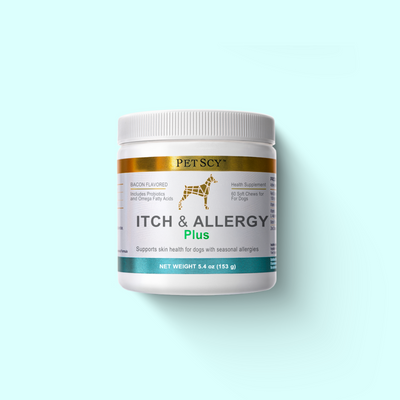
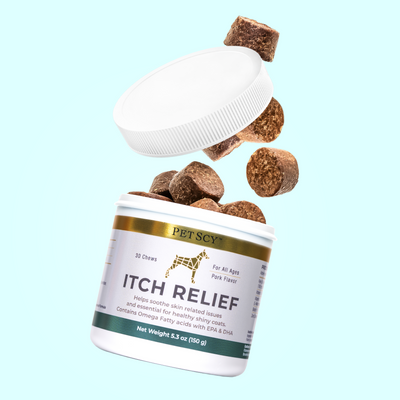
PetScy offers Probiotic Health Chews for dogs needing support for digestive balance and occasional loose stools, along with products for other canine health needs. Visit PetScy to review the current formula and decide whether its chewable format fits your dog's recovery plan.