












Probiotic Supplements for Digestive Balance in Dogs
Your dog was fine on Friday. After a weekend at boarding, a kennel, or a busy family gathering, they're eating smaller portions, passing softer stools, and producing more gas than usual. Their coat may look a little dull, too. You're left wondering whether this is a passing reaction to stress, a food problem, or a sign that a probiotic supplement could help.
That question deserves a more useful answer than “probiotics work” or “buy the best one.” The important questions are which dog, which strain, which symptom, and what timeline makes sense. Probiotic supplements for digestive balance can be helpful support, but they aren't interchangeable medicines or a cure for every gastrointestinal problem.
Table of Contents
- When Digestive Balance Goes Off Track
- What a Healthy Canine Gut Actually Looks Like
- What the Evidence Says About Probiotics
- How to Read a Probiotic Label
- Matching Strains to Common Digestive Symptoms
- Dosing, Timing, and Safety Day to Day
- Common Misconceptions and When to Call the Vet
- Putting It Together for Your Dog
When Digestive Balance Goes Off Track
A dog's digestive system can change quickly. Stress from boarding, a sudden diet switch, an antibiotic course, travel, or age-related changes can alter the conditions in which intestinal microbes live. The result may be loose stool, less interest in food, extra flatulence, or a coat that seems less glossy than usual.
Those visible signs don't prove that a probiotic is needed. They do tell you that digestion is responding to something. The gut contains communities of microorganisms that interact with food, the intestinal lining, and immune defenses. When the surrounding conditions change, the balance between those communities can change as well.
A familiar weekend pattern
Suppose your normally predictable dog returns from boarding with soft stool but remains bright, hydrated, and interested in food. A short-lived stress response or diet exposure may be more likely than a serious illness. In that situation, careful observation, access to water, a return to the usual diet, and veterinary guidance when needed may be more appropriate than immediately adding several supplements.
A different pattern needs more caution. Repeated diarrhea, vomiting, blood in stool, marked lethargy, refusal to eat, or worsening symptoms can point to problems that probiotics can't diagnose or treat. A useful overview of warning signs appears in this guide to signs your dog may need probiotics for better health, but symptom lists shouldn't replace a veterinary examination.
Practical rule: Digestive balance is a moving target, not a switch that's either on or off.
Why the same supplement won't fit every dog
A dog with occasional stress-related loose stool may need a different strategy from one with chronic soft stool, gas, or symptoms following antibiotics. Even within probiotics, research findings depend on the organism, strain, dose, formulation, and outcome being measured.
That's why the rest of the decision should start with the symptom pattern rather than the marketing phrase on the front of a bottle. A probiotic may nudge the gut toward greater stability, but the right choice depends on what changed and how the dog responds over time.
What a Healthy Canine Gut Actually Looks Like
Think of the canine gut as a garden. The intestinal lining is the soil, dietary fibres provide fuel, and microbial communities are the plants competing for space and nutrients. A healthy garden doesn't contain only one plant. It supports a stable community that can respond when weather, water, or soil conditions change.
Beneficial microbes can help ferment fibres into short-chain fatty acids. They also interact with the intestinal barrier and immune system. The gut isn't just a tube for moving food. It's an active meeting point between nutrients, microbes, and immune signals.

Balance has practical signs
Owners usually notice gut stability through everyday patterns:
- Stool quality: Bowel movements remain formed and reasonably predictable.
- Appetite: Meals are approached with a familiar level of interest.
- Body condition: The dog maintains weight appropriately for its diet and activity.
- Resilience: A minor routine change doesn't always trigger prolonged digestive upset.
Dysbiosis describes a disrupted microbial ecosystem. It can involve reduced diversity, expansion of opportunistic organisms, and a less effective intestinal barrier. Organisms such as Clostridium or Salmonella may be relevant in particular disease contexts, but their presence or absence alone doesn't tell you what treatment an individual dog needs.
Where probiotics fit
A probiotic is a live microorganism supplied deliberately, usually through a food, powder, capsule, or chew. In the garden analogy, it's closer to reseeding than rebuilding the soil. A supplement may support a particular function, but it won't correct every dietary, infectious, inflammatory, or structural cause of digestive disease.
Prebiotics and postbiotics add further nuance. Prebiotics provide fuel for microbes already present, while postbiotics contain compounds produced during microbial activity. A formulation that combines these elements may be designed around a broader digestive goal, but the evidence still needs to match the actual ingredients and symptoms.
What the Evidence Says About Probiotics
A dog with sudden loose stool may improve after a probiotic, while another dog with chronic vomiting or weight loss needs a veterinary workup first. The evidence supports a more useful question than “do probiotics work?” Ask which dogs, which strains, which symptoms, and how soon a change should appear.
Human gastrointestinal research is broad but does not transfer automatically to dogs. A 2012 meta-analysis pooled 74 studies, 84 trials, and 10,351 patients across eight gastrointestinal conditions and found a statistically significant overall benefit, with a relative risk of 0.58, 95% CI 0.51–0.65 (review of probiotics in gastrointestinal disease). A 2023 meta-analysis also found better overall effects than placebo for global IBS symptoms, abdominal pain, and quality of life, with results reported as SMD −0.55, SMD −0.89, and 0.99 (meta-analysis of probiotics for IBS). An updated 2026 review reported improved IBS severity scores but judged overall certainty low because findings were inconsistent.
These results support strain-specific reasoning. A product containing a familiar bacterial species is not automatically equivalent to the strain studied in a clinical trial.
Canine findings are more specific
In dogs with acute idiopathic diarrhea, canine-derived Bifidobacterium animalis AHC7, given at 2 × 10^10 CFU per day, shortened time to resolution from 6.6 ± 2.7 days to 3.9 ± 2.3 days and reduced metronidazole use from 50.0% to 38.5% compared with placebo (canine AHC7 trial). That result applies to one strain, dose, and clinical situation. It does not show that every Bifidobacterium product will produce the same outcome.
A systematic review of canine gastrointestinal probiotic trials found that most products used 10^8 to 10^10 CFU per day. One multicenter trial involving Lactobacillus fermentum VET 9A, L. rhamnosus VET 16A, and L. plantarum VET 14A found improved mean fecal consistency by day 7 and across days 1 to 28, although the day-28 endpoint alone was not significant (systematic review of canine GI probiotic trials).
| Strain | Studied for | Evidence strength |
|---|---|---|
| Bifidobacterium animalis AHC7 | Acute idiopathic diarrhea in dogs | Direct canine trial evidence |
| L. fermentum VET 9A, L. rhamnosus VET 16A, L. plantarum VET 14A | Fecal consistency in canine GI trials | Canine evidence with context limits |
| Lactobacillus rhamnosus GG | Human gastrointestinal research | Human evidence, not automatically canine evidence |
| Enterococcus faecium NCIMB 10415 | Canine digestive support research | Product and outcome dependent |
For practical label context, this discussion of best probiotics for gut support explains why strain identity matters. Probiotics are targeted support, not universal digestive medicine.
How to Read a Probiotic Label
A product label should answer four questions before you buy it. If it doesn't, the high CFU number or cheerful digestive-health claim shouldn't fill in the gaps.
Start with the organism's full identity
Look for the genus, species, and strain code, not just “Lactobacillus” or “Bifidobacterium.” A designation such as Lactobacillus rhamnosus GG is more informative because the strain is part of the evidence identity. Two strains from the same species can behave differently and may have been studied for different outcomes.
Next, check the CFU statement. CFU means colony-forming units, a measure of viable microorganisms. The useful label question is whether the count is guaranteed through the expiration date, rather than only measured when the product was manufactured. Storage conditions, moisture, heat, and the delivery system can affect viability.
Look for quality signals
Third-party verification doesn't prove that a product will help your dog, but it can provide more confidence that the contents and potency have been checked. Transparent expiration dating, storage instructions, lot information, and a complete ingredient list are practical signs of a more accountable formula.
The delivery format matters, too. A powder mixed into a meal may be sensible for one dog, while a capsule or chew may be easier for another. The best format is the one you can give consistently without creating a daily struggle.

Use this aisle-side checklist
- Full strain name: Is the genus, species, and strain code listed?
- Expiration potency: Does the CFU guarantee apply at expiration?
- Storage instructions: Can you store it as directed?
- Species fit: Does the evidence involve dogs or only another species?
- Symptom match: Is the strain studied for the problem you're trying to address?
- Formula transparency: Are added prebiotics, postbiotics, or other ingredients clearly identified?
A higher CFU count isn't automatically better. A dose aligned with the research for the named strain is more meaningful than a large number attached to an unverified blend.
Matching Strains to Common Digestive Symptoms
A dog develops loose stool after boarding, while another has months of soft stool and gas. Those patterns point to different questions. Choose a probiotic by the dog's symptoms, the strain studied, and the time allowed for assessment. The table offers a starting point for discussion with your veterinarian, not a diagnosis or a promise of response.
| 症狀模式 | 研究過的菌株 | 每次劑量的典型 CFU 範圍 | 預期反應時間 |
|---|---|---|---|
| 壓力或換食後出現急性稀便 | B. animalis AHC7,部分犬用複合配方 | 犬隻研究使用的劑量介於 10^8 至 10^10 CFU 每日,AHC7 的研究劑量為 2 × 10^10 CFU 每日,可參考前文的 Canine AHC7 trial | 可在第一週觀察糞便變化 |
| 長期軟便伴隨脹氣 | 多菌株犬用配方,或有明確菌株的複合配方 | 許多犬隻試驗使用 10^8 至 10^10 CFU 每日,可參考前文的 Canine GI probiotic systematic review | 逐步評估,不要預期立即改善 |
| 抗生素後的腸胃恢復 | 對相關犬隻結果有直接證據的菌株 | 依產品研究資料及獸醫建議決定 | 在腸胃受干擾期間及之後觀察 |
| 腸胃與皮膚或搔癢相關的模式 | 可將腸胃支持納入以皮膚問題為主的計劃 | 沒有適用所有狗的通用劑量 | 皮膚變化通常需要更廣泛的評估 |
Enterococcus faecium SF68、Bacillus coagulans 和 Lactobacillus rhamnosus GG,可能出現在犬用或以人類為對象的產品中。熟悉的菌名本身,不能證明每種配方都適合每隻狗。真正要問的是:哪一個菌株、使用什麼劑量、針對哪一種結果?
對於腸胃敏感的狗,食物成分、每餐份量、寄生蟲、胰臟疾病、發炎與壓力都可能影響症狀。這份關於腸胃敏感犬隻的指南可補充背景,但持續不適仍應由獸醫評估。
症狀重疊時,複合配方可能有其用途,成分更複雜卻不等於品質更高。先配對可觀察的症狀模式,再記錄糞便、食慾、精神與脹氣是否朝正確方向變化。
Dosing, Timing, and Safety Day to Day
A gradual introduction is often easier to interpret than starting several new products at once. Follow the product label and your veterinarian's instructions, especially if your dog has a diagnosed condition or takes medication.
A practical introduction routine
Days 1 to 3: Consider beginning with a reduced serving if your veterinarian agrees. Watch for increased gas, bloating, softer stool, vomiting, or a change in appetite. A mild change may be temporary, but worsening signs are a reason to pause and ask for advice.
Days 4 to 7: If your dog remains comfortable, move toward the labeled serving. Giving the supplement with a meal may improve routine consistency and can be gentler than giving it to an empty stomach.
Weeks 2 to 4: Assess the original symptom rather than chasing every daily fluctuation. Record stool quality, appetite, energy, flatulence, and any medication changes.
If your dog receives antibiotics, ask your veterinarian about timing and separation. A common practical approach is to separate the probiotic from the antibiotic by at least two hours, but the medication, infection, and dog's condition should guide the plan.

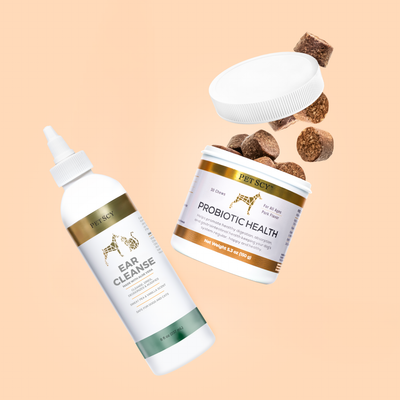
Powders, chews, and capsules can all work as delivery formats if the product remains stable and you can give it reliably. If you're comparing a daily chew with other options, PetScy Probiotic Health Chews are one example of a dog-focused digestive supplement format.
Pause the supplement and contact a veterinarian if your dog develops new diarrhea, blood in the stool, vomiting, pronounced lethargy, or worsening appetite. Probiotics can support a plan, but they shouldn't delay diagnosis.
Common Misconceptions and When to Call the Vet
The phrase “daily probiotic” can make supplementation sound necessary for every dog. It isn't. A healthy dog eating a complete, balanced diet may show no noticeable change from routine probiotic use, and a supplement shouldn't be added because the label makes broad wellness promises.
More CFU also doesn't mean more benefit. The relevant dose depends on the strain, formulation, and outcome studied. Some dogs may experience more gas or digestive discomfort when a new product is introduced, especially if owners combine a high-dose probiotic with abrupt diet changes or several other supplements.

Support isn't treatment
A probiotic isn't a substitute for antibiotics when a veterinarian prescribes them, deworming when parasites are involved, or a prescription diet when a specific dietary intervention is needed. It also shouldn't be used to cover up a symptom that keeps returning.
Seek veterinary attention for:
- Bloody or black, tarry stool
- Persistent vomiting
- Unexplained weight loss
- Refusal to eat for more than 24 hours
- Fever or sudden lethargy
- Diarrhea that persists or worsens
A mild episode of loose stool after stress may justify careful observation and a targeted trial in an otherwise well dog. Ongoing symptoms after a reasonable trial, especially when they worsen, call for diagnostic work rather than a stronger supplement.
The right response to a failed probiotic trial is a better question, not automatically a higher dose.
A veterinarian may recommend a physical examination, fecal testing, blood work, diet review, or other investigation depending on the pattern. The supplement decision belongs inside that broader health conversation.
Putting It Together for Your Dog
Start with the dog in front of you, not a product ranking. Write down the main problem, such as acute loose stool after boarding, chronic soft stool with gas, or digestive changes after medication. Then ask whether the product names a strain studied for a similar canine outcome.
Before buying, verify the full strain designation, expiration-date CFU guarantee, storage requirements, and quality information. Introduce one change at a time and keep a short log of stool quality, appetite, energy, gas, diet, stress, and medications.
A useful evaluation window is longer than a single day. Some short-course canine studies identified stool changes during the first week, while individual responses can be slower and inconsistent. Give your veterinarian enough information to judge whether the supplement is helping, doing nothing, or distracting from another cause.
Track the original symptom, not just the number on the label.
Digestive stability also depends on diet, hydration, routine, stress, exercise, and treatment of underlying disease. If symptoms remain unresolved after a trial, arrange a veterinary check and ask whether stool testing is appropriate. Reassess the supplement choice after sustained observation, rather than continuing indefinitely because the packaging sounds persuasive.
For owners comparing supportive options beyond probiotics, a digestive aid with herbal enzymes illustrates why ingredient purpose should be considered separately from probiotic strain evidence. Different ingredients address different questions, so combining them should be discussed with your veterinarian.
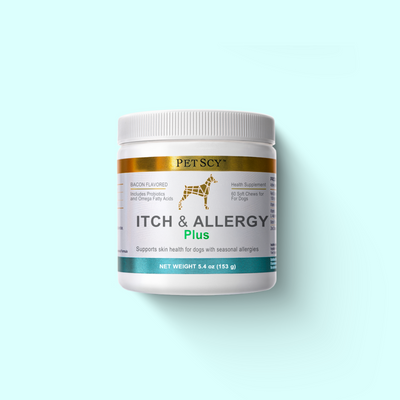
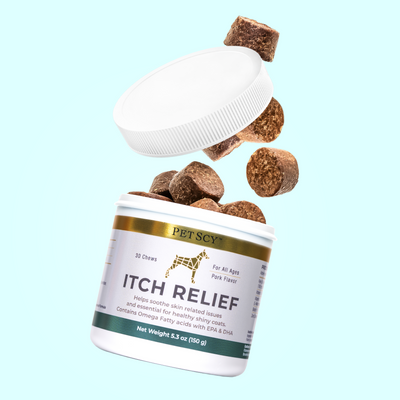
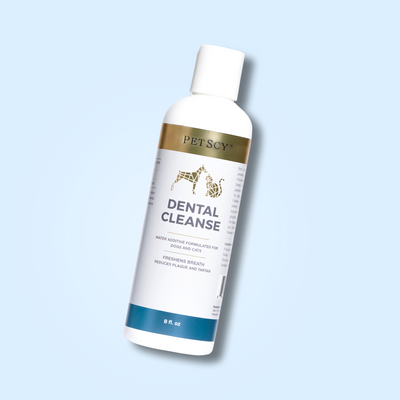
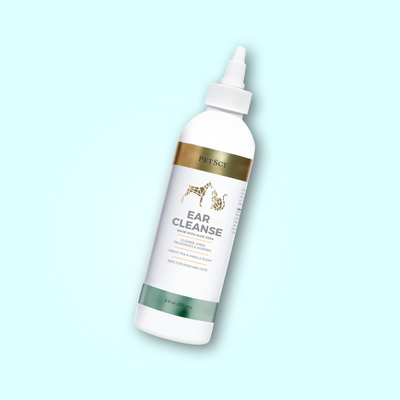
PetScy offers veterinarian-formulated dog supplements, including a probiotic chew designed for digestive and immune support, alongside products for skin, allergies, dental care, calming, and joint health. Visit PetScy to review the available options, compare ingredient details, and choose a supplement that fits your dog's symptom pattern and daily routine.