











Causes of Dog Dandruff and How to Soothe Flaky Skin
You run your hand down your dog's back, then notice little white flakes on your black pants. Or you finish brushing and see a dusting of skin in the fur that wasn't there last week. Most owners jump straight to one thought: dry skin.
That's understandable, but it's only part of the story.
Table of Contents
- Introduction What Those White Flakes Are Really Telling You
- How Healthy Skin Sheds and Why Flakes Appear
- Everyday Environmental and Grooming Triggers for Dry Flaky Skin
- Understanding Seborrhea and the Medical Roots of Persistent Dandruff
- Parasites Allergies and Infections That Cause Flaking and Itching
- When Flakes Signal Something More and How to Check at Home
- Simple Prevention and Daily Care for a Healthier Coat
Introduction What Those White Flakes Are Really Telling You
You pet your dog at night, and a scatter of white flecks shows up on the couch or your shirt. It is easy to call it dry skin and move on. In many dogs, though, dandruff is better understood as a clue. It points to how well the skin barrier is holding moisture, how much oil the skin is making, and whether your dog can still groom the coat normally.
Veterinary references describe dandruff as a sign that can show up with many different problems, from parasites and allergies to infections, ringworm, and hormone-related illness such as hypothyroidism or Cushing's disease (WebVet on dog dandruff and flaky skin). That helps explain why the same white flakes can mean very different things in different dogs.
One dog may have a few light, dusty flakes during winter because the air is dry or baths are too frequent. Another may have greasy scale that clings to the fur, along with odor and itching. An older dog may flake more because stiff joints or extra weight make self-grooming harder, so dead skin and oil build up instead of being worked through the coat.
Flakes are a little like crumbs under a toaster. You can wipe them away, but they still tell you something about what is happening upstream.
That is why the texture of the dandruff matters. Dry, powdery flakes often point owners toward moisture loss or over-washing. Greasy, waxy flakes suggest an oil balance problem and sometimes a skin condition that needs treatment. Where the flakes collect can matter too. A line of scale along the back, patches near the tail base, or flaking around the ears each gives a slightly different clue.
A helpful way to sort the causes is to group them into three buckets:
- Environment and grooming: dry air, harsh shampoo, too many baths, or poor brushing
- Grooming ability: pain, obesity, age, or illness that keeps a dog from cleaning the coat well
- Underlying disease: seborrhea, allergies, parasites, infection, or hormone problems
So the question is not just, “How do I get rid of these flakes?” It is, “What are these flakes telling me about my dog's skin and overall health?” That shift in thinking makes it much easier to decide when home care is enough and when a vet visit makes sense.
How Healthy Skin Sheds and Why Flakes Appear
Healthy skin sheds all the time. You just usually don't notice it.
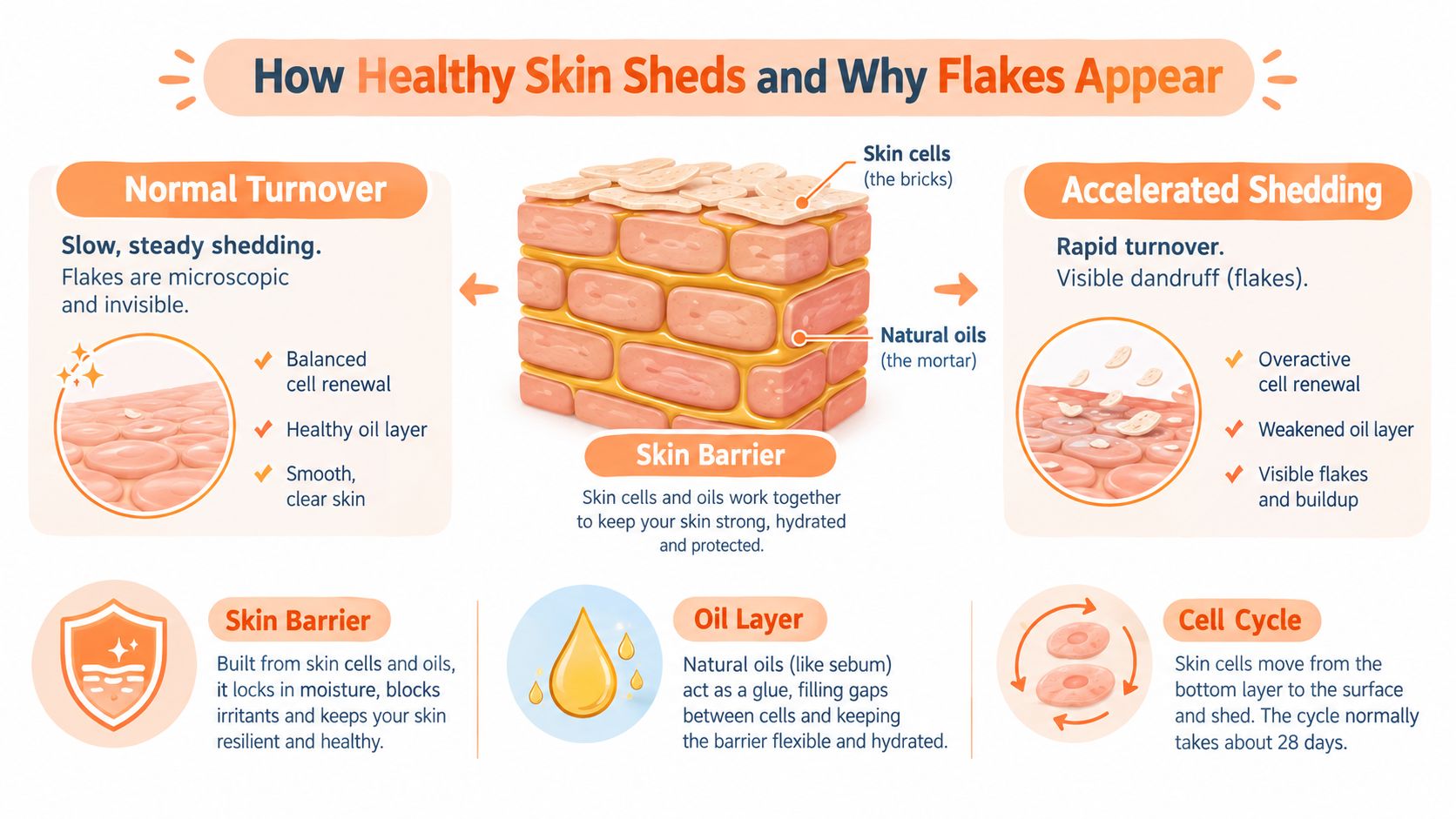
A simple way to picture it is a brick wall. The skin cells are the bricks. The natural oils help act like mortar, keeping that wall flexible and protective. When the wall is balanced, old cells lift off in tiny amounts that stay mostly invisible in the coat.
When that balance gets disrupted, the skin starts shedding faster or less neatly. Then the flakes become visible.
Think of skin as a barrier, not just a surface
Your dog's skin has a daily job. It helps hold in moisture, keeps irritants out, and supports the coat. Natural oils also help the fur feel smoother and keep the outer layer from becoming brittle.
If the skin barrier dries out, gets inflamed, or produces oil abnormally, the old cells don't slough away in the usual quiet way. They collect into visible scale. That's what you're seeing as dandruff.
What changes when flakes become obvious
There are a few basic ways skin goes from normal shedding to visible dandruff:
- Too little moisture support: the outer layer gets dry and crumbly
- Oil imbalance: the skin may be too stripped or too greasy
- Faster cell turnover: skin cells reach the surface and pile up more quickly
- Poor distribution of oils: the coat doesn't get evenly conditioned
This is why dandruff isn't always just “dry skin.” A dog can have flakes because the skin is too dry, but another dog can have flakes because the coat is oily and the skin environment is unhealthy in a different way.
Healthy shedding is quiet. Visible dandruff means the skin is shedding loudly enough for you to notice.
Dry flakes and oily flakes are not the same thing
This is useful language when you talk to your vet.
Dry flakes often look light, dusty, and loose. They fall off when you pet or brush the coat. Owners often notice them on the back or shoulders.
Oily flakes tend to cling. The coat may feel waxy, heavy, or slightly sticky. You may also notice a stronger skin smell, especially if yeast or infection is involved.
You don't need to diagnose the reason at home. But you can observe the pattern. Is the coat dry or greasy? Is the flaking all over or mostly in one spot? Is your dog itchy, red, or losing hair too? Those details help connect the visible flakes to the process underneath.
Everyday Environmental and Grooming Triggers for Dry Flaky Skin
You brush your dog after a walk and a little snowstorm of white specks lands on the couch. It is easy to assume the skin is dry. Sometimes that is true. But everyday flakes often point to three practical things you can check first: how well the skin barrier is holding moisture, whether natural oils are being spread through the coat, and whether your dog's routine is working with the skin or against it.
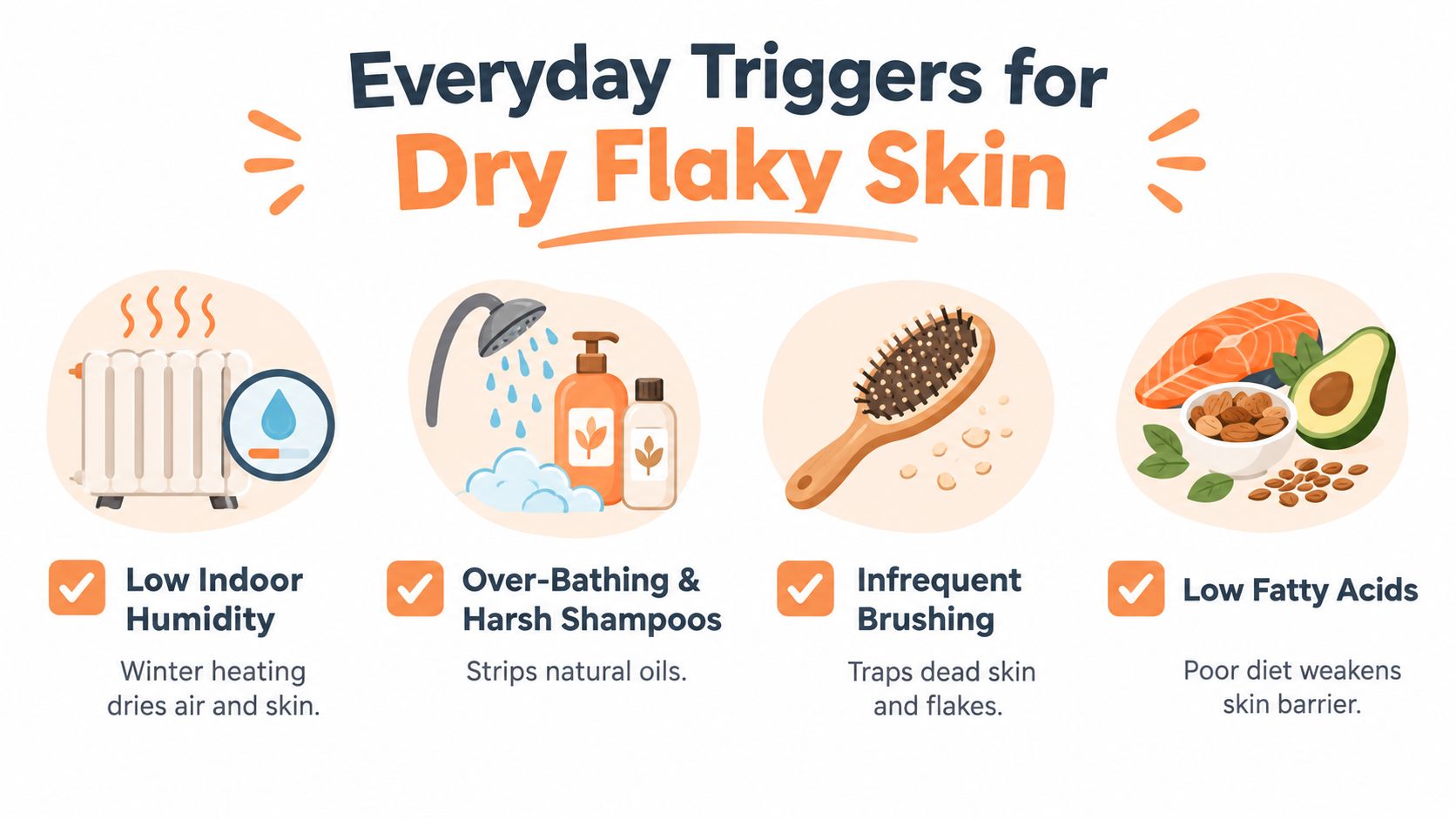
Common day-to-day triggers include dry indoor air, bathing habits that strip oils, too little brushing, and a diet that does not support healthy skin turnover. Veterinary teaching materials on canine skin care from VCA Animal Hospitals and grooming guidance from the AKC on dry skin in dogs both reflect that pattern.
Dry air can weaken the skin barrier
Winter often sets this up. Cold outdoor air holds less moisture, and indoor heat dries the air even more. The result is similar to what happens to chapped hands. The surface loses water, gets less flexible, and sheds more visibly.
Some dogs show this on the back and shoulders first. The coat can look dull, and the flakes are usually light and loose rather than sticky. That dry, dusty look is a clue that the barrier may be short on moisture support, not overloaded with oil.
Bathing can help or strip too much
A bath can remove loose scale, pollen, dirt, and irritants. But the wrong shampoo, or baths that happen too often for that dog, can wash away the thin oil layer that helps protect the skin surface.
Owners often notice a frustrating cycle. Flakes appear, so they bathe the dog more. The skin gets cleaner, but also drier, and the flakes return faster. A dog shampoo that is gentle and matched to your dog's skin type is usually a better choice than a strongly scented product meant to make the coat feel squeaky clean.
The goal is not to scrub the flakes off. The goal is to leave the skin barrier calm enough that it sheds normally.
For a simple barrier comparison, general reading on dry skin hydration with Skin Perfection can help explain why moisture and surface oils matter. Human and dog skin are different, but the basic barrier idea carries over.
Brushing helps the coat do its job
Brushing works like distributing conditioner through hair. It lifts away dead skin, loosens trapped flakes, and spreads natural oils from the skin across the coat. That matters most in thick coats, dense undercoats, and dogs that do not groom themselves well because of age, weight, or stiffness.
Without regular brushing, flakes can collect instead of clearing little by little. You also miss an easy home check. A brush session lets you notice whether the flakes are dry and powdery, or clingy and greasy, and whether there is redness, odor, or sore skin underneath.
If you want a practical routine, this guide on tips to keep your dog's coat looking great fits well with a quick weekly skin check.
Food affects what the skin can build
Skin is always being rebuilt. That means coat care from the outside only solves part of the problem. The body also needs the raw materials to make a strong, flexible skin surface.
Poor diet is not the main cause of every flaky coat, and dandruff alone does not prove a nutrient deficiency. Still, dogs with low-quality diets or poor fatty acid intake may have skin that feels less supple and flakes more easily, especially when dry air or overbathing is added on top.
A common real-life pattern looks like this: winter heat is running, baths become more frequent, brushing slips for a few weeks, and the coat was already a little dull. Flakes become visible because the skin barrier is under more stress and the coat is no longer spreading oils well. That is different from the oily, persistent scaling seen with medical problems, and it gives you a useful starting point for what to change at home.
Understanding Seborrhea and the Medical Roots of Persistent Dandruff
A dog who still has flakes after you fix the easy stuff is giving you a clue. The skin is not just a little dry. It may be shedding abnormally, making too much oil, or reacting to a health problem that changes how the skin barrier is built and maintained.
That is the basic idea behind seborrhea. In plain language, seborrhea means the skin is producing scale in an abnormal way, often with changes in oiliness too. The flakes you see are the visible part. Underneath, the skin's normal turnover system is out of rhythm, a bit like a roof that should shed a few old shingles but starts dropping them faster than the repairs can keep up.
Primary seborrhea versus secondary seborrhea
Vets usually sort seborrhea into two groups.
Primary seborrhea is an inherited skin disorder. It tends to show up in certain breeds and often starts earlier in life. The skin itself is prone to making excess scale, so flakes can be part of the dog's baseline skin pattern rather than a one-time reaction.
Secondary seborrhea is much more common. In those dogs, seborrhea is a result, not the starting problem. The skin is responding to something else, such as hormone disease, allergies, infections, immune-related illness, or other disorders that interfere with normal skin turnover and oil balance. The Merck Veterinary Manual explains this distinction and notes that seborrhea in dogs may appear as a primary inherited condition or as a secondary change linked to other disease processes (Merck Veterinary Manual on seborrhea in dogs).
That difference matters because treatment is not just about washing flakes away. If seborrhea is secondary, the skin often improves only after the trigger is found and managed.
Dry seborrhea and oily seborrhea do not point to the same thing
Owners often lump all dandruff together. Skin does not.
Dry seborrhea usually looks like light, loose flakes that fall off easily. Oily seborrhea tends to leave scale stuck to the hair, with a greasy feel, a heavier smell, or skin that seems waxy instead of dusty. Both involve abnormal shedding, but they do not suggest the same next step.
Dry, powdery flakes often fit better with a weaker skin barrier or a lower-oil type of scaling. Greasy, clingy flakes raise more concern for yeast, bacteria, or medical problems that change skin oil production. A dog with oily flakes may need much more than a moisturizing shampoo.
Some owners find it helpful to compare this idea with human scalp problems, where dry flaking and oily scaling also behave differently. This explainer from Sphagnum Botanicals on scalp care can make that visual difference easier to picture, even though dogs need dog-safe diagnosis and treatment.
Flakes are not the whole story. The texture of the coat, the smell of the skin, and whether scale is dry or greasy often tell you more than the flakes alone.
Dry Versus Oily Flakes and What They Suggest
| Flake Pattern | Common Associations | Clues to Discuss With Your Vet |
|---|---|---|
| Dry, light, powdery flakes | Dry seborrhea, weaker skin barrier, lower oil support | When it started, season, bathing changes, coat feel |
| Greasy or waxy flakes stuck to hair | Oily seborrhea, yeast, bacterial overgrowth, hormone-related skin change | Odor, sticky coat, darkened skin, repeated flare-ups |
| Flakes with itch and redness | Allergy-related inflammation, infection, parasites | Scratching, ear issues, paw licking, hotspots |
| Persistent flakes with hair loss or recurrent skin trouble | Secondary seborrhea linked to deeper disease | Age of onset, weight changes, energy changes, repeat infections |
Pattern matters more than one bad skin day
One flaky week after winter baths is one pattern. Persistent scaling that keeps returning, spreads, starts to smell, or comes with hair thinning is a different pattern.
Age can help frame that picture too. Inherited skin disorders often show up younger. Hormone-related and other internal diseases become more likely as dogs get older. That does not mean you can diagnose the cause from age alone. It means a vet will use the whole pattern, including age, coat changes, itch level, odor, and repeat infections, to decide whether dandruff is acting like a simple barrier problem or a sign of something deeper.
So if the flakes keep coming back, treat them like a message from the skin, not just a mess on the brush.
Parasites Allergies and Infections That Cause Flaking and Itching
A dog with flakes and itch is giving you a different clue than a dog with a few dry specks after a bath. In these cases, dandruff often points to irritated skin, a disrupted skin barrier, or an infection taking hold, not simple dryness.
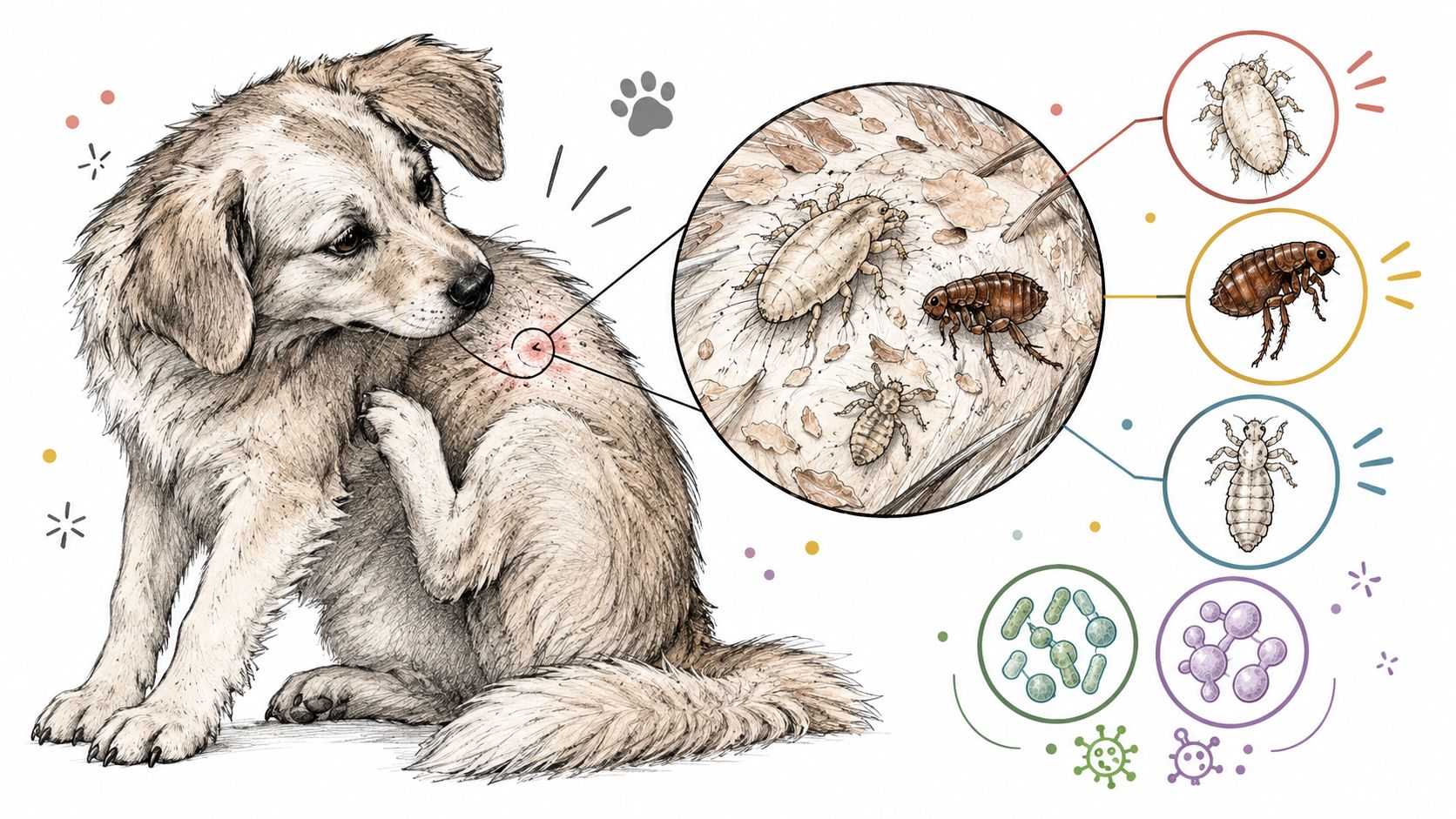
One classic example is walking dandruff, caused by Cheyletiella mites. These mites can create heavy scaling along the back, and the flakes may seem to shift through the coat because the skin is so irritated. Cornell University's parasite guidance includes Cheyletiella among contagious mites that can cause scaling and itch in dogs.
Parasites can look like “just flakes”
Parasites rough up the skin surface like sandpaper on fresh paint. The more the skin gets irritated, the more flakes you see. Fleas, mites, and lice can all set off that cycle.
Location helps. Flakes plus scratching around the rump, tail base, neck, or belly should put parasites higher on your list of possibilities, especially if the itch came on quickly or other pets are scratching too.
For owners looking for broader prevention ideas, this guide on how to eliminate dog fleas naturally can be a useful starting point alongside veterinary advice.
Allergies often turn mild flaking into a repeat problem
Allergies make skin reactive. Once the surface is inflamed, it loses some of its ability to hold moisture and block irritants, so flakes keep coming back even when the coat does not look obviously dirty.
That is why allergic dogs often show a pattern, not one isolated sign. You may notice paw licking, ear debris, face rubbing, pink skin, or flare-ups that return in the same seasons or after the same exposures. If that sounds familiar, this guide on whether your dog has allergies can help you sort what you are seeing before a vet visit.
Here's a quick visual overview of the itch-and-flake cycle many owners run into:
Infections change the kind of flakes you see
Infections often shift dandruff from dry and dusty to greasy, sticky, or smelly. Yeast and bacteria thrive on inflamed skin, and once they overgrow, the coat can start to feel waxy and look messy even soon after grooming.
Ringworm can also cause scaling, usually with broken hairs or round areas of thinning coat. The Merck Veterinary Manual notes that dermatophytosis, commonly called ringworm, can cause patchy hair loss and scale in dogs. That pattern deserves attention because it can spread to other pets and people.
Flakes with strong itch, odor, greasy buildup, or patchy hair loss are a skin problem asking for treatment. They are not the same as a few dry flakes in winter.
When Flakes Signal Something More and How to Check at Home
You brush your dog, see white flakes along the back, and assume the skin is a little dry. Sometimes that is true. Sometimes those flakes are more like a clue on the surface, pointing to a skin barrier problem, trouble grooming normally, or a health issue under the coat.
One often-missed cause is simple mechanics. A dog who is sore, stiff, or carrying extra weight may not be able to twist around and maintain the coat well, especially over the lower back and sides. VCA Hospitals notes that obesity, arthritis, pain, and stiffness can contribute to seborrhea because normal grooming drops off, particularly in hard-to-reach areas (VCA Hospitals on seborrhea in dogs).
Start with reach, comfort, and flake type
Healthy skin sheds tiny cells all the time, and the coat helps hide that process. Regular licking, scratching, and body movement also help keep oils and loose debris from building up. When a dog cannot reach part of the body comfortably, dead skin can collect there the way dust gathers on a shelf no one wipes often.
That is why the pattern matters. Flakes that cluster over the hips, lower back, or flanks can be a comfort clue, not just a skin clue.
A calm at-home check
You do not need special tools. Good light, your hands, and a minute of observation are enough to learn a lot.
- Check the flakes themselves: Are they light and dusty, or more oily and stuck to the hair?
- Look at the pattern: Is the flaking spread all over, or mainly at the tail base, back, sides, ears, or belly?
- Feel the coat: Does it feel soft and dry, or waxy and heavy soon after grooming?
- Watch your dog move: Is there hesitation when turning, scratching, jumping, or reaching back to groom?
- Part the fur: Look for pink skin, odor, scabs, bald spots, sores, or darker thickened areas.
A short phone video can help too. If your dog keeps trying to scratch, seems awkward reaching the rear end, or stops halfway through grooming, that gives your vet a clearer picture than flakes alone.
Signs the flakes are asking for more than home care
A few dry specks after cold weather usually behave differently from medical dandruff. Concerning flakes tend to stick around, return quickly, or come with other changes in the skin or coat.
Call your veterinarian if you notice:
- Persistent itching: scratching, chewing, rubbing, or restless sleep
- Greasy or smelly skin: a waxy coat or odor that returns fast
- Hair loss: thinning patches, broken hairs, or bald spots
- Redness or soreness: inflamed skin under the flakes
- Repeat flare-ups: the problem improves briefly, then comes back
- Changes in comfort: trouble bending, turning, or grooming certain areas
The flake is only part of the story. Where it shows up, what it feels like, and whether your dog can groom that area comfortably often tells you more.
At the clinic, a workup may include a close skin exam, a review of where the flakes are showing up, and questions about itching, odor, seasonality, diet, mobility, and parasite prevention. Your vet may then sort through the likely causes, such as a skin barrier problem, infection, allergies, parasites, hormone disease, or reduced grooming from pain or weight gain.
Simple Prevention and Daily Care for a Healthier Coat
The best prevention plan is the one that supports the whole skin system, not just the flakes you can see.
Start with the basics. Keep bathing gentle and not excessive. Brush often enough to remove loose skin and spread natural oils. If your home gets very dry, adding humidity can help some dogs hold onto skin moisture better. Consistent parasite prevention also matters, because a little irritation can turn into a very flaky coat fast.
Build a routine your dog can tolerate
A realistic coat-care routine usually works better than occasional overcorrection. Think steady, not intense.
- Use gentle skin care: dog-specific shampoo and thorough rinsing
- Support the barrier from within: balanced nutrition and, when your vet recommends it, omega-3 support
- Notice mobility changes: if grooming ability drops, flakes may be a comfort clue
- Choose targeted topicals when needed: your vet may suggest products based on whether the skin is dry, oily, itchy, or infection-prone
If you're reviewing product types for dry skin support, this guide to conditioner for dogs with dry skin can help you think in terms of barrier care rather than just shine.
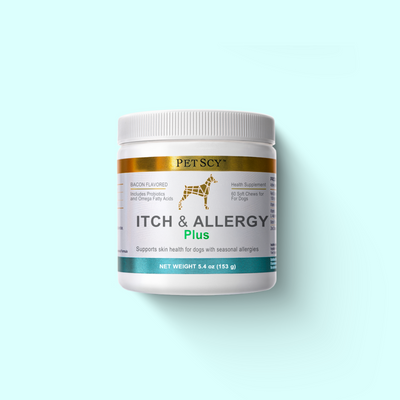
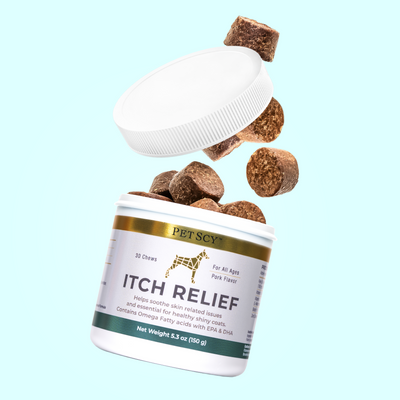
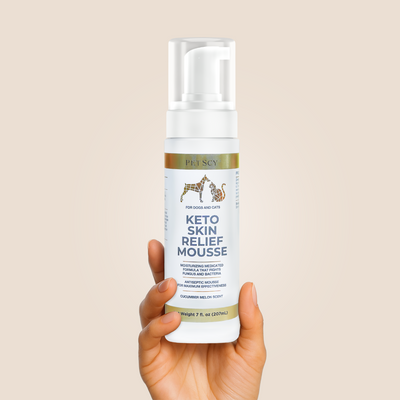
For some dogs, a vet-guided plan may include tools such as fish oil, allergy support, or a topical skin product. PetScy makes veterinarian-formulated options in those categories, including Fish Oil and Keto Skin Relief Mousse, which fit best when used as part of a broader plan based on the dog's actual trigger.
Keep it simple. Watch the pattern, not just the flakes. If the dandruff improves with barrier-friendly care, great. If it persists, gets greasy, starts to smell, or comes with itching or hair loss, let your veterinarian take the next step.
If your dog's coat is flaky, itchy, or hard to keep comfortable, PetScy offers veterinarian-formulated supplements and topical skin-care options that may fit into a broader skin-support plan. You can explore products for coat health, itch support, fish oil, and gentle topical care by visiting PetScy.