









Dog Breath Freshener: A Practical Guide to Fresher Breath
You know the moment. Your dog climbs into your lap, you lean in for a kiss, and the smell hits so hard you pull back before the cuddle even starts. That's the point where most owners reach for a minty shortcut, but dog breath freshener only works when you treat it like an oral-care tool, not a perfume spray for the mouth.
Bad breath in dogs usually comes from the mouth itself, especially plaque, tartar, and the bacteria living around the gumline. If the odor keeps coming back, you're not dealing with a flavor problem, you're dealing with a cleanup problem. If you want a quick primer on the line between home care and something more serious, knowing when to see a vet for bad breath is a useful place to start.
Table of Contents
- Why Dog Breath Is Hard to Ignore and Harder to Fix
- What Causes Canine Bad Breath
- Comparing the Main Breath Freshener Formats
- The Ingredients That Actually Freshen Breath
- How to Choose and Use a Dog Breath Freshener Daily
- Common Myths About Natural Breath Fresheners
- Red Flags That Mean a Vet Visit Instead
Why Dog Breath Is Hard to Ignore and Harder to Fix
The worst-smelling dogs usually aren't the ones who ate something weird that morning. They're the ones with a mouth full of plaque biofilm, a thin sticky layer that builds on teeth and gives bacteria a place to live. Those bacteria break down proteins and release sulfur compounds, and that's what creates the rotten, metallic, unforgettable smell.
I see this pattern all the time in frustrated owners. They buy a flavored spray, try a chew, maybe add a water additive, and the breath improves for a day or two, then comes right back. That happens because scent masking doesn't remove the material feeding the odor.
The smell is a signal, not the problem
Breath odor is the output. The actual problem is the bacterial ecosystem in the mouth, especially where plaque settles below the gumline. Once plaque hardens into tartar, it gets rougher and gives even more bacteria a foothold.
Practical rule: if a product only makes the mouth smell better for a short time, it's not fixing the part that keeps generating the odor.
That's why owners get stuck in a cycle of buying “fresh breath” treats that don't change much. The better question isn't, “What smells nice?” It's, “What reduces plaque, slows tartar, and disrupts the bacteria making the sulfur compounds?”
The commercial market reflects that shift toward real oral care. One industry report estimates the global dog breath freshener market at USD 1.2 billion in 2024 and projects USD 2.5 billion by 2033 at a 9.2% CAGR from 2026 to 2033. It also says North America accounted for about 40% of revenue in 2023, with Europe at 30%, Asia Pacific at 15%, Latin America at 10%, and the Middle East and Africa at 5%. Verified Market Reports on the dog breath freshener market show this is now a real oral-care category, not a novelty aisle item.
The simple takeaway is blunt. If your dog's breath is foul, the mouth needs a plaque-focused plan, not another flavor layer.
What Causes Canine Bad Breath

The core cause is usually plaque biofilm. After eating, bacteria settle on the tooth surface and multiply inside a sticky matrix. That biofilm matures quickly, and if it is not removed, it becomes the base layer for tartar.
Plaque, tartar, and sulfur compounds
Plaque is soft at first. Tartar is what happens when plaque mineralizes and becomes harder, rougher, and much harder to remove at home. That rough surface traps more debris, which lets more bacteria stay active and generate volatile sulfur compounds, especially hydrogen sulfide and methyl mercaptan.
Those compounds are why bad dog breath smells like rotten eggs, metal, or something dead. Food can change breath for a short window, but it does not explain persistent halitosis. The odor keeps coming back because the mouth keeps producing it.
Small dogs often get hit harder because their teeth are crowded and harder to clean well, so plaque builds faster in tight spaces. That does not mean big dogs are safe. Every dog with a mouth has to deal with the same basic chemistry.
Beyond the mouth
Digestive issues can influence odor, but they are not the usual explanation for chronic bad breath. Systemic disease can also change breath quality, which is why persistent odor should never be dismissed as “just dog breath.” Dental cleaning cost questions come up for a reason, because the mouth often needs more than a cosmetic fix, and compare canine dental cleaning costs before you assume a quick product is enough.
Plain truth: a breath freshener can reduce odor output, but it cannot scrape tartar off a tooth or clean below the gumline.
That is the reason the better products are built around plaque control. If the formula does not affect plaque or the bacteria inside it, it is mostly a temporary cover-up.
Comparing the Main Breath Freshener Formats
Different formats solve different pieces of the same problem. A water additive reaches the whole mouth every time your dog drinks, but it can't mechanically remove tartar. A wipe gives you direct contact with the teeth, which is useful if your dog won't tolerate a brush. A chew can help through abrasion, but the quality of chews varies a lot.
What each format is good at
| Format | How It Works | Best For | Main Limitation |
|---|---|---|---|
| Water additive | Mixes into drinking water and contacts the mouth repeatedly | Dogs that drink reliably and won't accept brushing | Doesn't remove hardened tartar |
| Dental powder | Mixes into food or a meal topper routine | Dogs that accept meal-based routines | Depends on consistent daily use |
| Dental chew | Combines chewing action with active ingredients | Dogs who chew well and enjoy treats | Results vary by chew quality and consistency |
| Finger wipe | Lets you wipe plaque and debris directly from teeth | Owners who can handle brief mouth contact | Needs cooperation and proper technique |
| Enzymatic toothpaste | Gives the most direct plaque removal with brushing | Dogs that tolerate brushing, even briefly | Requires time, training, and consistency |
If your dog likes chew time, you can look at a structured option like dental treats as part of the routine, but treat them as support, not a cure.
My recommendation, not the marketing version
Start with the format your dog will accept. A perfect brush used once a month does less than a simple wipe used every day. If brushing is possible, do it. If it isn't, use a combination of water additive, wipe, or powder, then add a chew if calories and chewing style make sense.
Best use case: tooth contact plus consistency beats a “fancy” product your dog resists.
The format tells you how the product behaves, but it doesn't tell you whether the formula is worth your money. That comes down to the active ingredients, and that's where the sorting begins.
The Ingredients That Actually Freshen Breath
The strongest formulas do more than add a mint smell. They attack odor, bacteria, and plaque formation at different points in the chain. That's why ingredient panels matter more than packaging claims.

What the main actives actually do
Stabilized chlorine dioxide is an oxidizing agent. In plain English, it reacts with odor-causing sulfur compounds instead of just covering them up. That's why it shows up in water-additive formulas meant for breath control.
Zinc compounds, such as zinc acetate or zinc citrate, are used for antimicrobial support and plaque-related odor control. They're common in products that aim to change the mouth environment, not just the scent.
Sodium hexametaphosphate works on tartar formation. It interferes with mineral buildup, which matters because tartar is what helps plaque become a more stubborn, odor-producing surface.
The enzyme angle
Enzyme systems, such as protease and glucose oxidase, are used to break down the protein matrix that holds plaque biofilm together. That matters because plaque isn't just loose debris. It's a structured film, and enzymes help weaken that structure.
Good formula, in one sentence: oxidize odor, disrupt bacteria, and slow plaque hardening.
There are also formulas built around chlorophyllin-copper complex or peppermint oil. Those ingredients can contribute to odor management, but they're not the same thing as plaque control. They help most when they're part of a broader formula, not standing alone.
If you're reading labels, the winning question is simple. Does the product change the oral environment, or does it just make the mouth smell nicer for a while?
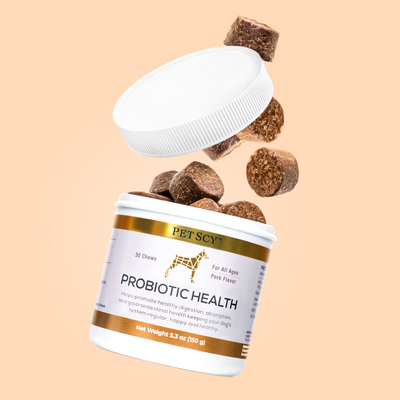
For broader gut and immune context, PetScy's probiotic support page is relevant if you're comparing whole-dog wellness products, but for breath itself, the ingredient story still comes back to oral chemistry first.
How to Choose and Use a Dog Breath Freshener Daily
Pick the product around your dog, not around the ad copy. A confident chewer can handle a chew-based routine. A suspicious, mouth-sensitive dog may do better with a wipe or water additive. A dog who accepts handling can get the most from brushing, and that should always be your first choice when possible.
Build the routine in the right order
- Daily mechanical cleaning first. Brushing beats every other option when your dog lets you do it. Finger wipes are the next best practical option if brushing is a fight.
- Add passive support second. Water additives or powders help fill the gaps on days when brushing isn't perfect.
- Use chews as a supplement. Chews are useful, but they're not a substitute for contact with the teeth.
- Watch the response, not the label. If breath doesn't improve at all after a reasonable trial of consistent use, the product isn't doing enough for your dog.
The main mistake owners make is inconsistency. They use a product for a few days, stop, then assume it failed. Breath products that work through plaque and bacterial control need routine use, not occasional rescue missions.
Introduce it without starting a food fight
Use small first exposures. Let your dog smell the product before you mix it into a full meal or apply it to the mouth. If it's a chew, offer it after a normal meal so it feels less like a bait-and-switch. If it's a water additive, don't overdo the concentration, just follow the label exactly.
I'd also be careful about combining every product in the cabinet at once. More isn't automatically better. A clean routine beats a chaotic one.
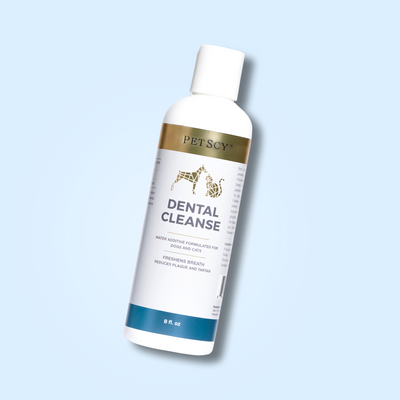
PetScy offers a Dental Powder, Dental Cleanse water additive, and Dental Finger Wipes, which fits the three practical categories most owners need, but any product only helps if you use it daily and pair it with real plaque removal when possible.
Common Myths About Natural Breath Fresheners
A lot of “natural” advice sounds harmless because it's cheap and easy to try. That doesn't make it effective. Parsley and mint can leave a fresher smell for a short time, but they mostly mask odor instead of changing the oral environment.
What doesn't deserve the credit
Coconut oil gets a lot of attention online, but attention isn't evidence. I wouldn't count on it to solve halitosis in a dog with plaque-driven breath. Apple cider vinegar is even less appealing as a routine mouth treatment, because anything acidic can irritate tissues if people try to use it aggressively.
Yogurt is another common suggestion, but oral breath is not the same thing as general gut wellness. Even if a food helps digestion, that doesn't mean it shifts the mouth ecology enough to control sulfur odor in an adult dog.
Don't overrate dry food or one heroic chew
Hard kibble is not a dental cleaning plan. It may offer some surface abrasion, but it doesn't reliably remove plaque from all the places that matter. The same goes for the idea that one dental chew can replace brushing.
My view: if a product doesn't physically disrupt plaque or change the mouth chemistry, it's a comfort item, not a breath solution.
That doesn't mean every home remedy is useless. A crunchy treat or a dog-safe chew can fit into a broader routine. It just means owners need to stop expecting folklore to do a job that requires consistent plaque control.
Red Flags That Mean a Vet Visit Instead
Persistent bad breath is not just annoying, it can be a symptom. Periodontal disease is the common one, but diabetes, kidney disease, and liver disease can also show up as changes in breath. If the smell is sudden, intense, or paired with other symptoms, stop shopping and book an exam.
Odor patterns that deserve attention
Sweet or fruity breath can point to a medical issue that needs veterinary attention. Urine-like or ammonia-smelling breath is another warning sign, especially if your dog also seems off, drinks differently, or behaves unusually. Severe, rotten breath with a painful mouth is a different category from ordinary morning dog smell.
The warning sign page from SoulNestor's guide on urgent dog symptoms is useful because it treats bad breath as part of a bigger symptom picture, not a standalone complaint.
What should push you past home care
- Persistent odor despite product use. If a freshener, wipe, or powder does nothing, assume there's a deeper dental issue.
- Red, swollen, or bleeding gums. That's not cosmetic, it's inflammation.
- Dropping food or eating differently. Pain in the mouth changes how dogs chew.
- Excessive drooling or pawing at the mouth. Dogs do this when something hurts or feels stuck.
- Changes in thirst, urination, or weight. That moves the concern beyond the mouth.
A proper dental workup usually means a full oral exam, assessment of the gums and teeth, and a plan that may involve professional cleaning under anesthesia if tartar or periodontal disease is present. For a clear owner-focused overview, PetScy's dog dental hygiene guide is a solid place to review the basics before you decide whether the issue is cosmetic or medical.
Stop self-treating if the breath is persistent, the gums look angry, or your dog is acting painful. Fresh breath is nice. A healthy mouth matters more.
If you want a breath routine that matches the problem, start with PetScy's dental care options and build from there. Visit PetScy to compare the dental products that fit brushing, wiping, and daily maintenance, then choose the one your dog will let you use consistently.