











Dogs with Sensitive Stomachs: Causes, Diet, and Relief
You wake before sunrise to find a small puddle of yellow bile on the kitchen floor. Your dog still looks interested in breakfast, but yesterday brought loose stool, loud stomach gurgling, or gas that made everyone leave the room. You change foods, remove treats, and try to remember everything your dog ate. Then the same problem returns.
“Sensitive stomach” is a useful description, but it isn't a diagnosis. Digestive signs can come from food intolerance, parasites, infection, microbiome disruption, pancreatitis, inflammatory bowel disease, blockage, or disease affecting organs outside the digestive tract. The American Kennel Club's overview of diet changes and sensitive stomachs also highlights how broad this symptom label can be.
The right response depends on the pattern. A brief, mild upset after an obvious dietary change may need careful observation, while recurring vomiting, diarrhea, weight loss, pain, or low energy deserves veterinary investigation. Dogs with sensitive stomachs need more than a bland-food reflex. They need a logical process that identifies what their gut is reacting to and protects them from unnecessary diet changes.
Table of Contents
- Why Your Dog's Stomach Seems So Sensitive
- Root Causes Behind Canine Digestive Sensitivity
- Recognizing Symptoms and When to See a Vet
- Dietary Strategies for Sensitive Dog Stomachs
- Probiotics and Supplements for Digestive Support
- Building a Daily Feeding and Management Plan
- Red Flags and Mistakes That Delay Recovery
Why Your Dog's Stomach Seems So Sensitive
The symptom is real, but the label is broad
Consider a dog called Milo. He has normal energy, eats quickly, and develops soft stool whenever his family gives him rich leftovers. After returning to a consistent complete diet, his stool settles. That pattern points toward a possible food or feeding-management problem, although it doesn't prove a specific intolerance.
Now compare Milo with a dog that has intermittent vomiting, reduced appetite, lethargy, and gradual weight loss. Calling both dogs “sensitive” hides an important difference. The second dog may have a medical condition that needs testing rather than another trip through the pet-food aisle.
The digestive tract responds to many different problems in similar ways. Loose stool can reflect poor digestion, excess fermentation, infection, parasites, inflammation, or a faster movement of food through the intestines. Vomiting can follow dietary indiscretion, but it can also accompany pancreatitis, obstruction, systemic disease, or significant inflammation.
The useful question isn't “Which sensitive-stomach food should I buy?” It's “What pattern is my dog showing, and what could explain it?”
Occasional upset versus a recurring pattern
An isolated episode doesn't automatically mean your dog has chronic digestive disease. Dogs may react to a sudden food change, scavenged food, stress, medication, or an unfamiliar treat. The concern rises when signs recur, fail to settle, or appear alongside changes in appetite, energy, hydration, body condition, or behavior.
Keep a simple record of meals, treats, stool quality, vomiting, appetite, and stressful events. A pattern often becomes clearer when you compare symptoms with specific foods or routines instead of relying on memory.
Dogs can also have digestive problems without dramatic diarrhea. Morning nausea, frequent grass eating, post-meal discomfort, excessive gas, or reluctance to eat may still justify a conversation with your veterinarian if they repeat. The visible symptom is only the surface. Effective relief starts by finding the driver underneath it.
Root Causes Behind Canine Digestive Sensitivity
Digestive sensitivity has several possible roots, and they don't all respond to the same food. A large cross-sectional study from the Dog Aging Project reported gastrointestinal disorders in 12,840 of 43,517 companion dogs, producing a 30% lifetime prevalence, while 70% had no reported history of these disorders. The findings, published in 2024 and available through the Dog Aging Project study on gastrointestinal disorders, show two things at once. Digestive trouble is common, but it isn't universal, so repeated symptoms shouldn't be dismissed as an inevitable trait.

Breed size changes the digestive context
Large-breed dogs may be more prone to digestive sensitivity because of differences in colonic transit time, fermentative activity, and intestinal permeability, as discussed in this review of canine digestive sensitivity and large-breed biology. A slower or altered movement of intestinal contents can give gut microbes more opportunity to ferment available material. That may contribute to gas, soft stool, or inconsistent bowel movements in susceptible dogs.
This doesn't mean every large dog needs a special diet, and small dogs can certainly develop gastrointestinal disease. It does mean that feeding advice should account for body size, meal volume, activity, and the dog's individual history rather than assuming one formula works for everyone.
Diet pattern and ingredient complexity matter
A dog may react to a specific ingredient, but the broader diet pattern can also shape gut biology. The same review discusses how a Western-style dietary pattern can promote colonic dysbiosis, altered fecal bile acids, and low-grade inflammation independent of obesity. In practical terms, frequent rich treats, table scraps, abrupt food changes, and highly varied meals may make it harder to identify what your dog tolerates.
Food intolerance and food allergy aren't interchangeable. An intolerance may involve difficulty handling an ingredient, while an allergy involves an immune response. Owners usually can't distinguish them from stool and vomiting alone, which is why a controlled dietary trial is more informative than repeatedly adding and removing foods at random.
Cornell's findings, summarized by the AKC resource linked above, suggest that ingredient simplification may matter more than “hypoallergenic” branding for some dogs with chronic enteropathy. A shorter, clearly defined ingredient list gives you and your veterinarian a cleaner way to assess patterns.
Health and environment can imitate a food problem
Stress from travel, household changes, boarding, or loud events can alter appetite and bowel habits. Parasites, infection, pancreatitis, inflammatory bowel disease, ulcers, blockage, liver or kidney disease, and tumors can also produce signs owners describe as a sensitive stomach.
That range explains why diet alone sometimes fails. If a simple, consistent feeding plan doesn't resolve recurring symptoms, the next step should be a veterinary workup, not an endless sequence of new recipes.
Recognizing Symptoms and When to See a Vet
Use three questions to decide whether you can monitor briefly or should arrange veterinary care: How severe are the signs? How long do they last? What else has changed?
Mild, isolated gas or a single episode of soft stool in a dog that remains bright, hydrated, and interested in food may allow short-term observation. Remove extras, keep water available, and avoid introducing another new food while you watch the pattern. You can also review practical ways to relieve gas in a dog, but gas that keeps returning still deserves attention.

A practical decision tree
Monitor briefly at home when:
- The episode is mild: Your dog has occasional loose stool, mild gas, or a brief appetite change but remains comfortable and alert.
- The pattern is isolated: There's a clear possible trigger, such as a sudden treat or food change, and no other concerning signs.
- Hydration and behavior remain normal: Your dog drinks, responds normally, and shows no obvious abdominal pain.
Contact a veterinarian promptly when:
- Vomiting or diarrhea persists: Ongoing symptoms, including vomiting or diarrhea lasting more than 24 hours, shouldn't be managed indefinitely at home.
- Blood appears: Blood in stool or vomit requires professional assessment.
- Whole-body signs develop: Lethargy, dehydration, pain, refusal to eat, weakness, or weight loss changes the risk calculation.
- The problem keeps returning: Repeated episodes despite diet changes may indicate parasites, pancreatitis, inflammatory disease, or another condition that food alone won't fix.
A veterinarian may begin with a physical examination and detailed diet history, then consider fecal testing, blood work, imaging, or a controlled elimination diet. Those tools answer different questions. Fecal testing can investigate parasites, blood work can assess systemic effects, and a dietary trial can test whether symptoms track with a particular protein or ingredient pattern.
For a visual explanation of symptom triage, watch this short veterinary-focused video:
Dietary Strategies for Sensitive Dog Stomachs
The most suitable diet depends on the suspected mechanism. A dog that reacts to a complex food may benefit from ingredient simplification, while a dog with suspected adverse food reaction may need a carefully controlled novel-protein or hydrolyzed diet. Hydrolyzed proteins are broken into smaller components, reducing the amount of intact protein that reaches the distal gut and potentially improving amino-acid availability.
A 2023 canine nutrition study found that all tested protein ingredients provided more than 80% standardized amino-acid digestibility, and its authors concluded that replacing casein with protein hydrolysates could improve protein quality in extruded canine diets. The canine protein digestibility study indexed by PubMed provides the technical basis for considering hydrolyzed formulas when protein tolerance or digestion is a concern.
| Diet Type | Best For | Expected Timeline | Key Limitation |
|---|---|---|---|
| Hydrolyzed protein | Suspected adverse food reaction or poor protein tolerance | Improvement is assessed during a consistent veterinary-guided trial | Can't diagnose non-food causes of vomiting or diarrhea |
| Limited-ingredient formula | Dogs whose signs may relate to ingredient complexity | Patterns become clearer when extras are removed and meals stay consistent | A short label doesn't guarantee the formula suits every dog |
| Novel protein diet | Dogs needing a protein source they haven't routinely eaten | Results depend on strict avoidance of previous ingredients | Treats and flavored medications can undermine the trial |
| Highly digestible diet | Dogs with poor tolerance of richer or more complex meals | Stool and comfort may improve as digestion becomes more efficient | Digestibility alone won't resolve parasites, inflammation, or obstruction |
Read the formula, not just the front label
Marketing terms can help you find a starting point, but they don't establish a diagnosis. Look for a complete diet with a clearly stated protein source, manageable ingredient complexity, and a fat level your dog tolerates. Don't add multiple toppers, chews, supplements, and table foods during the same trial. If you change everything at once, you won't know what helped or caused the setback.
A 2024 feeding study found that salmon hydrolysate diets improved apparent digestibility of dry matter, organic matter, crude protein, and gross energy compared with a control diet. That supports hydrolyzed protein as a useful tool, not as a universal cure.
Owners comparing digestive-support products may also find the Supplemynts Inc Can Gest review useful for understanding how a supplement fits alongside, rather than replaces, a complete diet. For broader food-selection guidance, review this resource on selecting the right dog food.
Probiotics and Supplements for Digestive Support
Probiotics make the most sense when you match them to the problem. A veterinary evidence review of five placebo-controlled trials reported better clinical outcomes for dogs with acute diarrhea lasting under 14 days when they received a daily oral probiotic. The veterinary evidence review of canine probiotics also supports a cautious interpretation. Benefits appear strain-specific and context-dependent, while evidence is weaker for chronic diarrhea, severe inflammatory bowel disease, and other complex conditions.

What probiotics may and may not do
Certain canine probiotic studies have reported normalized stool consistency, maintained appetite, and lower fecal counts of potential pathogens such as Clostridium perfringens and Enterococcus faecium compared with placebo. These findings suggest plausible microbiome effects, but they don't mean every product will work for every dog.
Think of a probiotic as an adjunct, not a repair kit for an undiagnosed disease. It may support recovery during short-lived diarrhea, stress-associated upset, or disruption after antibiotics. It won't remove a blockage, treat pancreatitis, eliminate parasites, or replace a dietary elimination trial when your veterinarian suspects food-related disease.
Choose the supplement for the situation, and set a stopping point. If signs worsen or fail to settle, investigate the cause instead of adding more products.
Selecting a supplement responsibly
Check the label for the named strains, serving instructions, storage requirements, and claims that match your dog's needs. Avoid stacking several products that all promise digestive support because overlapping ingredients can make it difficult to identify an adverse reaction.
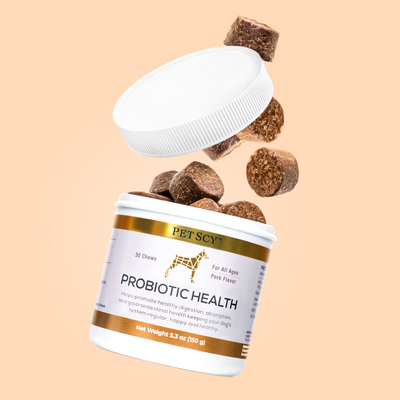
PetScy's Probiotic Health Chews are one option owners may consider for digestive and immune support during a broader plan. They should be used according to the product directions and discussed with a veterinarian when a dog has chronic disease, takes medication, or has recurring vomiting or diarrhea. You can also review signs that may indicate your dog needs probiotics, while keeping the limits of probiotic evidence in mind.
Fish oil can support a veterinary nutrition plan when inflammation is part of the concern, but it isn't a substitute for diagnosis. Supplements can complement a suitable diet and medical treatment. They can't turn an unsuitable or incomplete feeding plan into a safe long-term solution.
Building a Daily Feeding and Management Plan
Sensitive digestion improves when the routine becomes predictable. Start with a food selected for the suspected problem, then change one variable at a time. If your veterinarian has recommended a therapeutic diet or elimination trial, follow that plan precisely rather than adding home remedies or extra proteins.

Make the transition controlled
Move from the old food to the new food gradually over about a week, or longer if your dog reacts easily. Begin with a small proportion of the new formula mixed into the familiar diet, then increase it only when stool, appetite, and comfort remain stable. If symptoms worsen, pause the transition and contact your veterinarian rather than accelerating it.
Feed measured portions at consistent times. A slow-feed bowl can help a dog that gulps meals, while separating dogs during feeding prevents competition and makes it easier to confirm who ate what. Fresh water should remain available, and exercise should be calm around meals rather than immediately strenuous.
Use a written monitoring system
A notebook or phone note can capture information that memory loses. Record:
- Food intake: Include the main diet, treats, chews, table scraps, supplements, and flavored medications.
- Stool changes: Note firmness, frequency, mucus, unusual color, or blood.
- Digestive signs: Record vomiting, gas, gurgling, abdominal discomfort, and appetite.
- Whole-dog changes: Track energy, hydration, body condition, and behavior.
Treats should follow the same logic as the main food. During a controlled trial, use approved treats from the same dietary strategy or reserve part of the daily meal as a reward. In a multi-dog home, feed separately and prevent access to another pet's bowl.
Travel requires preparation. Bring the established food, familiar water if practical, the same bowls, and the symptom record. Don't test a new chew or restaurant scrap during a stressful trip. Consistency reduces the number of explanations if the gut reacts.
Stability is diagnostic as well as therapeutic. A consistent routine helps your dog's digestion and gives your veterinarian better information.
Red Flags and Mistakes That Delay Recovery
The most common mistake is treating every digestive episode as a food allergy. Owners often switch proteins repeatedly, add supplements, return to a bland diet, and then switch again when the next episode appears. That cycle can create dietary confusion and delay testing for parasites, pancreatitis, inflammatory bowel disease, obstruction, or systemic illness.
A bland diet may be reasonable as short-term veterinary guidance for a specific situation, but it isn't automatically complete and balanced for long-term feeding. It also won't explain why symptoms keep returning. If your dog improves briefly and relapses whenever normal food returns, the temporary improvement hasn't established the cause.
Stop experimenting when the pattern changes
Arrange veterinary care when symptoms recur despite a carefully controlled diet, or when your dog loses weight, becomes lethargic, seems painful, refuses food, or shows dehydration. Blood in stool, repeated vomiting, rapidly worsening signs, or suspected access to a foreign object should move the decision away from home observation.
Bring your food labels, treat packaging, medication list, and symptom journal to the appointment. Those details help the veterinarian distinguish a dietary pattern from a broader medical problem.
The central rule is simple: use diet to reduce variables, not to conceal warning signs. Choose a digestible, appropriately formulated food, transition carefully, keep the routine steady, and escalate when the pattern stops looking mild.
PetScy offers veterinarian-formulated products such as Probiotic Health Chews for owners seeking supplemental digestive support alongside a suitable diet and veterinary guidance. Visit PetScy to review its digestive, allergy, skin, dental, calming, and joint-support options, then choose only products that fit your dog's specific needs.