









Evening Primrose for Dogs: Benefits, Dosing, and Safety
Your dog settles beside you, then starts scratching again. Soon they're licking their paws, and you're searching for something that might help without adding another complicated treatment. Evening primrose oil sounds promising, but you need to know whether it's a reasonable option or just another appealing ingredient.
Evening primrose for dogs deserves a cautious, practical discussion. The canine research suggests that selected dogs may benefit, but it doesn't justify treating the oil as an allergy cure. The useful question is whether a veterinarian-supervised trial makes your individual dog more comfortable, without creating new problems.
Table of Contents
- What Evening Primrose Oil Is and Why Dog Owners Consider It
- How GLA Is Believed to Work in Canine Skin
- What the Research Actually Shows in Dogs
- Practical Dosing and How to Introduce the Oil
- Safety, Side Effects, and When to Avoid Evening Primrose
- How Evening Primrose Compares to Alternative Skin Supplements
- A Practical Checklist for Trying Evening Primrose Safely
What Evening Primrose Oil Is and Why Dog Owners Consider It
Evening primrose oil comes from the plant Oenothera biennis and supplies gamma-linolenic acid, usually shortened to GLA. It's a fatty-acid supplement, not a treatment that identifies or removes the cause of itching. Its appeal comes from GLA's potential involvement in inflammation and skin-barrier function.
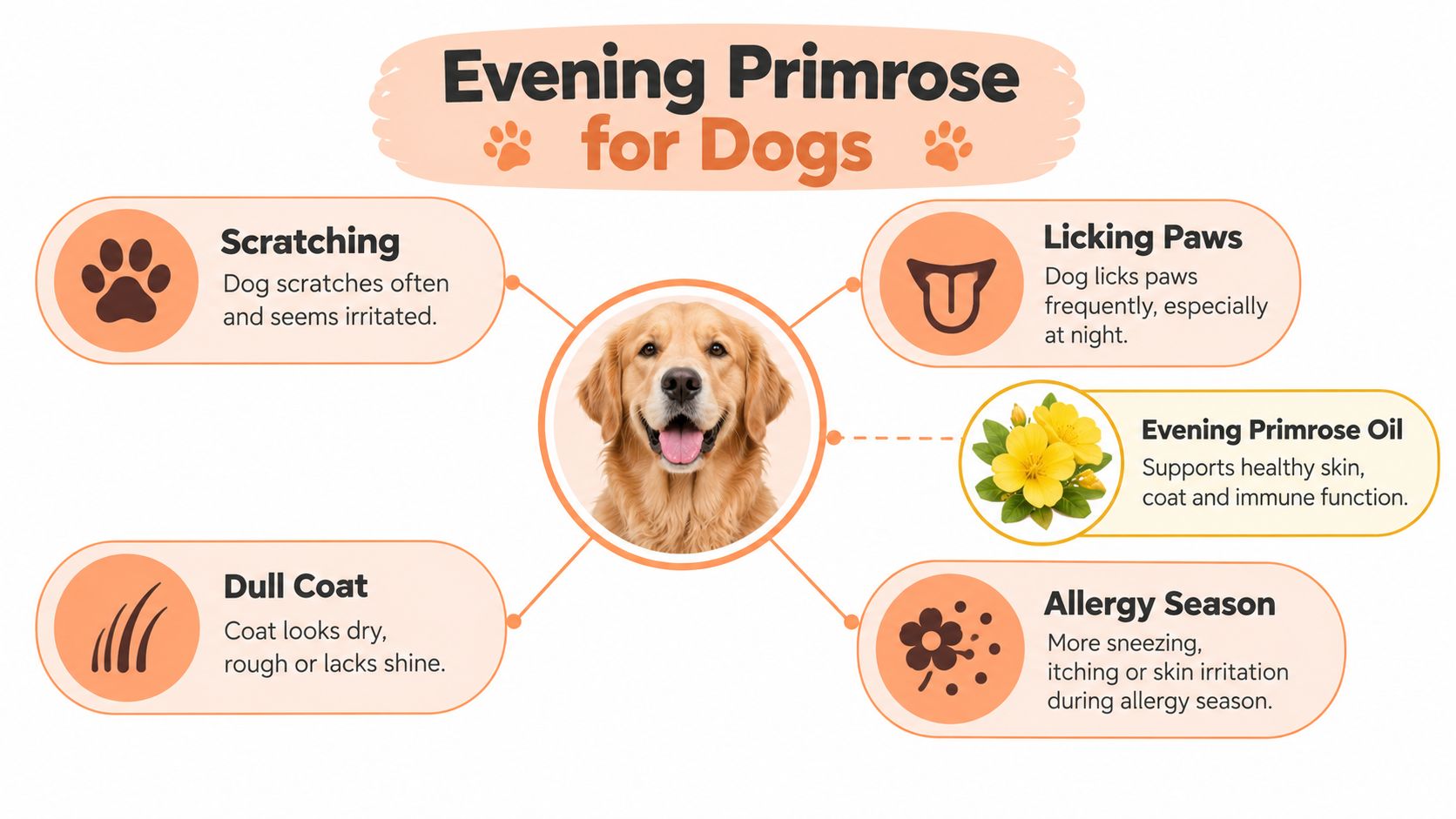
Owners often consider it when scratching, paw licking, or a dry-looking coat becomes difficult to ignore. Those observations are useful, but they aren't diagnoses. A dog that licks their paws needs an explanation for that behavior, not an ingredient associated with skin health.
The visual below groups the concerns that commonly prompt owners to investigate this supplement.
Start With the Problem, Not the Bottle
Before buying anything, describe what you're seeing. "Itchy skin" might mean scratching during rest, chewing a particular paw, or repeatedly licking an irritated area. Clear descriptions give your veterinarian something more useful than a general request for allergy support.
If you're unsure how your dog's symptoms fit together, this guide to recognizing possible allergies in dogs can help you organize your observations before an appointment. Treat it as preparation for a discussion, not confirmation that allergies explain every symptom.
Keep these distinctions in mind:
- An ingredient isn't a diagnosis. Choosing a skin supplement doesn't establish why your dog is uncomfortable.
- A plausible benefit isn't a guaranteed response. A biological explanation can justify investigating an ingredient without proving that it works reliably.
- Support isn't replacement treatment. The best reason to consider evening primrose is a defined role within an existing care plan.
Practical rule: Ask what evening primrose is supposed to improve before asking how much to give.
That question also prevents a common misunderstanding: a more attractive coat isn't necessarily evidence of better itch control. Decide whether comfort, visible redness, or another clearly defined problem is the main concern. Otherwise, almost any small change can feel like success.
How GLA Is Believed to Work in Canine Skin
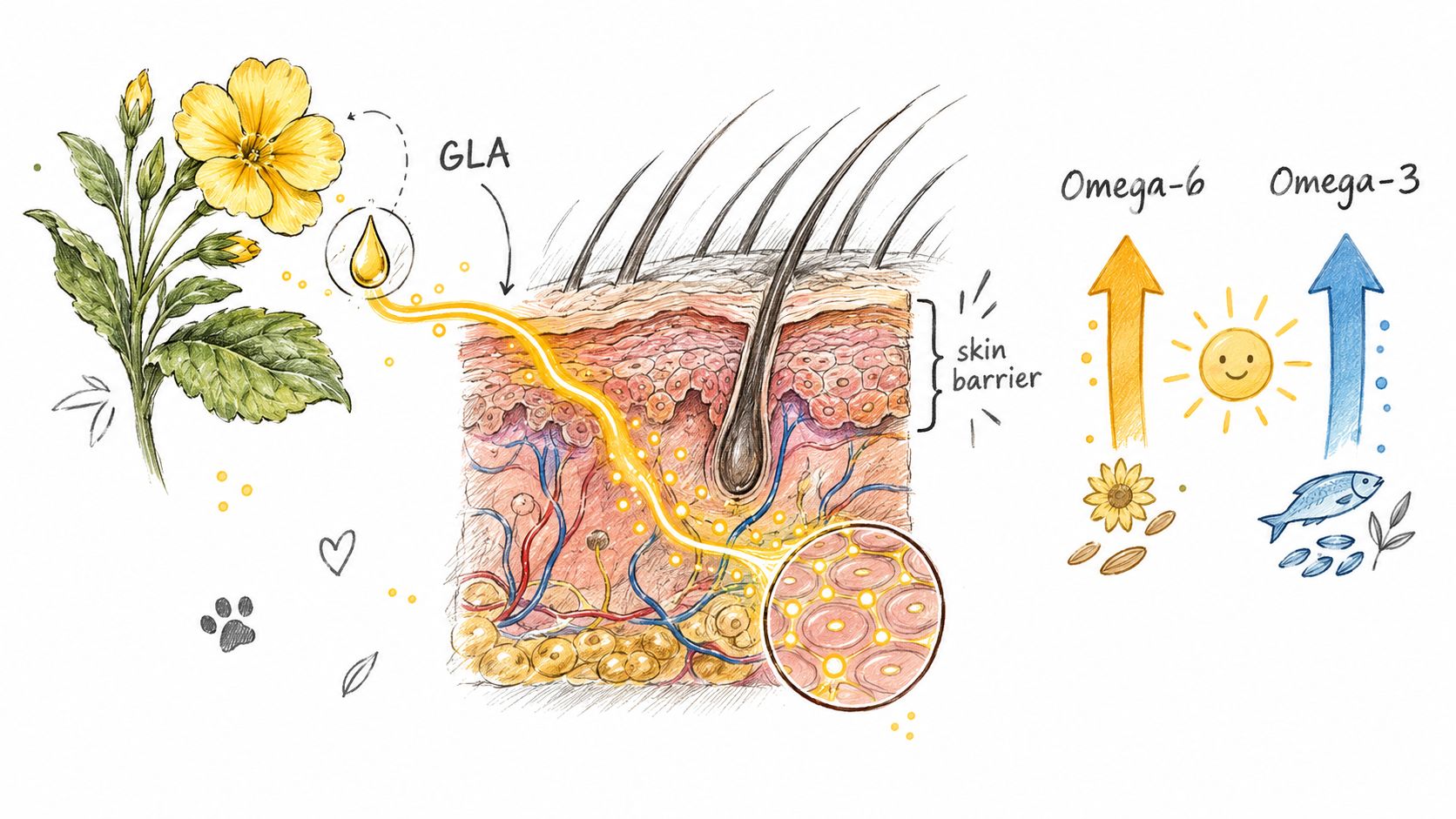
The proposed benefit starts with how a dog's body processes GLA. It can be metabolized to dihomo-gamma-linolenic acid, which participates in pathways that influence eicosanoid signaling. In plain English, these are chemical signals involved in inflammation and skin-barrier function.
Think of inflammation as a fire managed by several people, rather than a switch someone turns off. Some signals may help calm the response, while others can support it. Adding a fatty acid changes the materials available to that signaling system, but it doesn't guarantee the same result in every dog.
The illustration provides a simplified view of that proposed relationship.
Why the Pathway Isn't a Promise
In a double-blind, placebo-controlled crossover study of 35 dogs with nonseasonal atopic dermatitis, treatment significantly improved erythema, meaning redness, (P < 0.05) and increased plasma linoleic-acid concentrations, but arachidonic-acid concentrations also rose significantly (P < 0.005 in one phase), according to the canine evening primrose treatment study.
That combination matters. The researchers observed a favorable clinical change alongside biochemical changes that weren't uniformly anti-inflammatory. It would be misleading to reduce the finding to “GLA turns off inflammation.”
The skin-barrier idea also needs careful interpretation. A barrier-related mechanism gives researchers a reason to investigate the oil, but it doesn't prove that every dry patch reflects a problem evening primrose can address. Nor does a change in blood fatty acids automatically establish meaningful relief.
- The mechanism explains interest. GLA participates in relevant biological pathways.
- The clinical response determines usefulness. Your dog's comfort and skin findings matter more than the ingredient's theoretical potential.
- Individual metabolism complicates prediction. The same supplement needn't produce the same balance of downstream signals in different dogs.
The familiar omega-3 versus omega-6 conversation can make this sound simpler than it is. For an owner, the useful takeaway isn't to label an entire category of fats “good” or “bad.” It's to recognize that a specific formulation needs a specific purpose, and that purpose must be tested against what happens to the dog.
What the Research Actually Shows in Dogs
The clearest caution comes from a double-blinded randomized study of 20 dogs with atopy or idiopathic pruritus, in which each dog received four fatty-acid products for two-week periods: only 5 of 20 dogs (25%) achieved good-to-excellent itch reduction with at least one product, evening primrose accounted for responses in 2 dogs (10% of the cohort), and one dog developed loose stools, as reported in the comparative canine fatty-acid supplement trial.
The overall response figure wasn't an evening-primrose-only success rate. It included responses to any of the tested products. Confusing those results would make the oil look more reliable than the study supports.
Read the Outcome, Not Just the Ingredient Name
The same trial found no dependable relationship between response and age, breed, sex, body weight, disease duration, diagnosis, or intradermal-test reactivity. That means you can't reliably pick a likely responder because your dog resembles a dog someone else described online.
The redness finding discussed earlier and this itch finding also measure different things. Less visible redness can be worthwhile, but it doesn't automatically mean a dog scratches less or rests more comfortably. A useful trial should assess the outcome you want to improve.
These studies support a restrained conclusion: evening primrose may help selected dogs, but the evidence is modest and individual response varies. They don't establish it as a dependable frontline solution.
Evening Primrose Oil vs Common Canine Skin Supplements
This comparison distinguishes what the evening primrose studies address from what they don't establish.
| Supplement | Primary Action | Best For | Evidence in Dogs |
|---|---|---|---|
| Evening primrose oil | Supplies GLA involved in fatty-acid signaling | A selected, veterinarian-supervised skin-support trial | Small canine studies show variable response |
| Omega-3 fish oil | A different fatty-acid approach | Discussing an alternative nutritional strategy | These findings don't establish comparative superiority |
| Borage oil | Another oil-based option to evaluate by formulation | A product-specific discussion, not an automatic substitution | No borage-specific conclusion established here |
| Probiotic blends | A different supplement category | A separately defined digestive or skin-support goal | Evening primrose findings can't establish probiotic efficacy |
A short study also shouldn't become a rigid deadline for your dog's care. Assess a supervised trial over several weeks using consistent observations, rather than assuming benefit from the ingredient alone.
Most importantly, no improvement is a valid result. It tells you the supplement may not deserve a continuing place in your dog's routine.
Practical Dosing and How to Introduce the Oil
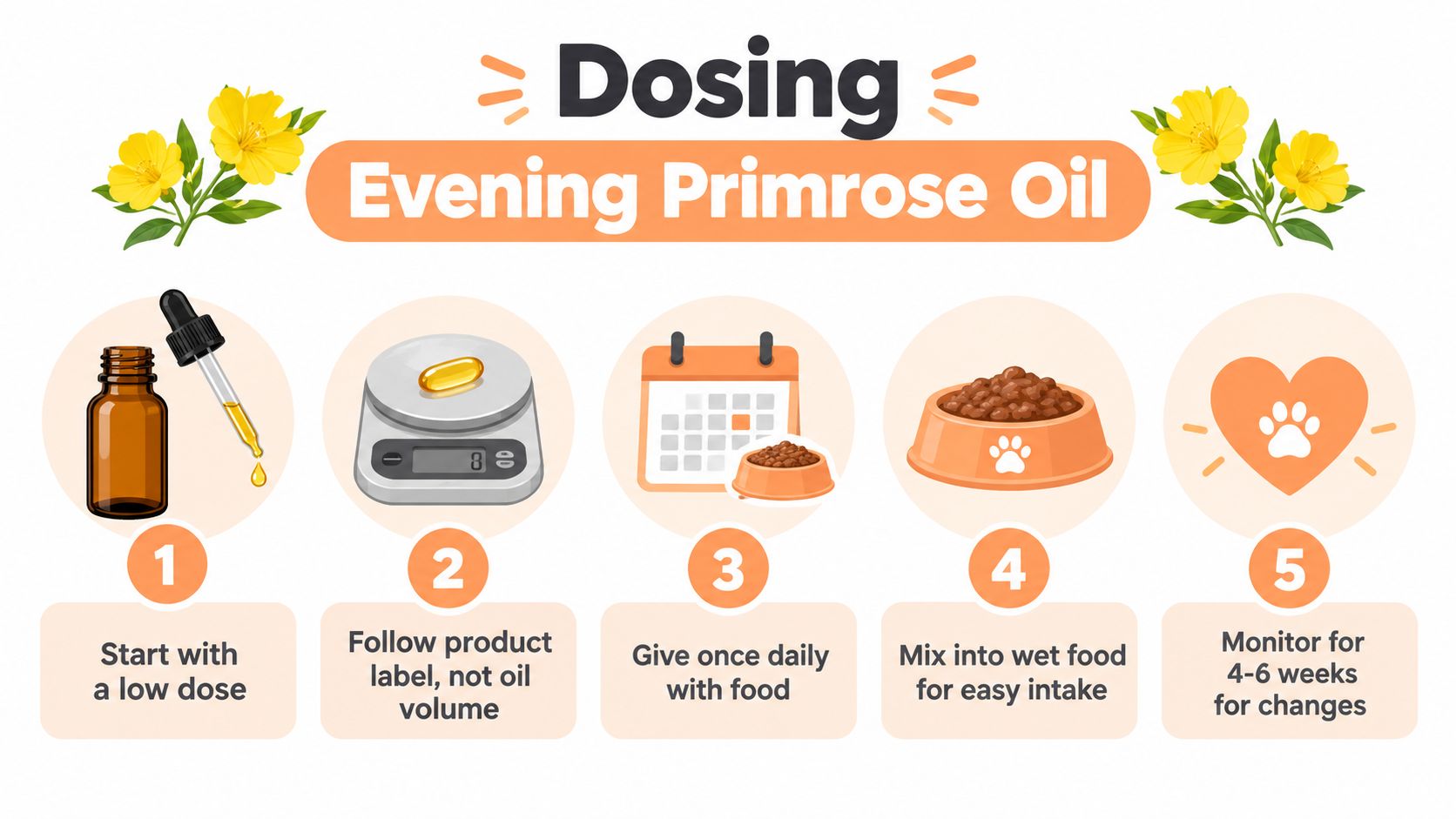
There's no defensible universal dose to offer from these studies. A spoonful of oil isn't a standardized amount of GLA, and formulations can differ substantially in GLA concentration. Dosing should follow a veterinarian-reviewed product specification rather than oil-volume guesswork.
That means a weight-based range copied from an unsourced guide isn't a suitable starting prescription. Your veterinarian needs the actual label, not just the words “evening primrose oil.” If the label doesn't clearly identify what each serving supplies, ask for clarification before using it.
The infographic offers a visual introduction routine, but its schedule shouldn't replace individualized advice.
Take the Label to Your Veterinarian
Bring a photograph of the ingredient panel and feeding directions. Include your dog's current food, other supplements, and medications, so the discussion covers the whole routine rather than a single bottle.
Ask your veterinarian to specify:
- The intended serving. Confirm the product, amount, frequency, and whether any gradual introduction is appropriate.
- How to administer it. If mixing it with food is approved, use a portion your dog reliably finishes so you know whether the serving was consumed.
- What changes require contact. Agree on how to respond to digestive symptoms or worsening skin signs.
- When to reassess. Set a review point rather than leaving the trial open-ended.
For background on a different fatty-acid option, you can find omega 3 benefits for dogs. Use that information to prepare questions, not to calculate a combined oil regimen yourself.
Keep the Introduction Easy to Interpret
Don't introduce a new oil, change the food, and add another skin supplement at the same time unless your veterinarian directs it. If several things change together, you'll struggle to determine which change helped or caused a problem.
| Option Being Considered | What to Clarify Before Combining |
|---|---|
| Evening primrose oil | GLA content and the approved product-specific serving |
| Fish oil | Whether it already has a defined role in the care plan |
| Borage oil | Whether the proposed formulation duplicates or changes the intended approach |
| Probiotic blend | Whether it addresses a separate goal worth assessing independently |
More oil isn't a better test. A consistent, reviewed plan gives you a clearer answer than repeated dose increases.
If your dog refuses the food containing the oil, record that too. A plan that's difficult to administer isn't a practical long-term option, even before you evaluate its clinical benefit.
Safety, Side Effects, and When to Avoid Evening Primrose
“Plant-derived” doesn't mean “safe under every circumstance.” The loose-stool observation in the comparative trial is a reason to watch gastrointestinal tolerance during introduction. It doesn't establish how frequently digestive problems occur across all dogs or products.
The available safety assessment also leaves an important uncertainty: an upper safe-use limit for evening primrose oil hasn't been established in dogs. That isn't evidence that every amount is dangerous, but it isn't permission to increase the dose freely or continue indefinitely.
Situations That Need Veterinary Clearance
A routine-looking supplement deserves closer review when your dog's circumstances make uncertainty more consequential.
- Concurrent medications. Give your veterinarian the complete medication and supplement list rather than trying to screen combinations yourself.
- Upcoming surgery or procedures. Ask the treating team whether to start, continue, pause, or avoid the supplement around the procedure.
- Pregnancy. Don't assume that experience in other dogs establishes suitability during pregnancy.
- Underlying disease. The dog's broader medical needs should guide whether an oil-based supplement belongs in the plan.
- Long-term administration. A short, tolerated trial doesn't establish that indefinite use is appropriate.
These are reasons for professional review, not proof that a specific interaction or complication will occur. That distinction matters because overstating risks can be just as misleading as overstating benefits.
Don't Let a Supplement Delay Diagnosis
Evening primrose should remain an adjunct for selected dogs with pruritic or barrier-related skin problems. It isn't a substitute for investigating parasites, infection, food allergy, or environmental atopy.
For example, if you're treating repeated paw licking as a nutritional issue without knowing its cause, you may be evaluating the wrong intervention. Your veterinarian should first decide what needs treatment and whether supplementary skin support has a useful place alongside it.
Safety boundary: Uncertainty is a reason to involve your veterinarian, not a reason to experiment with larger servings.
If your dog already looks uncomfortable, don't make access to appropriate care depend on whether the supplement eventually helps. Keep prescribed treatment and follow-up arrangements in place. The oil should add a carefully defined trial, not create a waiting period before diagnosis or treatment.
How Evening Primrose Compares to Alternative Skin Supplements
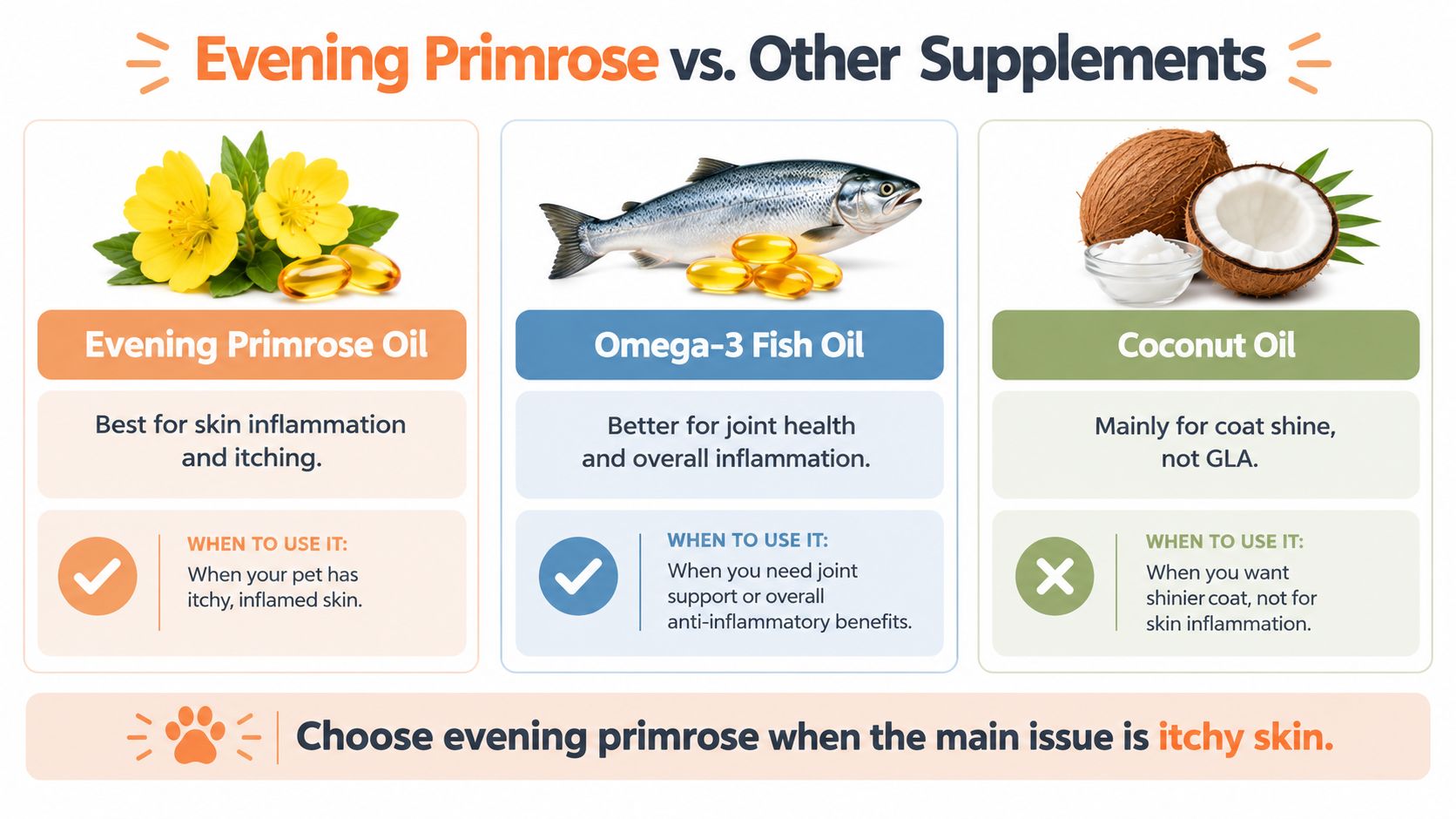
The best comparison begins with your dog's problem, not a ranking of fashionable ingredients. Evening primrose, fish oil, probiotic blends, and topical care aren't interchangeable because their labels mention skin support. Ask what each option is intended to accomplish and what evidence applies to that exact formulation.
The chart below is a simplified orientation aid, not proof that one oil is best for a particular symptom.
Compare the Question Each Option Answers
For evening primrose, the question is whether supplying GLA provides useful additional support for a selected dog's skin problem. For another supplement or topical product, the question may be different. A digestive-support goal, a nutritional goal, and a local skin-care goal require separate evaluation.
| Criterion | Evening Primrose | Omega-3 Fish Oil | Probiotic Blends | Topical Skin Care |
|---|---|---|---|---|
| Primary approach | GLA supplementation | A different fatty-acid strategy | A different biological target | Direct application to the skin |
| Evidence to request | Relevant canine clinical outcomes | Canine evidence for the intended use | Evidence for the specific formulation | Evidence for the ingredients and condition |
| Possible use case | Selected adjunctive skin support | An alternative nutritional discussion | A separately defined support goal | A veterinarian-identified local care need |
| Practical consideration | Label clarity and stool tolerance | Full-regimen review and acceptance | Ingredient review and administration | Correct application and suitability |
The research discussed above doesn't justify declaring fish oil, probiotics, or topicals universally superior. A stronger comparison would need evidence specific to the products, conditions, and outcomes being compared. Marketing categories aren't substitutes for that evidence.
If fish oil is already on your shortlist, this guide to fish oil for dogs with itchy skin can help you frame questions for your veterinarian. Don't interpret the existence of several options as a reason to use all of them.
This video can serve as another discussion aid rather than a personalized treatment recommendation.
Recognize When Evening Primrose Is the Wrong Tool
It's the wrong starting point when you need a diagnosis, when the proposed dose is unclear, or when nobody can explain what improvement would justify continuing. It's also a poor choice if you're using it to avoid reassessing a dog whose current treatment isn't controlling discomfort.
Choose the option that fits the clinical goal and can be evaluated cleanly. Sometimes that means testing evening primrose. Sometimes it means choosing something else, or adding no supplement at all.
A Practical Checklist for Trying Evening Primrose Safely
A useful trial needs a baseline, a stable routine, and a planned decision. Before the first serving, write down what you're trying to change and how you'll recognize a meaningful improvement. Your veterinarian can help choose a consistent pruritus scoring method and interpret the skin findings.
Keep a Simple Observation Record
Use a notebook or phone note, and take photographs in similar lighting when tracking visible changes.
- Itch and paw licking. Record the agreed pruritus score and describe whether licking interrupts rest or ordinary activities.
- Redness and lesions. Note where affected areas are and whether their extent changes.
- Coat appearance. Track it as a separate observation, not a substitute for comfort.
- Stool firmness and appetite. Record tolerance alongside any possible benefit.
- Other changes. Note medication adjustments, food changes, or missed servings that could affect interpretation.
Review the pattern over several weeks at the agreed appointment. Don't rely on your memory of a particularly good day.
Decide What Happens Next
Pause the supplement and contact your veterinarian if vomiting, persistent loose stools, or worsening itch develops. These are practical stop signals, not proof that evening primrose caused the problem. Your veterinarian can assess what happened and whether further care is needed.
If you're still unsure whether supplementation fits your dog's routine, consider the questions in does my dog need supplements before adding another product. Continue evening primrose only when the observed benefit and tolerability justify it.
The decision rule is straightforward: a defined purpose, an approved dose, and a measurable individual response. Without those, there's little reason to keep an uncertain supplement in the rotation.
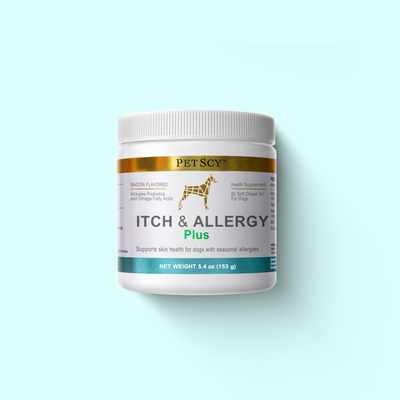
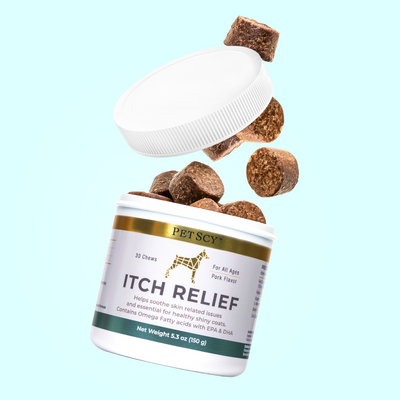
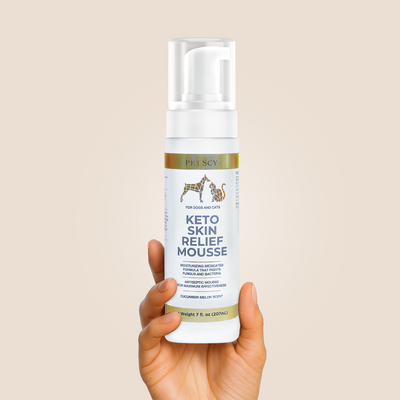
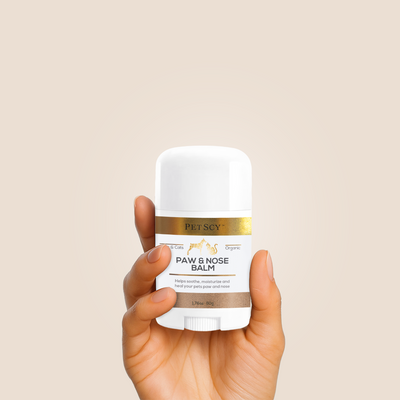
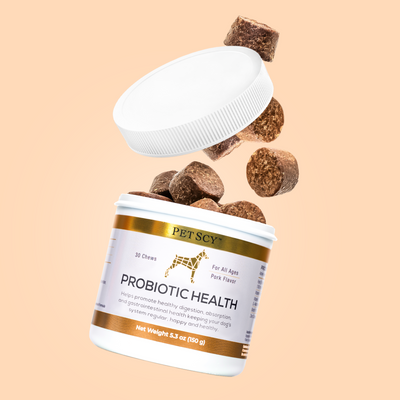
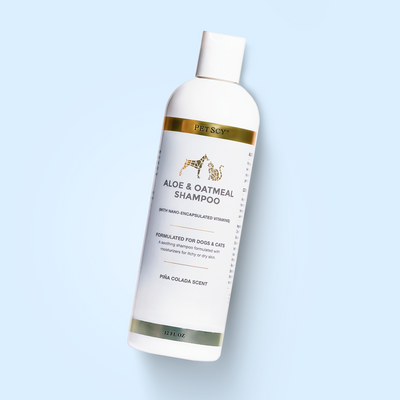
PetScy offers veterinarian-formulated dog supplements and topical care products, including options for skin, coat, and seasonal allergy support. Visit PetScy to review ingredient information and available formats, then bring your shortlist to your veterinarian to decide what belongs in your dog's care plan.