










Immune System Vitamin Supplements for Dogs: What Works
You're standing in the pet-store aisle, comparing chews that promise immune support. Your dog already eats a regular diet, but perhaps they're getting older or scratching more than usual, and you want to help. The labels make adding vitamins sound like an obvious next step.
Before buying immune system vitamin supplements, ask a different question: What nutritional problem would this product solve for my dog? That question helps separate useful supplementation from extra ingredients your dog may not need.
Table of Contents
- What Immune Support Really Means for Your Dog
- How Vitamins Support the Canine Immune System
- What the Evidence Says About Key Vitamins
- Why More Is Not Better for Immune Health
- How to Choose a Safe and Effective Supplement
- Building a Wellness Routine Around Immune Support
- Common Misconceptions About Immune Supplements
- Frequently Asked Questions About Canine Immune Vitamins
What Immune Support Really Means for Your Dog
Consider two hypothetical dogs. One needs a veterinary nutrition review because their diet may be missing essential nutrients. The other eats a diet their veterinarian considers appropriate, but their owner adds an immune chew because the package promises stronger defenses.
Those situations deserve different decisions. In the first, a supplement might address an identified nutritional gap. In the second, the owner needs evidence that adding more provides a meaningful benefit, not merely confirmation that vitamins are important.
Support is different from stimulation
Nutritional adequacy means providing enough of a nutrient for normal function. It doesn't mean supplying the highest amount available or choosing the product with the longest ingredient list.
Think of feeding the immune system like stocking a kitchen. A missing staple can prevent the cook from preparing a meal, but buying extra bags of an ingredient already in the cupboard doesn't automatically improve dinner. The useful purchase depends on what's missing.
The central question: Is this supplement addressing a need, or adding more of something your dog already receives?
That distinction changes how you interpret packaging. A nutrient can participate in immune processes without an additional serving producing better protection. Likewise, a change measured in a laboratory doesn't automatically mean a dog will experience fewer infections.
Start with a reason, not a bottle
A productive conversation with your veterinarian begins with the concern behind your purchase:
- A dietary concern: Bring the food label, feeding amount, treats, and current supplements.
- A health concern: Describe the symptoms that made you think your dog needs immune support.
- A preventive concern: Ask whether there's a nutritional reason to add anything to the existing diet.
Avoid treating itching, low energy, or repeated illness as a diagnosis of vitamin deficiency. Those observations are reasons to seek an assessment, not instructions to select a multivitamin.
The most useful meaning of immune support is therefore modest but important: helping your dog's normal defenses function appropriately. A supplement earns its place when there's a clear reason to use it, a suitable dose, and a sensible way to evaluate the result.
How Vitamins Support the Canine Immune System
The immune system isn't a single switch that a vitamin turns on. It's more helpful to think of a coordinated network, with different nutritional needs across its activities.
In the kitchen analogy, nutrients aren't interchangeable. Extra seasoning can't replace a missing main ingredient, and a fully stocked pantry still needs the right recipe. Vitamins and minerals belong within the whole diet, not in a separate category of ingredients that become more useful because they're labeled for immunity.
Understand the ingredients without assuming a benefit
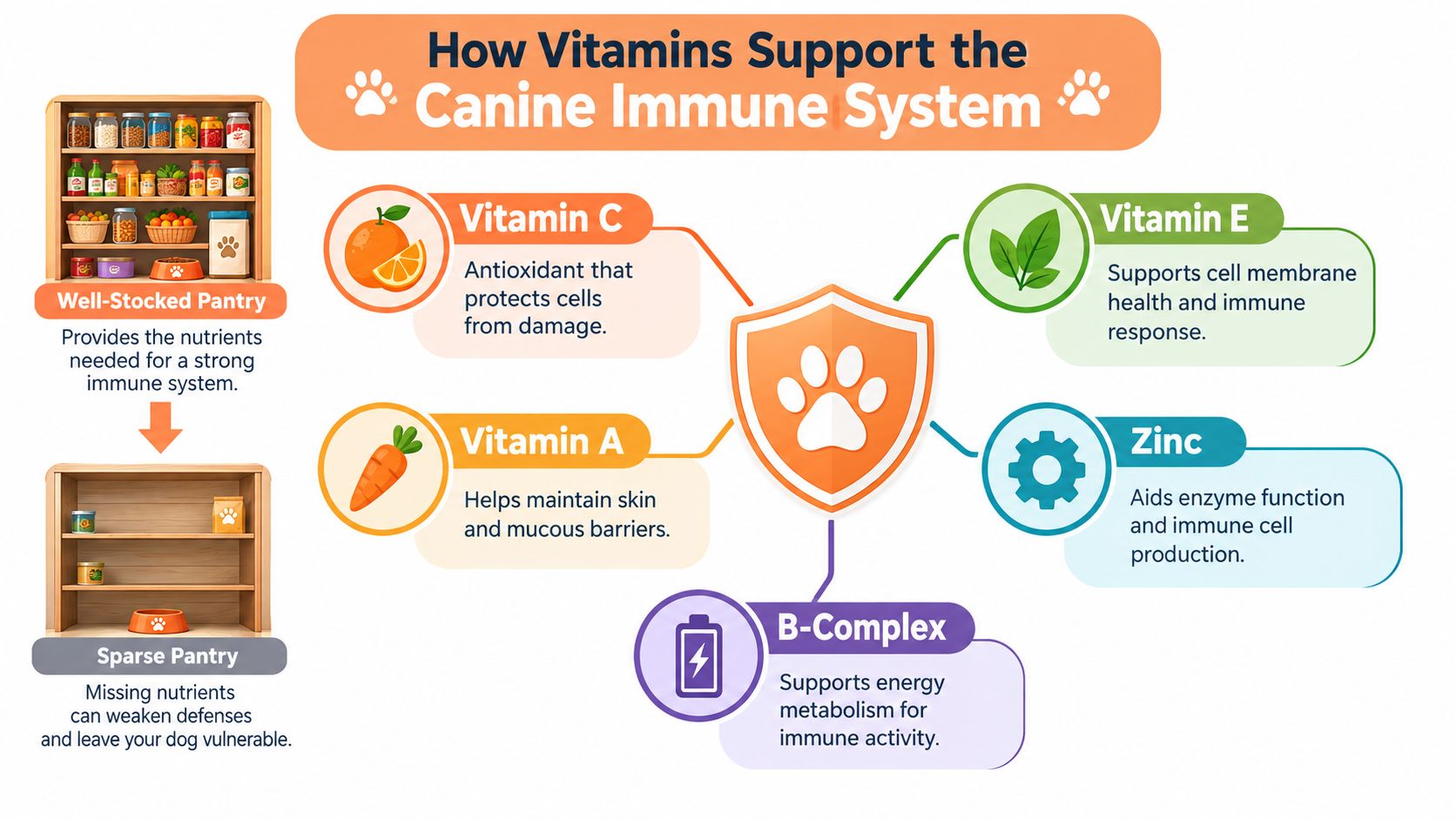
Vitamins A, C, D, and several B vitamins, along with zinc and selenium, participate in immune processes. A nutrient's biological role and a supplement's clinical benefit are different questions. Knowing that an ingredient matters doesn't establish whether your particular dog needs more.
The concept map below illustrates how different nutrients are commonly described in relation to immune function. Treat it as an orientation to ingredient roles, not evidence that every dog needs a supplement containing them.
For practical interpretation, separate the questions:
- What does the nutrient do? This explains why it belongs in nutrition.
- Is intake inadequate? This determines whether an additional source might be relevant.
- What happens when more is given? This requires evidence about supplementation, not just nutrient function.
Vitamin E is a useful example of why these questions shouldn't be collapsed into one. Researchers can examine its effects on immune measurements in dogs, but the findings still need interpretation within the diet and study conditions.
Put feeding before fortification
Before focusing on individual vitamins, review the feeding pattern itself. Get Pet Vet's vet-approved advice on canine feeding provides a starting point for organizing questions about your dog's meals.
Digestive products also deserve their own evaluation rather than being treated as another name for multivitamins. This guide to probiotic supplements for digestive balance can help you distinguish that category when comparing labels.
A useful habit is to translate every ingredient claim into a question for your veterinarian: Does this role indicate a need in my dog, or merely explain why the nutrient is part of normal nutrition? That keeps an appealing ingredient list from substituting for a feeding assessment.
What the Evidence Says About Key Vitamins
Canine evidence matters most when choosing a canine supplement. Human research can explain why scientists investigate a nutrient, but it can't establish a dose or promise an outcome for dogs.
Vitamin A has important human evidence, not a canine shortcut
A World Health Organization review of vitamin A supplementation in children synthesized 47 randomized trials involving approximately 1,223,856 children; across the trials reporting all-cause mortality, supplementation was associated with a 12% reduction in death risk.
That's meaningful evidence in its clinical and population context. It isn't evidence that vitamin A chews prevent infections in well-nourished dogs. The appropriate lesson is about addressing deficiency risk, not transferring human outcomes across species.
Vitamin E shows why study conditions matter
In a controlled vitamin E feeding study in older Beagles, 32 dogs were studied over 17 weeks. Dogs receiving the lowest vitamin E concentration had lower percentages of CD8+ T cells, while the medium-concentration group produced the largest delayed-type hypersensitivity response under one dietary fatty-acid condition.
That skin-test response is a way of examining an aspect of immune function. It isn't the same outcome as preventing naturally occurring illness.
The practical finding is that vitamin E's effects depended on dose and dietary context. The highest concentration wasn't uniformly the most effective across measurements, and fatty-acid composition mattered.
Vitamin D status isn't the same as disease resistance
A canine vitamin D supplementation study found that 50 IU/kg body weight daily increased serum vitamin D status without significantly changing neutrophil, monocyte, or lymphocyte percentages.
That's a research dose, not a home dosing recommendation. The distinction is important: researchers demonstrated a biochemical change, but not a corresponding change in those routine immune-cell measurements.
Vitamin Evidence at a Glance
| Vitamin | What Evidence Shows | Key Caveat |
|---|---|---|
| Vitamin A | Human trials support an important role for supplementation in relevant at-risk populations. | Those findings don't establish infection prevention in healthy dogs. |
| Vitamin E | A canine feeding study found differences in selected immune measurements. | Dose and dietary fatty acids affected the response. |
| Vitamin D | Supplementation raised canine blood vitamin D status. | Higher status didn't significantly change the measured white-cell percentages. |
For other ingredients, including vitamin C, B vitamins, zinc, and selenium, nutritional relevance shouldn't be presented as proof that an added canine product prevents disease. Ask what outcome researchers measured and whether the finished product has evidence relevant to your dog's situation.
Why More Is Not Better for Immune Health
A higher-strength label can feel reassuring. It gives you something concrete to compare when the promise of immune support is otherwise vague.
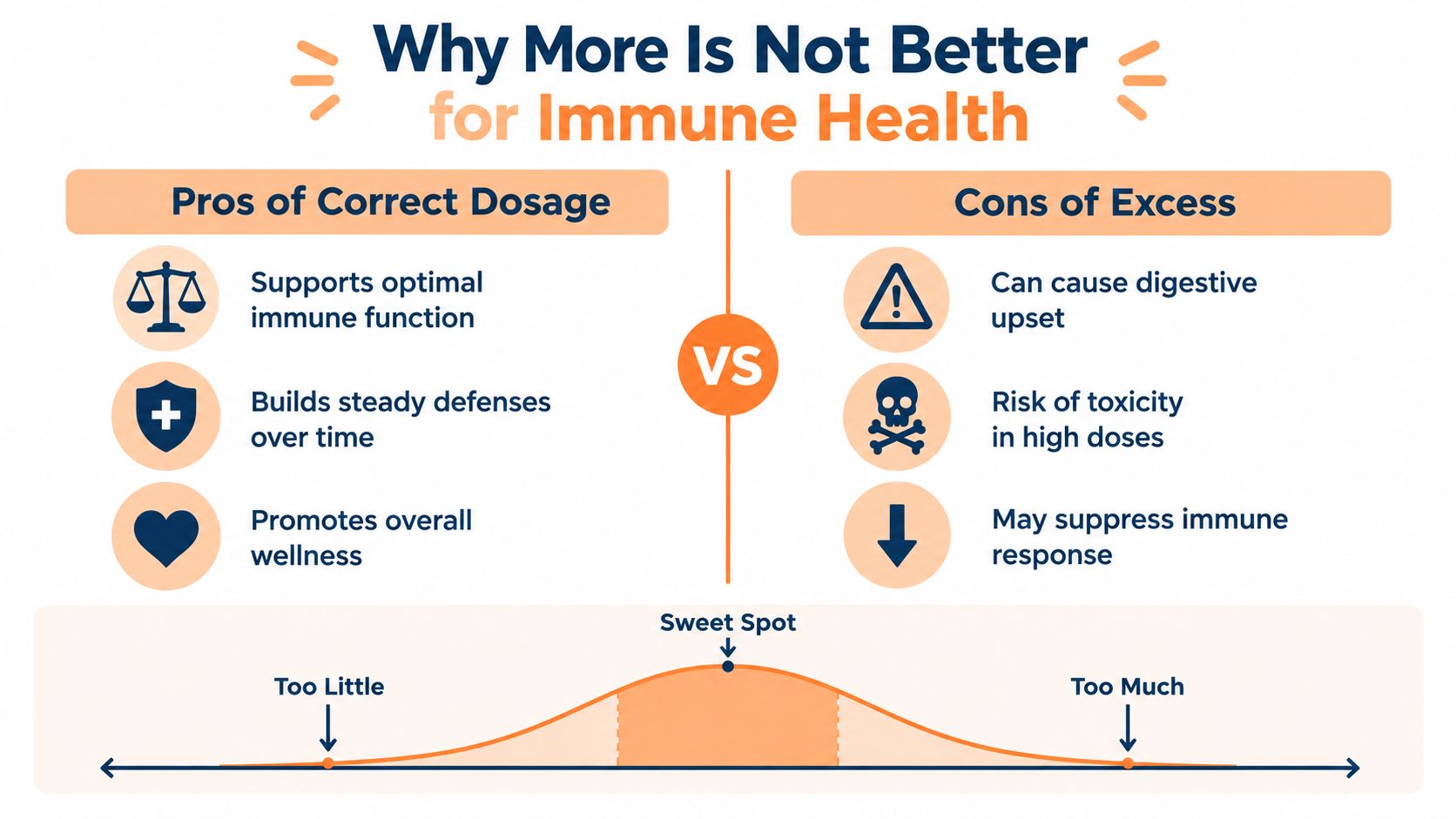
But the largest dose isn't a reliable shortcut to the most useful product. The canine findings above show why dose needs interpretation rather than admiration.
The visual below offers a broad safety reminder. Its “sweet spot” is a concept, not a dosing chart or a demonstrated response curve for every vitamin.
Count the whole feeding routine
Suppose an owner gives a daily food, a skin-and-coat chew, a multivitamin, and an immune-support product. Each package may look reasonable in isolation, but the relevant assessment is the combined intake, including treats and fortified extras.
Create a simple inventory:
- Daily food: Record the exact formula and the amount fed.
- Chews and supplements: Photograph ingredient panels and serving instructions.
- Other additions: Include oils, powders, fortified treats, and products used only occasionally.
Bring the actual labels rather than relying on descriptions such as “a small vitamin chew.” Concentration and serving size matter, and products marketed for different purposes may contain overlapping nutrients.
A serving instruction tells you how the manufacturer intends a product to be used. It doesn't assess everything else your dog consumes.
Human prevention research doesn't justify escalation
In an updated systematic review of vitamin D and acute respiratory infections, 40 studies involving 61,589 participants did not show a statistically significant overall reduction in infections.
Those were human studies, not canine trials. Their relevance here is a caution against broad reasoning: even extensive research on a nutrient doesn't justify assuming that more supplementation reliably prevents infection.
Use the following video as a conversation starter, not as a substitute for an individualized dosing assessment.
Don't assume that a water-soluble vitamin is exempt from dose review, either. Ask your veterinarian which intake limits apply to the specific ingredient and your dog's circumstances rather than using a general vitamin category as permission to increase it.
A supplement plan should explain why the dose is appropriate. “More protection” isn't an adequate explanation.
How to Choose a Safe and Effective Supplement
A useful label lets you understand what you're giving. An impressive front panel isn't enough if the ingredient amounts, intended serving, or manufacturer information remain unclear.
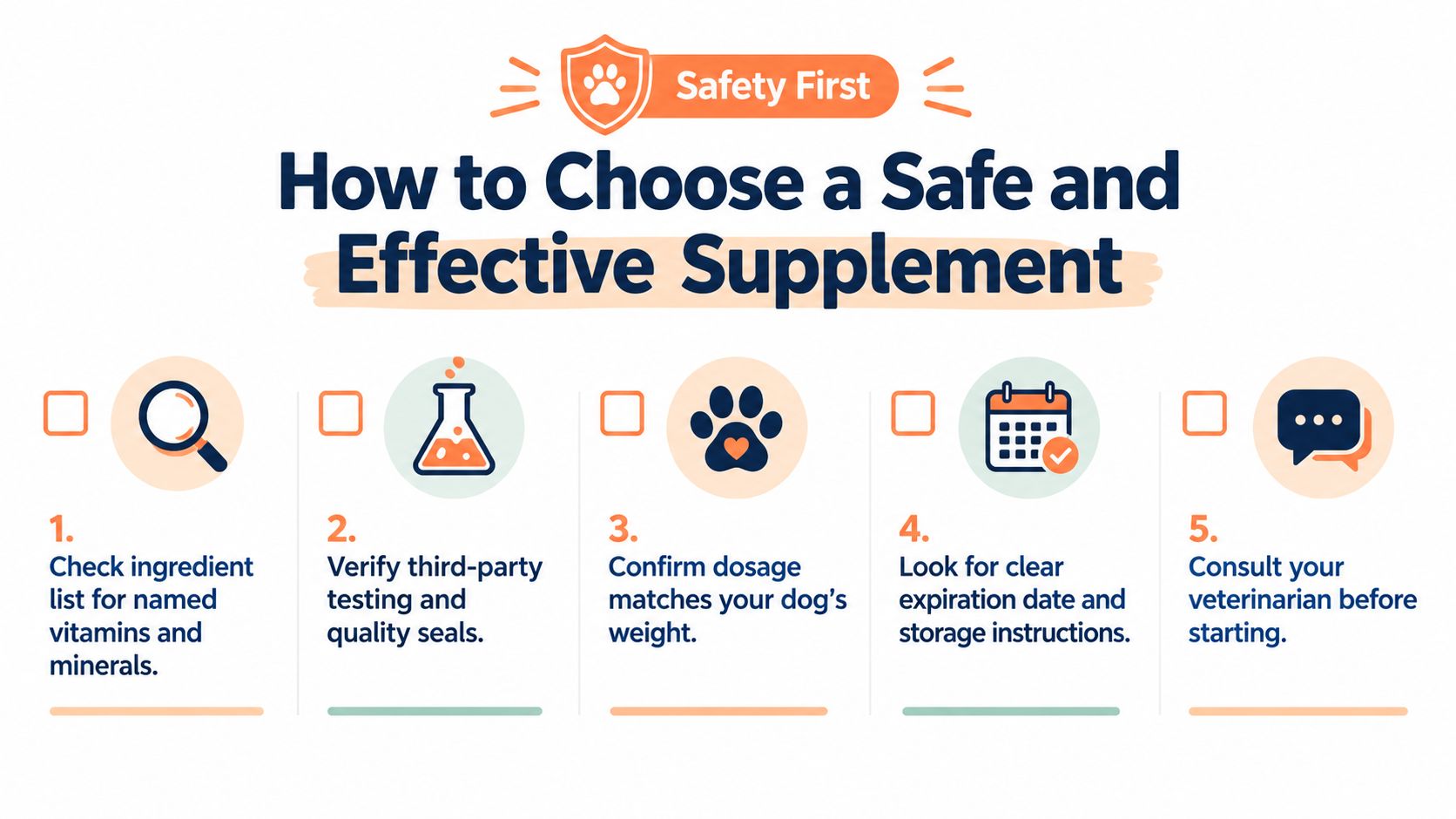
Use this checklist to organize your review before discussing a product with your veterinarian.
Match the product to an identified purpose
Start by completing this sentence: "We're considering this product because…" If the answer is that your dog deserves good health, the purpose needs refining.
This guide to whether your dog needs supplements can help you prepare that discussion. Ask your veterinarian what would make supplementation appropriate, what outcome you should monitor, and when to reassess.
Then examine the product:
- Ingredient identity and amount: Look for named ingredients and clear quantities, not just an appealing blend name.
- Quality verification: Ask what third-party testing covers, whether the manufacturer provides supporting documentation, and how it checks for contamination.
- Quality markers: If a company cites National Animal Supplement Council membership, verify the claim and ask what it means for the product. Don't treat a membership statement as evidence of clinical effectiveness.
- Practical instructions: Check storage directions, expiration information, and how to contact the manufacturer with questions.
Make safety part of the purchase decision
The NIH consumer guide to dietary supplements explains that adverse effects are more likely with high doses, multiple supplements, or supplements taken alongside medicines. That is human guidance, so it shouldn't be used to select canine doses.
For dogs, review medications and existing health conditions with the veterinarian before starting. Puppies, pregnant dogs, seniors, and dogs receiving treatment deserve particular attention rather than assumptions based on an adult dog's package directions.
Never transfer a human dosing rule to a dog. Body weight is relevant, but it isn't the only factor in assessing suitability.
Agree on a response plan before the first serving. If concerning symptoms appear, stop the new product and contact your veterinarian; seek urgent care for breathing difficulty, collapse, or other severe signs. Keep the packaging available so the clinician can identify the ingredients and estimated exposure.
Building a Wellness Routine Around Immune Support
Think of your dog's care as maintaining a house. A targeted repair may be worthwhile, but it doesn't replace checking the plumbing, roof, and electrical system.
A supplement belongs within that larger maintenance plan. Keep conversations about diet, activity, parasite prevention, and routine veterinary care on the calendar rather than allowing a new chew to become the entire wellness strategy.
Make the plan manageable
Start with the meal your dog eats every day. This guide to selecting the right dog food can help you organize feeding questions before an appointment.
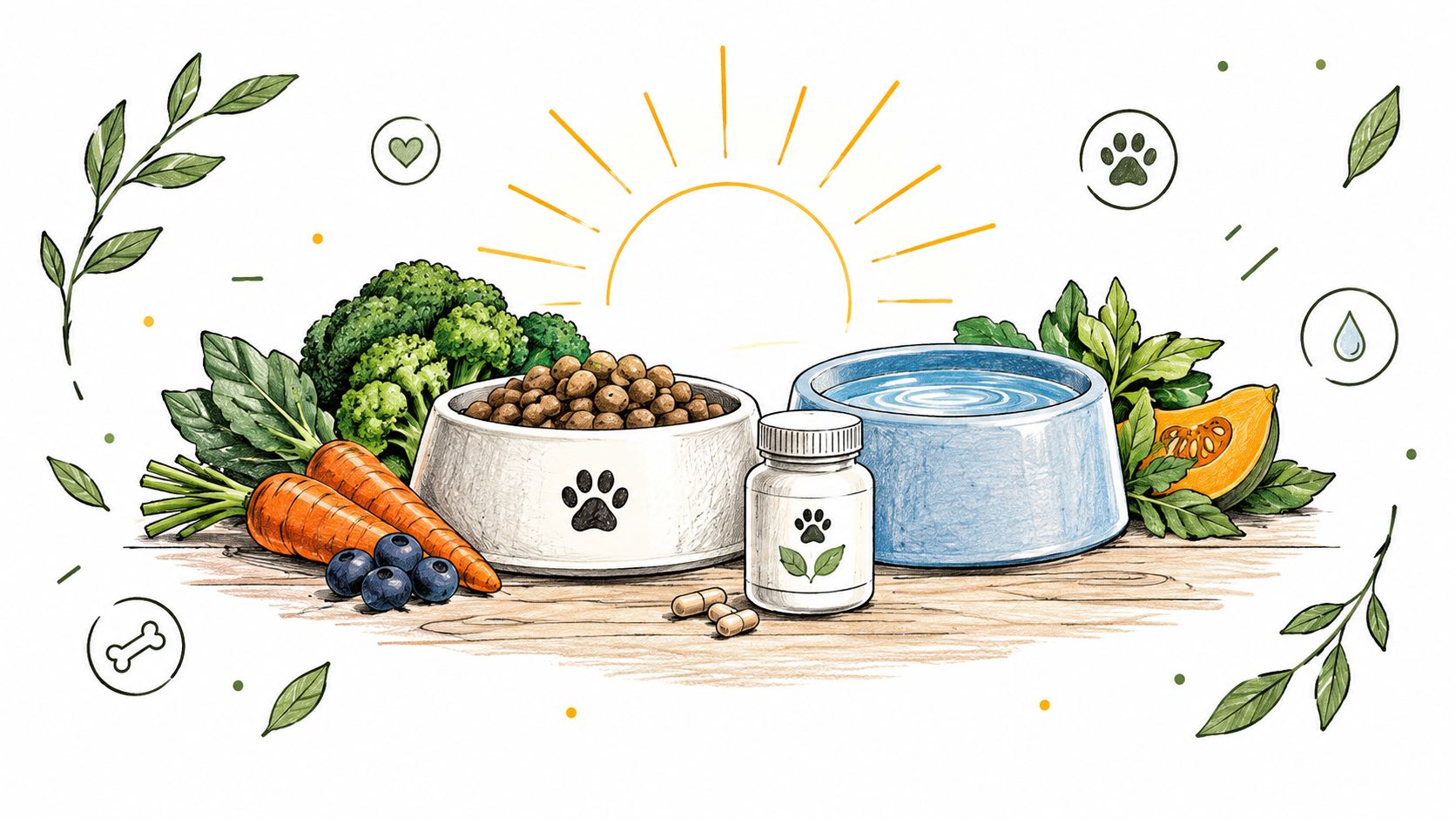
The illustration below represents nutrition and daily care broadly. It isn't a recipe or an instruction to add every pictured ingredient to your dog's bowl.
If your veterinarian recommends a supplement, ask for a routine you can follow consistently. Confirm whether it should be given with food, what to do after a missed serving, and when the plan should be reviewed.
A written note is especially useful when several people feed the dog. It reduces uncertainty about whether someone has already given the daily product.
Keep the routine interpretable: Agree on changes with your veterinarian, and record what changed and when.
Monitor the reason you started
A vague aim such as stronger immunity is difficult for an owner to assess. Choose observations that relate to the original concern without pretending they measure immune function directly.
- Record administration: Note the product, serving, and start date.
- Describe observations: Track appetite, stool changes, itching, or other concerns your veterinarian asks you to watch.
- Keep the review appointment: Discuss whether the original reason for supplementation still applies.
A good week doesn't prove that a supplement prevented illness, just as an illness doesn't automatically prove it failed. Your veterinarian may need dietary information, an examination, or selected tests to interpret what's happening.
The routine should remain useful even if the supplement is eventually stopped. Clear feeding records, coordinated care, and realistic expectations are valuable habits in their own right.
Common Misconceptions About Immune Supplements
“Popular” doesn't mean “proven.” Owners often see widespread supplement use as reassurance, but purchasing behavior isn't a clinical outcome.
U.S. survey data reported dietary supplement use among 60.2% of adults during August 2021 through August 2023, according to the CDC report on dietary supplement use. Those figures cover all dietary supplements, not specifically immune products, and they provide no evidence of effectiveness in dogs.
Support language isn't an infection-prevention promise
The distinction between supporting a normal function and preventing disease matters. In the United States, human dietary supplement structure/function language can appear without proof that the product prevents infection; that regulatory context shouldn't be assumed to describe every animal product.
For your dog's product, read the exact claim and ask what evidence supports it. Don't mentally upgrade “supports immune health” into “will keep my dog from getting sick.”
Other assumptions deserve the same scrutiny:
- Natural means safe: Ask about the actual ingredient, dose, quality controls, and compatibility with medications.
- Veterinarian-formulated means clinically proven: Ask whether research evaluated the finished formula or only individual ingredients.
- More ingredients mean broader protection: Ask what each addition contributes to the identified purpose.
- A testimonial predicts my dog's result: Treat another owner's experience as a personal account, not a controlled comparison.
Be skeptical without dismissing everything
A manufacturer that clearly describes a product's limits gives you something useful to evaluate. You can examine the ingredient quantities, discuss suitability, and decide whether the proposed use makes sense.
By contrast, be cautious when a seller promises protection against unrelated illnesses, avoids dose questions, or implies that veterinary assessment is unnecessary. The strongest purchase decision isn't the most optimistic one. It's the one you can explain using your dog's needs and the product's actual evidence.
Frequently Asked Questions About Canine Immune Vitamins
Does a healthy dog need immune vitamins?
Not automatically. Ask whether the current diet leaves an identifiable need before adding a product.
How can I tell whether my dog has a deficiency?
You can't reliably diagnose one from appearance or a symptom checklist. Your veterinarian can review feeding history and decide whether examination or testing is appropriate.
What if my dog gets too much?
Contact your veterinarian or an emergency veterinary service promptly. Keep the package and report the estimated amount, time of exposure, and your dog's weight. Don't wait for symptoms or induce vomiting unless instructed.
Can I give my dog human vitamins?
Only if your veterinarian approves the exact product and dose. A human label isn't a canine feeding instruction.
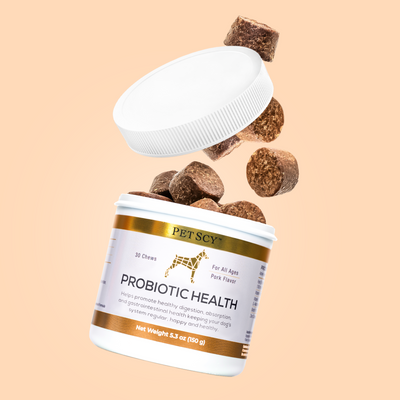
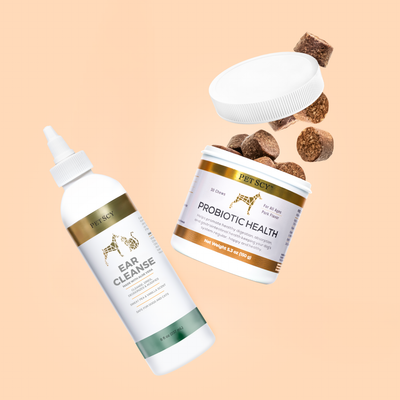
PetScy offers veterinarian-formulated canine supplements, including Probiotic Health Chews and Longevity Joint & Immune Chews, as options to discuss alongside other approaches with your veterinarian. Visit PetScy to review product information, then bring the ingredient label to your dog's next nutrition discussion before deciding what belongs in their routine.