










Why Dog Has Bad Breath: Causes, Red Flags and Fixes
In most dogs, bad breath starts in the mouth, with periodontal disease involving plaque, tartar, and gum inflammation as the most common cause; diet and body-wide illness are less frequent sources. Up to 80% of dogs have some level of periodontal disease by age 2.
But if a dental product makes your dog's breath smell better, does that mean their mouth is healthy? Not necessarily. Odor is a risk signal, not a diagnosis, and the most useful clues often come from how your dog chews, tolerates facial contact, and behaves around food.
Table of Contents
- The Usual Causes Behind Dog Bad Breath
- Why Plaque Turns Into Periodontal Disease
- Diet, Gut and Body-Wide Causes of Odor
- Odor Patterns That Signal Home Care or a Vet Visit
- Home Care Options and Their Limits
- What the Vet Checks During a Dental Exam
- Book a Dental Exam When Odor Persists
The Usual Causes Behind Dog Bad Breath
Most persistent dog bad breath begins with a problem involving the teeth or gums. A temporary smell after scavenging is different from an odor that returns every day or comes with discomfort.
In 2023, 73% of dogs seen at Banfield Pet Hospital were diagnosed with dental-related issues, according to Banfield's dental health report, which analyzed records from more than 3 million pets. That finding concerns dogs receiving care at Banfield, not every dog, but it makes dental disease a sensible starting point.
Common causes of dog bad breath by source
| Cause group | Typical examples | Where the odor starts | Clue that points here |
|---|---|---|---|
| Dental and periodontal disease | Plaque, tartar, gingivitis, periodontitis | Gumline and tissues around tooth roots | Red or bleeding gums, tartar, chewing on one side |
| Oral non-plaque problems | Retained food, tooth-root abscess, fractured tooth, oral tumor | Trapped debris or a mouth lesion | Localized swelling, drooling, facial sensitivity |
| Diet and feeding habits | Scavenging, eating garbage or feces, food residue | Material coating the mouth and tongue | Odor closely follows eating or scavenging |
| GI tract issues | Reflux, gastritis, digestive disturbance | Stomach or esophagus | Vomiting or regurgitation |
| Metabolic and systemic disease | Kidney disease, diabetes, liver disease | Changes in breath chemistry | Increased thirst, weight loss, lethargy |
| Nose, throat or lung infection | Nasal disease, throat infection, pneumonia | Airways or lungs | Nasal discharge, coughing, sneezing |
These clues help you describe the problem, but none identifies the cause on its own. A dog with vomiting can also have dental disease, and clean-looking front teeth don't tell you what's happening around the back teeth or roots.
For comparison, Mouthology's human-focused explanation of how to reduce odor-causing bacteria overnight offers context about bacterial odor. Its human oral-care advice shouldn't be applied to dogs.
Start with the teeth and gums, then consider whether feeding history, digestive symptoms, or changes elsewhere in the body call for a broader examination.
Why Plaque Turns Into Periodontal Disease
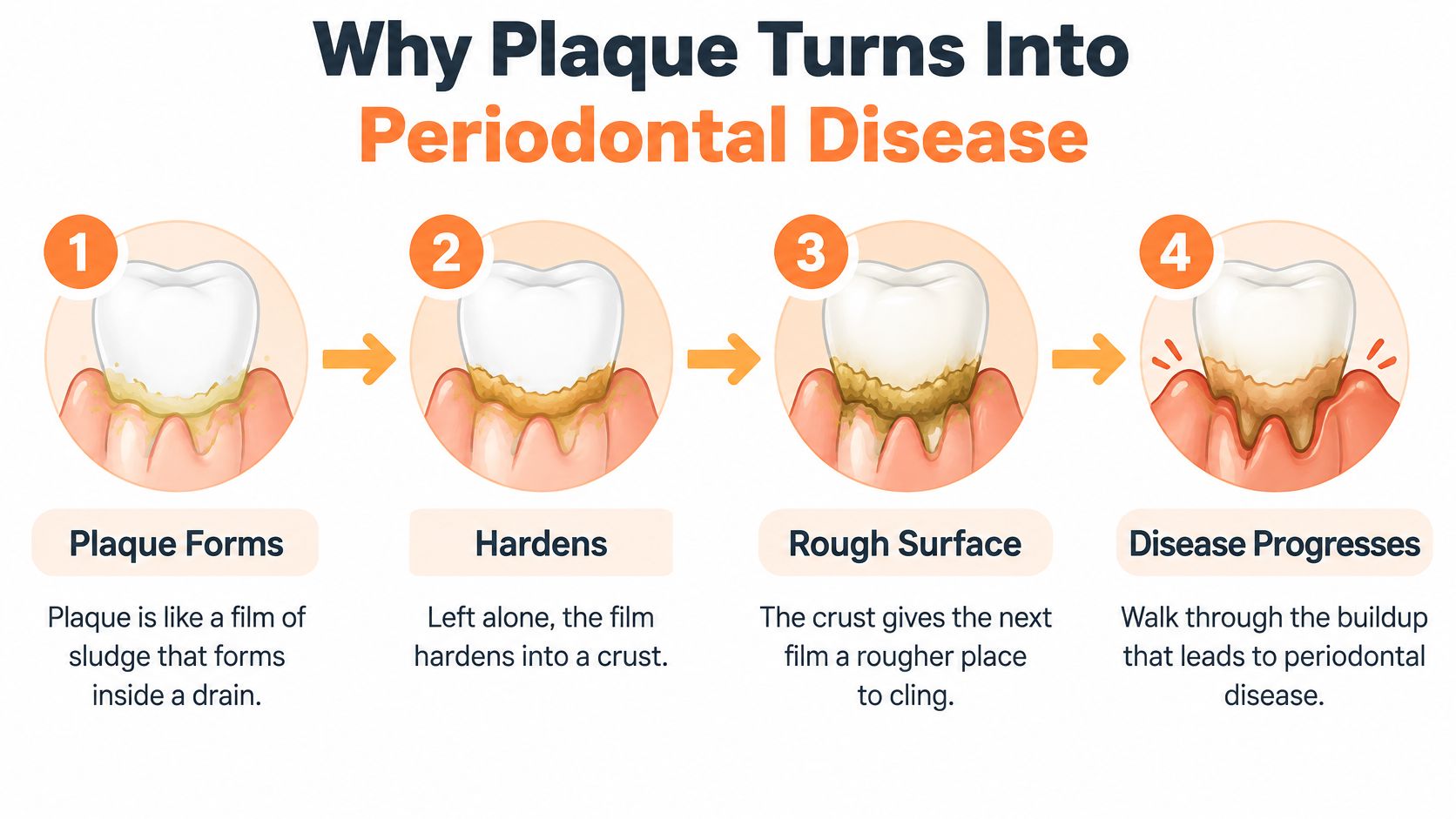
Plaque is like the slippery film that forms inside a drain. Left undisturbed, that film can harden into a crust, and the rough crust gives new material somewhere to cling.
The analogy helps explain why removing food from the mouth isn't the same as controlling dental disease. Plaque is a bacterial biofilm, a community of microbes attached to a surface, rather than leftover dinner.
How the damage develops
- Plaque forms. Bacteria accumulate on tooth surfaces, particularly where teeth meet the gums. The film may be difficult to see before obvious deposits appear.
- Tartar develops. Within days, plaque can mineralize into hard tartar, also called calculus. Its rough surface retains more plaque.
- Gums become inflamed. Bacteria multiply near and below the gumline, producing compounds including hydrogen sulfide, ammonia, and acids. These contribute to odor and gum irritation.
- Supporting tissues deteriorate. Gingivitis can progress to periodontitis, which destroys the gum, ligament, and bone that support a tooth.
The sequence is illustrated below.
The Merck Veterinary Manual reports that up to 80% of dogs have some level of periodontal disease by age 2 and lists halitosis, plaque, calculus, inflamed or bleeding gums, periodontal pockets, bone loss, loose teeth, and tooth loss among the clinical signs.
Age and anatomy affect risk. A review of canine periodontal evidence in the American Journal of Veterinary Research cites a 2009 JAVMA review estimating that approximately 75% or more of dogs develop some degree of periodontitis by age 4, with prevalence increasing with age and decreasing as body weight increases.
Crowded teeth in toy breeds create tight spaces that retain plaque. Short-muzzled dogs may also have tooth positioning that complicates cleaning, so an individualized dog dental hygiene routine matters more than assuming a young or small dog has little risk.
Persistent odor can come from bacteria beneath the gumline, not just buildup on the visible tooth surface.
Diet, Gut and Body-Wide Causes of Odor
A sudden smell after your dog raids the garbage has a different context from unexplained odor accompanied by increased thirst. Timing and accompanying symptoms help a veterinarian decide what to investigate.
Don't try to identify an organ disease by sniffing alone. Different conditions can produce overlapping smells, and owners describe the same odor differently.
Food and digestive sources
Scavenged material, feces, and strongly scented food can temporarily affect breath. Record meals, treats, chews, table scraps, and anything your dog may have found outdoors rather than noting only the brand of kibble.
A guide to selecting the right dog food can help you review feeding choices, but switching food shouldn't substitute for investigating persistent odor. A smell that continues between meals needs more explanation than a recent treat.
Reflux or other stomach and esophageal problems become more relevant when bad breath accompanies vomiting, regurgitation, or difficulty eating. A veterinarian starts with the history and physical examination, then decides whether imaging or other digestive testing is appropriate.
When breath chemistry changes
The Journal of Small Animal Practice discussion of canine halitosis identifies non-dental sources and describes how kidney dysfunction, diabetes, and liver disease can alter breath odor.
- Kidney dysfunction: An ammonia-like or uremic smell may accompany increased thirst, altered urination, poor appetite, or lethargy. Blood chemistry and urinalysis help assess kidney function.
- Diabetes: Sweet or fruity breath can reflect ketones, particularly when thirst, frequent urination, and weight loss are present. Blood glucose and urine testing help guide assessment.
- Liver disease: An unusual musty odor, sometimes called fetor hepaticus, may occur alongside poor appetite, vomiting, lethargy, or yellow tissues. Testing may include liver enzymes and additional liver-function assessment.
These aren't conditions to treat with extra brushing. An unusual odor plus changes in drinking, urination, weight, or energy warrants prompt veterinary evaluation, with tests selected from the examination rather than from the smell alone.
Odor Patterns That Signal Home Care or a Vet Visit
Bad breath deserves more attention than a cosmetic complaint. A 2026 study of 12,753 owner-reported canine health questionnaires found periodontal disease in 50.5% of dogs, with halitosis associated with approximately twice the odds of periodontal disease and resistance to head touching also associated with increased odds.
Those associations don't prove that a particular dog has periodontitis. They do support taking odor and behavior seriously together.
Eating normally is weak reassurance. A dog may continue eating despite significant oral disease, so watch how they eat: dropping kibble, chewing on one side, hesitating over harder food, or moving away when you approach their face can be more informative than an empty bowl.
Triage: which odor pattern needs which action
| Pattern | Signs present | Recommended action |
|---|---|---|
| Mild, stable odor | No other signs, normal eating behavior, healthy-looking gums | Begin daily home care and arrange a recheck at the next wellness visit; book sooner if it persists |
| Persistent odor | Continues despite consistent daily cleaning | Book a dental examination |
| Oral pain or bleeding | Bleeding gums, tartar, loose teeth, reluctance to chew | Arrange a veterinary visit within days, sooner for significant pain or reduced eating |
| Systemic change | Sudden odor with increased thirst or urination, vomiting, or weight loss | Seek a prompt veterinary visit; bloodwork may be needed |
| Urgent facial or airway signs | Facial swelling, nasal discharge, difficulty swallowing | Contact the clinic for same-day care; breathing difficulty requires immediate emergency care |
Observe without forcing the mouth open
If your dog is comfortable, gently lift the lip and compare what you see with examples of healthy dog gums. Look for a change from their usual appearance, because normal pigmentation can make color alone misleading.
Stop if your dog pulls away, stiffens, growls, or appears painful. Don't repeatedly test a sore area to confirm that it hurts.
Decision rule: A fresher smell doesn't cancel out bleeding, altered chewing, facial sensitivity, or swelling.
These patterns guide the urgency of care; they don't establish a diagnosis. When you call, describe both the odor and the accompanying behavior so the clinic can help prioritize the appointment.
Home Care Options and Their Limits
Home care targets plaque on accessible tooth surfaces. It can support cleaner teeth and fresher breath, but it can't restore destroyed periodontal support, treat an infected root, or correct systemic illness.
Comfortable positioning and dog-specific toothpaste are useful starting points.
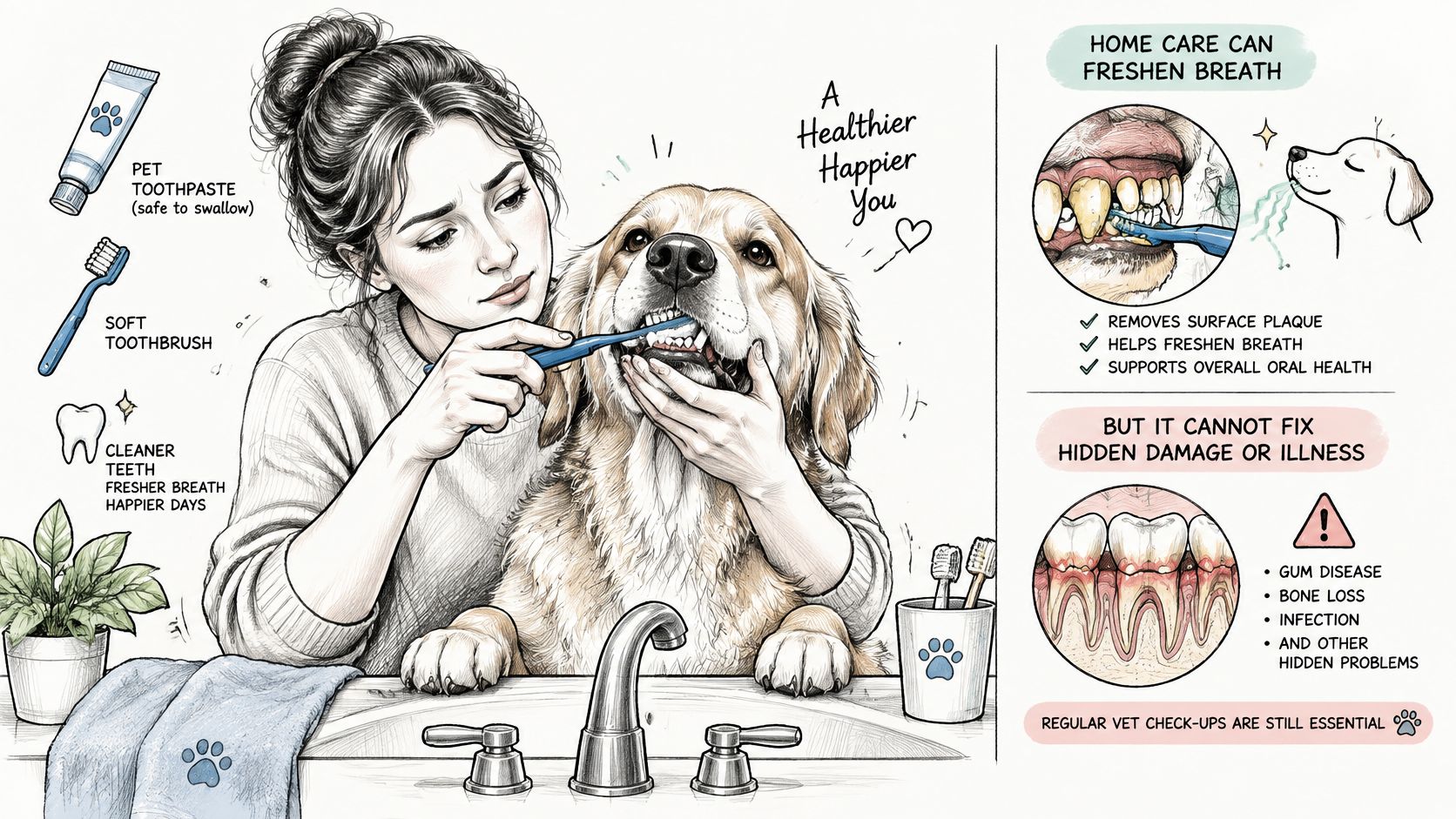
Start with brief, calm sessions, allowing your dog to accept lip lifting before introducing a soft dog toothbrush. Gently clean the outer tooth surfaces along the gumline, without forcing the jaws apart or scrubbing painful tissue.
Daily mechanical cleaning directly disrupts biofilm, while additives and powders are adjuncts rather than replacements for treatment, as discussed in the American Journal of Veterinary Research paper on canine oral malodor. A textured wipe can help remove loose debris when brushing is difficult, but don't scrape hard tartar with household instruments.
Choose an option by its job
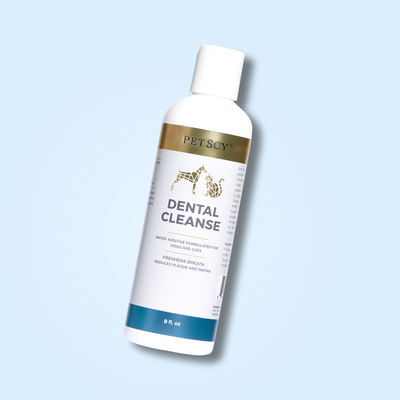
PetScy offers Dental Finger Wipes, Dental Cleanse, and Dental Powder as options alongside brushing, with different roles in a home routine.
At-home options for dog breath and their limits
| Option | What it does | Limit |
|---|---|---|
| Daily tooth brushing | Mechanically removes plaque from accessible surfaces | Requires training; doesn't clean periodontal pockets or remove established tartar |
| Dental Finger Wipes | Wipe teeth and remove loose debris between brushing sessions | Won't remove hardened tartar |
| Dental Cleanse water additive | Supports fresher breath and oral hygiene | Adjunct only; doesn't treat periodontal pockets |
| Dental Powder | Formulated to target tartar buildup and halitosis | Doesn't replace professional cleaning or assessment |
| Human toothpaste or household antiseptics | Aren't appropriate substitutes for canine dental products | May contain unsafe ingredients; use dog-specific products |
For a visual demonstration to discuss with your veterinary team, watch the following video.
Don't use mouth handling as a training exercise when your dog appears painful. Persistent odor or visible tartar calls for an examination, not a stronger-smelling product or more aggressive scrubbing.
What the Vet Checks During a Dental Exam
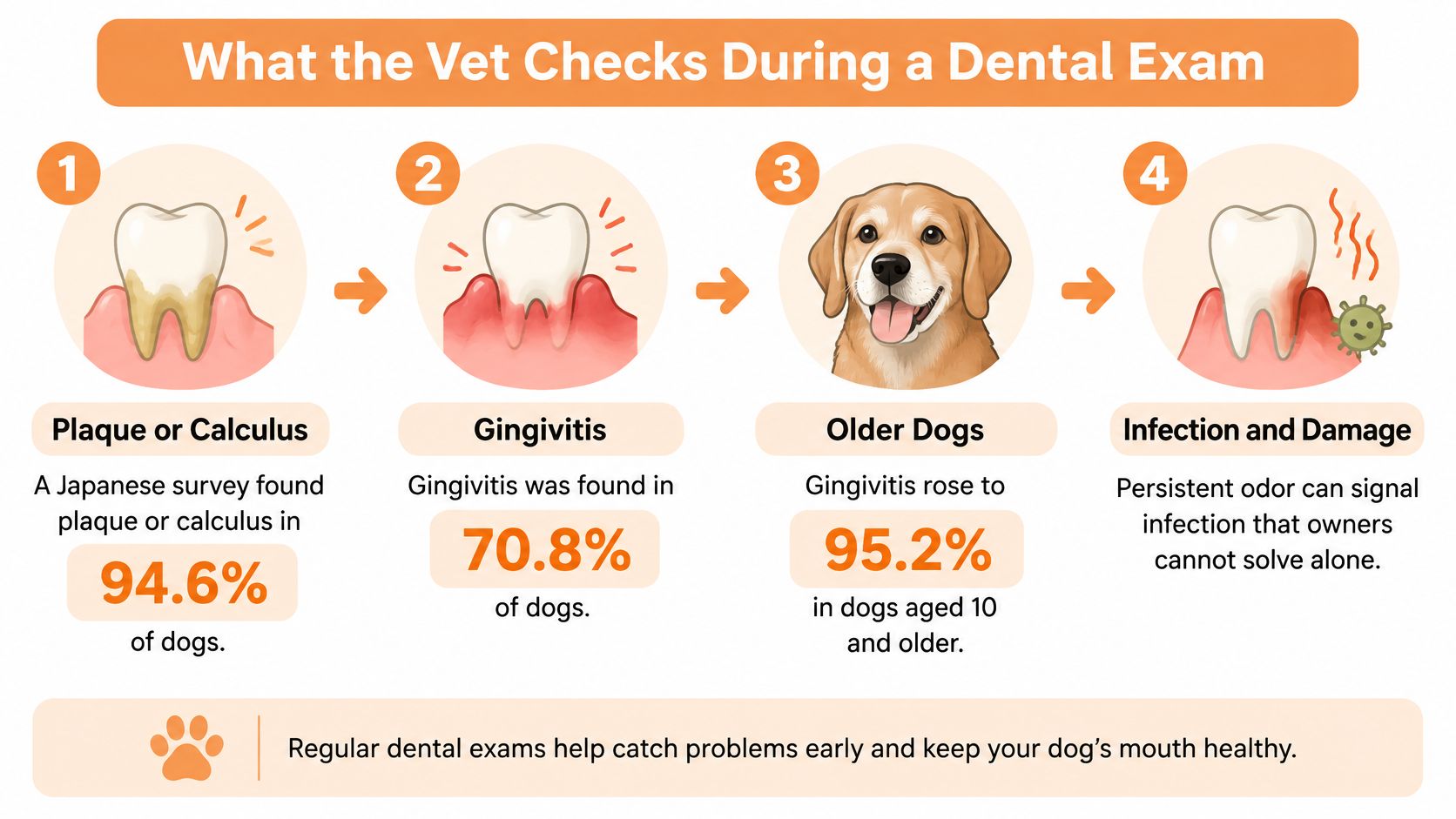
A Japanese veterinary nursing survey reported plaque or calculus in 94.6% of dogs and gingivitis in 70.8%, with gingivitis reaching 95.2% among dogs aged 10 years or older. Those findings describe the surveyed dogs, but they illustrate why an oral assessment deserves attention, especially in older animals.
An awake look inside the mouth is a starting point, not a complete assessment of tooth roots and supporting bone. The examination may involve the following checks.
- Review the history. The veterinarian asks when the odor began and about diet, medications, drinking, urination, vomiting, and chewing to distinguish local from broader concerns.
- Examine the lips, gums, teeth, and tongue for deposits, redness, bleeding, fractures, foreign material, and abnormal tissue.
- Measure periodontal pockets. Probing assesses spaces around teeth that an owner can't evaluate by looking.
- Take dental radiographs when indicated to assess tooth roots, bone loss, and disease hidden beneath the gums.
- Select laboratory tests. Bloodwork, urinalysis, or glucose testing may be appropriate when systemic disease is suspected; preanesthetic assessment may also require testing.
- Assess any mass and recommend imaging or biopsy when its appearance alone can't establish what it is.
- Agree on treatment. Findings may support scaling, polishing, treatment of damaged teeth, or extractions, with pain control and follow-up suited to the dog.
Why an awake inspection has limits
A complete periodontal examination and dental radiographs generally require general anesthesia, with airway protection and monitoring, rather than restraining an awake dog. Your veterinarian should explain the proposed procedure and how your dog's health affects planning.
Mild visible tartar doesn't establish mild disease. Root abnormalities, pockets, and damaged supporting tissues can explain persistent odor even when the exposed crowns look relatively clean.
Book a Dental Exam When Odor Persists
You don't need to identify the exact smell before calling the clinic. A clear account of what changed and how your dog behaves is more useful than deciding whether the odor resembles sulfur, garbage, or ammonia.
Use these steps to prepare without postponing care.
- Start a symptom log. Record when you notice the odor, whether it follows meals, and changes in drinking, eating, chewing, or behavior. Continue while awaiting the appointment, but don't delay a call to collect more observations.
- Look gently at the lips and gums if your dog allows it. Note visible buildup, bleeding, swelling, or a broken tooth without poking, scraping, or forcing the mouth open.
- Book the examination. Persistent odor despite consistent care deserves assessment; pain, swelling, difficulty swallowing, or systemic changes warrant prompt contact.
- Bring the log, medication and supplement list, and details of food, treats, chews, and scavenging.
- Ask about the diagnostic plan. Find out whether periodontal probing, dental radiographs, laboratory testing, or assessment of an abnormal growth is appropriate.
- After treatment, agree on a manageable home routine and a professional recheck plan.
Before the appointment: Don't introduce several new breath products at once. Tell the veterinarian what you already use and whether it changed the odor or your dog's comfort.
Once painful or diseased areas have been addressed, brushing and suitable adjuncts can become part of maintenance. Choose a routine your dog tolerates and your veterinarian considers appropriate, rather than using scent as the measure of success.
Bad breath is a message, and the vet's exam is how you read it. If the odor keeps returning, make the booking rather than continuing to guess.
PetScy offers dental wipes, a water additive, and dental powder to support everyday canine oral hygiene alongside veterinary care. Visit PetScy to explore these options and discuss which, if any, fits your dog's routine after persistent odor has been assessed.