










Why Is My Dog Scratching Without Fleas
You've checked the usual places, combed through your dog's coat, and found no obvious fleas. Yet your dog keeps scratching, licking their paws, rubbing their face, or chewing at one stubborn patch of skin. It's frustrating to watch, especially when every quick fix seems to help for only a short time.
The answer to why is my dog scratching without fleas usually isn't a single alternative parasite. It may involve an allergy, damaged skin, yeast or bacterial overgrowth, pain, or a combination of problems that reinforce one another. Understanding that layered pattern helps you observe your dog more accurately and gives your veterinarian better information to work with.
Table of Contents
- The Hidden Drivers of Canine Itch
- Allergies and Environmental Triggers
- Secondary Infections and Skin Barrier Disruption
- Pain, Behavioral, and Less Common Causes
- At-Home Checks and Veterinary Red Flags
- Supportive Care and Barrier Repair Strategies
- Building a Proactive Skin Health Routine
The Hidden Drivers of Canine Itch
Consider a dog named Milo. His family inspected his coat, used a flea comb, and saw no insects or flea dirt. Milo still scratched at night, licked his front paws, and rubbed his muzzle against the carpet. His skin looked almost normal at first, but the fur between his toes had darkened from repeated licking, and one ear smelled faintly musty.
That pattern matters because scratching is a symptom, not a diagnosis. Veterinary reviews describe chronic pruritus, or itch, as usually arising from inflammatory skin disease, particularly hypersensitivity disorders, rather than fleas alone. Environmental allergens, food reactions, contact irritation, and inflammatory changes can activate the skin's itch pathways even when no parasite is visible. A veterinary review of chronic canine pruritus explains why non-flea itch can involve several mechanisms, including pathways that don't respond well to antihistamines alone.
A dog may also begin with one problem and develop another. An allergy can weaken the skin barrier. Scratching then creates tiny breaks, moisture accumulates around paws or skin folds, and yeast or bacteria multiply. The infection becomes an additional source of inflammation, making the original itch feel much worse.
Practical rule: Don't ask only, “What is biting my dog?” Ask, “What is inflaming the skin, what is amplifying that inflammation, and where is the discomfort located?”
This is why a flea product may fail even when it's being used correctly. Flea allergy dermatitis remains possible if an allergic dog has been bitten and groomed away the evidence, but persistent itch also calls for a wider differential diagnosis. Veterinary workups commonly consider parasites first, then infections, allergies, and less common causes such as immune-mediated or neoplastic skin disease. Merck Veterinary Manual's overview of canine pruritus includes uncommon possibilities such as pemphigus foliaceus and cutaneous epitheliotropic lymphoma when symptoms are chronic or resistant to treatment.
The useful shift is from a binary question, fleas or allergies, to a sequence of observations. Note where your dog scratches, whether the problem is seasonal, whether the skin smells or feels greasy, and whether your dog seems painful or generally unwell. Those clues can reveal which layer needs attention first.
Allergies and Environmental Triggers
Allergies are a leading explanation for intense itching without visible fleas. In an allergic dog, the immune system reacts too strongly to a substance that would ordinarily be harmless. Environmental atopy may involve pollen, dust mites, mold, or other airborne and household exposures. Food allergy involves an immune response to a dietary protein, while contact dermatitis develops where the skin touches an irritating substance.
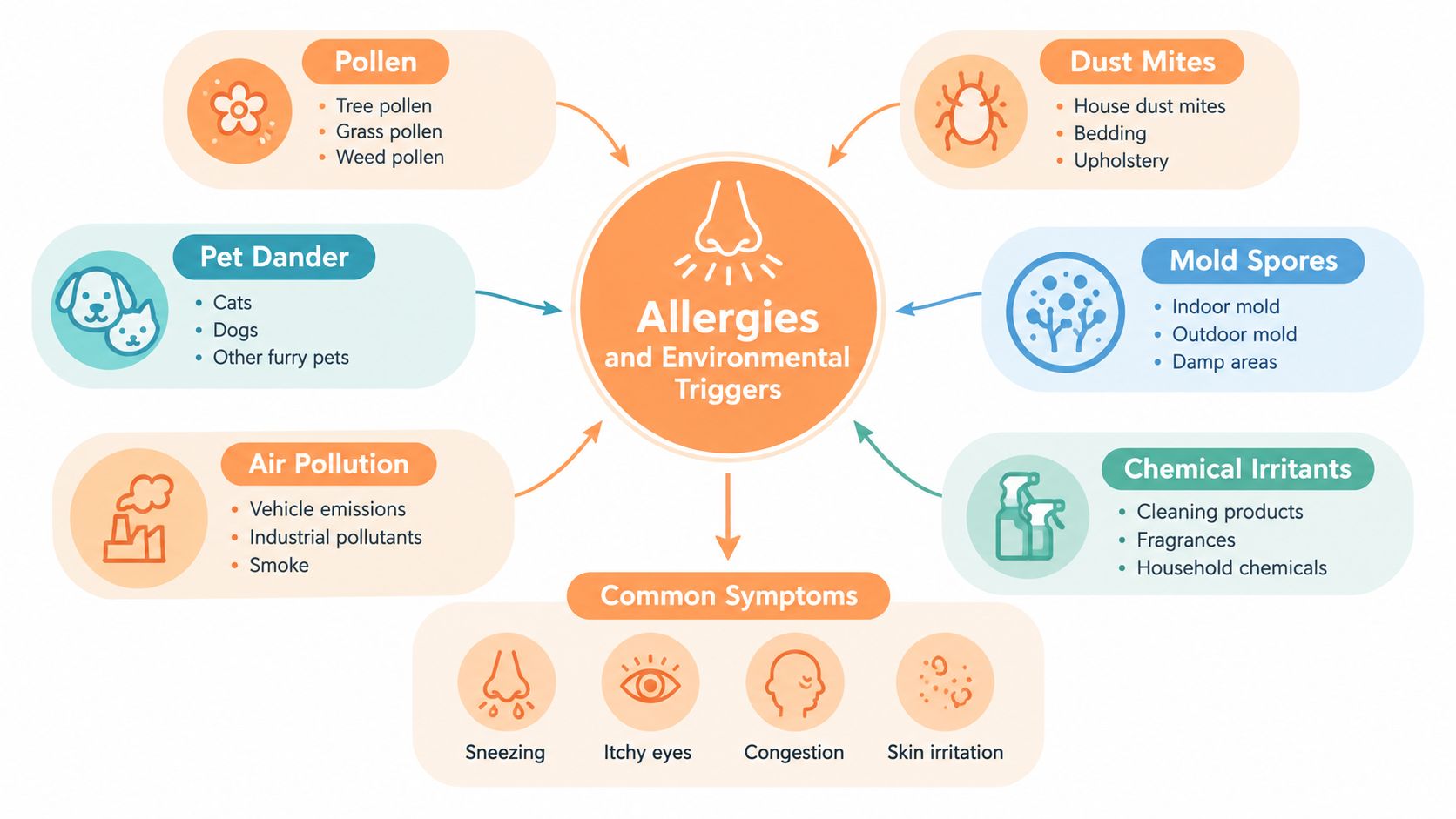
The skin's reaction can look similar regardless of the trigger. Inflammation activates nerve endings, causes redness, and disrupts the outer barrier that normally keeps moisture in and irritants out. Once that barrier is compromised, ordinary exposure can produce a stronger reaction, and the dog's scratching causes further damage.
A large U.S. study of 31,484 dogs seen for skin problems found atopic or allergic dermatitis in 4.7% of those dogs, as reported in a major review of canine atopic dermatitis. The same review estimates that canine atopic dermatitis may affect 3% to 15% of the overall dog population, while also emphasizing that the true prevalence remains uncertain because older estimates weren't based on strong epidemiological methods. Read the veterinary review of canine atopic dermatitis for the evidence and limitations behind those figures.
Recognizing environmental patterns
Environmental allergy often produces a recognizable distribution:
- Face rubbing: Dogs may rub around the muzzle, eyes, or cheeks.
- Paw licking: Repeated licking can stain the fur and keep the spaces between toes damp.
- Fold irritation: Armpits, groin, and belly may become red or sensitive.
- Ear problems: Recurring ear inflammation can accompany allergic skin disease.
- Seasonal changes: Symptoms may worsen during particular outdoor exposure periods, though some dogs react throughout the year.
These signs don't prove atopy. They tell you where to look and what to record. A short video of the behavior, notes about outdoor exposure, and photographs of changing skin lesions can make a veterinary appointment more productive.
Understanding food allergy claims
Food allergy is often confused with general food sensitivity. A strict veterinary elimination diet is the reliable route to investigating a food trigger. Switching brands, choosing a “grain-free” label, or changing one ingredient alone may not answer the question because many foods share protein sources and treats can undermine the trial.
Food-related itch may occur year-round because the suspected trigger is repeatedly present in meals. Digestive changes can occur too, but their absence doesn't rule out a food-related skin problem. Your veterinarian may recommend a novel-protein or hydrolyzed diet and explain how to avoid hidden exposures in treats, chews, supplements, and flavored medicines.
For additional plain-language background, see does your dog have allergies. You can also review practical approaches to reducing exposure in this guide on how to stop your dog's itching with a real allergy-management plan. Neither resource replaces a diagnosis, but both can help you prepare useful questions for your veterinarian.
Secondary Infections and Skin Barrier Disruption
A dog may start scratching because of an allergy, then continue because the skin has become infected. Secondary bacterial and yeast overgrowth can turn moderate irritation into relentless itch, especially when the dog keeps licking a damp paw or rubbing an inflamed ear.
Healthy dogs can carry microorganisms on their skin without problems. The yeast Malassezia pachydermatis, for example, is a predominant cutaneous yeast in healthy dogs as well as dogs with Malassezia dermatitis or ear disease. When the skin environment changes, yeast can proliferate and trigger an inflammatory response. This Frontiers review of Malassezia in dogs describes the organism's role in canine skin and ear disease, while the MSD Veterinary Manual guide to itching in dogs notes that secondary bacterial or yeast infections can cause or intensify itching.
Clues you can notice at home
Look for a cluster of sensory and visual changes rather than one isolated sign:
- Musty or sour odor: A strong odor may accompany yeast overgrowth or an inflamed ear.
- Greasy coat: Oiliness around the paws, ears, armpits, or belly can indicate an altered skin environment.
- Brown-black debris: Dark material in the ears or around nail beds deserves veterinary attention.
- Red or thickened skin: Repeated inflammation may make the skin warmer, darker, or leathery.
- Localized hair loss: Chewing and infection can create bald patches that expand over time.
- Recurrent hot spots: Moist, painful areas can worsen quickly when licking continues.
These signs don't tell you whether yeast or bacteria are responsible. They tell you that guessing with household creams or repeated flea treatments may delay the right care.
Why testing changes treatment
A veterinarian can examine skin cells or debris with cytology, which helps identify yeast, bacteria, inflammatory cells, or combinations of these findings. Culture may be appropriate in selected cases, especially when infection recurs or doesn't respond as expected.
The treatment depends on what the test shows. A documented yeast problem may require an antifungal approach, while bacterial disease may need a different topical or systemic plan. Treating the visible infection without investigating the allergy, moisture, endocrine disease, or barrier problem underneath can lead to recurrence.
Barrier repair still matters. Gentle cleansing, careful drying, and preventing licking can reduce additional trauma while the primary cause is being investigated. Avoid harsh disinfectants, human medications, and repeated bathing unless your veterinarian has recommended a specific product and schedule.
Remember: The infection may be the immediate reason your dog can't stop scratching, but it may not be the original reason the skin became vulnerable.
Pain, Behavioral, and Less Common Causes
Not every repetitive lick or scratch begins in the skin. Dogs sometimes focus on a painful joint, injured paw, or uncomfortable limb and express that discomfort through licking or chewing. Veterinary guidance on compulsive scratching, licking, and chewing notes that physical discomfort, including orthopedic problems and paw injuries, can contribute to these behaviors.

The location often provides an important clue. A dog with generalized itch may move between several body areas, while a dog with pain may return repeatedly to one joint, toe, or limb. Watch whether the behavior appears after exercise, when rising from rest, on stairs, or during handling. Notice limping, stiffness, reluctance to jump, changes in posture, or sensitivity when you touch the area.
When the skin isn't the whole story
Hormonal disorders can also complicate a chronic itch pattern. Veterinary references describe thyroid or cortisol-related disease as possible contributors to recurring superficial infections, hair loss, and skin changes. In these cases, the infection may be visible while the endocrine problem remains hidden.
A dog with an underlying systemic issue may show more than itching. Changes in energy, body shape, coat quality, appetite, thirst, or muscle condition can help your veterinarian decide whether blood testing or broader evaluation is appropriate. Don't assume every bald patch is an allergy, particularly when treatment helps briefly and the problem repeatedly returns.
Behavioral grooming is another possibility, but it should be considered carefully. Anxiety, boredom, frustration, and environmental stress can maintain licking after an original skin problem has improved. A behavior-driven pattern often appears during predictable stressful moments or when the dog is resting, but behavior and disease can coexist. A painful or itchy dog may develop a repetitive habit, and an anxious dog can damage already irritated skin.
This video offers a visual introduction to how discomfort and repetitive behavior can overlap:
Less common causes deserve attention
Most cases fall into the broad categories of parasites, infection, or allergy. Chronic, severe, or treatment-resistant disease may require a wider investigation for immune-mediated disorders, mites that are difficult to detect, or skin tumors. That doesn't mean a serious diagnosis is likely. It means persistent symptoms shouldn't be repeatedly relabeled as “just allergies” without reassessment.
At-Home Checks and Veterinary Red Flags
A calm, consistent inspection can give your veterinarian more useful information than a general statement that your dog is “very itchy.” Choose a well-lit room, avoid scraping or squeezing lesions, and stop if your dog appears painful or frightened.
A simple observation routine
- Start with the ears. Lift the ear flap and look for redness, swelling, discharge, odor, or dark debris. Don't insert cotton swabs deep into the canal, and don't use leftover ear medication without veterinary guidance.
- Examine the paws. Check between the toes, around the nails, and across the pads. Look for redness, swelling, cracks, grass awns, small wounds, or a foreign object. Compare the affected paw with the opposite paw when possible.
- Part the coat. Inspect the belly, armpits, groin, tail base, and any area your dog keeps targeting. Look for redness, scabs, moist patches, dandruff, greasy skin, thickening, or hair loss.
- Notice the pattern. Record whether the itch is seasonal, follows walks, worsens after meals, interrupts sleep, or appears after bathing. Write down new foods, treats, bedding, cleaning products, lawn exposure, or medications.
- Film the behavior. A brief phone video can show whether your dog scratches, licks, chews, rubs, or repeatedly targets one limb. That distinction can guide the next diagnostic step.
When to call promptly
Contact your veterinarian soon if the itching is persistent, keeps your dog awake, or has continued despite appropriate parasite control. Arrange prompt care for open sores, spreading redness, sudden hair loss, painful swelling, discharge, or a foul odor.
Seek urgent advice if your dog is lethargic, refuses food, seems broadly painful, or develops rapidly worsening skin changes. Mention any itchy people or pets in the household, since some contagious conditions can affect more than one species.
Don't apply human steroid creams, essential oils, harsh antiseptics, or random antibiotic ointments. Some products irritate damaged skin, and licking can expose your dog to unsafe ingredients. Until the appointment, keep nails trimmed, prevent self-trauma with a properly fitted protective collar if needed, and keep affected areas clean and dry.
Supportive Care and Barrier Repair Strategies
Supportive care should protect the skin while the cause is being identified, not replace diagnosis. The right routine depends on whether your dog has infection, allergy, contact irritation, pain, or another condition. A medicated product that helps one problem may worsen another if used without guidance.
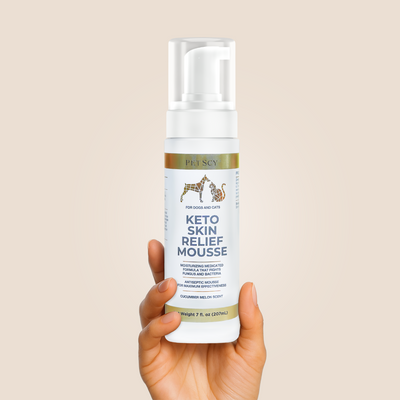
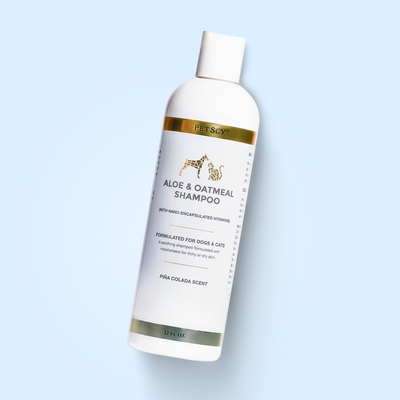
For localized irritation, a veterinarian may recommend a dog-formulated mousse, shampoo, or wipe. Oatmeal and aloe-based products can provide soothing support for some dry or irritated skin, while antimicrobial or antifungal products may be appropriate when testing identifies a relevant infection. Use products only as directed, keep them away from the eyes and mouth, and dry the coat thoroughly after bathing.
Build the routine around the finding
- For damp paws: Wipe after outdoor exposure and dry carefully between the toes. This reduces moisture that can support overgrowth.
- For irritated folds: Clean gently, inspect daily, and ask your veterinarian whether a medicated product is suitable.
- For ear discomfort: Use a veterinary ear-care plan rather than treating the ear as though every dark discharge has the same cause.
- For broken skin: Prevent licking and arrange veterinary assessment. Open lesions need more than cosmetic soothing.
- For dry skin: Avoid hot water, harsh shampoos, and unnecessary bathing. Gentle grooming can help preserve surface oils.
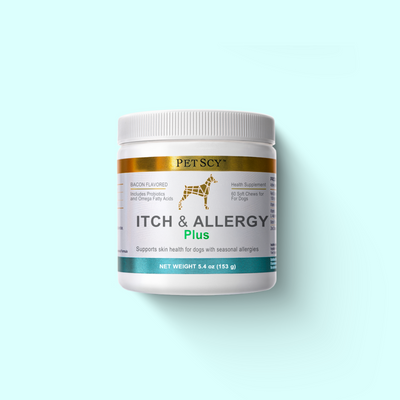
Nutrition can support the barrier, but supplements aren't instant cures. Marine omega-3 sources provide EPA and DHA, fatty acids commonly used in skin-support plans. PetScy's Fish Oil uses omega-3 EPA and DHA from wild-caught Alaskan pollock and salmon, while its topical Keto Skin Wipes are positioned for antiseptic, antimicrobial, and antifungal care. These are options to discuss with your veterinarian, especially if your dog has other medical conditions or takes medication.
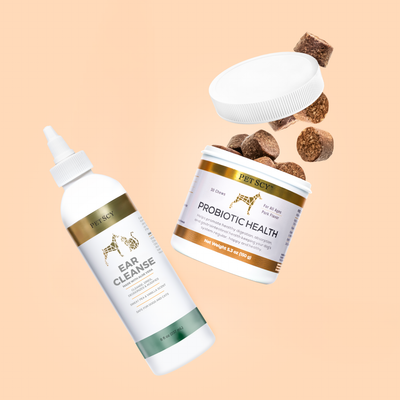
Probiotic products may support digestive and immune balance, but they shouldn't be presented as a substitute for infection testing or an elimination diet. If you're considering wipes as part of daily care, review antiseptic wipes for dogs and confirm that the product fits the area and the diagnosis.
For household hygiene, a practical MRSA prevention guide for staff can provide general infection-control context, though it isn't a veterinary treatment guide. Wash bedding regularly with a gentle detergent, keep shared grooming tools clean, and don't share prescribed medications between pets.
Building a Proactive Skin Health Routine
A comfortable dog usually needs more than a single emergency response. Flea control remains important, but long-term skin health also depends on observation, exposure management, barrier support, and timely veterinary review.
Keep a simple skin diary. Record the areas your dog targets, the appearance and odor of the skin, outdoor activities, diet changes, bathing, ear symptoms, and sleep disruption. This record can reveal patterns that are easy to miss when each day feels similar.
Use your veterinarian's findings to choose support. A dog with allergy-related paw licking may need exposure reduction and an allergy plan. A dog with recurrent yeast may need infection treatment plus attention to the underlying barrier or hormonal issue. A dog focused on one limb may need a pain assessment before you add more skin products.
Probiotics may fit some dogs' broader wellness routines, but expectations should remain realistic. Read do probiotics help dogs stop scratching for a balanced discussion, then ask your veterinarian whether a probiotic, fish oil, topical product, or diet change makes sense for your dog.
The most useful mindset is to treat itching as information. Your dog's body is showing you where something is wrong, while the location, timing, odor, skin texture, and associated behavior help narrow the possibilities. With consistent notes and a layered diagnostic approach, you can move from repeated guesswork toward targeted care.
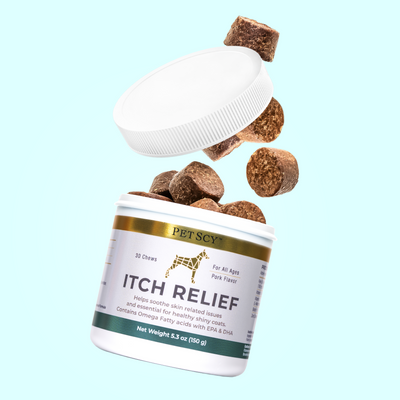
PetScy offers veterinarian-formulated supplements and topical products for concerns such as seasonal allergy discomfort, skin and coat support, ear care, and digestive balance. Visit PetScy to review options such as Fish Oil, Itch Relief Chews, and dog-formulated topical care, then discuss the most appropriate choice with your veterinarian.