









Best Dental Water Additive for Dogs: A Practical Guide
Your dog's breath has started to announce itself before the dog enters the room. You've tried a toothbrush, your dog objected immediately, and the brown line along the teeth isn't disappearing. A dental water additive looks like the obvious next move because it fits into something your dog already does, drinking water.
The best dental water additive for dogs isn't one universal bottle. It's the formula your dog will drink consistently, matched to the problem you're trying to manage. Water additives can slow new plaque and support fresher breath, but they won't scrape away established tartar or treat diseased gums. The strongest approach uses an additive as daily maintenance, while brushing and veterinary dental care handle the work a liquid can't.
Table of Contents
- What a Dental Water Additive Actually Does for Your Dog
- Active Ingredients That Make a Water Additive Work
- Comparing the Leading Additive Formulations
- How to Use a Dental Water Additive the Right Way
- Matching the Additive to Your Real-Life Scenario
- What the Clinical Evidence Really Shows
- Choosing the Best Option for Your Dog
What a Dental Water Additive Actually Does for Your Dog
Most owners struggle to brush their dog's teeth consistently. A dental water additive turns the water bowl into a low-effort daily habit. You measure a dog-specific liquid into fresh drinking water, and the formula contacts the mouth as your dog drinks.
That contact can help control oral bacteria, interfere with early plaque development, and reduce odor. It doesn't act like a dental scaler. Soft plaque is the target. Hardened tartar, infected gum pockets, loose teeth, and bone loss require veterinary care.
Plaque begins rebuilding quickly after a professional cleaning, which is why home maintenance matters between appointments. Professional cleaning removes existing deposits, but it doesn't prevent new deposits from forming after your dog goes home. A broader routine that includes exercise, nutrition, and preventive care is covered in this Denver Dog health and fitness guide.

What the liquid can and cannot do
A well-formulated additive may:
- Slow plaque accumulation: It can make the oral environment less friendly to plaque-forming bacteria.
- Support breath control: Reducing odor-producing bacteria can improve breath, though breath odor can also signal disease.
- Extend the value of mechanical care: It adds another daily layer for dogs that resist brushing.
It won't:
- Remove tartar: Mineralized deposits don't dissolve solely because they contact treated water.
- Reverse periodontal disease: Inflamed, bleeding, or receding gums need examination.
- Replace brushing or scaling: Mechanical cleaning remains more powerful for removing deposits.
For a practical refresher on brushing, wipes, and routine maintenance, use this dog dental hygiene guide. Think of the additive as a compliance tool. If your dog refuses a toothbrush, consistent water treatment is better than abandoning oral care, but it still deserves realistic expectations.
Active Ingredients That Make a Water Additive Work
Ingredient lists become easier to judge when you assign each ingredient a job. Some compounds primarily target bacteria and breath. Others slow the conversion of plaque into tartar. Enzymes support the mouth's natural defenses, while botanical blends usually emphasize palatability and odor control.
Chlorhexidine is a potent antibacterial ingredient used in veterinary oral care, often when bacterial control is the priority. It can be useful in short-term or veterinarian-directed routines, but some dogs dislike the taste, and prolonged use may create practical drawbacks such as staining. It isn't the default choice for every healthy dog's indefinite daily use.
Zinc gluconate also targets odor-producing bacteria and can help reduce volatile sulfur compounds associated with bad breath. It's generally a better fit when halitosis is the owner's main complaint, although persistent bad breath still warrants an oral examination.
Ingredients that target tartar formation
Sodium tripolyphosphate and sodium hexametaphosphate are polyphosphates. Their role is different from an antibacterial agent's role. They bind minerals such as calcium, helping slow plaque mineralization and the formation of additional calculus.
That makes them prevention ingredients, not tartar removers. A formula built around polyphosphates makes more sense after a professional cleaning, when the goal is to slow the return of deposits.
Enzymatic systems may include glucose oxidase and lactoperoxidase. These ingredients are designed to support antimicrobial activity through reactions associated with salivary defense. They're attractive for owners who want a gentler formula, especially when taste sensitivity makes stronger antiseptic products hard to use.
Cetylpyridinium chloride is another antibacterial option. Botanical formulas may include thyme, parsley, green tea, or essential-oil blends, but “natural” doesn't automatically mean stronger, safer for every dog, or clinically better. Avoid products containing xylitol, which is toxic to dogs, and avoid adapting human mouthwash for canine use.
| Active Ingredient | How It Works | Primary Target |
|---|---|---|
| Chlorhexidine | Strong antibacterial action against oral microbes | Bacterial control and plaque |
| Zinc gluconate | Helps control odor-producing compounds and bacteria | Bad breath |
| Cetylpyridinium chloride | Antibacterial activity in the oral environment | Plaque and breath |
| Sodium tripolyphosphate | Binds minerals that contribute to plaque mineralization | Tartar prevention |
| Sodium hexametaphosphate | Helps limit mineral deposition in plaque | Tartar prevention |
| Glucose oxidase and lactoperoxidase | Supports enzyme-based antimicrobial activity | Early plaque and oral hygiene |
| Botanical or essential-oil blends | Plant-derived antimicrobial and odor-support activity | Breath and general freshness |
Comparing the Leading Additive Formulations
The label philosophy matters more than the front-of-bottle promise. An antibacterial-first formula and a polyphosphate formula may both claim dental support, but they're solving different parts of the problem.
Antibacterial formulas are usually the practical choice for dogs with strong breath odor or owners focused on bacterial control. Tartar-control products are better suited to maintenance after deposits have been removed. Enzymatic systems appeal to dogs that reject sharp flavors, while herbal blends can work for owners who prefer botanical ingredients, provided the product is specifically formulated for dogs and has clear dosing directions.
| Formulation Type | Core Mechanism | Best For | Main Limitation |
|---|---|---|---|
| Antibacterial-first | Reduces or inhibits oral bacteria | Breath odor and early plaque | Taste acceptance can be inconsistent |
| Polyphosphate tartar control | Slows mineralization of plaque | Maintenance after cleaning | Doesn't remove established tartar |
| Enzymatic | Supports antimicrobial reactions in saliva | Gentle daily maintenance | Visible changes may be subtle |
| Natural or herbal | Uses botanical compounds for microbial and odor support | Ingredient-conscious owners | Evidence and potency vary by formula |
How the four approaches differ
Antibacterial-first additives are the most direct choice when your dog's mouth smells bad but doesn't show obvious heavy deposits. Chlorhexidine can be effective, but it's not the formula I'd choose casually for every dog over the long term. Zinc or cetylpyridinium may offer a more practical daily compromise for breath-focused care.
Polyphosphate formulas make sense when tartar returns quickly after cleaning. They won't make an existing brown crust disappear, but they can help reduce the mineral supply available to new plaque.
Enzymatic products are useful for brushing-refusal dogs that still drink normally from a treated bowl. The key benefit is consistency. A gentler product that your dog accepts every day is more useful than a stronger product that gets ignored.
Natural blends require the most label scrutiny. Botanical ingredients can support breath management, but a long ingredient list isn't proof of better plaque control. For odor-focused routines, a dedicated dog breath freshener guide can help you separate breath masking from actual oral hygiene.
Several products combine antibacterial, enzymatic, and mineral-control strategies. Choose according to the primary problem, not the number of ingredients.
How to Use a Dental Water Additive the Right Way
A water additive only works when your dog drinks it at the intended concentration. Guessing with a splash from the bottle creates inconsistent exposure, while adding a full dose to a nearly empty bowl can make the remaining water too strong.
Introduce it without creating a water strike
Start with plain water and the additive at half strength during the first 24 to 48 hours, using the product's recommended dose as your reference. Keep a second bowl of plain water nearby during the transition. If your dog avoids the treated bowl, don't force the issue. Drinking enough water matters more than winning an argument over a dental product.
Once your dog accepts the taste, move to the full label dose. Many products use dosing tied to bowl volume, with directions such as one capful per 8 to 16 ounces, but the correct amount varies by formulation. Use the bottle's instructions rather than copying another product's capful measurement.

Build the routine around fresh water
Replace the water and additive mixture at every refill. Don't top off old water, and don't add a dose to a bowl your dog has already partly emptied. Wash the bowl daily so food residue and biofilm don't undermine the routine.
Avoid mixing the additive into milk, broth, or flavored liquids. The product is designed for drinking water and mouth contact, not as a flavoring for another beverage.
Track three simple signals during the first few weeks:
- Water acceptance: Your dog should continue drinking normally.
- Breath: Improvement suggests odor control, but it doesn't rule out disease.
- Gum appearance: Healthy gums should not become increasingly red, swollen, or prone to bleeding.
If your dog develops digestive upset, refuses water, or shows mouth pain, stop the additive and contact your veterinarian.
Matching the Additive to Your Real-Life Scenario
The right choice changes with the dog standing in front of you. A product that suits a brushing-refusal adult may be inappropriate for a puppy or insufficient for a senior dog with thick calculus.
| Scenario | Recommended Additive Type | Reason |
|---|---|---|
| Adult dog that refuses brushing | Enzymatic, zinc-based, or mild antibacterial formula | Daily acceptance and consistent contact matter most |
| Senior dog with visible tartar | Polyphosphate maintenance formula, alongside veterinary care | It may slow new mineralization but won't remove existing deposits |
| Multi-dog household | Clearly dosed formula used in individual bowls | Each dog needs the intended concentration |
| Puppy in the teething phase | Mild, alcohol-free, xylitol-free canine formula | Gentle acclimation supports an eventual oral-care routine |
The brushing-refusal adult
Choose a taste-neutral or mild enzymatic option if your dog walks away from anything strongly flavored. If breath is the main complaint, zinc or cetylpyridinium may be more logical than a tartar-focused product. Use it every day, because irregular use defeats the convenience advantage.
The senior dog with existing tartar
Don't buy an additive expecting it to clean off a thick brown ridge. Book a veterinary dental assessment, then use a polyphosphate-oriented additive after treatment if your veterinarian agrees. Senior dogs may also have kidney, cardiac, medication, or swallowing concerns that affect product selection.
The multi-dog home
Use separate bowls rather than a shared trough. Individual bowls let you dose according to each dog's water volume and observe whether one dog dislikes the formula. A flavor-neutral product usually creates fewer household problems than an intensely scented blend.
The teething puppy
Ask your veterinarian whether the product is appropriate for your puppy's age. An alcohol-free, xylitol-free formula at a cautious introductory concentration can help make oral care familiar, but teething pain, mouth injuries, and changing teeth deserve attention rather than masking.
Owners comparing daily powder and liquid routines may also find this plaque powder guide for dogs useful. The principle stays the same: choose the format your dog will accept and keep mechanical cleaning in the plan.
What the Clinical Evidence Really Shows
The most useful evidence doesn't claim that every additive transforms a dog's mouth. It shows that some formulations can produce measurable changes under specific conditions.
A 2023 randomized, researcher-blinded trial evaluated a pomegranate-based drink additive in dogs after professional dental cleaning. After 30 days, dogs receiving the additive daily had 47% lower plaque and 24% lower tartar than controls, with improved gingival health reported through standard dental indices. The study is important because it measured plaque and calculus rather than relying only on breath ratings. Read the full randomized trial.
That result supports a clear commercial and clinical point. A water additive can slow the return of oral deposits after cleaning. It doesn't prove that the same product will remove established tartar from an uncleaned mouth.
The weaker standalone picture
A 2024 clinical comparison of home-care protocols in unscaled dogs found that water additive use alone didn't significantly improve dental deposits or periodontal health, while combined mechanical care performed better. Earlier controlled work found smaller standalone effects. A 208-day randomized double-blind trial of a xylitol-based additive reported a 5.1% decrease in mean plaque score and a 14.9% decrease in mean calculus score, while another controlled study reported 25.4% lower calculus at day 84 versus controls. See the comparative clinical evidence.
The honest conclusion is straightforward:
Water additives earn a place as daily adjuncts. They don't replace brushing, professional cleaning, or treatment for periodontal disease.
The evidence is strongest when the mouth has already received professional care and the additive is used consistently afterward. For an unscaled mouth with established deposits, expect maintenance support, not a reversal.
Choosing the Best Option for Your Dog
Choose by dog profile and primary problem, not by the most dramatic label claim. The best dental water additive for dogs is the one that fits the animal's health status, drinking habits, and current oral condition.
| Dog Profile | Best Additive Type | Primary Target |
|---|---|---|
| Brushing-refusal adult | Enzymatic or mild antibacterial formula | Daily plaque support |
| Adult with breath-focused concerns | Zinc or cetylpyridinium formula | Odor-producing bacteria |
| Puppy beginning oral care | Mild, alcohol-free, xylitol-free canine formula | Routine acclimation |
| Senior dog after veterinary cleaning | Polyphosphate-oriented formula | Slowing new tartar formation |
| Taste-sensitive dog | Flavor-neutral enzymatic formula | Consistent water intake |
My practical picks
For a healthy adult that refuses brushing, I'd start with a mild enzymatic or zinc-based formula and judge it by acceptance. Consistency beats theoretical strength. If your dog has persistent breath odor without obvious deposits, a zinc or cetylpyridinium formula is the more targeted choice, but don't treat worsening odor as a cosmetic issue.
For puppies, choose only a product whose label supports the puppy's life stage. Keep it alcohol-free and xylitol-free, introduce it gradually, and ask your veterinarian if the puppy has mouth pain or unusual chewing difficulty.
For senior dogs, address visible tartar first. A polyphosphate formula can support maintenance after a professional cleaning, but kidney or cardiac disease may affect ingredient and sodium choices. Ask your veterinarian to review the label before starting it.
Look for transparent dosing, dog-specific formulation, and Veterinary Oral Health Council acceptance where applicable. In a multi-pet home, check whether the product is safe around cats, because some canine oral-care ingredients may not be suitable for feline use. Keep separate water sources if cats share the space.
Four questions owners ask
How much should I add to the bowl?
Measure the bowl's actual water volume and follow the product label. Don't copy a capful from another brand, because concentrations differ.
When will I see results?
Breath may improve before plaque or tartar changes are visible. The strongest controlled evidence described above measured effects after daily use following professional cleaning, not instant removal of old deposits.
Can my dog use one with kidney disease?
Not without veterinary review. Your veterinarian can assess the full ingredient list, sodium content, medications, and hydration needs.
Can flavoring reduce drinking?
Yes, some dogs dislike altered taste or smell. Introduce the formula gradually and keep plain water available during the transition. If drinking drops, stop and reassess.
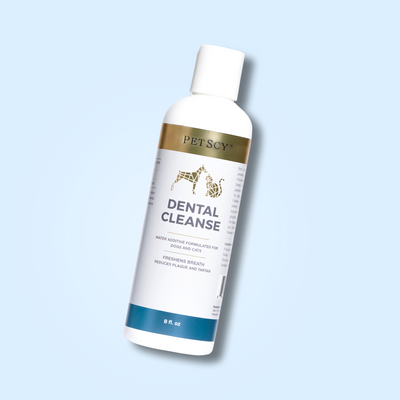
PetScy offers Dental Cleanse, a daily add-to-water formula for dogs and cats intended to support fresher breath and oral hygiene, alongside other dental formats such as powder and finger wipes. Choose the format your dog can tolerate consistently, then visit PetScy to review the available dental-care options and build a routine that fits your household.