









Best Ear Cleaning Solution for Dogs: A Vet-Style Guide
The most popular advice about the best ear cleaning solution for dogs is also the least useful: buy the bottle with the highest rating. A dog's ear doesn't care about star ratings. It needs a formula suited to what is happening in the canal, whether that's ordinary wax, excess moisture, yeast overgrowth, bacterial disease, or a painful ear with a potentially damaged eardrum.
Otitis externa remains common enough to make ear care a recurring veterinary concern, not a niche shopping problem. Reported prevalence has ranged from 4.58% to 7.30% in general practice, with some estimates reaching 10% to 20% of the dog population, and a 2024 review summarized global estimates of 5% to 20%, rising to 30% to 40% in tropical environments (Banfield's State of Pet Health Report). The right question isn't “Which cleaner is best?” It's “Which chemistry fits this ear, and is home cleaning safe today?”
| Ear presentation | Cleaner category to consider | What it's designed to do | When to stop and call a vet |
|---|---|---|---|
| Mild, visible wax with no pain or odor | Ceruminolytic | Loosen and lift cerumen | Wax returns quickly, irritation develops, or the dog resists handling |
| Moisture after bathing or swimming | Gentle pH-balancing rinse | Support routine hygiene and reduce moisture-related buildup | Head shaking, redness, odor, or tenderness persists |
| Brown debris with a yeasty odor | Antiseptic or antimicrobial cleaner, alongside veterinary assessment | Alter the canal environment and help remove debris | Scratching, inflammation, recurrent discharge, or self-trauma |
| Yellow, green, or purulent discharge | Veterinary-directed antimicrobial care | Clean the canal only as part of a treatment plan | Same-day assessment is appropriate, especially with pain or strong odor |
| Pain, bleeding, head tilt, balance changes, or neurological signs | No routine cleaner until examined | Protect the middle and inner ear from unsafe products | Veterinary examination before flushing |
Table of Contents
- Why One Best Ear Cleaner Is the Wrong Question
- The Four Cleaner Chemistries You Will See on the Shelf
- Side-by-Side Comparison of Cleaner Types
- Matching the Cleaner to Your Dog's Ear Problem
- How to Actually Clean a Dog's Ear the Right Way
- Ingredients to Avoid When the Eardrum May Be Compromised
- Situational Recommendations by Ear Issue
- A Vet-Oriented Framework for Evaluating Any New Product
Why One Best Ear Cleaner Is the Wrong Question
A healthy ear with a layer of wax needs a different product from an inflamed ear carrying infection. A ceruminolytic that softens thick wax may be sensible for a waxy, otherwise comfortable ear, but it isn't a treatment for an infected canal. A drying acidifier that helps manage moisture or yeast in an intact canal can sting badly when the lining is ulcerated.
Consider three common situations. Your Basset has a small amount of brown wax, no odor, and doesn't mind ear handling. A gentle maintenance cleanser, or no cleaner at all if the ear is already clean, makes sense. Your Cocker Spaniel has a sweet or musty smell, greasy brown debris, redness, and persistent scratching. That pattern needs veterinary assessment and likely cytology, not a stronger bottle chosen from an online ranking. Your Labrador starts shaking its head after a bath. The priority is careful inspection and appropriate drying or maintenance care, provided the ear isn't painful or discharging.
The practical rule: Match the cleaner to the problem you can justify, not to the promise printed on the label.
Breed and ear anatomy change the odds. A five-year clinical study reported especially frequent ear disease in Cocker Spaniels at 20.77%, Bulgarian Shepherd dogs at 17.91%, Shar Pei at 15.58%, Kangals at 11.76%, Dogo Argentinos at 10.81%, and French Bulldogs at 9.35%. Pendulous ears were more commonly affected, 38.29% of cases occurred in summer, and 63.94% were unilateral, meaning one ear can be affected while the other appears normal (the published clinical study).
The popular “one cleaner for every dog” framing hides the important safety branch. If the ear is painful, swollen, bleeding, or producing colored discharge, the eardrum may not be intact. A product that's acceptable for routine maintenance can be the wrong choice in that moment.
The Four Cleaner Chemistries You Will See on the Shelf
Read an ear cleaner by its job, not by how long the ingredient list looks. Most products fall into four functional groups, and some combine more than one.
Ceruminolytics dissolve the material you can see
Ceruminolytic cleaners target cerumen, the waxy mixture of oils, skin cells, and debris that can accumulate in the canal. Ingredients such as squalene and docusate help soften, emulsify, or lift that material so a liquid flush and the dog's head shake can remove it. They earn their place when the ear is physically blocked with wax but isn't hot, intensely red, or painful.
A ceruminolytic doesn't diagnose why wax is accumulating. Allergies, ear shape, moisture, foreign material, and infection can all change cerumen production. If the wax returns rapidly, the cleaner is revealing a recurring problem rather than solving it.
Drying antiseptics shift the canal environment
Salicylic acid and lactic acid are common in drying or acidifying formulas. They lower the canal's pH and help manage surface moisture, while some formulations also loosen superficial debris. That can support maintenance in an intact, mildly waxy ear, especially where dampness contributes to recurring trouble.
Acid is not automatically gentle. On raw, inflamed tissue, a low-pH solution can cause discomfort. Don't use an acidifying product as a substitute for an examination when the dog is painful.
Antimicrobials have a more targeted role
Chlorhexidine is used for antiseptic activity, while Tris-EDTA helps disrupt bacterial defenses and can improve the environment for veterinary-directed antimicrobial therapy. Tris-EDTA is particularly relevant when rod-shaped organisms such as Pseudomonas are suspected, but a cleaner still isn't the same as a prescribed treatment.
This distinction matters because a foul, purulent ear may need cytology, culture, medication, pain control, or all of those. A cleaner can remove obstructive exudate, but it can't replace the treatment decision.
pH-balancing cleansers suit prevention
Gentle pH-balancing maintenance cleansers use mild surfactants and sometimes a light ceruminolytic blend. Their job is modest: remove surface debris, support routine hygiene, and avoid creating extra irritation in a normal or mildly dirty canal.
Combination formulas exist because ear problems overlap. A product may include a wax-dispersing ingredient, an acidifier, and an antiseptic. That can be useful, but more actives don't make a product universally better. The dog's symptoms, the state of the canal, and the eardrum's safety determine whether the combination is appropriate.
Side-by-Side Comparison of Cleaner Types
The table below is a decision aid, not a product ranking. Ingredient names tell you what the bottle is trying to do, while the ear's appearance and sensitivity tell you whether that job is appropriate.
Cleaner Type Comparison at a Glance
| Cleaner Type | Best Use | Key Ingredients | Ideal Ear Condition | Red Flags |
|---|---|---|---|---|
| Ceruminolytic | Loosening thick wax and compacted debris | Squalene, docusate | Waxy ear with little or no inflammation | Pain, ulceration, bleeding, suspected eardrum damage |
| Antiseptic or drying | Managing surface moisture and shifting pH | Salicylic acid, lactic acid | Intact canal with mild moisture or yeast-prone maintenance needs | Raw tissue, marked redness, severe tenderness |
| Antimicrobial | Supporting bacterial or yeast management as directed | Chlorhexidine, Tris-EDTA | Veterinary-selected use where microbial overgrowth is suspected | Purulent discharge, neurological signs, unknown membrane status |
| pH-balancing maintenance | Routine cleansing between flare-ups | Mild surfactants, gentle ceruminolytic blends | Comfortable, mildly dirty ears without active disease | Persistent odor, recurrent discharge, scratching, pain |
A wax-dissolving product is the obvious choice when wax is the only finding. It is not the obvious choice when the dog has pain or a strong odor. Likewise, an antimicrobial formula may be useful in a treatment plan, but using one indefinitely for a normal ear adds unnecessary chemical exposure.
The safety label deserves as much attention as the active ingredient. If the product doesn't clearly explain whether it can be used when the tympanic membrane is ruptured, don't assume it's safe. A clinician can examine the eardrum with an otoscope and choose a flush that won't put the middle or inner ear at risk.
Matching the Cleaner to Your Dog's Ear Problem
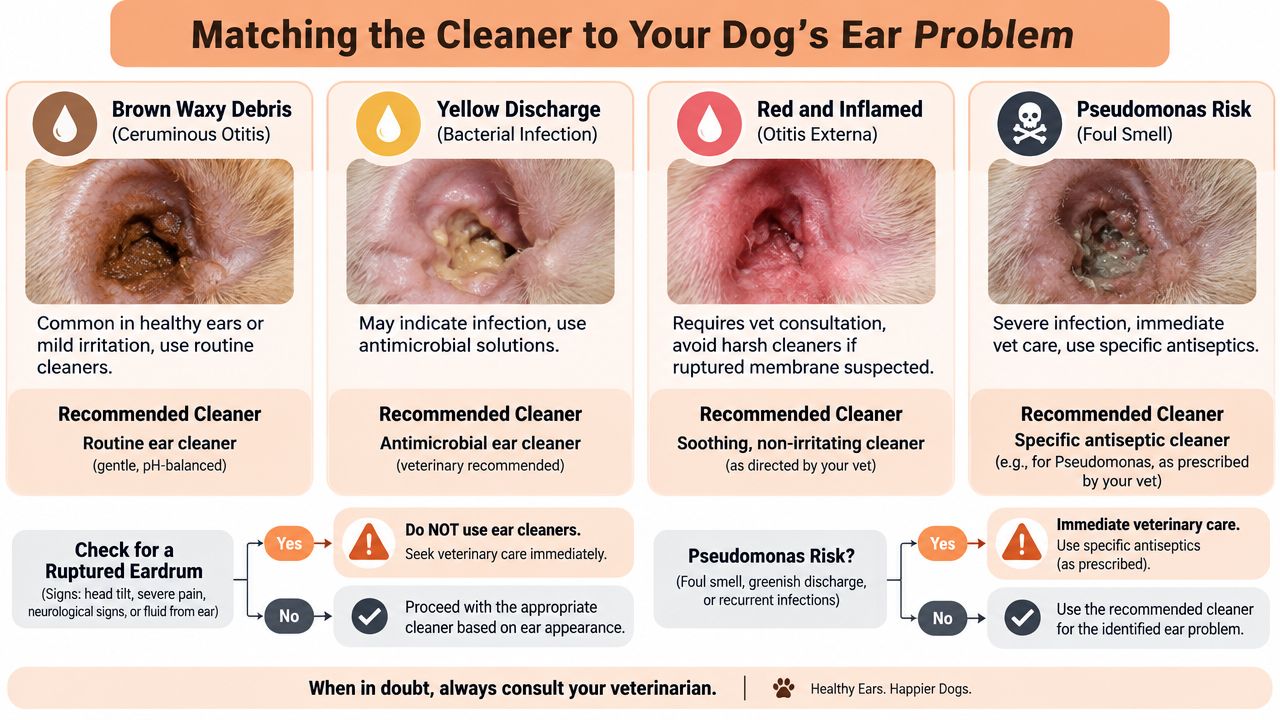
The right cleaner depends on the problem in front of you, not the bottle's ratings. Color, odor, moisture, and behavior can guide triage, but they cannot identify the organism involved. Cytology does that under a microscope, and the two ears may need different decisions.
Use the appearance as a triage signal
Brown, waxy debris in a comfortable ear usually calls for a ceruminolytic-leaning maintenance cleaner. This is the least urgent pattern when the canal is not hot, swollen, or painful and the debris does not return almost immediately.
A sweet or yeasty odor with brown, greasy buildup fits possible Malassezia overgrowth. A drying, pH-balancing, or antimicrobial cleaner can support the plan, but select one with a stated antifungal purpose. Scratching, redness, or self-trauma warrants veterinary assessment rather than repeated product changes.
Yellow, green, or purulent discharge needs a different response. Bacterial otitis, including possible Pseudomonas, requires veterinary evaluation, not repeated home flushing. A 2024 study review placed global otitis estimates at 5% to 20%, with 30% to 40% in tropical environments, highlighting how warm, humid conditions can increase the burden of ear disease. The figures were reported in the 2024 study review of otitis prevalence.
An odorless but inflamed ear may reflect allergy-driven irritation. Choose a gentle maintenance cleanser instead of an aggressive acid or drying formula, but address the inflammation. Allergies can keep the flare-up cycle active.
Know when the bottle is the wrong tool
Pendulous-eared dogs, including Cockers and Bassets, often do better with a consistent maintenance plan than with a harsh formula. Swimming and bathing add moisture. Continued head shaking, pain, or discharge after water exposure needs veterinary attention.
Stop home treatment for unilateral discharge, head tilt, circling, nystagmus, loss of balance, or acute pain. These signs raise concern about a damaged tympanic membrane or middle-ear disease. An over-the-counter cleaner cannot safely manage that risk without an examination.
How to Actually Clean a Dog's Ear the Right Way
The correct method is a liquid canal flush, not a few drops followed by a quick wipe. Veterinary guidance recommends filling the canal so the solution can contact wax and debris, then massaging the base of the ear for 15 to 30 seconds before allowing the dog to shake (Cornell's guide to cleaning canine ears).
Warm the bottle in your hands first. Place the dog standing or lying comfortably, lift the pinna upward and outward, and keep the nozzle at the canal opening rather than pushing it down into the ear.
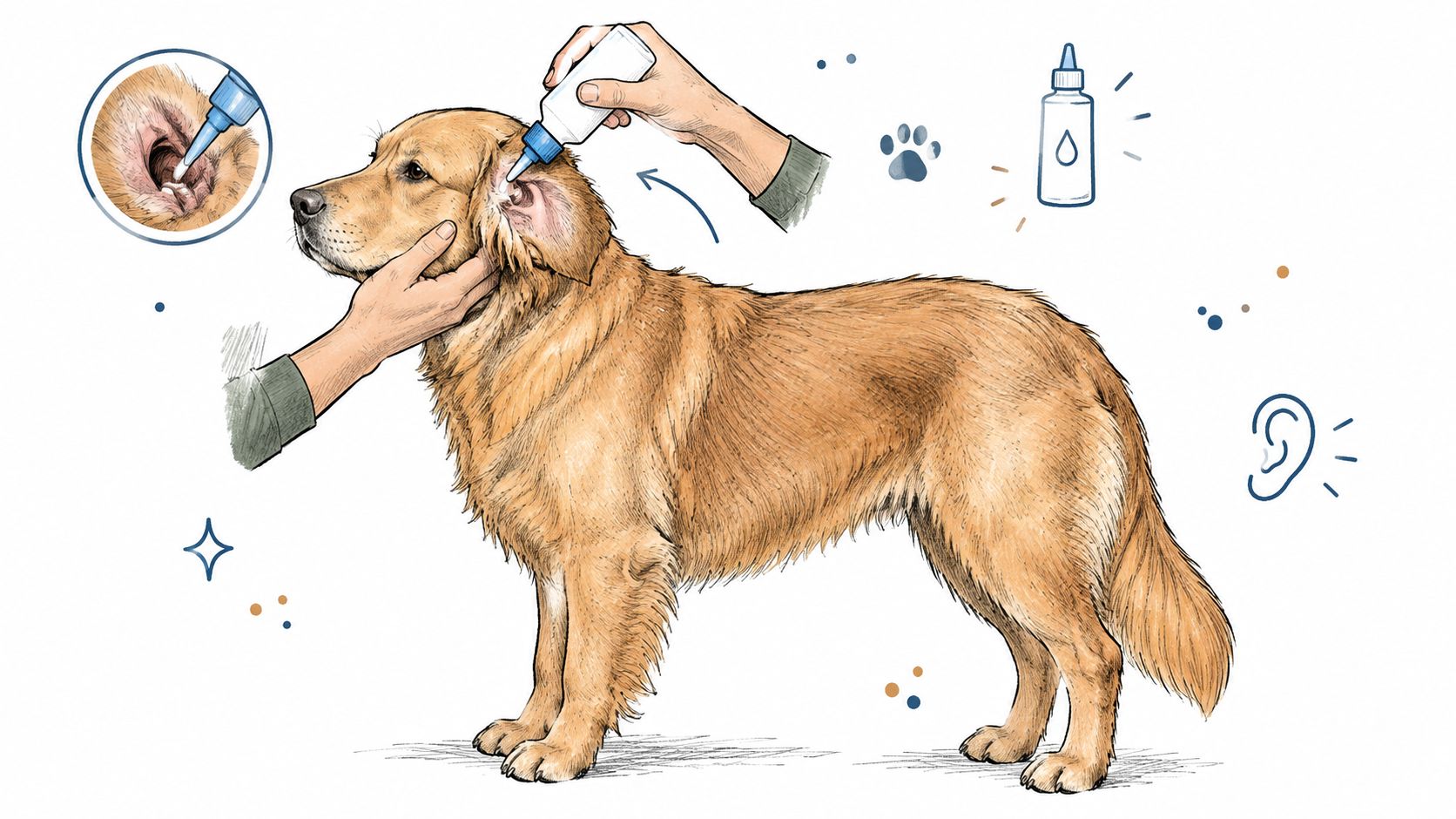
The flush, massage, and shake sequence
- Stabilize the head. Use one hand to steady the muzzle and the other to hold the ear flap upright.
- Fill the canal. Apply the labeled amount at the opening until you can see the liquid at the entrance. Don't force the nozzle inward.
- Massage the base. Place your fingers where the ear meets the skull and massage for 15 to 30 seconds. A soft squelching sound means the solution is moving through the canal.
- Release and step back. Let the dog shake. That movement helps lift loosened debris out of the vertical canal.
- Wipe what you can reach. Use cotton balls, gauze, or a damp cloth on the pinna and visible canal opening only.
Cotton-tipped swabs are a bad trade. They can compact debris deeper, abrade the canal lining, and injure an eardrum that's already fragile. For an additional overview of the technique, see this dog ear cleaner solution guide.
Don't clean more aggressively because the ear looks dirty. Frequency depends on anatomy, allergies, swimming, and recurrence history. Most dogs do better with a measured maintenance routine than with repeated flushing that strips protective cerumen and irritates the canal.
Watch the technique demonstrated here:
Ingredients to Avoid When the Eardrum May Be Compromised
A product can be appropriate for an intact external canal and unsafe if it reaches the middle ear. You can't reliably confirm the eardrum's condition from the outside, so pain, pus, bleeding, marked swelling, or neurological signs should change your plan immediately.
Veterinary guidance specifically warns that detergents and DSS are contraindicated when the tympanic membrane is ruptured. Tris-EDTA or sterile saline may be considered as gentler interim flushing options under veterinary direction, but even a “mild” cleaner isn't a diagnosis.
| Ingredient or class | Avoid when | Safer interim step |
|---|---|---|
| Detergents and strong surfactants | The membrane may be ruptured or the canal is ulcerated | Stop home flushing and seek veterinary advice |
| DSS-based ceruminolytics | Eardrum status is unknown in a painful or infected ear | Ask a veterinarian which flush is appropriate |
| Acidifying agents | The canal is raw, very inflamed, or the membrane is suspect | Use only a clinician-approved option |
| Alcohol or hydrogen peroxide | There is pain, broken skin, or possible middle-ear exposure | Don't apply household or harsh preparations |
| Essential-oil blends or irritant botanicals | The ear is inflamed or the formula lacks clear safety guidance | Choose a veterinary-directed product or wait for examination |
Don't assume “natural” means harmless. Essential oils and witch hazel can irritate compromised tissue, and household alcohol or peroxide can turn a difficult cleaning session into a painful one. A cleaner should have a defined otic purpose and clear warnings, not just a reassuring botanical label.
Stop and refer: If the ear is foul-smelling, hot, draining pus, or painful when you touch the base, treat it as potentially compromised until a veterinarian confirms otherwise.
For related topical care, keep the distinction clear between a surface wipe and an ear-canal flush. This guide to antiseptic wipes for dogs concerns topical skin care and shouldn't be used to justify putting a wipe deep into a painful ear.
Situational Recommendations by Ear Issue
Routine maintenance is the easiest decision. If the canal is comfortable and only mildly waxy, use a gentle pH-balancing cleanser or light ceruminolytic. If the ear is already clean, leave it alone. The goal is to remove excess material without creating inflammation that wasn't there.
| Ear Presentation | Recommended Cleaner Type | Frequency | When to Escalate |
|---|---|---|---|
| Clean, comfortable ear with occasional wax | Gentle pH-balancing or mild ceruminolytic | Only as needed for the dog's anatomy | Odor, redness, pain, or rapidly recurring wax |
| Thick wax and debris in a predisposed dog | Ceruminolytic formula | Use the label and veterinary plan, rather than increasing frequency on your own | Debris persists, the ear becomes sore, or the dog resists |
| Yeasty smell with brown, greasy discharge | Veterinary-selected antimicrobial or acidifying cleanser | Follow the clinician's instructions | Scratching, self-trauma, swelling, or recurrence |
| Moisture after swimming or bathing | Gentle maintenance rinse if the ear is intact and comfortable | After exposure only when appropriate | Continued head shaking, odor, or tenderness |
| Purulent discharge, severe odor, pain, or head tilt | No routine product until examined | Veterinary-directed treatment | Immediate veterinary attention |
Spaniels, Labradors, and Retrievers often benefit from a wax-focused approach when their ears are otherwise healthy. The mistake is treating a wax problem by escalating to the strongest available antimicrobial, or treating an infection by cleaning repeatedly without cytology.
Yeast-prone ears may need a chlorhexidine-based cleanser or another product with a clearly stated antimicrobial purpose, but active disease still belongs under veterinary direction. The cleaner removes debris and changes the canal environment. It doesn't address allergy, resistant bacteria, a foreign body, or middle-ear disease.
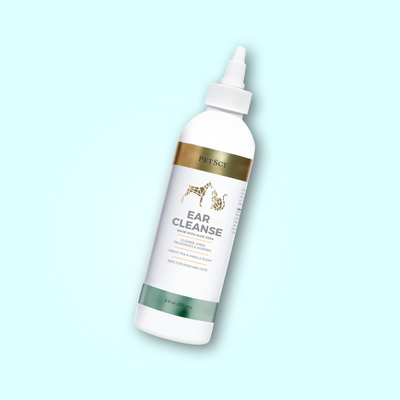
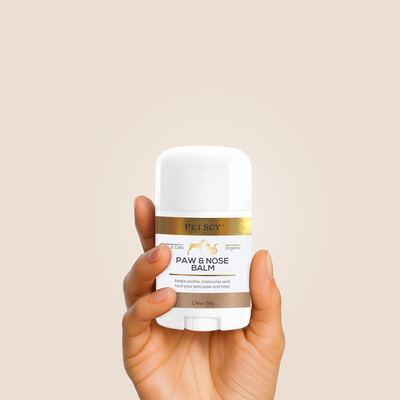
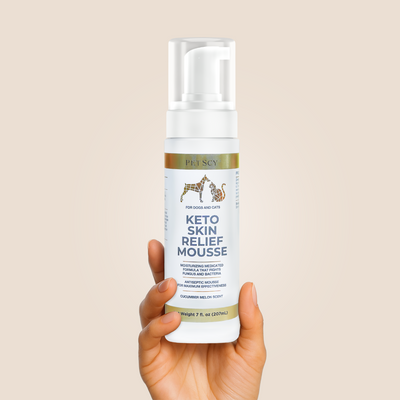
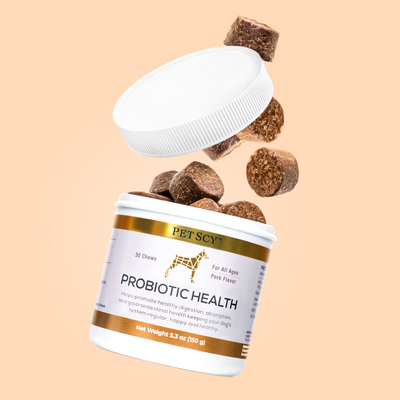
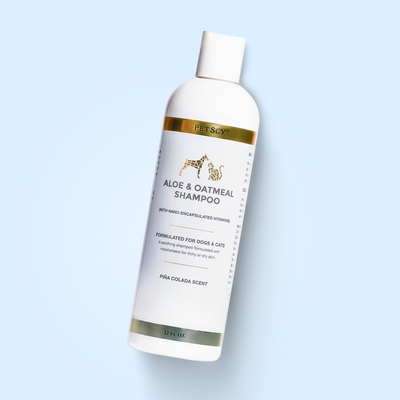
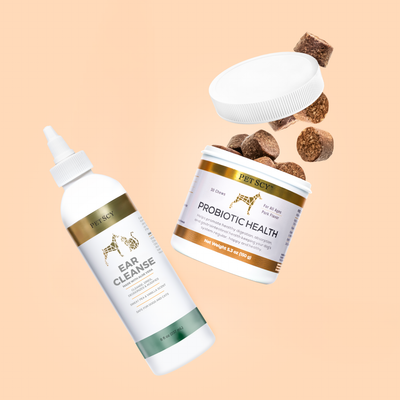
A veterinarian-formulated maintenance cleanser can sit on the shelf for the quiet periods between flare-ups. PetScy's Ear Cleanse is one product option described for cleansing and supporting routine ear hygiene, but it should be selected by the same chemistry and safety rules as any other bottle. Don't use a maintenance product as an excuse to delay care for an infected ear.
A Vet-Oriented Framework for Evaluating Any New Product
Ignore the bottle claims until you answer four questions in order.
- Identify the active ingredients. Sort them into ceruminolytic, drying or antiseptic, antimicrobial, and pH-balancing functions. If the label doesn't make the formula's purpose clear, treat that as a reason to investigate, not a reason to buy.
- Check the pH information. A canal-friendly product should disclose a sensible range or provide clear veterinary-use guidance. Avoid assuming that a strongly acidic or strongly drying formula is suitable for irritated tissue.
- Assess the formulation type. Decide whether you're holding a cleaner, a medication, or a combination product. A cleaner may support treatment, but it doesn't replace diagnosis or prescribed therapy.
- Review membrane safety. Look for explicit warnings about a ruptured tympanic membrane, alcohol, detergents, DSS, and other potentially irritating ingredients. If the warning is absent, ask your veterinarian before use.
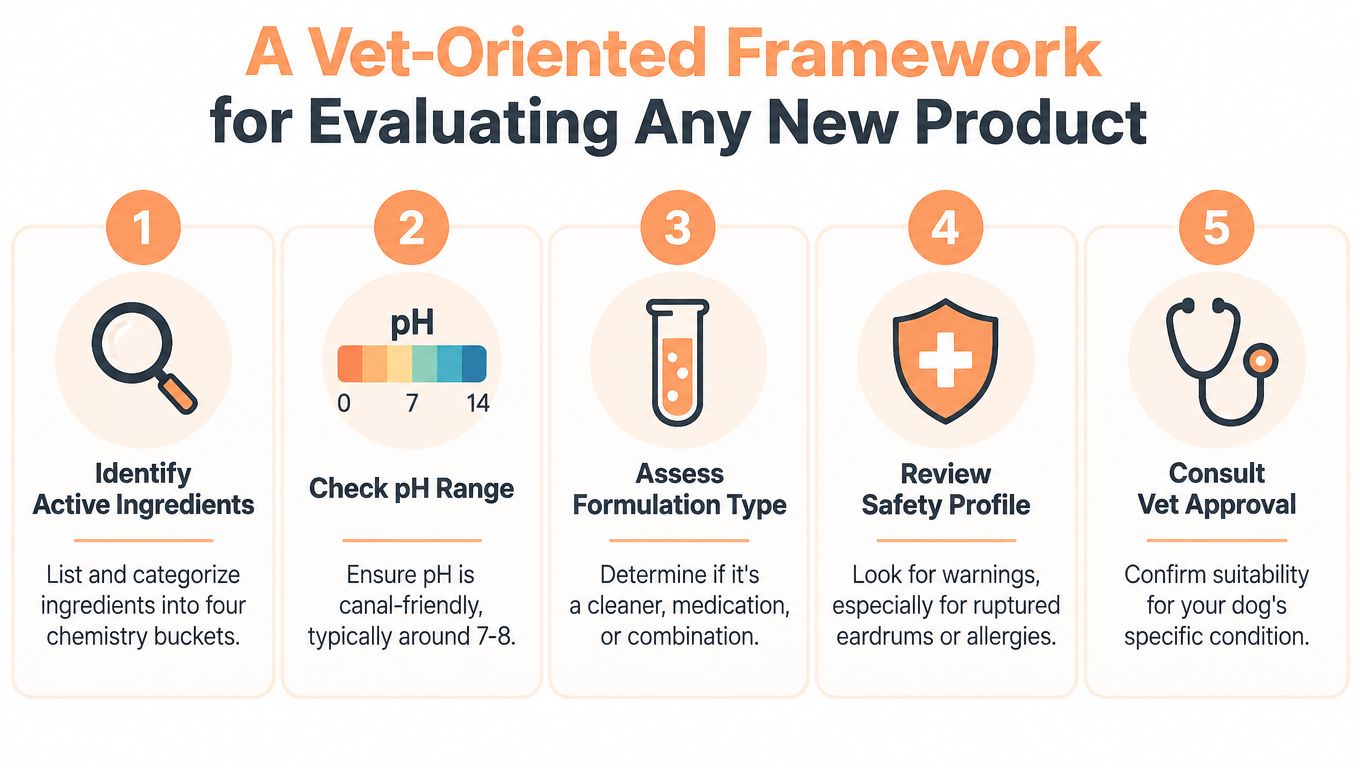
Natural formulas deserve the same scrutiny. Witch hazel, essential oils, and soothing plant extracts don't automatically make an inflamed ear safe. The final question is the most important one: is this ear painful, bleeding, or producing colored discharge? If yes, don't flush it until a veterinarian has confirmed that the eardrum is intact and advised you what to use.
One rule to remember: Never treat a painful or discharging ear as a shopping problem.
PetScy offers veterinarian-formulated topical care, including an Ear Cleanse product for routine canine ear hygiene and ear-care bundles for owners managing recurring concerns. Review the options at PetScy, then ask your veterinarian whether the selected formula fits your dog's ear condition before starting a cleaning routine.