

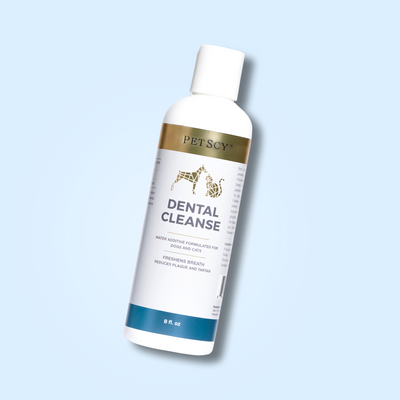








Dental Cleanse — Water Additive for Fresh Breath & Oral Hygiene.
You lean in for a cuddle, your dog opens their mouth, and a sharp, sour smell arrives before the kiss does. It's tempting to call it normal dog breath, especially if your dog is otherwise playful and eating well. But persistent odor is useful information. It often points to bacterial activity around plaque, calculus, and the gumline, and a water additive can only help responsibly when it's used as part of a broader dental plan.
Dental Cleanse is designed for the practical gap between brushing sessions, dental chews, and veterinary care. It can support fresher breath and daily oral hygiene, but it can't scrape away established calculus, treat advanced periodontal disease, or replace an examination when your dog has pain or visible gum problems.
Table of Contents
- Why Dog Breath Is a Health Signal, Not Just a Smell
- How Common Canine Dental Disease Really Is
- What a Water Additive Like Dental Cleanse Actually Does
- Adding Dental Cleanse to Your Dog's Daily Routine
- Can a Water Additive Replace Brushing
- Pairing Dental Cleanse With Chews, Powders, and Professional Care
- Realistic Results, Vet Escalation, and a 30-Day Plan
Why Dog Breath Is a Health Signal, Not Just a Smell
A mild, meaty scent can be ordinary. A persistent rotten, sour, sweet, or ammonia-like odor is different. Anaerobic bacteria around the tooth surface and gum margin produce volatile sulfur compounds as they break down proteins, and those compounds create much of the smell owners notice.
The odor may come from plaque and calculus, but it isn't the only possible explanation. Gingival disease, an ulcer, a foreign object lodged between teeth, or a systemic illness can also change a dog's breath. Kidney disease and diabetes are especially important considerations when the smell is unusual or appears with other changes in an older dog.
What the smell can tell you
A strong odor deserves more attention when it appears alongside:
- Drooling or pawing at the mouth: These behaviors can indicate discomfort rather than simple breath odor.
- Dropped food or reluctance to chew: A dog may still seem hungry while avoiding painful teeth.
- Bleeding, swelling, or receding gums: These are signs that home freshening alone isn't enough.
- A sudden sweet or ammonia-like smell: Arrange a veterinary assessment instead of masking it with a product.
A water additive may reduce odor by changing the oral environment and helping manage odor-producing compounds. It won't identify why the smell started, and it won't remove hardened deposits below the gumline.
Practical rule: Fresh breath is a useful outcome, but it isn't proof that every part of the mouth is healthy.
If you're comparing products for routine odor management, look for pet-safe, clearly labeled formulas and avoid treating a strong smell as a cosmetic issue. This guide to safe dog breath freshener options is a useful starting point for reviewing choices and safety considerations.
A home routine should also include regular visual checks of the gums and teeth. The dog dental hygiene guide offers practical context for combining brushing, oral products, and veterinary attention without assuming one product can do every job.
How Common Canine Dental Disease Really Is
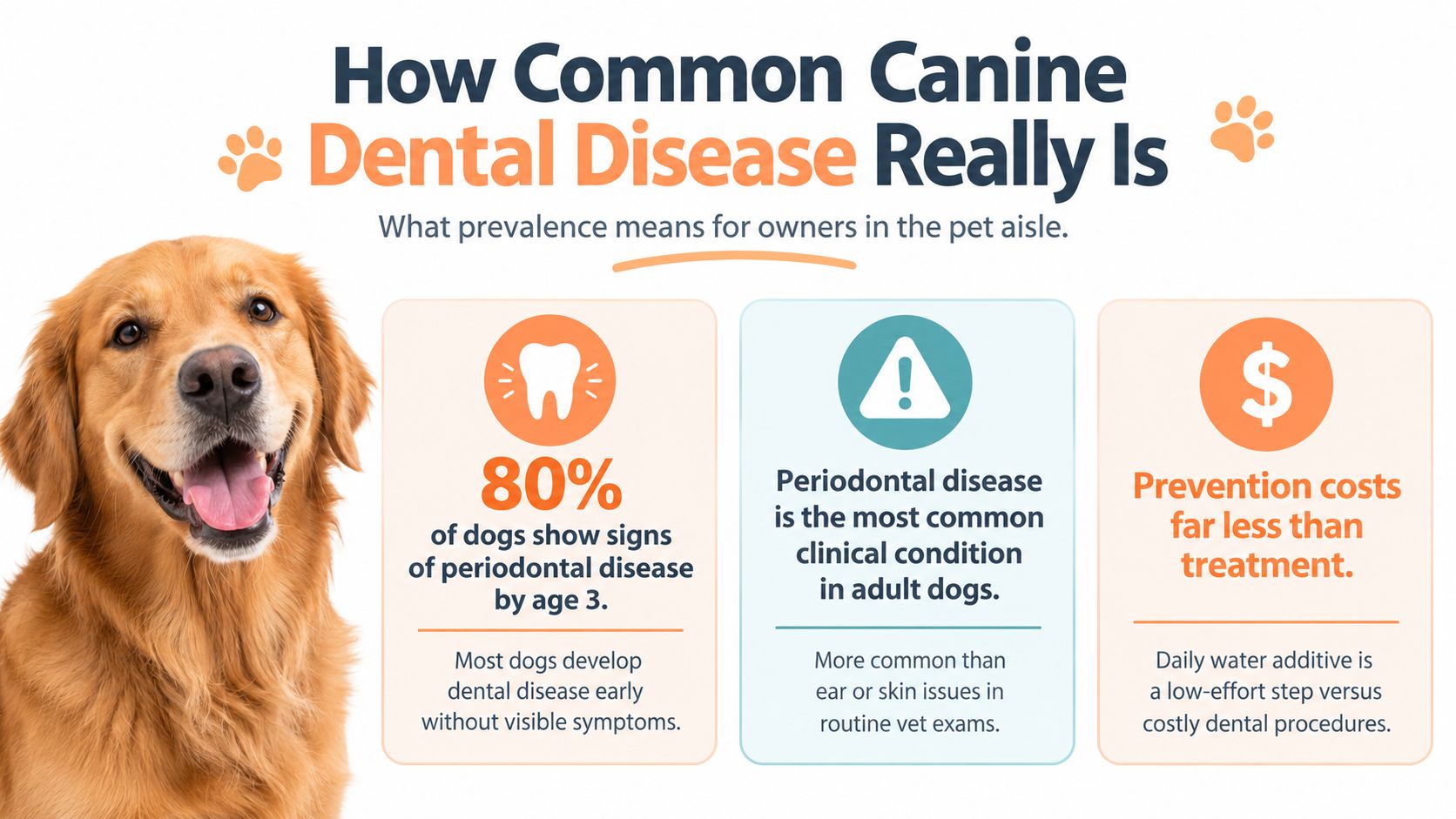
Dental disease is common enough that most owners shouldn't wait for dramatic symptoms before building a routine. In a VetCompass analysis of 22,333 dogs seen at 784 UK primary-care clinics, 2,797 dogs received a periodontal disease diagnosis during a single year. That produced a 1-year period prevalence of 12.52%, with a confidence interval of 12.09 to 12.97, or roughly one in eight dogs annually in that clinical population. The findings are reported in the VetCompass canine periodontal disease study.
The same study recorded periodontal disease more often than ear infections, reported at 7.3%, and obesity, reported at 7.1%, within that dataset. Broader veterinary references cited in the verified evidence place the lifetime or age-related burden considerably higher, with 80% to 90% of dogs over age three showing some component of periodontal disease. Those figures describe different measures, so they shouldn't be treated as interchangeable. Together, they show why prevention belongs in ordinary adult-dog care.
What this means at the pet aisle
You don't need to wait until your dog has visibly brown teeth to consider daily support. The sensible question is which routine your dog will accept and how that routine complements veterinary cleaning.
Small dogs, brachycephalic dogs, and dogs with crowded or retained teeth often need especially consistent observation because their mouths can be difficult to clean thoroughly. A dog that rejects a toothbrush may still accept a measured additive, but acceptance doesn't change the product's role. It remains a low-friction maintenance tool, not a replacement for physical plaque removal.
Banfield's 2023 national data reported dental-related issues in 73% of dogs seen at its hospitals and 64% of cats, as summarized in its State of Pet Health dental findings. That surveillance doesn't mean every dog needs the same product. It does make daily oral care a rational consideration for owners who want to intervene before odor, gum inflammation, or chewing changes become obvious.
What a Water Additive Like Dental Cleanse Actually Does
A water additive is a measured liquid mixed into a dog's drinking water whenever the bowl is refreshed. Dental Cleanse is a sugar-free formulation with stabilized chlorine dioxide, zinc, and a mild mint flavor, intended to support fresher breath and everyday oral hygiene through regular contact with the mouth.
Stabilized chlorine dioxide works through oxidation. In practical terms, it can help break down odor-related compounds and interfere with the biofilm environment that allows plaque to adhere. Zinc supports odor control and tartar-management goals at the gumline. Neither mechanism physically scrubs a tooth, and neither can reach every sheltered area with the same force as brushing or veterinary instruments.
The right expectation
Think of the product as a chemical maintenance layer. It can help manage the conditions that contribute to odor and plaque accumulation, particularly between more direct cleaning sessions. It isn't a drug, it isn't a treatment for established advanced periodontal disease, and it won't turn hardened calculus back into clean enamel.
Dental Cleanse sits among several different PetScy dental formats. Dental Powder is mixed with food, while Dental Finger Wipes provide direct contact with visible tooth surfaces and the gumline. A water additive has the lowest handling burden, which matters for dogs that resist fingers, brushes, or prolonged mouth handling.
The evidence supports that maintenance role. In a randomized, blinded canine trial, dogs received professional scaling and polishing before daily water-additive use for 30 days. Compared with control, plaque accumulation was reduced by 47% and tartar by 24%, as described in the Frontiers Veterinary Science trial summary. Those outcomes measured regrowth after cleaning, not removal of existing calculus.
For practical guidance on odor-focused routines and product selection, see this dog breath freshener resource. Use it as a supplement to assessment and mechanical care, not as evidence that a fresh smell equals a disease-free mouth.
Adding Dental Cleanse to Your Dog's Daily Routine
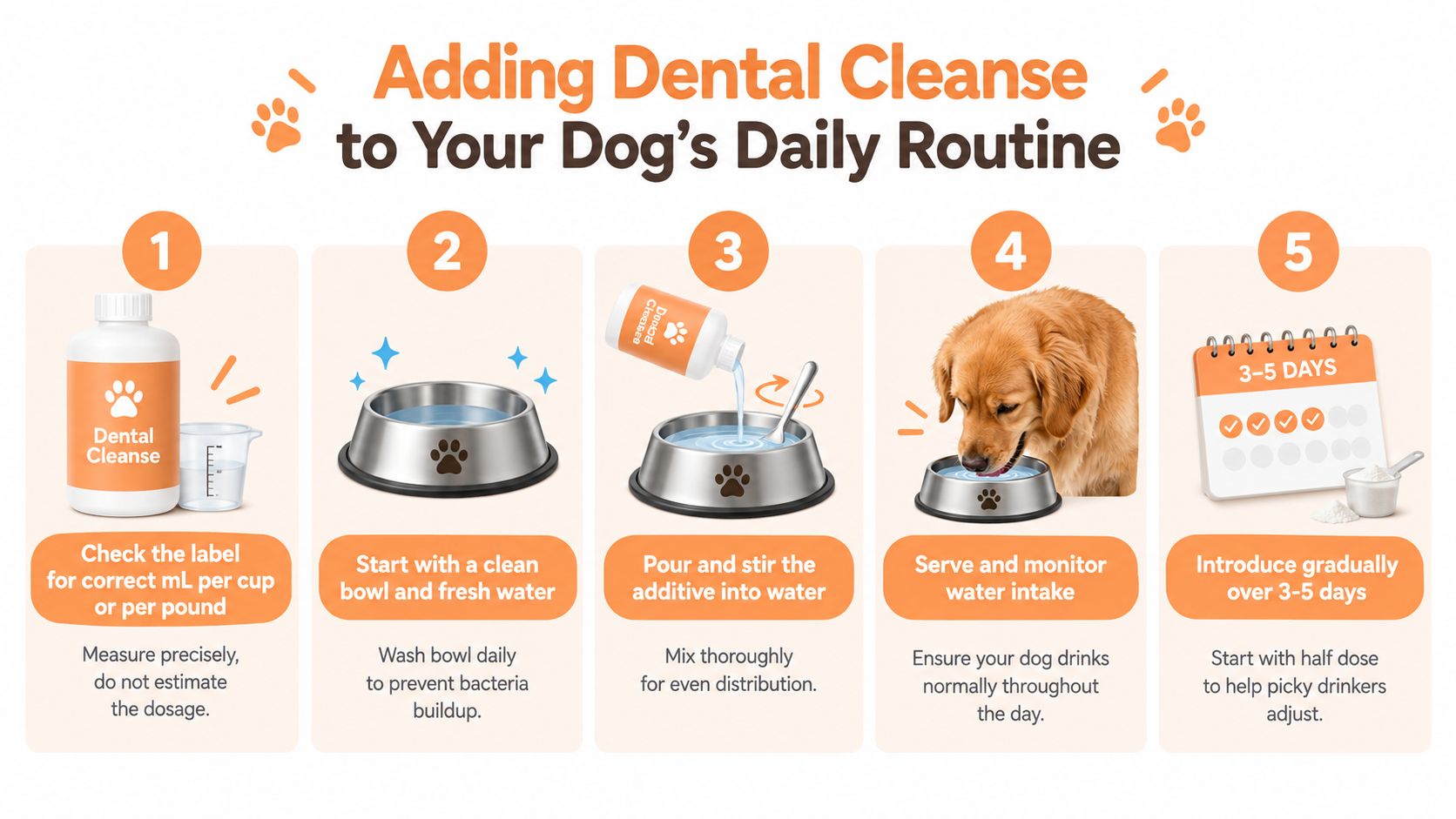
A good routine is precise enough to repeat and gentle enough that your dog keeps drinking normally. Start by reading the product label every time you change products or container size. Use the stated milliliter amount per cup or per pound, measure it rather than estimating, and mix it into fresh water in a clean bowl.
A simple daily sequence
- Measure first. Check the label for the correct ratio. Accurate dosing keeps the flavor and concentration consistent.
- Prepare the bowl. Wash the bowl, add fresh water, and then pour in the measured amount.
- Mix thoroughly. Stir or swirl the water so the additive disperses evenly.
- Serve and observe. Confirm that your dog drinks normally and isn't avoiding the bowl.
- Pair the routine. Add one brushing, wipe session, or appropriate dental chew to provide mechanical action.
Introduce the additive gradually if your dog is selective about water. Begin with a reduced amount, then increase toward the labeled dose over several days. The infographic below shows a five-step sequence, but the exact transition speed should follow your dog's acceptance rather than a rigid deadline.
Keep a plain-water bowl available during the transition, particularly in a multi-dog household where you can't easily tell which dog drank from which bowl. Watch for a drop in water consumption, refusal, or repeated attempts to find another water source. If any of those occur, stop the transition and ask your veterinarian or follow the product's safety directions.
Small details that protect compliance
Stainless steel is easy to clean and doesn't absorb residue as porous surfaces can. Replace water at least daily, and refresh it more often in warm weather or whenever food, dirt, or saliva has contaminated the bowl. Store the bottle away from direct sunlight and follow its label instructions for handling and storage.
Tape this checklist inside the cupboard:
- Dose: Measure the labeled amount.
- Water: Use a clean bowl and fresh water.
- Mix: Distribute the additive evenly.
- Monitor: Confirm normal drinking.
- Mechanical care: Brush, wipe, or offer an appropriate chew.
- Refresh: Empty and wash the bowl on schedule.
For a visual demonstration of the routine, watch the embedded guide below.
Can a Water Additive Replace Brushing
No. The available evidence supports water additives as an adjunct, and the size and design of the studies matter.
One randomized, double-blind canine study evaluated a xylitol-based additive over 208 days. It reported a 5.1% decrease in mean plaque score and a 14.9% decrease in mean calculus score, as detailed in the published canine study. Those results show measurable support with long-term daily compliance, but they don't show that the additive can perform the same physical job as brushing.
A separate 2024 clinical study found that daily water additive alone didn't significantly improve deposits or periodontal health in unscaled dogs. The protocol that combined weekly brushing with daily additive use partly improved periodontal status, which is the more useful message for owners. The clinical study on combined home-care protocols supports layering chemical and mechanical actions instead of choosing one and abandoning the other.
| Method | Plaque index reduction | Calculus index reduction | Best for |
|---|---|---|---|
| Daily water additive after professional cleaning | 47% in a 30-day randomized trial | 24% in the same trial | Limiting regrowth during maintenance |
| Long-duration xylitol-based additive | 5.1% mean reduction | 14.9% mean reduction | Consistent daily support over time |
| Water additive alone in unscaled dogs | No significant improvement reported in the 2024 study | No significant improvement reported in the 2024 study | Not a stand-alone treatment |
| Weekly brushing plus daily additive | Partly improved periodontal status in the 2024 study | Combination outcome, not a substitute for cleaning | Dogs needing a realistic layered routine |
The difference is easy to understand at home. A brush physically disrupts soft plaque where its bristles contact the tooth, while the additive reaches the mouth through drinking and supports the chemical side of the routine. Neither approach guarantees coverage of every tooth, and neither removes calculus that has already hardened.
The honest answer: A water additive can cover gaps between brushing sessions. It can't replace the brush, a chew with suitable mechanical action, or professional care when disease is established.
A 2023 review also cautioned that many products lack published efficacy data and emphasized the value of evidence-backed or VOHC-aligned options when owners want meaningful plaque control. The review of canine dental home-care products is particularly useful when fresh breath claims sound stronger than the underlying evidence.
Pairing Dental Cleanse With Chews, Powders, and Professional Care
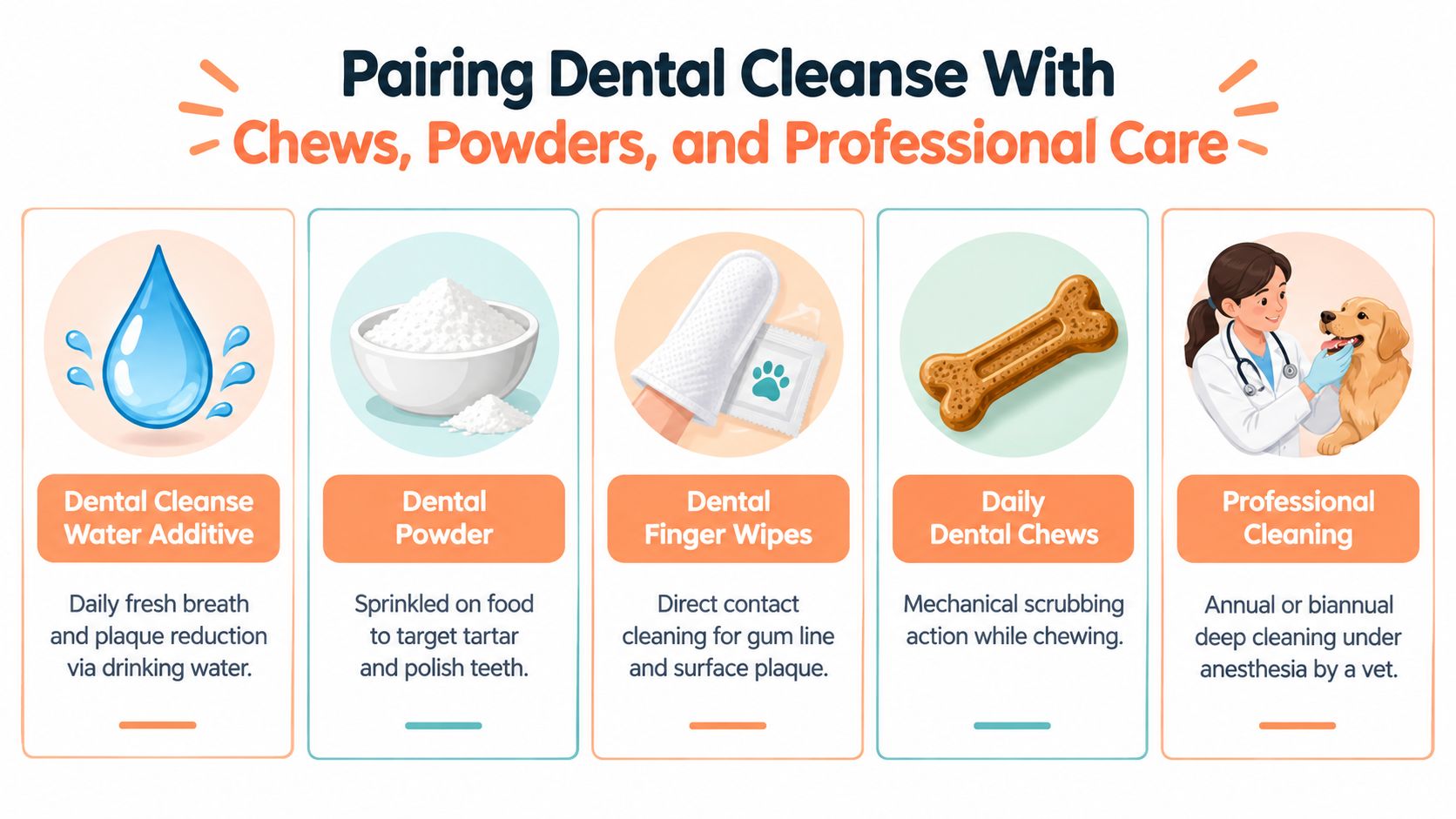
Each dental tool handles a different part of the problem. Dental Cleanse supports the oral environment between direct cleaning sessions. A brush or wipe physically contacts the tooth surface, a chew adds abrasion while the dog works through it, and a veterinary cleaning addresses deposits and structures that home products can't safely reach.
Use the tool that matches your dog's tolerance and dental status:
- Dental Cleanse: Add the measured formula to drinking water for daily breath and plaque-support coverage.
- Dental Powder: Mix it with food when a dog refuses brushing or when a tartar-focused food routine is easier to sustain. The dog plaque powder guide provides more context on this format.
- Dental Finger Wipes: Use direct contact for visible surface debris, short gumline sessions, or gradual puppy desensitization.
- Dental chews: Choose a size and texture your dog can handle, and supervise chewing. The benefit comes from appropriate mechanical contact, not from giving a treat.
- Professional cleaning: A veterinarian can evaluate the mouth, remove deposits home care can't reach, and decide whether extra treatment is needed.
Layering matters most for small and brachycephalic dogs, seniors, and dogs already showing early periodontal changes. Crowded teeth create places where food and plaque can remain, while a dog with existing disease may need professional treatment before any home routine can work effectively.
Professional cleaning also deserves financial planning rather than postponement. Owners comparing veterinary estimates may find this overview of canine dental cleaning costs helpful when deciding how to budget for examination and treatment.
The rule is straightforward: place the additive underneath brushing and chews, never on top of professional cleaning as a substitute.
Realistic Results, Vet Escalation, and a 30-Day Plan
Give the routine enough time to become consistent before judging it. The first week is about acceptance and normal hydration, not dramatic tartar changes. By the second week, aim for the full labeled dose alongside a brush or wipe session, then reassess odor and visible plaque during the following weeks.
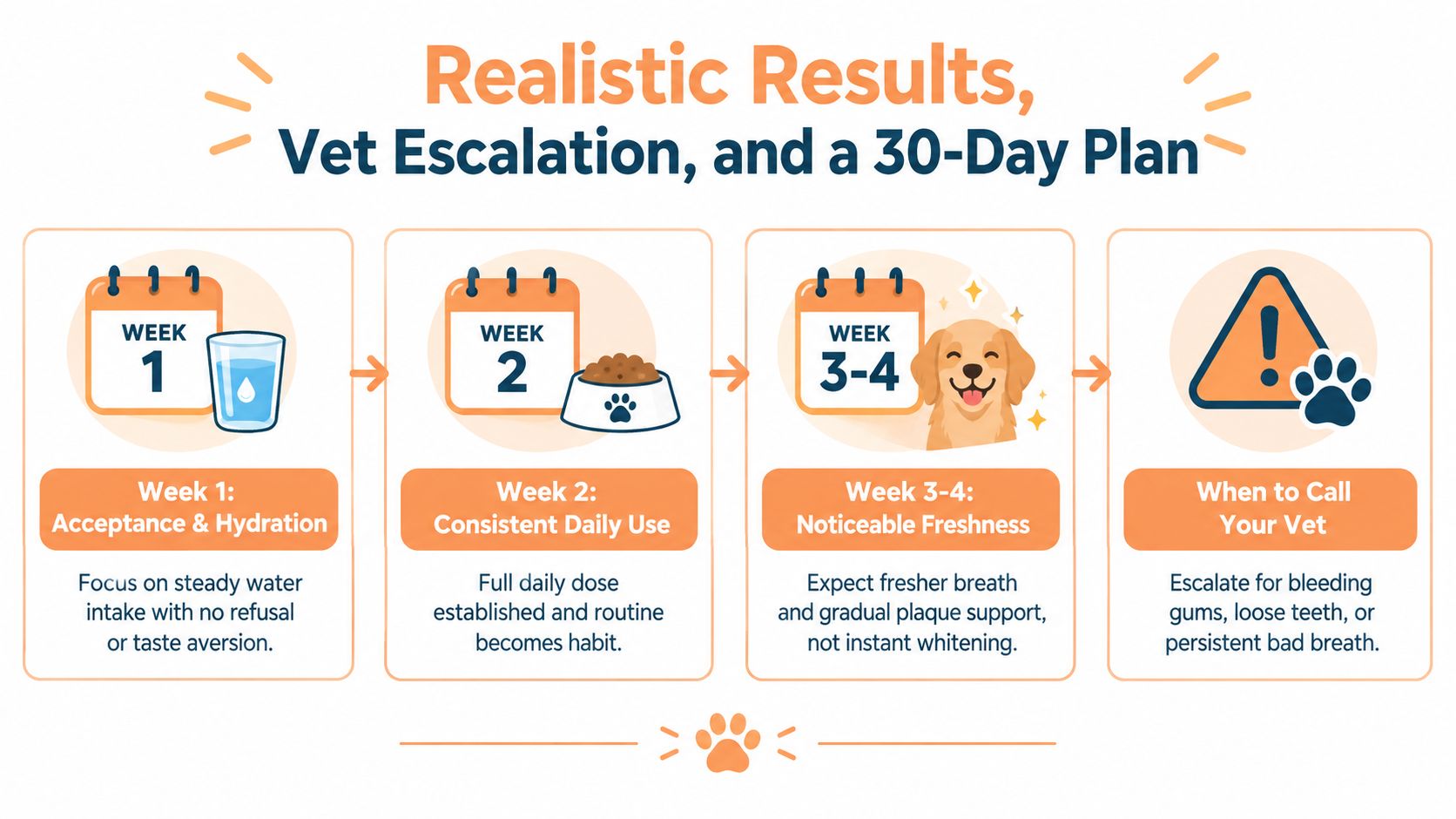
A practical four-week plan looks like this:
- Week one: Measure once daily, track water intake, and confirm your dog accepts the bowl.
- Week two: Establish the full labeled dose and add one daily brushing or wipe session.
- Week three: Assess breath at the same time each day and look for changes in gum color or visible buildup.
- Week four: Decide whether the routine is supporting maintenance or whether your dog needs a veterinary examination.
Persistent halitosis after consistent home care, bleeding or receded gums, loose or broken teeth, facial swelling, mouth pawing, dropped food, or sudden eating changes all justify prompt veterinary attention. Don't keep adding products to a painful mouth while hoping the odor will resolve. Water additives can slow accumulation between cleanings, but they don't reverse established periodontal disease.
Escalate for the dog in front of you, not the promise on the bottle.
Start tomorrow with one measured dose in the main water bowl, a clean refill, a short brushing or wipe session, and a simple note about drinking and breath. That record gives you a clearer basis for deciding whether the routine is helping and gives your veterinarian useful context if symptoms persist.
PetScy offers Dental Cleanse as a daily water additive alongside Dental Powder and Dental Finger Wipes, so you can build an oral-care routine around your dog's tolerance and needs. Visit PetScy to review the dental-care options and choose the format you can use consistently.