









Dog Dental Powder: A Complete Guide to Tartar and Breath
More than 80% of dogs over age three have active dental disease, according to veterinary sources summarized in a review of canine oral health (veterinary review). That makes dental care a routine health responsibility, not a cosmetic extra.
Dog dental powder is designed for this everyday gap. You sprinkle it over food, where its ingredients may help manage soft plaque, slow tartar accumulation, or reduce compounds associated with bad breath. It isn't a cure for established periodontal disease, and it can't replace a veterinary dental examination, professional scaling, or brushing when your dog will accept it.
The useful question isn't whether powder magically “cleans” every tooth. It's which oral-care job the formula can support. Plaque control, tartar management, and breath freshening are related but separate outcomes, and a responsible routine treats them that way.
Table of Contents
- Why Dog Dental Powder Matters for Your Dog
- How Plaque and Tartar Build Up in a Dog's Mouth
- Common Ingredients and How Each One Works
- How to Use Dog Dental Powder Step by Step
- Comparing Dog Dental Powder to Other Dental Products
- Safety, Side Effects, and When to Skip Powder
- Choosing, Buying, and Storing a Quality Powder
- Setting Realistic Expectations and Quick Answers
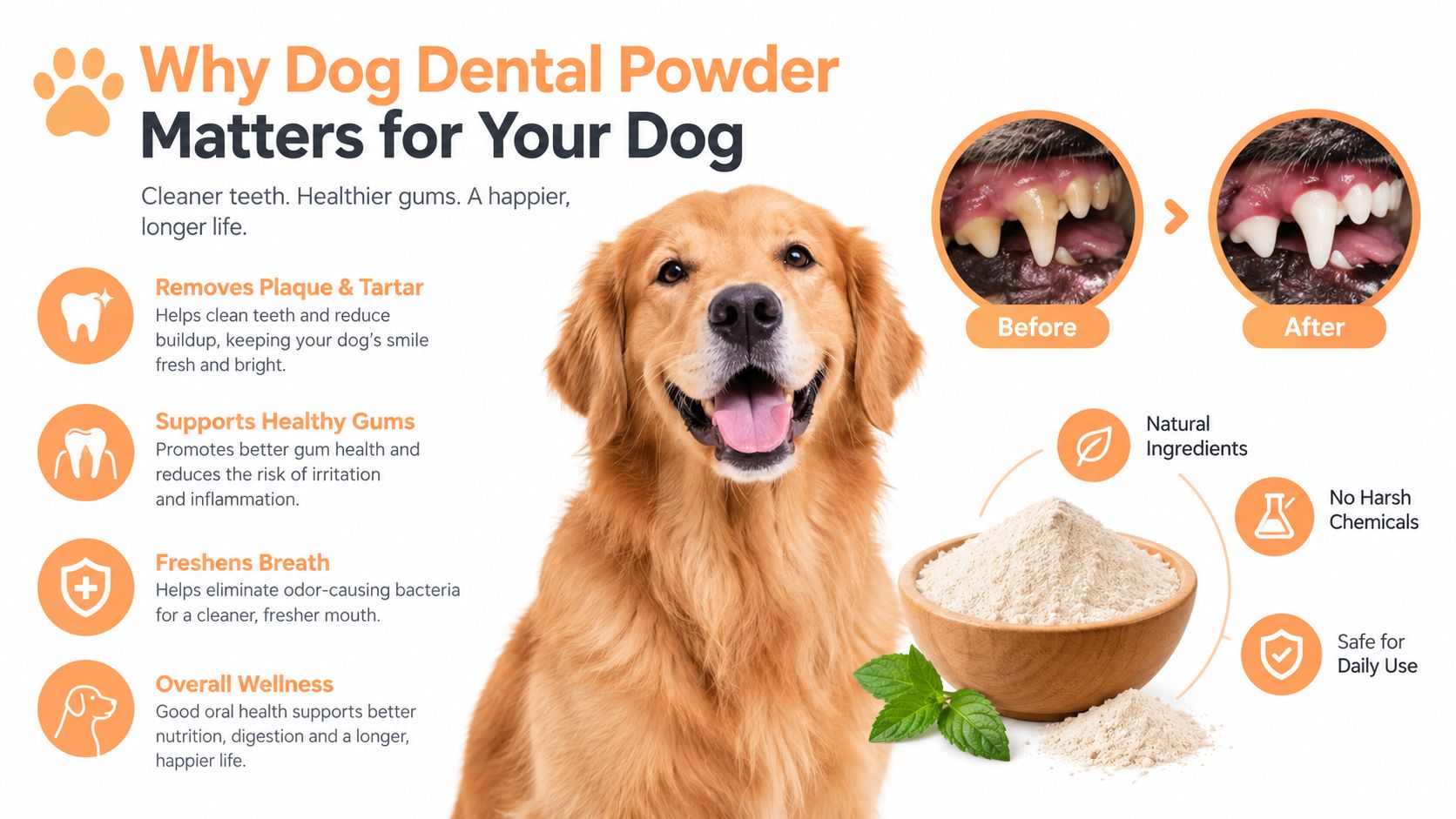
Why Dog Dental Powder Matters for Your Dog
Dental disease can begin early in a dog's life. Older veterinary guidance summarized research reporting periodontal disease in 80% of dogs by age two (World Small Animal Veterinary Association guideline paper). A separate review found prevalence estimates ranging from 44% to 100%, depending on the population and assessment method (canine oral-health review).
This high prevalence makes daily oral care a practical health routine, not a cosmetic extra. A dog dental powder gives owners one way to act consistently between veterinary visits, particularly when a dog resists a toothbrush. Brushing remains the most direct method for disrupting plaque, but an ideal routine that never happens provides no benefit. A food-based powder may help close that compliance gap.
Three outcomes that should stay separate
- Plaque control addresses the soft bacterial film on teeth.
- Tartar control aims to slow or reduce mineralized buildup. Bonded calculus may still need professional removal.
- Breath freshening targets odor-producing compounds and the conditions that let them accumulate.
These goals overlap, but powder should not be expected to deliver all three equally. Clinical work on a seaweed-based powder reported measurable improvements in plaque, tartar, and gingival bleeding when dogs received it daily with food. The study supports maintenance use, not replacing veterinary cleaning (ProDen PlaqueOff canine study).
For practical at-home treatments for dog breath, separate simple odor control from signs that require veterinary attention. Fresh breath alone does not show that tartar has been removed.
How Plaque and Tartar Build Up in a Dog's Mouth
Start with a drinking glass. After sitting overnight, it may develop a thin, slightly sticky film even when it looked clean earlier. Plaque is similar, except a dog's plaque is a bacterial biofilm mixed with material from food and saliva.
The process usually follows a predictable sequence:
- Soft plaque forms. Bacteria attach to enamel and create a film.
- Saliva adds minerals. Calcium and other minerals can harden that film.
- Tartar develops. The soft layer becomes a rough, firmly attached deposit.
- Gums become irritated. Bacteria and rough calculus sit near the gumline, where inflammation can begin.
A useful household comparison is the inside of a neglected kettle. Mineral scale starts as a thin coating, then becomes a hard crust that doesn't disappear when you rinse the kettle. Tartar behaves in much the same way. Once it has bonded to a tooth, sprinkling a supplement onto dinner shouldn't be expected to chip it away.
Why daily timing matters
The provided infographic describes a 24 to 72 hour period in which plaque can harden into tartar. That window matters because a powder is better understood as support against accumulation and re-accumulation, not as a scraper for mature calculus.
Tartar also creates a rougher tooth surface. Rough surfaces give new plaque more places to cling, producing a self-reinforcing cycle. Daily care aims to interfere with the soft-film stage before the cycle becomes harder to manage.
This distinction is also central to daily care for reducing plaque and improving breath. If your dog has loose teeth, painful chewing, bleeding gums, facial swelling, or heavy deposits below the gumline, home powder isn't an appropriate substitute for an examination.
Common Ingredients and How Each One Works
Dog dental powders use different formulation strategies. Some ingredients work after mixing with food and saliva, while others depend on contact with the tooth surface or mild polishing during chewing. The label should make that distinction clear, because plaque control, tartar removal, and fresher breath are separate outcomes.
Ingredient categories at a glance
| Ingredient Category | How It Works | Primary Target |
|---|---|---|
| Algae and seaweed derivatives | May influence the oral environment through digestion and saliva | Plaque and calculus accumulation |
| Enzymatic systems | Intended to interfere with bacterial activity and biofilm structure | Soft plaque and odor |
| Probiotic organisms | Aim to support a more favorable oral microbial balance | Microbiome and breath |
| Gentle abrasives | Provide mild polishing when food is chewed | Surface debris and plaque film |
Algae and seaweed, including Ascophyllum nodosum, have the clearest powder-specific evidence in the supplied data. In a daily, food-administered trial, ProDen PlaqueOff powder produced a mean 32% reduction in plaque index, 35% reduction in tartar index, and 67% reduction in gingival bleeding versus placebo (clinical canine powder study). These findings support a maintenance role. They do not show that an algae powder can remove thick, established tartar.
Enzymes, such as glucose oxidase or lactoferrin systems, are designed to make the mouth less favorable to plaque-forming bacteria. Their practical role is supporting management of soft biofilm and odor. A claim that they dissolve every hardened deposit extends beyond the evidence supplied here.
Probiotics and postbiotics work on the oral microbiome rather than directly on the tooth surface. A canine clinical study of a postbiotic reported a 27% reduction in volatile sulfur compounds, with effects observed within 7 days (postbiotic canine study). That result applies to breath-related compounds. It should not be treated as proof of equivalent tartar removal.
Abrasives, including silica or mineral particles, may polish exposed surfaces as a dog chews food containing them. Polishing can loosen surface debris, like rubbing a thin film from glass, but it cannot reliably reach every tooth or the area below the gumline. Formulas that promise plaque control, tartar removal, and instant fresh breath without explaining these limits need careful evaluation.
How to Use Dog Dental Powder Step by Step
A powder only helps if your dog consumes the intended amount. The simplest routine is to connect dosing to one regular meal and mix it thoroughly enough that the supplement doesn't remain at the bottom of the bowl.
Build the feeding routine
Use the product label first, since scoop sizes and formulas differ. The dosing plan supplied for this guide is:
- Small dogs under 10 pounds: half a scoop.
- Dogs from 10 to 30 pounds: one scoop.
- Large breeds: one and a half to two scoops.
For a dog with a sensitive stomach, starting lower can make the transition easier. Mix the powder into wet food, softened kibble, or a small amount of plain yogurt if that food already suits your dog. Dry-kibble feeders may need a little water so the powder adheres rather than collecting beneath the food.
Make consistency easier
Choose a once-daily time you can repeat. Don't double the next serving after a missed day. A regular, correctly measured dose is more useful than an occasional large serving, and extra powder won't compensate for hardened tartar.
The supplied plan suggests a practical expectation frame of 5 to 14 days for breath improvement, visible tartar softening at 30 days, and meaningful tartar reduction at 60 days. Those time points are a usage guide, not a guarantee, and response depends on the dog's starting oral condition and the formula.
If your dog rejects the meal, try blending the powder into a smaller portion first, then serve the rest once that portion is eaten. Dogs on prescription diets need a veterinarian's approval before you add a supplement. Ask the prescribing clinic to assess the full ingredient and mineral profile rather than assuming that a small scoop is automatically compatible.
Comparing Dog Dental Powder to Other Dental Products
No oral-care product wins on every criterion. Powder is attractive because it requires little hands-on effort, but brushing offers more direct plaque disruption, while chews add physical contact and palatability.
| Product | Daily Effort | Plaque Control | Tartar Control | Breath Control | Best Fit |
|---|---|---|---|---|---|
| Dog dental powder | Sprinkle into food | Supports daily maintenance | Helps slow accumulation | Ingredient-dependent | Dogs that resist brushing |
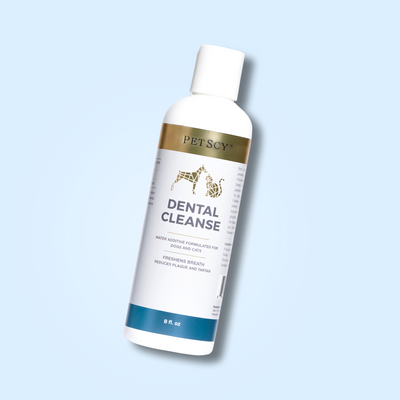
| Water additive | Add to drinking water | Targets the oral environment | Limited direct action | May support odor control | Owners seeking a low-contact routine |
| Dental wipes | Wipe tooth surfaces | Direct surface contact | Limited once deposits harden | Can remove surface residue | Dogs that reject brushes |
| Dental chews | Offer a suitable chew | Mechanical contact varies | May help with surface buildup | Often improves immediate odor | Dogs motivated by chewing |
| Toothbrushing | Hands-on cleaning | Most direct home disruption | Helps prevent new buildup | Removes odor-producing film | Dogs trained to accept brushing |
Brushing demands patience and cooperation, but it physically reaches the tooth surfaces that a food additive may not. Wipes offer a middle option for owners who can handle the mouth briefly but can't establish brushing. Chews may be easier to give, yet owners should account for suitability, swallowing behavior, and calorie intake.
Powder sits between a water additive and brushing. It adds no separate handling session, and some formulas focus on tartar accumulation through saliva-related or microbiome-related mechanisms. It still won't clean below the gumline or remove bonded calculus.
For another option focused on odor support, compare the approach described in this dog breath freshener guide. The strongest routine may combine methods: brushing where practical, a suitable chew or wipe for additional contact, and powder for consistent food-based support. Professional care remains necessary when disease is already present.
Safety, Side Effects, and When to Skip Powder
A vet-formulated powder may suit many dogs, but “natural” doesn't mean universally appropriate. Ingredients can affect digestion, mineral intake, allergies, and dietary restrictions, so read the complete label before serving it.
During the first week, watch for soft stool, reduced appetite, or increased thirst. These signs may reflect intolerance, an unsuitable ingredient, or an unrelated problem. Stop the product and seek veterinary advice promptly if your dog vomits within hours of dosing, develops facial swelling, has blood in the saliva, or suddenly refuses food.
Check the formula and the dog
Avoid products containing:
- Xylitol or artificial sweeteners, which can be dangerous for dogs.
- Added sugars, which don't support a sensible oral-care routine.
- Alcohol-based preservatives, which may be unsuitable for ingestion.
- High sodium chloride levels, especially when a dog has dietary restrictions.
Speak with your veterinarian before starting powder if your dog eats a prescription kidney or cardiac diet, is younger than six months with adult teeth still erupting, has an active infection, abscess, or recent extraction, or has a history of seaweed or algae allergies.
Stop and call your clinic: Broken, loose, or painful teeth require an examination before you introduce a home dental product.
Powder is maintenance support, not treatment for periodontal disease. Bad breath accompanied by pain, bleeding, swelling, drooling, or reluctance to eat should move the priority from shopping for a supplement to arranging veterinary care.
Choosing, Buying, and Storing a Quality Powder
A clear label gives you more useful information than a long list of vague promises. Look for a named active ingredient, species-specific directions, complete ingredient disclosure, and evidence that relates to dogs rather than only laboratory testing or human products.
Quality signals can include National Animal Supplement Council membership, good manufacturing practices, and third-party testing. These features don't guarantee that a formula will suit your dog, but they show that the manufacturer has addressed manufacturing and verification rather than relying only on attractive packaging.
Read the serving information
Compare the scoop amount with the container's total servings. A large tub isn't necessarily better value if the daily serving is also large. Calculate the recurring cost from the stated serving instructions, then decide whether a one-off purchase or subscription suits your routine.
A first-time buyer may prefer a starter-size container before committing to automatic deliveries. That lets you observe tolerance, acceptance, and breath response. If you choose recurring delivery, check how to pause or cancel it and whether the formula or serving guidance has changed.
PetScy offers a Dental Powder subscription for owners who prefer scheduled replenishment. Its relevance here is practical, since a daily product is easier to evaluate when the supply doesn't unexpectedly run out.
Store it like a supplement
Seal the container after every use. Keep it away from humid bathrooms and damp feeding areas, check for unusual clumping, and follow the printed expiration date. Enzyme and probiotic activity can decline over time, so an old or poorly stored powder may not perform as intended even if it still looks usable.
Setting Realistic Expectations and Quick Answers
The most useful expectation is modest and specific. Dog dental powder can support daily control of soft plaque and may freshen breath, but it won't reliably dissolve established tartar. Hardened calculus, especially below the gumline, needs professional assessment and cleaning.
At the early stage of use, owners may notice a change in breath or less visible plaque film. Over a longer maintenance period, tartar edges may appear less active or accumulate more slowly, but the result varies with the dog, diet, existing deposits, and formula. The supplied evidence describes powder effects as meaningful but modest, which is why these products work best between cleanings rather than instead of them (evidence summary on powder limits).
Veterinary examinations remain important for older dogs and for any dog showing pain or gum disease. A powder can't inspect a tooth, diagnose an abscess, or treat infection under the gumline.
Quick answers
How quickly can breath improve? Some formulas may produce a noticeable breath change during consistent use, but the response varies. The supplied usage framework places breath improvement within 5 to 14 days, while the postbiotic study linked above reported volatile sulfur compound effects within 7 days.
Can puppies use dental powder? Puppies younger than six months should only start after veterinary guidance, especially while adult teeth are erupting.
Can powder be combined with brushing, wipes, or chews? Usually, combination routines make sense because each method reaches the mouth differently. Introduce products carefully and monitor total ingredients and calories.
What happens after a missed dose? Resume the normal serving at the next appropriate meal. Don't double the dose.
Is powder suitable with kidney or cardiac diets? Ask the prescribing veterinarian first. Mineral and sodium content can matter even when the product is served in a small quantity.
A sensible plan is to have your dog's mouth examined, remove established disease professionally when needed, then use a consistent home routine to slow re-accumulation.
PetScy offers veterinarian-formulated dental products, including a food-based Dental Powder intended to support tartar management and fresher breath during daily care. Visit PetScy to review the dental options and choose a routine that fits your dog's diet, tolerance, and veterinary advice.