







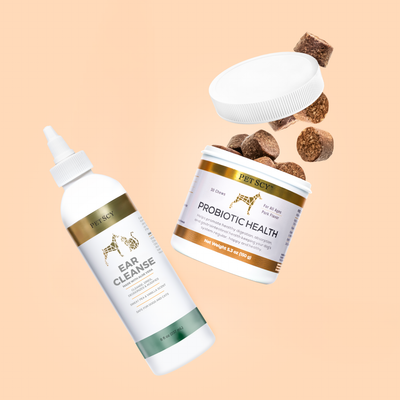


PetScy's Fish Oil — Omega-3 EPA/DHA from Wild Alaskan Pollock & Salmon
You notice the signs during ordinary moments. Your dog scratches through dinner, licks their paws at night, or rises slowly after a nap. Maybe the coat looks dull, or a previously active companion has started avoiding stairs. These changes can have many causes, so fish oil isn't a substitute for a veterinary examination, but the right omega-3 supplement can be a useful part of a broader care plan.
PetScy's Fish Oil, omega-3 EPA and DHA from wild Alaskan pollock and salmon, is designed around the two marine omega-3s most relevant to canine nutrition. The practical questions are more important than a generic promise that “fish oil is good”: what do EPA and DHA do, why do the fish sources matter, how much does a dog need, and how can you tell whether a product deserves your trust?
Table of Contents
- Is Your Dog Constantly Scratching or Moving Stiffly
- Understanding the Power of EPA and DHA
- Why Wild Alaskan Pollock and Salmon Matter
- The Science-Backed Benefits for Your Dog
- How to Use Fish Oil for the Best Results
- PetScy's Commitment to Quality and Purity
Is Your Dog Constantly Scratching or Moving Stiffly
A dog with irritated skin may seem unable to settle. They scratch, chew at their feet, rub against furniture, or wake repeatedly to lick a sore area. Another dog may have a different pattern, taking longer to stand, walking cautiously on slippery floors, or losing interest in a game they once loved.
Those symptoms deserve attention because allergies, parasites, infection, injury, and joint disease can look similar from home. Omega-3 fatty acids may support the body's inflammatory balance, but they won't diagnose the reason for your dog's discomfort. If the itching is intense, the skin is damaged, or mobility changes suddenly, arrange a veterinary assessment rather than relying on a supplement alone.

Why EPA and DHA enter the conversation
EPA, or eicosapentaenoic acid, and DHA, or docosahexaenoic acid, are long-chain omega-3 fats found in marine oils. They aren't interchangeable with counting total “fish oil” on a label. The meaningful question is how much EPA plus DHA the serving provides.
For a dog with seasonal scratching, EPA may help support a healthier inflammatory response alongside appropriate allergy care. For a dog moving stiffly, the same fatty acid is relevant to joint comfort and everyday movement. DHA has a different emphasis, supporting neurological and visual tissues throughout life.
Owners often search for a supplement after trying to manage a recurring problem at home. The guide on whether omega-3 helps dogs with itching can help put skin symptoms into context. If you're caring for a cat as well, persistent bald patches need their own assessment, and getting expert advice on feline health is a sensible next step.
Practical rule: Use fish oil as supportive care, not as a reason to postpone an examination.
A well-chosen product can fit into a routine that also includes parasite prevention, a balanced diet, weight management, prescribed treatment, and regular monitoring. The goal isn't to promise that every scratch or stiff step will disappear. It's to provide relevant EPA and DHA in a form you can use consistently while your veterinarian addresses the underlying issue.
Understanding the Power of EPA and DHA
Think of omega-3 fats as raw materials that help the body maintain different systems. EPA and DHA are the marine omega-3s with direct biological roles, while the phrase “omega-3” by itself is too broad to tell you what a product will deliver.
EPA is closely associated with inflammatory signaling. That matters because inflammation can influence the skin barrier, joint tissues, and cardiovascular system. Supplying EPA doesn't make an allergy or arthritis vanish, but it can support a less reactive inflammatory environment as part of a complete plan.
DHA is especially concentrated in the brain and eyes. Growing puppies need appropriate nutrition for development, while older dogs still rely on healthy nervous-system function. DHA isn't just a puppy ingredient, though. It remains a useful part of a marine omega-3 profile throughout a dog's life.

Read the label in the right order
Start with the amount of EPA and DHA per serving. A label that highlights the total oil weight without clearly stating these fatty acids leaves you guessing about the active contribution.
Then check the serving instructions, storage requirements, ingredient list, and quality testing information. A liquid oil can be convenient for mixing with food, while capsules may suit some households better. Neither format automatically proves higher quality.
EPA in everyday language
- Skin support: EPA can complement veterinary care for dogs with an inflammatory component to their skin discomfort.
- Mobility support: EPA is relevant when a dog's joints need nutritional support alongside exercise, weight control, and treatment.
- Cardiovascular support: EPA contributes to the broader marine omega-3 profile used in nutritional support.
DHA in everyday language
- Brain function: DHA supports nervous-system tissues, making it relevant to puppies and aging dogs.
- Vision: DHA has an important structural role in the eyes.
- Whole-life nutrition: DHA remains useful beyond early development because the brain and visual system continue to need appropriate fatty acids.
The best product isn't the one with the most impressive front label. It's the one that clearly identifies EPA and DHA, provides a usable serving, protects the oil from degradation, and fits your dog's medical situation. For a broader buying framework, see this guide to the best fish oil for dogs.
Why Wild Alaskan Pollock and Salmon Matter
The fish species used for an oil affect its natural fatty-acid profile, its place in the supply chain, and the questions a manufacturer must answer about testing. Wild Alaskan salmon is naturally rich in EPA and DHA. Pollock is leaner, but its scale and established role in seafood production make it a practical marine source.

Potency starts with the species
A typical 100 g raw serving of salmon can provide roughly 690 mg to 1,910 mg of combined EPA and DHA, depending on species and origin. USDA-based summaries list farmed Atlantic salmon at about 1,910 mg per 100 g, wild Atlantic salmon at about 1,410 mg, coho at about 1,560 mg, and sockeye or pink salmon at around 690 mg. These values come from the species comparison of EPA and DHA in salmon.
A 100 g raw portion of Alaskan pollock provides about 130 mg of combined EPA and DHA, including approximately 40 mg EPA and 90 mg DHA, according to the Alaskan pollock nutritional profile. That is lower than salmon, but “leaner” doesn't mean irrelevant. Pollock remains a scalable source for marine ingredients, and its tissues and side streams contain recoverable EPA and DHA, as discussed in this analysis of Alaska pollock omega-3 composition.
Purity requires more than a location name
Wild Alaskan sourcing can be meaningful, but geography alone isn't a complete quality claim. Fish oils need testing for contaminants, accurate fatty-acid content, and oxidation. The species and origin help explain the ingredient, while the manufacturing process and finished-product testing determine whether the oil remains suitable for use.
Alaskan pollock is also associated with a major, traceable fishery. The Alaska Pollock fishery is MSC-certified, which gives sustainability-minded owners a concrete supply-chain signal rather than a vague “ocean-friendly” phrase.
Sustainability and effectiveness belong together
Responsible sourcing matters because a supplement should support an animal without ignoring the marine ecosystem behind it. Pollock's role in large-scale food production can make its side streams useful for oil recovery, while salmon contributes a naturally concentrated source of EPA and DHA.
A responsible sourcing claim should answer three questions: What fish was used, can its origin be traced, and does the finished oil still meet its quality specifications?
For owners who want to understand the fisheries angle in more detail, PetScy's discussion of fish oil sourced from sustainable wild-caught fisheries offers additional context. The strongest decision combines source transparency with evidence that the oil was protected and tested after extraction.
The video below provides a visual introduction to the fish-source story and how pollock and salmon fit into an omega-3 product.
The Science-Backed Benefits for Your Dog
A useful way to judge fish oil is to connect each fatty acid to a practical goal. EPA and DHA aren't magic ingredients, and they won't replace treatment for infection, parasites, orthopedic disease, or a poorly controlled allergy. They can, however, support several systems that matter to comfort and quality of life.
Skin and coat
A dog with a compromised skin barrier may scratch, lick, or chew because irritation keeps triggering the itch cycle. EPA can support inflammatory balance, while the oil's fatty acids contribute to the nutritional environment needed for healthy skin and coat.
Owners may notice practical changes gradually, such as less attention to the paws, fewer interruptions during sleep, or a coat that feels softer. Those observations are useful, but they aren't proof that fish oil caused the improvement. Keep track of other changes, including flea control, diet, bathing, medications, and seasonal exposure.
Joints and mobility
Joint discomfort often appears as hesitation rather than an obvious limp. Your dog may stop jumping into the car, take shorter walks, or need time to warm up. EPA's role in inflammatory pathways makes it relevant to joint-support routines, especially when paired with a healthy body condition and an exercise plan suited to the dog.
Fish oil works best as one part of mobility care. A veterinarian may also recommend pain control, physical rehabilitation, environmental changes, or imaging, depending on the cause of stiffness.
Brain and vision
DHA supports neurological and visual tissues. That makes it relevant to puppies during development and to older dogs whose families want to maintain cognitive health. A supplement can't reverse every age-related change, but adequate nutritional support is a reasonable part of preventive care.
Cardiovascular support
EPA and DHA also contribute to cardiovascular nutrition. The benefit for an individual dog depends on age, health status, diet, medications, and the amount supplied. Dogs with heart disease should receive supplement advice from their veterinarian, particularly if they're already taking medication or have a complex diet.
The visible goal is comfort: fewer irritated moments, easier movement, and a daily routine that supports your dog without promising more than the evidence can show.
How to Use Fish Oil for the Best Results
Dose by the amount of EPA plus DHA, not by the total volume of fish oil alone. Two products can provide the same number of pumps while delivering different quantities of active omega-3s, so compare the product label and follow its serving instructions.
PetScy's fish oil is one option owners may consider when they want a liquid source made from wild-caught Alaskan pollock and salmon. Mix the instructed serving into a meal, introduce it gradually if your dog has a sensitive stomach, and store it exactly as directed on the package.
A clinically relevant target
A 2024 canine study found that about 68 to 70 mg of EPA and DHA per kilogram of body weight per day raised the Omega-3 Index from 1.4% to 3.3% after 16 weeks, with modest improvements in pain and quality-of-life scores mainly in small and medium dogs. The study is reported in this PubMed record on canine EPA and DHA dosing.
That finding helps answer the question owners often ask, “How much will matter?” It also shows why a tiny maintenance amount may not equal a studied therapeutic intake. Don't calculate a high-dose plan independently for a dog with arthritis, bleeding risk, pancreatitis history, or concurrent medication. Ask your veterinarian to select the target and monitor tolerance.
Daily Fish Oil Dosage Guide for Dogs
The table below is a serving reference format, not an invented dosing schedule. The number of pumps must come from the specific PetScy label and your veterinarian's recommendation, because pump output and EPA plus DHA concentration vary by product.
| Dog's Weight | Recommended Daily Dose (Pumps) |
|---|---|
| Small dog | Follow the product label and veterinary guidance |
| Medium dog | Follow the product label and veterinary guidance |
| Large dog | Follow the product label and veterinary guidance |
Watch for digestive upset, changes in appetite, unusual bruising, or other concerns after starting any oil. Contact your veterinarian if symptoms appear, and ask before combining fish oil with other supplements that contain omega-3s.
Consistency matters more than occasional large servings. Give the oil with food, keep the bottle protected from heat and air, and record the serving so every household member follows the same plan. Skin and mobility changes may take time, and your veterinarian can help decide whether the response is meaningful or whether the original diagnosis needs reconsideration.
PetScy's Commitment to Quality and Purity
Fish oil can lose value when manufacturers overlook oxidation, storage, or label accuracy. EPA and DHA are chemically fragile, and research has shown that salmon oil can lose these fatty acids sharply under thermal and oxidative stress. A commercial fish-oil survey found that 98% met a peroxide value limit of 10 meq O2/kg and 96% met a TOTOX limit of 50, highlighting the technical benchmarks used to assess oxidation status in the fish-oil quality survey.
That doesn't mean a product is trustworthy because it names salmon or pollock. Look for clear EPA and DHA amounts, batch or third-party testing information, sensible packaging, and storage instructions. Sourcing supports the story, but process control protects the finished oil.

Label accuracy is part of canine care
A 2025 analysis of 11 canine fish-oil supplements found that six failed to meet label claims for EPA, DHA, or both, making third-party testing and quality control important considerations for owners. The findings are available in this analysis of canine fish-oil supplement labels.
PetScy describes its catalog as veterinarian-formulated, made in the United States with globally sourced ingredients, and supported by NASC membership and third-party testing practices. Those details give owners questions to verify, not a reason to skip their own review of the product label.
Choose a fish oil that tells you what it contains, how much EPA and DHA it supplies, where the fish comes from, and how to preserve the oil after opening. Then use it within a veterinary plan built around your dog's actual symptoms, diagnosis, diet, and medications.
PetScy offers a fish oil made from wild-caught Alaskan pollock and salmon to provide EPA and DHA for dogs whose families want nutritional support for skin, coat, joints, and whole-body wellness. Review the label, discuss the appropriate serving with your veterinarian, and visit PetScy to explore the product and available canine health options.