










Fish Oil Sourced from Sustainable, Wild-caught Fisheries.
You're standing in the pet aisle with two fish oil bottles in your hands. One highlights EPA and DHA, the omega-3 fats you want to provide. The other names a fish, an ocean region, and a certified fishery. The more trustworthy choice needs both stories to make sense, because your dog's supplement begins long before it reaches the bottle.
Fish oil sourced from sustainable, wild-caught fisheries should be judged from ocean to finished oil. First, ask whether the source fishery is managed responsibly. Then check whether the manufacturer protects EPA and DHA through extraction, testing, and storage. A sustainability logo can't prove freshness, and a strong supplement facts panel can't prove that the fish were harvested responsibly.
Table of Contents
- Why Your Dog's Fish Oil Starts in the Ocean
- What Sustainable and Wild-Caught Actually Mean
- How Fisheries Earn a Sustainability Certification
- EPA DHA Purity and Dosage for Dogs
- Red Flags and Greenwashing on Fish Oil Labels
- A Real Example Wild-Caught Alaskan Pollock and Salmon
- A Practical Buying Guide for Dog Owners
Why Your Dog's Fish Oil Starts in the Ocean
A bottle of fish oil is the final step in a marine supply chain. Before a manufacturer measures EPA and DHA into a serving, fish populations have been harvested, landed, processed, and converted into oil. Each decision affects more than the ingredient's availability. It can also affect the target stock, other animals caught alongside it, habitat, and the future stability of the fishery.
Fishery management provides the foundation. A responsible system uses stock assessments, catch limits, monitoring, enforcement, and rules that can change when conditions change. The global fishmeal and fish oil sector shows why those controls matter. Fish used to produce fishmeal and fish oil peaked at 35 million tonnes in 1989, representing 39% of global capture fisheries, then declined and stabilized at about 21 million tonnes per year, or 23% of capture fisheries, after 2006. A major review connected that decline with Peru's harvest control rule, which reduced anchoveta catches from 8 to 10 million tonnes to under 6 million tonnes since 2006. The review published by the U.S. Office of Disease Prevention and Health Promotion shows how management decisions can materially shape marine oil supply chains.

Two questions belong on every label check
Where did the fish come from? Look for the species, region, and fishery rather than a generic fish illustration.
What evidence supports the claim? A named certification and traceable supply chain provide stronger evidence than phrases such as “ocean-friendly.”
The ocean-side answer and bottle-side answer remain separate. A well-managed fishery can supply a responsible raw material, but the manufacturer still needs to test the finished oil for potency, contaminants, and oxidation. EPA and DHA are the useful omega-3s in this conversation, yet the total weight of “fish oil” doesn't tell you how much of either one your dog receives.
Practical rule: Treat sustainability and product quality as two checkpoints. Your dog's oil should pass both.
What Sustainable and Wild-Caught Actually Mean
Wild-caught answers one basic question: where did the fish live before harvest? Wild-caught fish come from natural waters rather than aquaculture systems. That description tells you the production setting, but it doesn't automatically tell you whether the stock is healthy, whether the fishing method limits bycatch, or whether the oil was handled quickly enough to remain fresh.
Sustainably sourced addresses the way the fishery operates. The claim should connect to healthy target populations, effective harvest rules, protection of the wider ecosystem, reduced bycatch and habitat damage, and traceability through the supply chain. Those are related responsibilities, but they aren't interchangeable with the phrase “wild-caught.”
A neighborhood garden makes the distinction easier. Saying a tomato came from a garden identifies its origin. It doesn't show whether the gardener conserved water, protected the soil, harvested at a responsible pace, or kept records. Fishery labels work the same way. The fish's origin is one fact. The quality of its management is another.
Separate the ocean claim from the bottle claim
A responsible fishery concerns:
- Stock health: Whether the target population can support continued harvest.
- Fishing impact: Whether gear, seasons, and closed areas reduce harm to habitat and non-target species.
- Governance: Whether managers use data, enforce rules, and respond to changing conditions.
- Traceability: Whether the source can be followed through the supply chain.
The finished oil requires a different review. Check the EPA and DHA content, contaminant testing, oxidation results, serving size, and freshness information. The Marine Stewardship Council's discussion of certified marine ingredients emphasizes traceability from ocean to finished ingredient, while also illustrating why certification should be paired with technical quality documentation.

A product can be wild-caught without a recognized certification. A certified ingredient can still leave shoppers looking for details about EPA, DHA, oxidation, or heavy metals. Evaluate the two claims independently, just as you'd assess the source of a food and its handling after harvest.
How Fisheries Earn a Sustainability Certification
A sustainability certification begins with a named fishery, not a decorative badge on a bottle. For wild-caught fish oil, the Marine Stewardship Council, or MSC, reviews whether the target stock can support fishing, whether the fishery limits harm to surrounding ecosystems, and whether managers enforce and adjust their rules. Its chain-of-custody system then helps follow eligible ingredients from the fishery through processing and supply. MSC explains how certified marine ingredients rely on traceable chain-of-custody systems.
What the MSC review examines
Assessors look for evidence that the target stock remains suitable for harvest, including stock information, catch records, surveys, and harvest rules. They also examine bycatch, habitat effects, and impacts on other species. Management must include monitoring, governance, compliance systems, and a way to respond when environmental conditions change.
Bycatch controls can include closed areas, seasonal restrictions, modified gear, observer coverage, or limits on sensitive species. Each measure addresses a particular risk. A gear change may reduce accidental catches while leaving habitat or enforcement concerns unresolved, so certification examines the fishery as a working management system.
Certification applies to a defined supply chain
MSC certification belongs to a specific fishery and its traceable chain of custody. It does not automatically approve every product displaying a fish, wave, or blue package. Check the named species, fishery, certificate number, certification status, and supplier records before treating the logo as evidence.
ASC generally relates to responsible aquaculture, including farmed seafood. It may help evaluate a farmed ingredient, but it is not the usual certification to seek when a product specifically claims wild-caught fish.
The ocean review and the bottle review answer different questions. Certification supports the sourcing claim, while finished-product documents should show the ingredient lot, chain-of-custody records, EPA and DHA amounts, contaminant testing, oxidation results, and freshness information. A company that names its fishery but cannot explain how it preserves identity through processing leaves the sustainability claim difficult to verify. That same gap can make the bottle's quality claims harder to judge, even when the source itself is responsibly managed.
EPA DHA Purity and Dosage for Dogs
EPA and DHA deserve more attention than the total fish oil number. Fish oil can weigh heavily on a supplement facts panel while providing a modest amount of the omega-3s your dog receives. Start by finding EPA per serving and DHA per serving, then add those amounts together.
The serving also matters for small dogs. A softgel or pump may contain more oil than a small dog needs, or less EPA and DHA than the label's large fish oil number suggests. Ask your veterinarian to set the target for your dog's weight and health goal, especially when the supplement is being used alongside medication or for a specific skin, joint, or cardiac concern.
Forms, freshness, and oxidation
Fish oil may appear in triglyceride, ethyl ester, or phospholipid forms. These describe how the fatty acids are structured in the oil, but the form doesn't replace the need to check the actual EPA and DHA amount, tolerability, and quality documentation.
EPA and DHA are highly unsaturated, which makes them vulnerable to autoxidation during harvest, processing, and storage. Quality programs commonly use peroxide value, p-anisidine value, and TOTOX to monitor different parts of oxidation. Higher-quality benchmarks are often described as PV below 5 meq O2/kg, p-AV below 20, and TOTOX below 26, while a large analysis found 98% of sampled fish oils met a PV limit of 10 and 96% met a TOTOX limit of 50. The published fish oil oxidation analysis explains why oxidation testing is a manufacturing issue, not a cosmetic detail.
Label check: A freshness date tells you more about expected shelf life than a manufacture date alone.
Fish oil dosage guide for dogs by weight
The table below is a practical starting framework, not a universal prescription. A veterinarian may adjust the target according to your dog's size, diet, medical history, and reason for supplementation.
| Dog Weight | Daily EPA+DHA (mg) | What to Check on the Label |
|---|---|---|
| Up to 10 lb | Ask your veterinarian for a weight-based target | EPA and DHA per pump or softgel, not total oil |
| 11 to 25 lb | Ask your veterinarian for a weight-based target | Whether one serving can be measured accurately |
| 26 to 50 lb | Ask your veterinarian for a weight-based target | Combined EPA+DHA and oxidation documentation |
| 51 to 75 lb | Ask your veterinarian for a weight-based target | Serving size, freshness date, and contaminant testing |
| Over 75 lb | Ask your veterinarian for an individualized target | Whether the product can deliver the target without excess oil |
For dogs with itching, omega-3s should fit into a broader plan rather than replace diagnosis. This veterinary-focused discussion of omega-3s and dog itching can help owners frame the conversation with their veterinarian.
Red Flags and Greenwashing on Fish Oil Labels
A label can sound environmentally responsible while offering little that a shopper can verify. “Ocean-friendly,” “pure,” “natural,” and “sustainably sourced” may describe a company's positioning, but the wording alone doesn't identify the fishery, prove chain of custody, or document testing.
Start with the source line. A transparent label names the fish species and, ideally, the ocean region or fishery. A generic “fish oil blend” makes it harder to understand which populations supplied the ingredient and whether the product's sourcing changes from batch to batch.
Fast tests for vague claims
- Look for a certification name: MSC or another relevant certification is more useful when paired with a certificate or chain-of-custody number.
- Verify the fishery: Search the certifying organization's database for the actual fishery, species, and current status.
- Read the potency panel: Find EPA and DHA separately. Don't use the total fish oil weight as a substitute.
- Inspect the quality file: Look for oxidation values, heavy metal testing, lot information, and a freshness date.
- Ask about the molecular form: Triglyceride, ethyl ester, and phospholipid forms are different, so the supplier should identify the form clearly.
A phrase such as “sustainably sourced” is a claim. A traceable chain-of-custody code is evidence you can investigate. That distinction protects your budget and helps you avoid treating attractive packaging as proof.
This guide to third-party product verification offers useful context for understanding why independent testing matters beyond a manufacturer's own statement.

The missing detail can be the warning
A product doesn't become unsafe just because a label uses broad language. The problem is that you can't judge what the language means without the supporting details. If the company won't identify the fishery, disclose testing, or explain how it measures EPA and DHA, choose a product with clearer documentation.
A Real Example Wild-Caught Alaskan Pollock and Salmon
Alaska pollock provides a useful example because the fishery's management record can be examined separately from the oil in a bottle. A sustainability assessment reports annual catches of roughly 1.0 to 1.4 million metric tons, about 50% of the fishery's Acceptable Biological Catch, and notes that biomass increased by more than 65% in 2014 compared with prior assessments. An earlier industry summary described biomass above 8 billion kg, catch below 50% of the overfishing level, and a 37-year record of sustainable management. The Alaska pollock sustainability information explains why wild-caught North Pacific pollock is often used as a foundation for sustainably marketed fish oil.
Those figures describe the fishery, not every finished supplement. The product still needs its own identity, chain-of-custody records, EPA and DHA declaration, and oxidation testing. Salmon can serve as another source when it comes from a named, responsibly managed wild fishery, but the species name alone doesn't establish the same evidence.
What the fishery story should look like on a bottle
A well-documented product connects several points:
- Named fish: Alaska pollock, wild salmon, or another identified species.
- Defined origin: A stated region or fishery rather than “ocean fish.”
- Certification evidence: An MSC claim that can be checked against the actual fishery and supply chain.
- Ingredient information: EPA and DHA per serving, form of oil, and processing details.
- Finished-product testing: A certificate of analysis with oxidation and contaminant results.
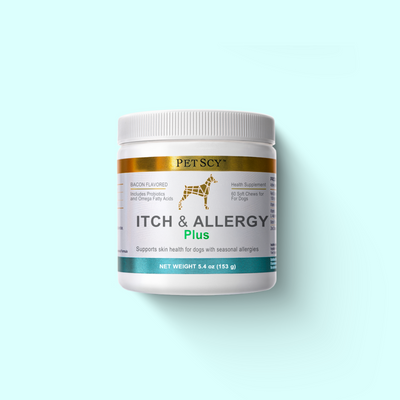
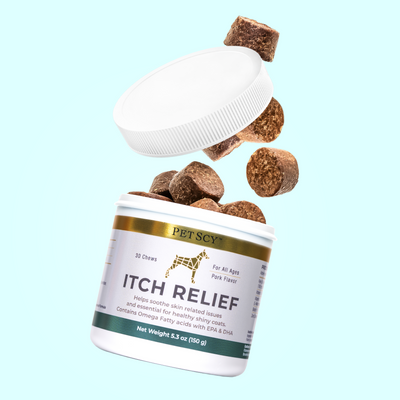
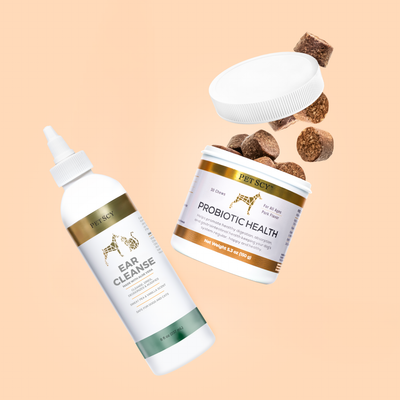
PetScy's Fish Oil is presented as a dog supplement using wild-caught Alaskan pollock and salmon, with a stated sustainability focus and third-party testing references. That makes it an example to evaluate through the same end-to-end checklist as any other product, rather than a reason to skip the label review.
For readers learning about the source environment, a guide to salmon fishing in urban Anchorage offers useful local context about the region and its fishing culture. Local color can make the origin easier to understand, but it isn't a substitute for a fishery certificate or product test.
The larger lesson is simple. Responsible harvest and careful manufacturing are linked stages, not one guarantee. Pollock or salmon may come from a well-managed fishery, while the oil still requires protection from heat, oxygen, and contamination after landing.
A Practical Buying Guide for Dog Owners
Use the label in a set order so marketing language doesn't make the decision for you. Begin with the source, move to the supplement facts, then confirm testing and storage information.
Start with the fishery
Look for a named species such as Alaska pollock or wild salmon, a stated ocean region, and a recognizable certification mark. If the product claims MSC certification, check the fishery and chain-of-custody details rather than relying on the logo alone.
Then inspect the oil
Find combined EPA and DHA per serving. Check whether the serving is one softgel, several softgels, or a measured pump, and make sure the amount is practical for your dog's size. A smaller dog may need a formula that allows precise measurement rather than forcing an entire high-potency capsule.
Review TOTOX, peroxide value, and p-anisidine information when available. Look for heavy metal testing, lot-specific documentation, a freshness date, and independent testing such as IFOS or an equivalent program. For a broader explanation of omega-3 formats and label details, this omega-3 fish oil guide from VitzAi.com is a useful companion resource.
Keep the routine sensible
Store the oil according to the product instructions, protect it from heat and light, and close the container promptly. A mild fish smell can be expected, but a sharp, stale, or rancid odor is a reason to stop and contact the manufacturer. Ask your veterinarian before adding fish oil if your dog has a medical condition, takes medication, or already receives omega-3s through a therapeutic diet.
For more product-specific comparison points, use this guide to choosing fish oil for dogs.
A compact checklist:
- Source: Species, region, and fishery identified.
- Sustainability: Certification and traceability can be verified.
- Potency: EPA plus DHA listed per serving.
- Purity: Heavy metal and contaminant testing disclosed.
- Freshness: Oxidation results and freshness date available.
- Fit: Dose selected with your veterinarian based on your dog's weight and needs.
PetScy offers a veterinarian-formulated Fish Oil made with wild-caught Alaskan pollock and salmon, alongside third-party testing references and other canine wellness formulas. Visit PetScy to review the product details, compare the label information with this checklist, and choose a routine that fits your dog's needs.