












Green Lipped Mussels for Dogs: Joint Support Guide
Your senior dog used to lead the walk. Now they pause at the doorstep, take longer to get up, or hang back on a familiar route. You're looking at joint supplements, and green lipped mussels keep appearing on labels beside fish oil, glucosamine, and chondroitin.
The useful question isn't whether a marine ingredient sounds healthy. It's what that preparation contains, what researchers have observed in dogs, and whether the label gives your veterinarian enough information to recommend it. Green-lipped mussel deserves consideration, but it also deserves realistic expectations.
Table of Contents
- What Green Lipped Mussels Are and Where They Come From
- The Active Compounds That Support Canine Joints
- What the Research Shows for Dogs With Osteoarthritis
- How to Evaluate GLM Product Quality and Type
- Dosing Guidelines and What to Expect Over Time
- Common Misconceptions and Setting Realistic Expectations
- Potential Side Effects and Safety Considerations
- Making the Right Choice for Your Dog
What Green Lipped Mussels Are and Where They Come From
Green-lipped mussel, often shortened to GLM, refers to Perna canaliculus, a shellfish species native to New Zealand. It isn't a catchall term for mussels, shellfish powder, or marine oil.
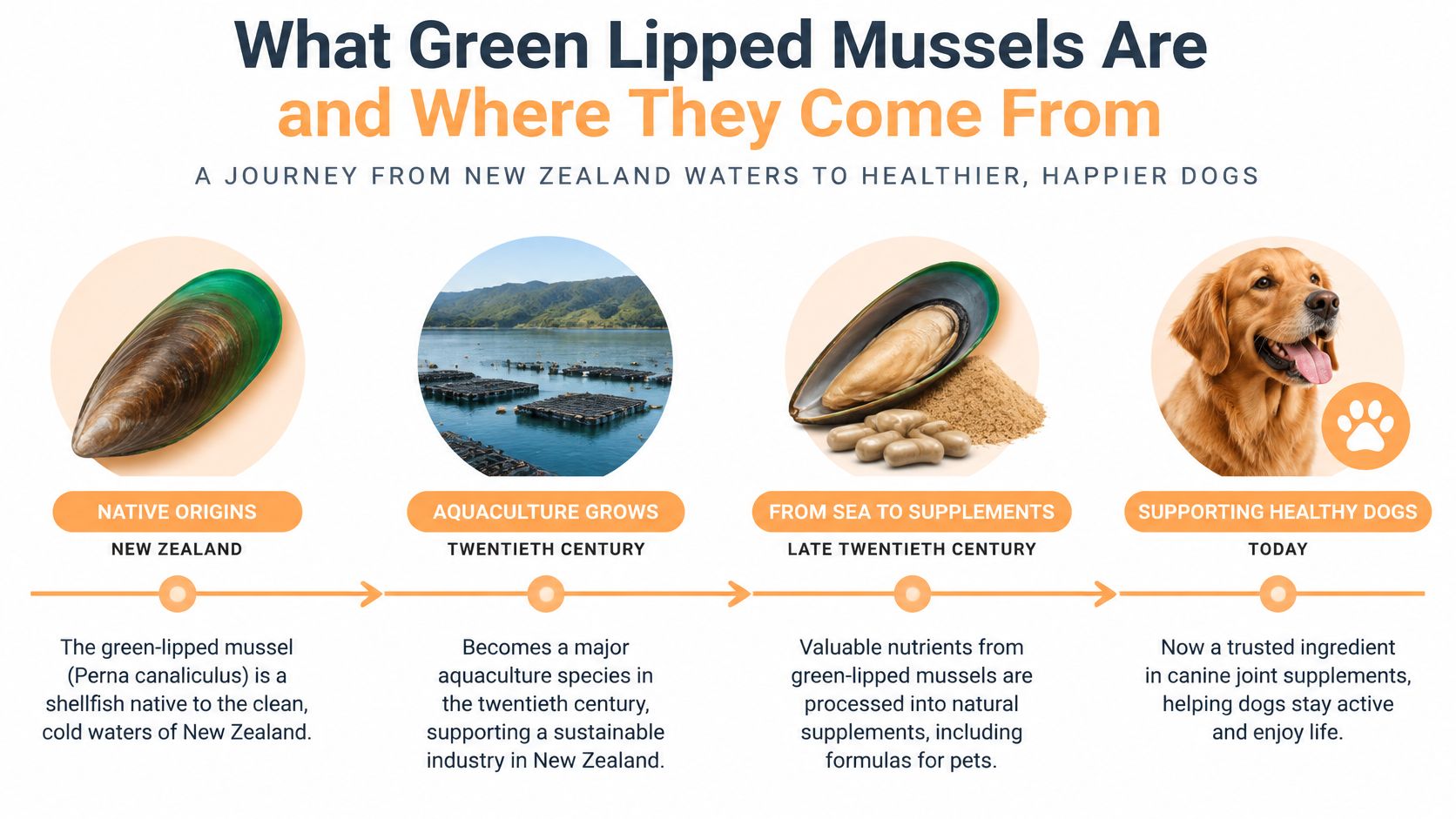
The ingredient has an established aquaculture history. Commercial harvesting began with hand collection in the late nineteenth century, while modern rope-based cultivation developed during the 1960s and 1970s, according to the New Zealand Department of Conservation's history of mussel farming. That history helps distinguish an identifiable farmed ingredient from a vaguely described marine blend.
The timeline below puts that origin into context.
Origin is a starting point, not a quality guarantee
A New Zealand origin statement tells you something useful about sourcing. It doesn't, by itself, tell you how the mussel was processed, which components remain, or what's in the finished supplement.
Think about comparing a whole-food ingredient with an extract made from that ingredient. They share an origin, but you still need to know what the manufacturer retained and what it removed. The same distinction matters when comparing mussel powder with mussel oil.
For an owner researching a slower-moving dog, the practical sourcing questions are straightforward:
- Species identity: Does the label name Perna canaliculus, rather than listing shellfish or marine ingredients?
- Traceable origin: Can the manufacturer identify where the ingredient comes from?
- Finished-product information: Can the company explain its preparation, testing, and storage requirements?
Don't confuse ingredient identity with a diagnosis
A recognizable ingredient doesn't explain why your dog has slowed down. Before buying a supplement, describe the changes to your veterinarian: difficulty rising, reluctance on walks, or changes in how your dog uses a leg.
Practical rule: Choose the care plan around your dog's assessed needs, then choose an ingredient that fits that plan.
This approach keeps the purchase focused on a defined goal, such as easier everyday movement, rather than a general promise of healthy aging.
The Active Compounds That Support Canine Joints
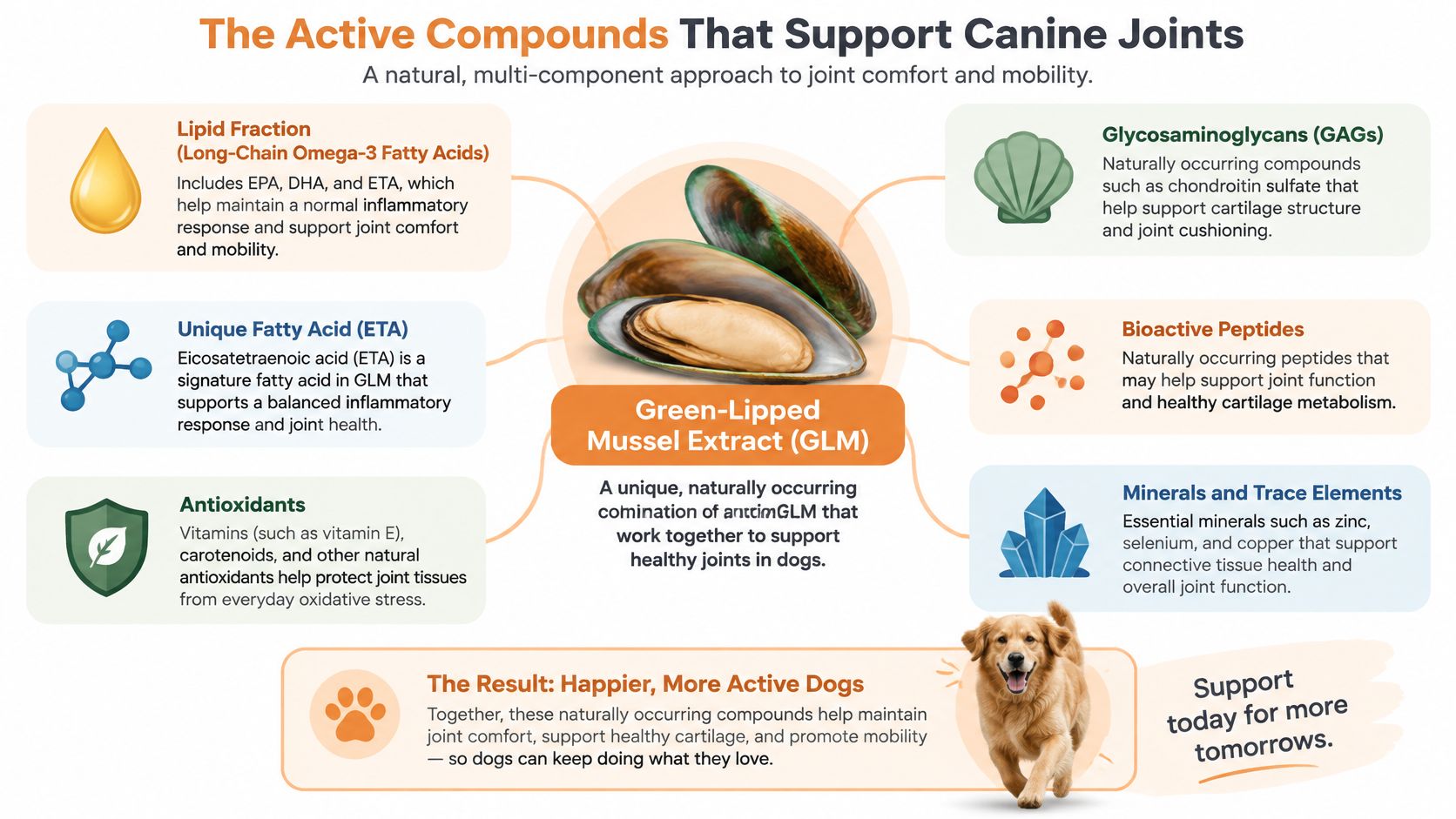
GLM is more interesting than a simple marine-oil label suggests. Its joint-support rationale involves both lipids, which include fatty acids, and glycosaminoglycans, often abbreviated as GAGs.
The veterinary review of GLM's composition and mechanisms describes long-chain omega-3 fatty acids, including eicosatetraenoic acid, or ETA, alongside whole-ingredient glycosaminoglycans such as chondroitin sulfate. It also explains why preparation and extraction methods matter when evaluating these components.
This concept map separates the major components without treating them as interchangeable.
ETA relates to inflammatory signaling
Think of inflammatory signaling as a network of routes rather than a single switch. ETA can act as a precursor within omega-3 inflammatory-lipid pathways. A precursor is a starting material the body can use in subsequent processes, not an instruction that guarantees a particular clinical result.
The mechanism described in the review involves omega-3 fatty acids potentially reducing mediators produced through cyclooxygenase and lipoxygenase pathways. Those mediators are relevant to pain and cartilage degradation.
That explanation supports biological plausibility. It doesn't establish how much relief an individual dog will experience, nor does it make GLM equivalent to a prescription anti-inflammatory.
Glycosaminoglycans add a different component
The whole ingredient also supplies GAGs such as chondroitin sulfate. A useful mental model is a formulation with different categories of components, rather than a bottle containing only fatty acids.
You may see chondroitin described as cartilage “building material.” Treat that as a simplified analogy, not a claim that swallowing mussel powder rebuilds an arthritic joint. Providing a compound and demonstrating cartilage repair are different things.
This is the important distinction from generic fish oil:
- An omega-3 claim describes a category. It doesn't fully describe the ingredient's composition.
- A GLM claim needs preparation details. Whole-mussel material and a selected lipid fraction shouldn't automatically receive identical expectations.
- Mechanism isn't comparative proof. A broader component profile doesn't establish universal superiority over another supplement.
GLM therefore makes most sense as adjunctive joint support. It shouldn't displace veterinary-directed analgesia, weight control, or exercise modification.
What the Research Shows for Dogs With Osteoarthritis
The canine research is encouraging, but it's limited enough that broad promises would overstate it. The strongest question is whether a defined GLM preparation improved meaningful outcomes in dogs with diagnosed osteoarthritis.
In a randomized, double-blind, placebo-controlled trial, 45 dogs with chronic pain and radiographically confirmed osteoarthritis completed an 8-week study; GLM-treated dogs had statistically more favorable veterinary mobility, chronic pain, and visual-analogue pain scores, and the same publication discusses a systematic review identifying two randomized trials involving 62 dogs with positive effects while noting the limited evidence base (canine GLM trial and discussion of prior evidence).
Canine GLM Trial Outcomes at a Glance
| Study Feature | Details | Outcome |
|---|---|---|
| Study design | Randomized, double-blind, placebo-controlled | Provides a stronger comparison than owner impressions alone |
| Dogs enrolled | Chronic pain with radiographically confirmed osteoarthritis | Findings concern diagnosed disease, not general prevention |
| Veterinary assessment | Mobility index | More favorable results with GLM than placebo |
| Owner assessments | Chronic pain and visual-analogue pain scoring | More favorable results with GLM than placebo |
| Evidence scope | Limited clinical literature | Supports cautious consideration, not guaranteed benefit |
The distinction between veterinary and owner assessment matters. A veterinarian can evaluate movement during an examination, while an owner observes everyday activities at home. Agreement across different assessments is useful, but it still doesn't mean every treated dog improves.
Better than placebo isn't the same as drug-level relief
Statistical significance tells us that the observed comparison met the study's statistical criterion. It doesn't tell an owner exactly how much easier their dog will find getting out of bed.
A broader veterinary evidence review reports that the GLM preparation was less effective than carprofen. That is a clinically important limit, especially when a dog already needs reliable pain management.
Improvement in a mobility score is useful evidence. It isn't proof that a supplement reverses osteoarthritis.
For owners, the sensible interpretation is a possible supportive benefit, not disease modification or a substitute for adequate pain relief. PetScy's educational guide to joint stiffness, mobility loss, and daily activity can help you organize the changes you're noticing before a veterinary conversation.
Avoid extending these findings into claims about preventing arthritis in healthy dogs. Research in dogs with established osteoarthritis answers a narrower question.
How to Evaluate GLM Product Quality and Type
A label that says “green-lipped mussel” identifies an ingredient, not a standardized dose of active components. Your job is to find out what the manufacturer means by that name.
Use this checklist to organize the comparison.
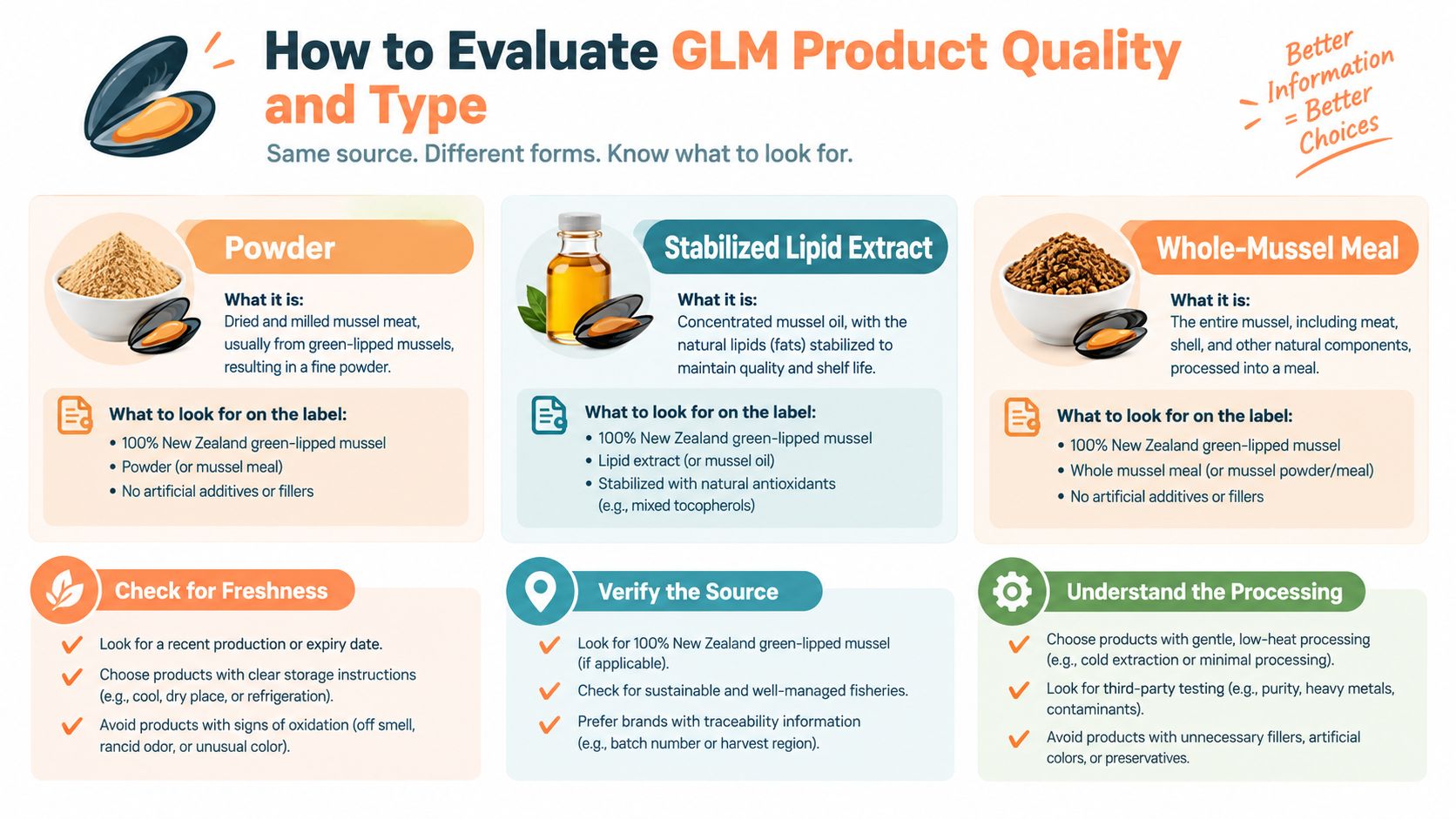
Compare the preparation before the serving size
Start with the form, then ask for the measurements that make the label interpretable.
| Label description | What to clarify |
|---|---|
| Mussel powder | Is it whole-mussel material, and what lipid content is specified? |
| Stabilized lipid extract | Which components are targeted, and what active markers are declared? |
| Whole-mussel product or meal | How is the ingredient amount measured and kept consistent? |
| Multi-ingredient joint chew | How much GLM is present separately from the overall blend? |
Total lipid content and omega-3/ETA content are useful questions because they connect the product description to the composition discussed earlier. Don't assume that a larger amount of powder provides a larger amount of the components you're trying to evaluate.
Ask for evidence behind quality language
A manufacturer should be able to explain what it tests and what its quality statements cover. A badge or membership statement shouldn't be treated as evidence that a particular product produced a clinical outcome.
- Testing: Ask whether results concern the raw ingredient, the finished product, or both, and whether batch documentation is available.
- Handling: Request the product's actual storage and shipping instructions. Don't assume every preparation requires refrigeration.
- Stabilization: Ask what the company means by “stabilized” and how it verifies the finished product.
- Blended ingredients: Compare the amounts of glucosamine, chondroitin, and added omega-3s separately rather than judging by the length of the ingredient list.
The embedded video provides another format for reviewing the topic; written specifications should still guide your comparison.
Price isn't a substitute for those answers. A less expensive product with clear documentation may be easier to assess than a premium-priced product supported only by general wellness language.
Dosing Guidelines and What to Expect Over Time
There isn't a defensible universal dose that applies to every GLM preparation. The clinically useful starting point is the specific product, its composition, your dog's body weight, and your veterinarian's recommendation.
A powder dose shouldn't be transferred to a lipid extract. Nor should the weight of an entire chew be mistaken for the amount of GLM it contains. If the label gives only a blend total, ask the manufacturer for clarification before trying to calculate an ingredient dose.
For a powder product, follow its directions for measuring and administration rather than estimating a portion by appearance.

Build a usable dosing plan
Bring the container or a clear label photograph to your veterinary appointment. Include the ingredient panel, directions, and any manufacturer information about active markers.
- Confirm current weight: Use your dog's measured weight rather than a remembered estimate.
- Match the preparation: Have your veterinarian assess the actual powder, extract, or combined formula you intend to use.
- Clarify the amount: Confirm how much to give and how to measure it with the supplied device.
- Agree on reassessment: Establish when to review benefit and what would prompt an earlier call.
Very small dogs, giant dogs, and dogs with multiple medical conditions deserve an individualized discussion rather than an improvised adjustment to another product's instructions.
Measure everyday function consistently
Use the clinical evaluation period described earlier as a discussion point, not a promise of a deadline. The guide to how long dog joint supplements take to work can help you frame questions about monitoring.
Record a short baseline description before starting. Useful observations include how readily your dog rises after rest, whether they finish their usual comfortable walk, and how evenly they appear to use their limbs.
Monitoring tip: Repeat the same comfortable activity under similar conditions. Don't turn improvement tracking into an exercise challenge.
Keep notes about other treatment changes, too. If medication, activity, and supplementation all change together, you won't be able to confidently assign improvement to GLM alone.
Common Misconceptions and Setting Realistic Expectations
Calling GLM “natural” doesn't tell you how well it will work, how quickly it will help, or whether it suits your dog. Those are separate questions.
The most useful expectation is a monitored supportive trial, not a commitment to keep buying a product regardless of results. Agreeing on observable goals makes that distinction easier.
More isn't automatically more useful
A larger serving doesn't establish a greater benefit. Without preparation-specific evidence, increasing the dose is an experiment, not an evidence-based upgrade.
The same problem applies to stacking joint products. A powder, a chew, and an oil may look different on the shelf, but the combined plan still needs someone to review the ingredients and amounts.
| Assumption | More useful interpretation |
|---|---|
| A marine ingredient must work immediately | Judge it through a planned observation period |
| A stronger-looking label means stronger pain relief | Compare clinical evidence and formulation details |
| A bigger serving should produce a better response | Use the agreed product-specific instructions |
| A positive response proves joint repair | Distinguish better function from structural change |
Don't let supplementation delay care
If your dog becomes less comfortable, don't wait for a supplement trial to finish before seeking advice. The research comparison discussed earlier is a reason to protect adequate pain management, not to postpone it.
Likewise, a good day doesn't justify abruptly removing prescribed treatment. Talk to the veterinarian who manages the care plan before making changes.
GLM also shouldn't become the only measure of progress. Ask whether the complete plan is helping your dog move comfortably, participate in appropriate activity, and maintain an acceptable daily routine.
That broader perspective protects against a common purchasing mistake: repeatedly changing supplements without revisiting the underlying problem. When a product doesn't produce a recognizable benefit, the next step is reassessment, not automatically a larger scoop or a more complicated formula.
Potential Side Effects and Safety Considerations
Safety deserves the same product-specific attention as effectiveness. Don't interpret a small clinical evidence base as a guarantee of safety for every dog, every formulation, or indefinite use.
The available evidence discussed here doesn't establish dependable rates for individual adverse effects. It would therefore be misleading to assign a frequency to digestive upset or describe a particular preparation as universally gentle.
Review allergies and medications before starting
Because GLM is shellfish, a known shellfish allergy is a reason not to start it without veterinary direction. If your dog has undergone a food-allergy investigation, bring the proposed ingredient panel to the clinician managing that process.
Medication review is equally important. Discuss GLM before combining it with an NSAID or another anti-inflammatory product; its mechanism alone doesn't establish either a harmful interaction or a safe combination.
The overview of joint medications for dogs can help you prepare that conversation, but your dog's prescription history should guide the decision.
- Bring the complete list: Include medications, supplements, oils, treats used as supplements, and combination chews.
- Explain previous reactions: Describe what happened, which product was involved, and whether veterinary treatment was needed.
- Mention upcoming procedures: Ask whether supplementation should change before surgery or another planned intervention.
Know what should prompt a call
If vomiting, diarrhea, reduced appetite, unusual lethargy, or a new skin reaction appears after introduction, stop giving the supplement and contact your veterinarian. These observations don't prove GLM caused the problem, but they warrant assessment rather than continued dosing without advice.
Keep the packaging and batch information when reporting a suspected reaction. Your veterinarian needs to know exactly what your dog received.
Seek urgent veterinary care for severe symptoms, breathing difficulty, or collapse. Don't attempt to manage a significant reaction by reducing the serving and trying again at home.
Making the Right Choice for Your Dog
Choose GLM through a clear sequence: assess the mobility problem, identify a transparent preparation, confirm its use with your veterinarian, and review observable results. A useful supplement is one that fits your dog's care plan, not one with a convincing ingredient story.
Questions to settle before buying
- How does it compare with glucosamine? They aren't identical ingredients. The evidence discussed here doesn't establish a universal winner.
- Can it be combined with fish oil? Ask your veterinarian to review the complete formulation and intended amounts rather than assuming the combination is necessary.
- How long should my dog stay on it? Set a review point based on benefit, tolerance, and the ongoing care plan. A positive initial impression isn't a reason to skip reassessment.
Bring a label photograph and your mobility notes to the next appointment. That gives your veterinary team something concrete to evaluate.
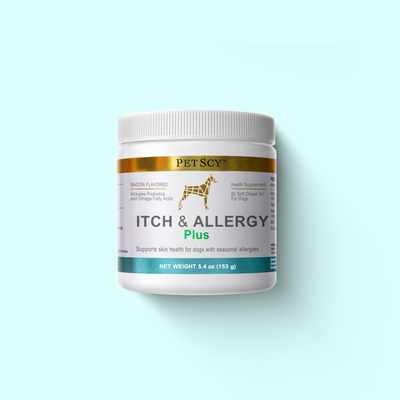
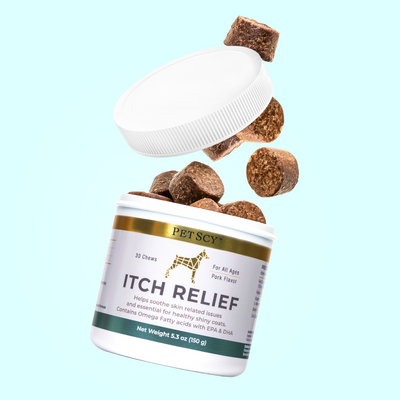
PetScy offers veterinarian-formulated dog supplements, including joint-support chews and fish oil, as options to discuss with your veterinary team. Visit PetScy to review ingredient labels and directions, then compare them with the preparation-specific questions and monitoring plan outlined above.