









How Long Do Probiotics Take to Work in Dogs
Acute diarrhea may improve in 1 to 3 days with the right probiotic, while digestive, skin, and stress-related benefits typically take 2 to 6 weeks. There isn't one universal timeline because the goal, the dog, and the probiotic strain all change what “working” looks like.
The popular advice that probiotics work in a fixed number of days sounds convenient, but it can mislead owners. A dog with sudden loose stool isn't following the same biological timetable as a dog taking a supplement for recurring gas, itchy skin, or travel-related stress.
The better question is not “How long do probiotics take to work in dogs?” Ask first, “What result am I trying to achieve?” Stool changes can occur quickly during an acute digestive episode. Immune, skin, and behavior-related changes involve slower processes and may require several weeks of consistent use.
Table of Contents
- Why There Is No Single Answer to This Question
- How Probiotics Actually Help a Dog's Gut
- Realistic Timelines by Condition You Are Treating
- Factors That Change How Quickly Probiotics Work
- What the Research Shows About Onset of Results
- Signs Your Dog's Probiotic Is Actually Working
- Smart Ways to Get the Best Results
- Common Questions Owners Ask About Probiotic Timelines
Why There Is No Single Answer to This Question
A probiotic isn't a stopwatch-controlled treatment that produces the same result for every dog. In controlled studies, some dogs with acute diarrhea returned to normal stool consistency in 1.3 days, compared with 2.2 days for controls, while another trial found resolution after 3.9 days with a probiotic versus 6.6 days with placebo (veterinary evidence summarized by VIN). Those findings support a faster response in some acute cases, but they don't establish a universal deadline.
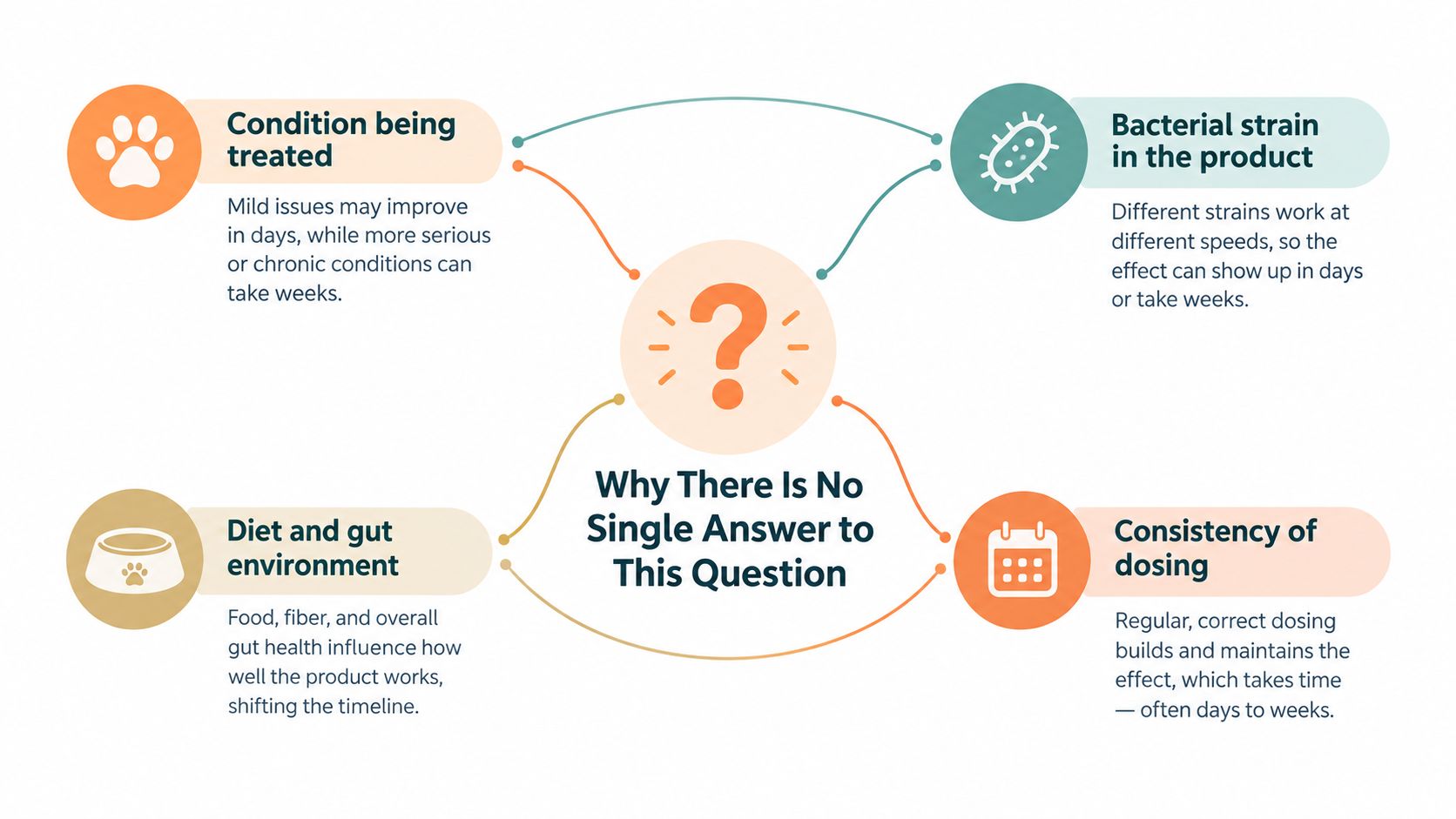
The condition matters first. The strain matters next. A product selected for acute gastrointestinal upset may not have the same evidence behind it for allergy-related itching or stress behavior. Dose, product viability, recent antibiotics, diet, and your dog's existing gut environment also influence the response.
A condition-by-condition timeline
Use four separate clocks rather than one:
- Acute diarrhea: Stool may begin to improve within 1 to 3 days when the product and diagnosis are a good match.
- Daily digestive support: Consistent stool quality, less gas, and a calmer stomach usually need a longer trial, often around 2 to 4 weeks.
- Skin and allergy support: Gut-immune effects are slower to judge, commonly requiring 4 to 6 weeks or longer.
- Stress-related digestive symptoms: Preparing before travel, boarding, or another trigger may require days of advance use, with continued dosing during the event.
These are practical windows, not promises. The Cornell Riney Canine Health Center guidance on probiotics notes that preparation several days in advance can be useful when gut support is the goal, while expert commentary commonly discusses at least two weeks for acute gastroenteritis and four to six weeks or longer for chronic enteropathies.
Practical rule: Define the symptom you want to change before deciding whether a probiotic is fast or slow.
A dog can show firmer stool while still having an unsettled microbiome, or show internal microbial changes before the owner sees a dramatic difference in the bowl. That distinction prevents two common mistakes: stopping a useful supplement too soon and continuing an unsuitable product indefinitely.
How Probiotics Actually Help a Dog's Gut
Think of the intestinal tract as a garden rather than an empty container. It already contains a busy community of organisms, and a probiotic introduces selected living microorganisms into that environment. The incoming strains have to pass through the digestive tract, interact with existing microbes, and function under conditions shaped by food, medication, and gut health.
From arrival to protection
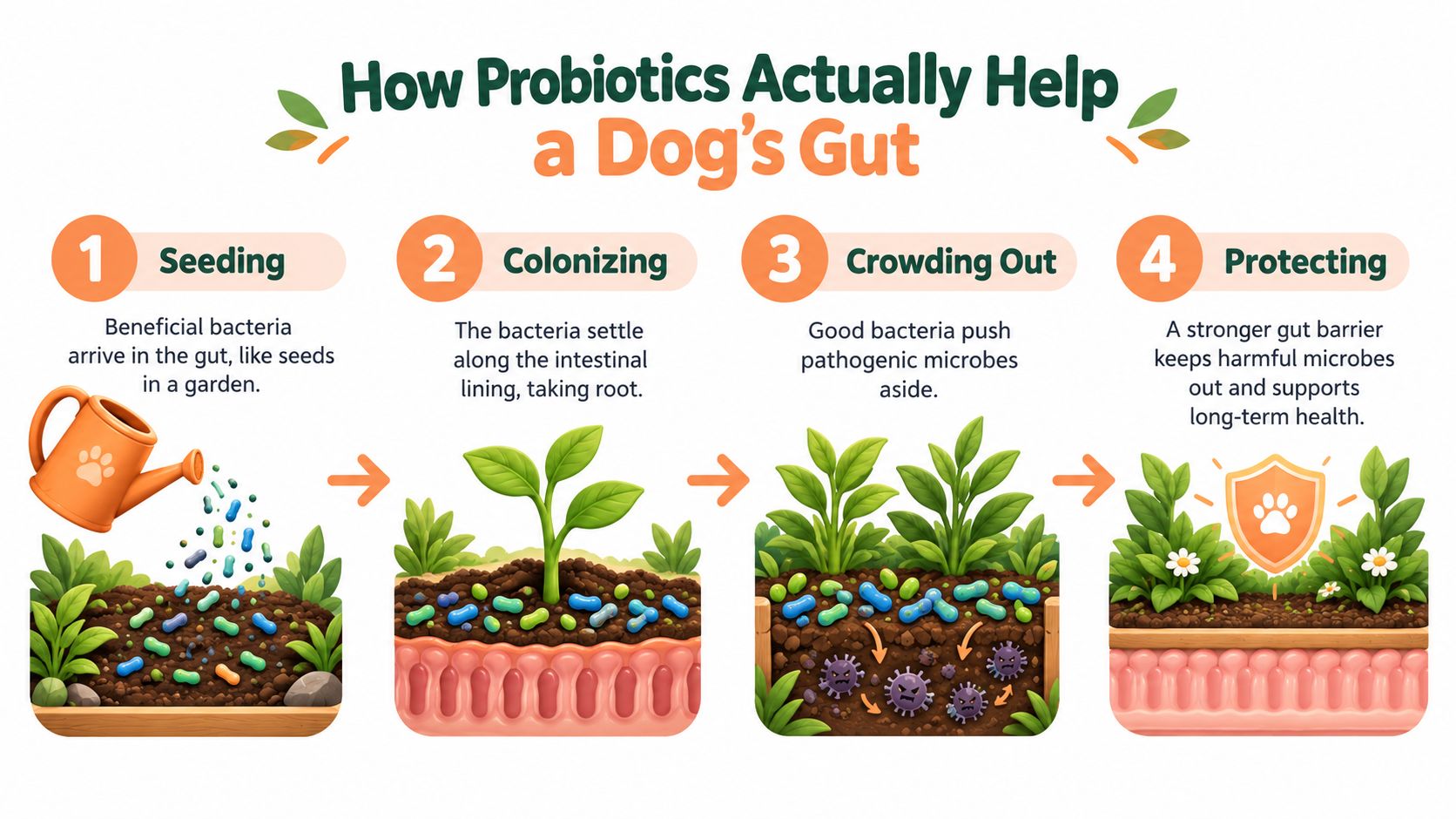
The process is easier to understand in four steps:
- Seeding: Beneficial bacteria arrive with the daily serving.
- Temporary settlement: Some interact with the intestinal lining and nearby microbial community.
- Competition: Helpful organisms can compete with less desirable microbes for space and nutrients.
- Barrier support: Their activity may contribute to a more stable gut environment and normal immune signaling.
Certain bacteria also produce short-chain fatty acids, compounds that can provide fuel for cells in the gut lining. The intestinal immune system sits directly beneath that lining, so microbial activity can influence how the body responds to material passing through the digestive tract.
Most supplemental strains shouldn't be assumed to permanently colonize a dog's intestine. Many act more like visitors who contribute while they're present, which helps explain why daily dosing matters and why benefits may fade after stopping. Independent microbiome research has found that probiotic-related community shifts can be transient, with some changes reverting roughly 3 weeks after treatment stopped in a 7-week oral microbiota study (Cornell's review).
Temporary doesn't mean irrelevant. A visiting strain may still alter the local environment or leave metabolic byproducts behind after its numbers decline. But owners should avoid treating a probiotic as a permanent replacement for diet, veterinary care, or a balanced microbial ecosystem.
For a plain-language overview of product selection and gut support, this UK probiotic buying guide offers useful background. Dog owners can also review probiotic supplements for digestive balance when comparing formats and intended uses.
Realistic Timelines by Condition You Are Treating
There is no universal probiotic countdown for dogs. The right timeline depends on the problem being measured. Stool changes can appear quickly, while itching, everyday comfort, or stress-related symptoms require a longer trial because those outcomes involve more than the gut alone.
Four clocks for four goals
Acute diarrhea or post-antibiotic disruption is usually the quickest situation to assess. Controlled canine trials reported better stool consistency within roughly 1 to 4 days, although findings differed among studies and not every comparison reached statistical significance (VIN clinical review). A probiotic may support recovery, but it cannot reveal or treat every cause of diarrhea. Persistent diarrhea, vomiting, weakness, or other concerning signs call for veterinary advice.
Routine digestive support needs more observation. For goals such as fewer gas episodes, steadier stools, or improved daily comfort, assess the overall pattern across 2 to 4 weeks while keeping the diet and treats consistent. A single good or bad day does not show whether the supplement is helping.
Skin and allergy support follows a slower clock. Allow 4 to 6 weeks or longer before judging changes related to gut-immune communication. Ongoing itching still needs evaluation for allergies, parasites, infection, and other causes, since probiotics do not replace that assessment.
Stress-related gut symptoms are best addressed before the predictable trigger. For travel, boarding, training, or a similar event, begin several days ahead and continue through the event. A first dose after symptoms start is less likely to provide timely support.
| Condition | Expected onset | Best-supported strains |
|---|---|---|
| Acute diarrhea | About 1 to 3 days in some controlled trials | Strain-specific products studied for canine gastrointestinal upset |
| Routine digestive support | About 2 to 4 weeks | Product-specific strains with canine digestive evidence |
| Skin and allergy support | About 4 to 6 weeks or longer | Strains selected for the stated gut-immune goal |
| Stress-related digestive symptoms | Several days of preparation, with continued use during the trigger | Product-specific strains and formulations studied for the intended use |
The Yuve probiotics timeline provides general onset guidance, but the condition should determine the expectation, not a single number copied across every use case.
For loose stool, this guide to probiotics for dogs with diarrhea helps connect symptom severity, product purpose, and the point at which veterinary input matters.
Factors That Change How Quickly Probiotics Work
Start with the strain, not the marketing label
“Probiotic” describes a category, not a single treatment. Enterococcus faecium and Bifidobacterium animalis have different evidence bases and shouldn't be treated as interchangeable ingredients. A formula designed around a canine diarrhea study may not be the logical first choice for a dog's skin problem.
The label should identify the organism clearly and explain how much is delivered at the end of shelf life. A large count printed at manufacture doesn't guarantee the same number of viable organisms when the product reaches your dog's bowl.
Then check the practical variables
- Dose: Follow the product's dog-specific directions and weight guidance. Too little may not reproduce the studied approach, while improvising with a human product creates uncertainty.
- Severity: Mild, short-lived loose stool is a different situation from persistent diarrhea, vomiting, weight loss, or a chronic enteropathy.
- Baseline health: Age, existing disease, immune status, and recent medication can alter tolerance and response.
- Diet: Abrupt food changes can create new digestive symptoms that obscure whether the probiotic helped.
- Consistency: Give the serving daily and store it according to the label. Missed doses make the trial harder to interpret.
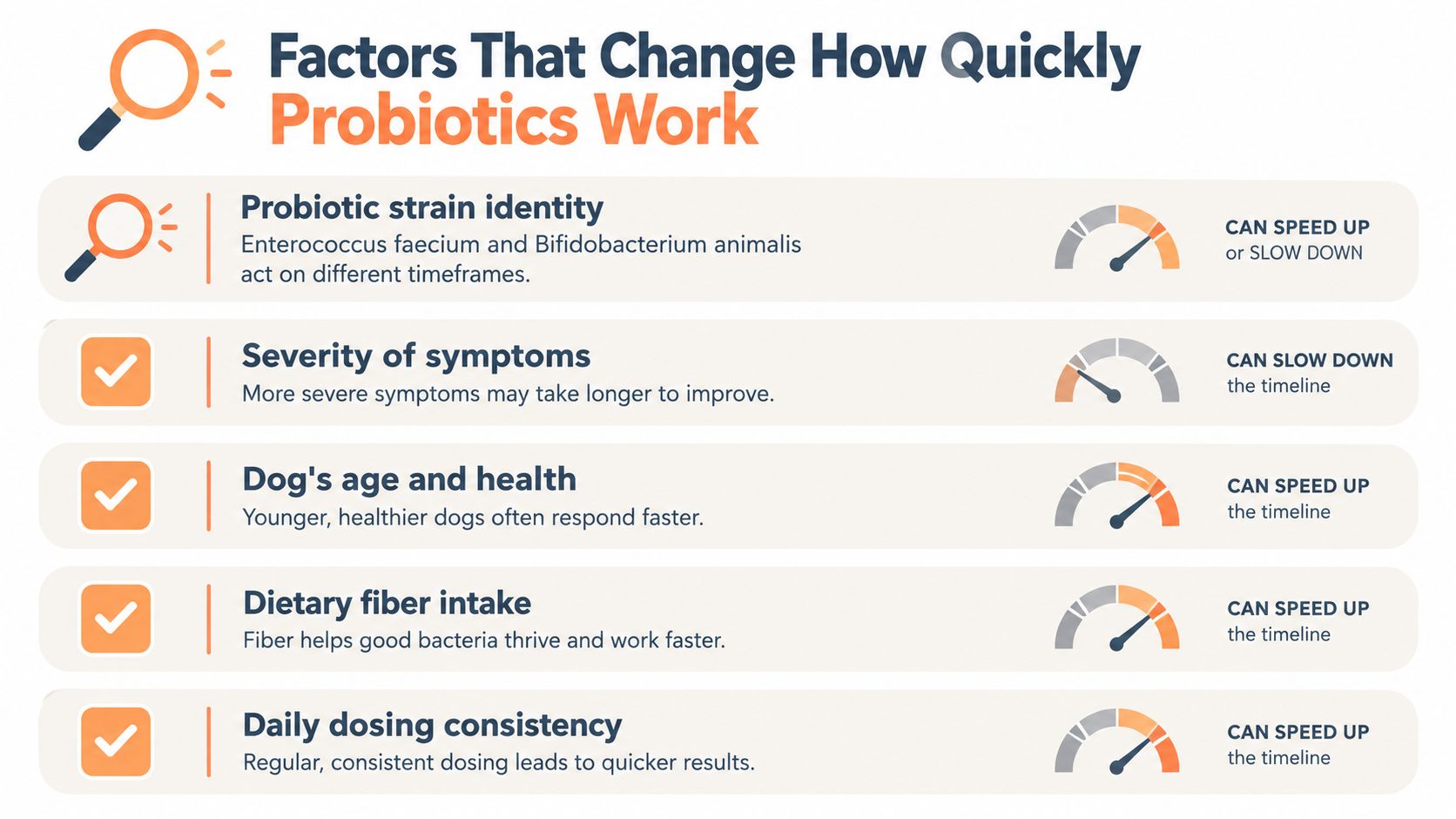
Fiber also matters because some dietary fibers can provide fuel for existing or incoming microbes. That doesn't make every high-fiber diet appropriate for every dog, so changes should be gradual and compatible with the underlying condition.
Before buying: Match the strain to the goal, confirm viability through the product's expiry date, use the recommended dose, and keep the rest of the routine as steady as possible.
Recent antibiotics deserve special attention. They can change the gut environment, so a dog recovering after treatment may not follow the same timeline as a dog with occasional gas and otherwise stable digestion. If your dog has a serious illness, takes immune-suppressing medication, or is very young or elderly, ask your veterinarian before starting a supplement.
What the Research Shows About Onset of Results
Research does not support a universal “works by day X” promise. The more useful map is condition by condition. Acute diarrhea studies often measure stool improvement within days, while broader digestive, microbiome, allergy-related, or stress-related goals may require weeks and different measures of success.
One randomized trial found acceptable fecal consistency after 3.5 ± 2.2 days with probiotics and 4.8 ± 2.9 days with placebo, although the difference was not statistically significant (veterinary review). A separate randomized placebo-controlled study reported resolution after 3.9 ± 2.3 days with a probiotic compared with 6.6 ± 2.7 days with placebo (Journal of Veterinary Internal Medicine study).
These findings support a possible early benefit during some acute episodes, not a guarantee for every dog. Strain selection, the cause and severity of illness, diet, concurrent treatment, and study design can all affect the result. A probiotic used for routine digestion is also being judged by a different standard than one used during sudden diarrhea.
Why study timelines differ
A short acute-diarrhea trial may ask when stool became acceptable. A longer study may examine whether microbial diversity changed, whether that change lasted, or whether laboratory findings matched visible symptoms. Those endpoints cannot be treated as interchangeable.
A 2025 pilot study reported increased fecal microbiome alpha-diversity after one week in most long-term participants. It also reported clinical diarrhea improvement in 8 of 11 dogs over 60 days (Frontiers in Veterinary Science pilot study). The comparison illustrates why a dog may show a measurable microbial change before an owner sees a clear clinical difference.
| Study type | Observation window | Result commonly assessed |
|---|---|---|
| Acute diarrhea trial | A short clinical episode | Stool consistency and diarrhea resolution |
| Routine digestive support | Several weeks of daily use | Stool pattern, gas, appetite, and comfort |
| Microbiome study | Early follow-up through extended observation | Diversity and microbial composition |
| Chronic or complex case | Ongoing veterinary monitoring | Clinical signs, laboratory findings, and disease activity |
For allergy skin support or stress behavior, improvement may need four to six weeks of consistent observation because skin turnover and behavioral patterns change more slowly than stool. A quick response in one condition does not set the schedule for another. Conversely, a slower study may be measuring a deeper or different outcome rather than showing that nothing happened early on.
Signs Your Dog's Probiotic Is Actually Working
Judge progress against the original goal. If you started the supplement for acute diarrhea, stool consistency and urgency matter first. If you started it for routine support, one isolated bowel movement tells you very little.
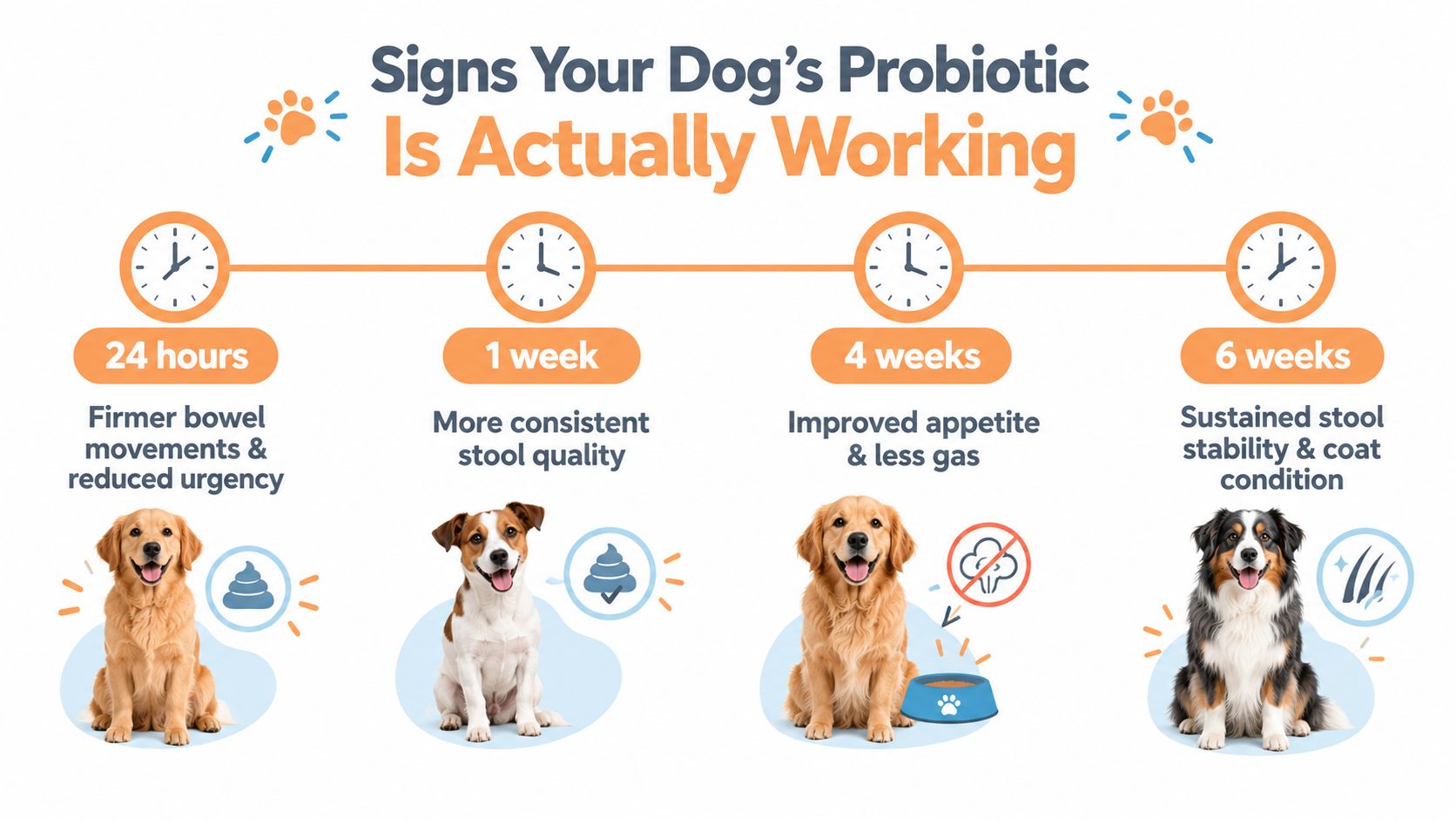
What to watch at each checkpoint
- Around 24 hours: In an acute episode, look for firmer bowel movements, less urgency, and no new signs of illness. A single better stool is encouraging, but it isn't a complete verdict.
- At one week: Look for a more reliable stool pattern, stable appetite, and less digestive noise or gas. If symptoms are worsening rather than settling, don't keep waiting for the supplement to prove itself.
- At four weeks: For routine support, assess whether stool quality has stayed consistent and whether gas or mealtime discomfort has decreased. For a skin-related goal, look for a gradual change in scratching, coat feel, or irritation rather than an overnight transformation.
- At six weeks: Reassess the full picture. Consider energy, weight stability, recurring digestive signs, coat condition, and the frequency of allergy flares, while remembering that skin disease often needs its own veterinary diagnosis and treatment.
Keep a simple daily log. Record stool quality, appetite, gas, vomiting, scratching, skin changes, and any diet or medication changes. This makes gradual improvement easier to see and helps your veterinarian distinguish a real pattern from normal day-to-day variation.
A useful test: Change one major variable at a time. If you replace the food, treats, probiotic, and shampoo in the same week, you won't know which change affected the dog.
A probiotic can also cause brief gas or a temporary stool change as a dog adjusts. Mild symptoms may settle, but persistent diarrhea, vomiting, lethargy, blood in the stool, dehydration, or refusal to eat deserves veterinary attention rather than a longer supplement trial.
Smart Ways to Get the Best Results
The fastest route to a useful answer is a clean, consistent trial. Give the product at the same time each day, use the label's serving instructions, and follow storage requirements. Some products are intended for a small meal, while others may be directed differently, so the product label and veterinary advice should take priority over a generic internet rule.
Choose the formulation for the problem you're addressing. A canine product with strains studied for acute digestive upset is more relevant to diarrhea than an unrelated supplement chosen only because it contains a large number on the label. If antibiotics are involved, ask your veterinarian about timing and product compatibility rather than assuming every probiotic behaves identically.
Avoid the mistakes that reset the experiment
- Stopping after the first better stool: Improvement may be the beginning of a stable pattern, not proof that the underlying issue has resolved.
- Switching brands every few days: Frequent changes make it impossible to evaluate one strain combination fairly.
- Mixing cultures into hot food: Heat can threaten live organisms. Follow the label and use food at the recommended temperature.
- Skipping doses during stressful events: Travel, boarding, and other disruptions are precisely when consistency may matter most.
- Changing the diet at the same time: A new food can either improve or worsen stool, masking the supplement's effect.
Prebiotic ingredients may help support the microbial community, but they aren't automatically suitable for every dog. A veterinarian can help determine whether fiber, diet modification, medication, or diagnostic testing is more important than adding another supplement.
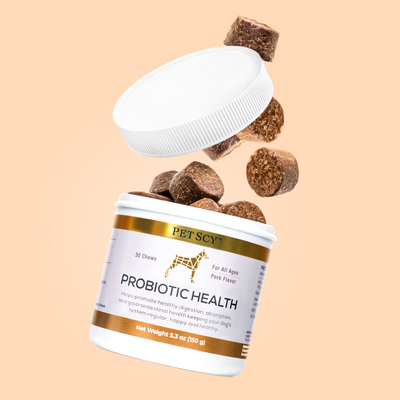
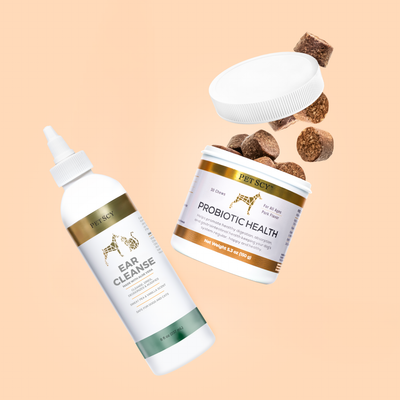
For owners looking for a chew format, PetScy's Probiotic Health Chews are one dog-specific option positioned for digestive and immune support. Compare any product by its stated strains, serving instructions, storage requirements, and intended outcome.
A practical checklist looks like this:
- Define the target symptom.
- Select a dog-specific product with clearly identified strains.
- Confirm the serving and expiration information.
- Give it consistently.
- Keep food and treats stable.
- Track symptoms for the relevant condition window.
- Reassess or contact your veterinarian if the dog worsens or fails to improve.
Common Questions Owners Ask About Probiotic Timelines
Do probiotics work immediately after the first dose? Usually, don't expect an instant whole-body change. A dog with acute diarrhea may show an early stool response, while routine, skin, and stress-related goals need longer observation.
Can stool improve within 24 hours? Yes, it can happen in some acute cases, but one bowel movement isn't enough to confirm a lasting benefit. Persistent or severe symptoms need veterinary assessment.
Are the results permanent after stopping? Not necessarily. Many supplemental strains appear to act temporarily, and probiotic-related microbial changes can partly reverse after discontinuation (Cornell review).
Will puppies and senior dogs follow the same timeline? Not always. Age, health status, diet, medications, and the cause of symptoms can shift both tolerance and response.
How long does reduced itching take? Skin-related goals commonly need 4 to 6 weeks or longer, and itching should always be evaluated for allergies, parasites, infection, and other causes.
Why might one brand fail while another helps? Strain identity, viability, dose, and formulation differ. “Probiotic” alone doesn't tell you whether a product matches the dog's condition.
Is yogurt or kefir equivalent to a veterinary probiotic? Not automatically. The strains, viable amount, ingredients, and dog-specific evidence may differ, so compare the actual label and ask your veterinarian.
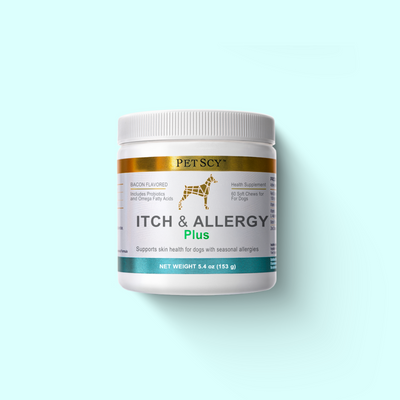
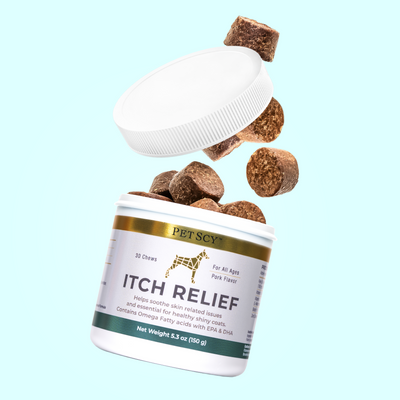
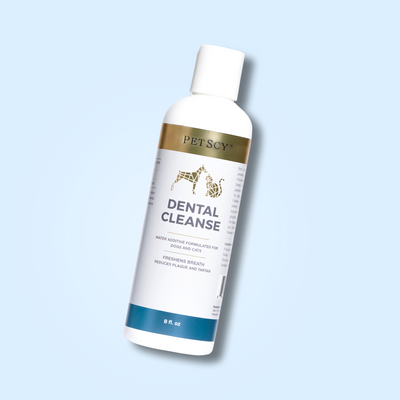
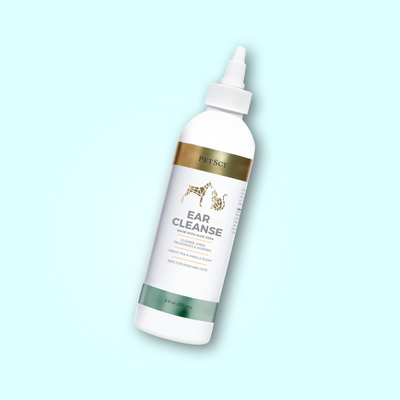
PetScy offers veterinarian-formulated dog supplements and topical care products, including probiotic chews for digestive support alongside options for skin, calming, dental, ear, joint, and immune needs. Visit PetScy to compare products by your dog's goal and build a consistent care routine.