









How to Get Rid of Dog Bad Breath Naturally in 2026
You've already tried the parsley. Maybe the mint treat, the coconut oil on a spoon, the promise that a sprinkle of something green would fix it. Then your dog climbed up for a cuddle, opened his mouth for a happy pant, and you pulled back anyway. That sour, rotten smell isn't a failure of effort. It's a sign you've been treating the odor, not the cause.
Table of Contents
- Why Natural Dog Breath Remedies Usually Miss the Real Problem
- The Cause of Bad Breath and What a Healthy Mouth Looks Like
- Building a Brushing Routine Your Dog Will Actually Tolerate
- Comparing Chews, Water Additives, Powders, and Wipes
- Diet, Water, and Supplements That Support Fresher Breath
- Unsafe Ingredients and Home Habits to Skip
- Warning Signs, Vet Visits, and Your First 90 Days
Why Natural Dog Breath Remedies Usually Miss the Real Problem
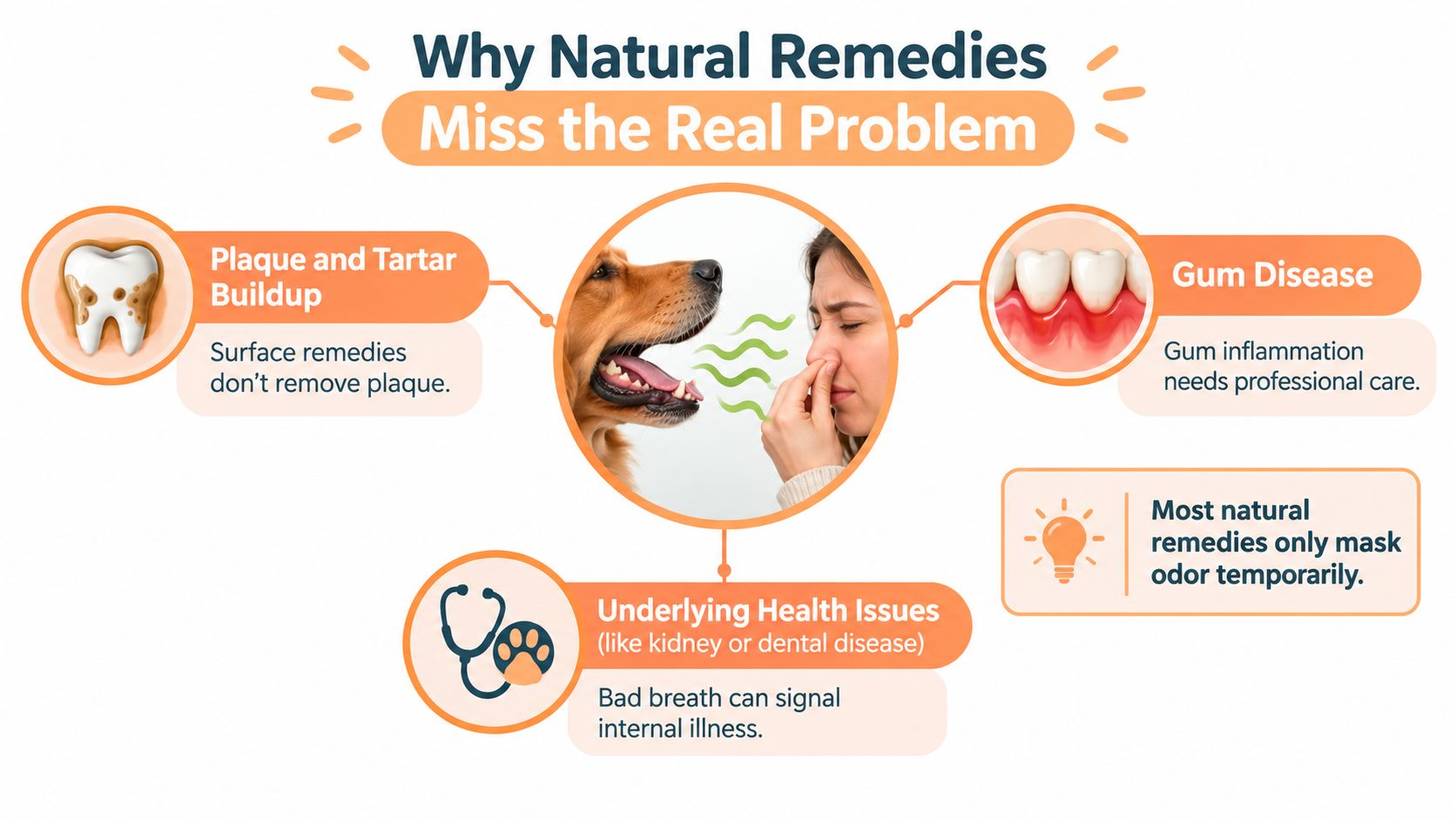
Most advice on how to get rid of dog bad breath naturally starts in the wrong place. It treats halitosis like a smell you can cover, freshen, or flavor away. In reality, persistent bad breath is usually a symptom of periodontal disease, not a simple odor problem.
That distinction changes everything. A leaf of parsley might make breath smell different for a short while. It doesn't remove the bacterial film sitting on your dog's teeth. Neither does coconut oil smeared on gums, and neither does a minty treat that disappears in ten seconds.
Plaque Is the Problem You Can Actually Act On
Plaque is an accumulation of bacteria and food debris that forms along the teeth and gumline. If you don't remove it, it hardens into tartar, also called calculus, and can progress below the gumline where household remedies can't reliably reach, as explained in Covetrus guidance on pet dental health and periodontal disease. That source also places periodontal disease at approximately 80% of dogs by age three.
Once disease moves under the gum, you're no longer dealing with a surface smell. You're dealing with inflamed tissue, bacteria in a protected pocket, and odor that keeps returning because its source keeps living there.
If a remedy doesn't physically disrupt plaque, assume it's masking odor, not treating it.
A More Honest Definition of Natural
Natural shouldn't mean plant based, homemade, or vaguely wholesome. For breath, it should mean mechanical, low intervention plaque control you can do consistently at home. Brushing, wiping, and appropriate chewing fit that definition. Flavoring the mouth does not.
This approach also comes with a limit you need to accept early. Home care prevents and slows new plaque. It doesn't reliably remove established tartar, cure loose teeth, or clean below the gumline. When those problems are present, a vet visit isn't a failure of natural care. It's the correct next step, and you'll get a clear cut off line for that decision later in this guide.
The Cause of Bad Breath and What a Healthy Mouth Looks Like
Dogs with halitosis had about twice the odds of periodontal disease, with an odds ratio of 2.03, in data summarized in a veterinary review of owner reported dental signs and periodontal risk. The same source reports halitosis in 47.7% of dogs and dental calculus in 37.3%. Bad breath is common, but common doesn't mean normal.
The chain is straightforward. Bacteria and food debris form soft plaque. Plaque left in place mineralizes into hard calculus. Calculus irritates the gum, the gum pulls away, and bacteria gain access below the surface where you can't brush them away.
What Healthy Looks Like
A healthy mouth gives you a useful baseline:
- Gums: Pink, smooth, and tight against the teeth, without a bright red edge
- Teeth: Mostly white, without thick yellow brown deposits near the gumline
- Breath: Mild dog smell at worst, not sour, rotten, or room filling
- Eating: Comfortable chewing on both sides, without dropping food
A mouth sliding toward disease looks different. Watch for yellow brown calculus, red or receding gums, fractured teeth, stuck material, oral masses, one sided chewing, pawing at the mouth, or excess drooling.
Your Weekly Mouth Check
Pick a calm moment, use good lighting or a phone flashlight, and lift each lip for a few seconds. Look at the large upper back teeth first, because plaque collects heavily on their cheek side surfaces. You don't need to pry the jaw open or inspect every tooth perfectly.
Note what you see and whether it's changing. Bleeding during cleaning is a warning sign, not proof a remedy is working. In owner survey data already cited above, 34.7% of owners who cleaned teeth reported occasional oral bleeding.
If you can't inspect the mouth at all, that's information too. It means your first goal isn't a perfect brush. It's training your dog to tolerate brief, calm handling.
Building a Brushing Routine Your Dog Will Actually Tolerate
Daily brushing is the primary natural intervention. Not because it's trendy, but because it physically removes plaque before it hardens. Everything else in this guide is support work.
Fewer than 10% of pet owners brush daily, and only 14% of dogs receive annual veterinary dental care, according to American Animal Hospital Association home dental care guidance for owners. The barrier usually isn't knowledge. It's a dog who clamps his mouth shut and an owner who understandably gives up.
The Low Friction Progression
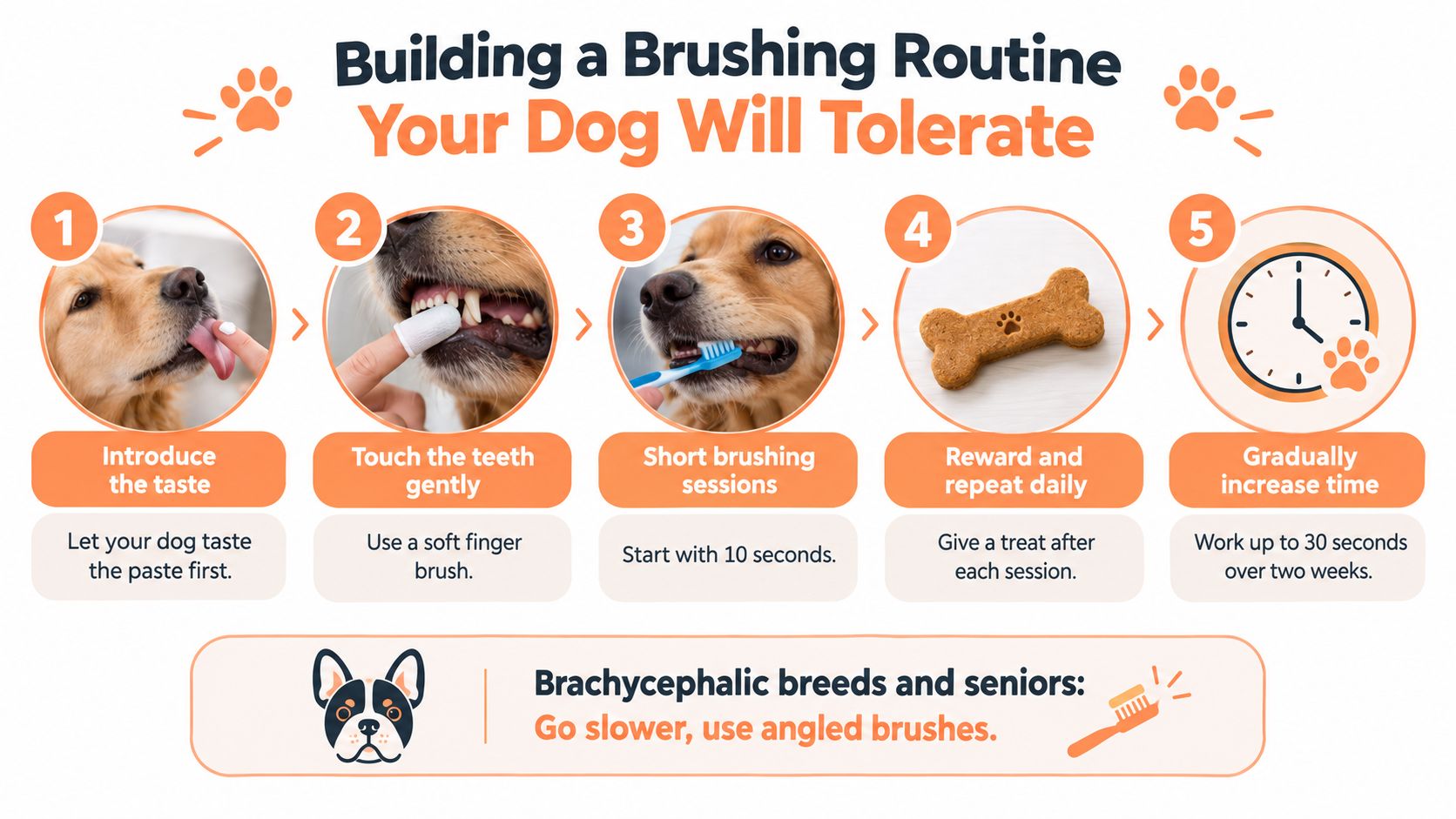
Use a soft pet toothbrush or finger brush and toothpaste formulated specifically for dogs. Don't start by forcing a brush into a closed mouth.
- Days 1 to 3: Let your dog lick a small amount of dog safe toothpaste from your finger, then reward and stop
- Next sessions: Lift the lip briefly and rub one easy tooth with your finger, soft gauze, or a finger brush
- Add the brush: Place it at the gumline and use small circular motions on outer surfaces only
- Build duration: Move from a few seconds per side toward 30 to 60 seconds total
- Prioritize targets: Spend most effort on the cheek side of the upper premolars and molars
Reward after every session, even a five second one. For flat faced dogs, go slower, use a small angled brush, and accept shorter sessions. For seniors, support the head gently and stop if you find pain, bleeding, or a loose tooth.
This short demonstration shows the handling and brush angle in action.
Daily is the meaningful target because plaque reforms quickly. Every other day is a workable fallback while you're training. Once a week is better than a wrestling match you abandon, but don't pretend it's equivalent. For broader technique and product basics, see this guide to dental care for dogs and building a home routine.
Practical rule: A calm 20 second brush you repeat daily beats a perfect two minute brush that happens twice and never again.
Don't force brushing through painful or bleeding gums. Resistance plus foul odor, swelling, or reluctance to eat means you stop training and get the mouth examined.
Comparing Chews, Water Additives, Powders, and Wipes
Adjuncts have a place, but they aren't interchangeable. Your job is to match the tool to what your dog will accept and what his mouth needs.
Controlled research summarized in a study of home dental care in dogs without initial scaling found that daily dental chews or brushing every other day partly reduced deposits, while weekly brushing plus daily water additive improved periodontal health scores. Water additives were less effective when substantial plaque and calculus were already present.
Natural Dental Aids Compared
| Aid | Plaque Reduction | Ease for Owners | Good for Brushing-Refusers | Big Limitation |
|---|---|---|---|---|
| Dental chews | Moderate through tooth contact | Easy if size is right | Often yes | Poor chewers get little contact, gulpers get risk |
| Water additives | Low to moderate as support | Very easy, daily in water | Yes | Weak against existing tartar |
| Dental powders | Supportive, varies by formula | Easy, stirred into food | Yes | No direct scrubbing action |
| Finger wipes | Moderate for reachable surfaces | Moderate, needs handling | Sometimes | Can't clean below gumline or remove calculus |
Dental chews work through sustained contact as your dog gnaws. Choose an appropriately sized, veterinary approved chew and supervise. A chew swallowed in chunks isn't cleaning anything, and aggressive chewers can fracture teeth on items that are too hard.
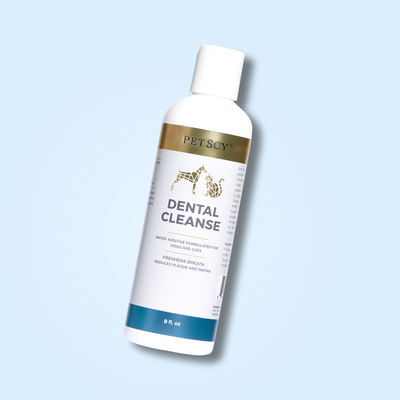
Water additives work well for ease. You will use them daily, which matters. They are less effective when tartar is already established, so use them to maintain oral health once the mouth is reasonably clean.
Dental powders stirred into food suit dogs who eat happily but reject mouth handling. PetScy offers a Dental Powder designed for daily use in food to target tartar buildup and halitosis, which is one example of this category. Powders still don't scrub teeth the way a brush does.
Textured finger wipes are the bridge product. They give you mechanical wiping without a brush head, and many dogs tolerate a finger sooner than a brush. They're useful for front teeth and the outer back teeth you can reach safely.
The Benchmark Worth Checking
Look for the Veterinary Oral Health Council, or VOHC, seal when brushing isn't possible. Its trial standard requires at least a 15% plaque or calculus reduction versus control in each trial and an average reduction of at least 20% across two trials, as described in AAHA dental care guidelines on home plaque control.
My hierarchy is direct. Brush first. Add a suitable chew second. Use an additive or powder third. Use wipes whenever they're the option that keeps mechanical cleaning happening at all.
Diet, Water, and Supplements That Support Fresher Breath
Food won't rescue a mouth full of tartar. It can, however, make your brushing routine easier to maintain and reduce how quickly odor returns.
Texture Helps, but Only Modestly
Crunchy kibble creates some tooth contact as your dog chews, while soft food tends to leave more debris behind. Don't overstate that difference. Ordinary kibble often shatters before it scrubs near the gumline, so it's not a brushing substitute.
If you're changing food anyway, prioritize complete nutrition, appropriate calories, and a texture your dog chews rather than inhales. This overview of selecting the right dog food for everyday health can help you judge the basics before you chase dental claims.
Special dental diets are a separate category from standard kibble. Ask your vet whether one fits your dog, especially if he has loose or sensitive teeth that make chewing painful.
Water Access Is Basic Oral Hygiene
Keep fresh water available and wash the bowl regularly. A dog who drinks freely rinses loose debris more often, and you'll notice changes in thirst sooner when you're refilling a clean bowl daily. Water additives belong in this routine only if your dog drinks normally with them. Reduced drinking defeats the point.
If your dog avoids treated water, stop the additive. Hydration matters more than a minor breath benefit.
Supplements Sit on Top of Cleaning
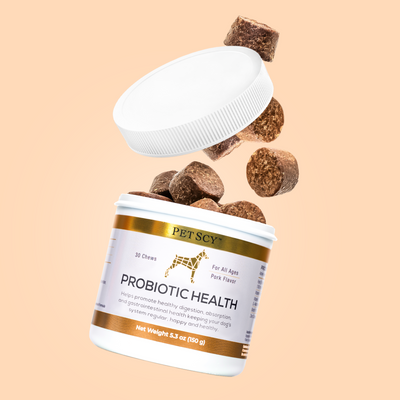
Veterinarian formulated dental powders and probiotic chews are designed to support oral bacteria balance when used daily in or with food. Probiotics may also help some dogs whose breath worsens alongside digestive upset. Omega 3 fish oil supports general inflammatory balance, but it doesn't remove plaque.
Set expectations accordingly. Supplements can support a routine that's already disrupting plaque. They can't compensate for a routine that never touches the teeth. If packaging promises fresher breath with zero cleaning effort, read that as marketing, not dentistry.
Unsafe Ingredients and Home Habits to Skip
Natural doesn't equal safe. Concentrated plant extracts can poison dogs, pantry chemicals can burn tissue, and hard natural chews can split a tooth. Honest advice matters more than optimism here.
Keep These Out of Your Dog's Mouth
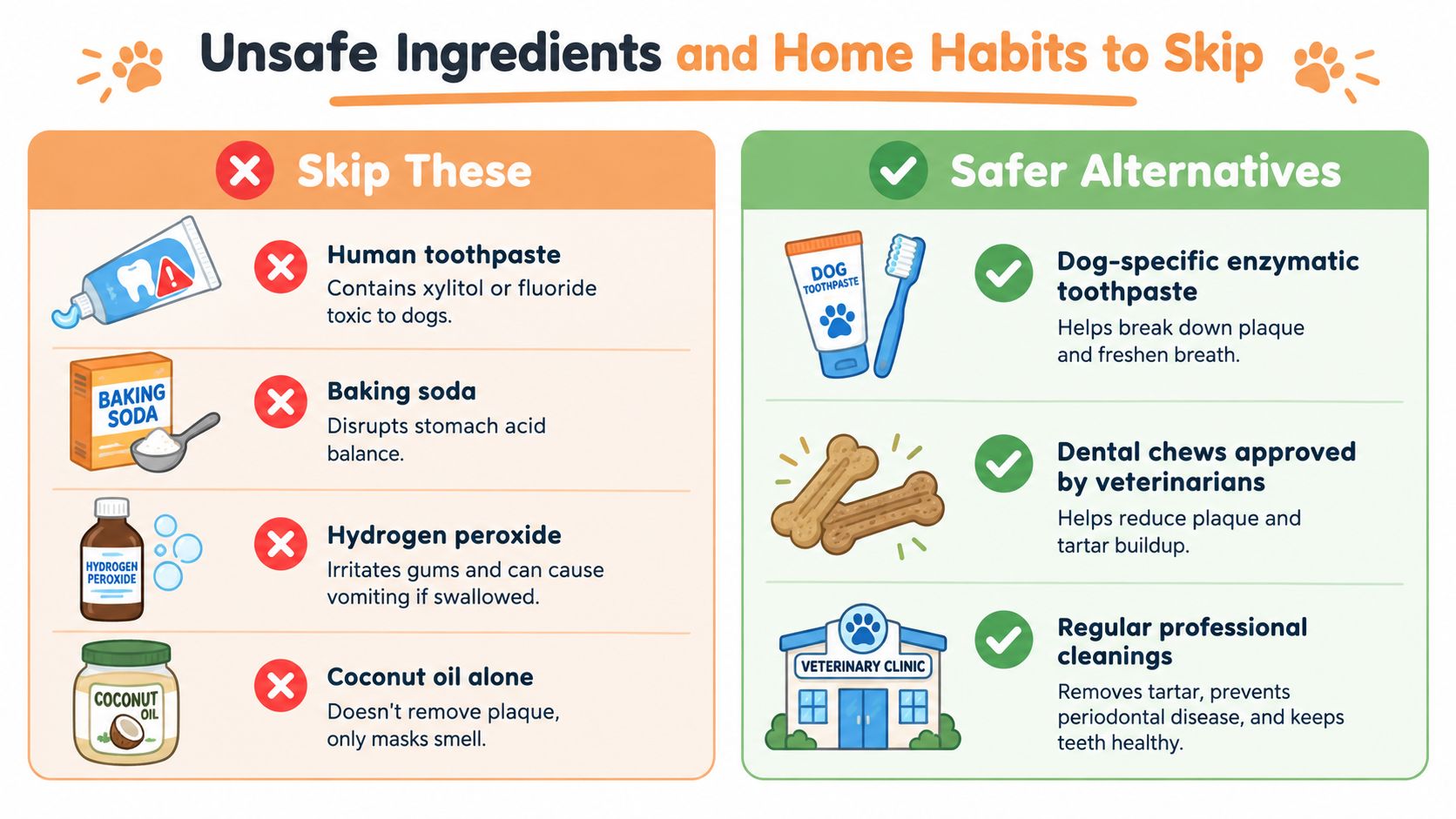
- Human toothpaste: Some formulations contain ingredients unsafe for dogs, and dogs swallow toothpaste instead of spitting
- Baking soda: Can irritate oral tissues and upset the stomach when swallowed
- Hydrogen peroxide: Can irritate or burn gums and isn't meant for routine oral use in dogs
- Essential oils: Concentrated products create toxicity and irritation risks, especially when licked and swallowed
- Abrasive household powders: Uncontrolled grit can damage enamel and soft tissue
Don't scrape tartar at home with metal tools. You can chip enamel, cut the gum, push bacteria into damaged tissue, and create a rough surface that collects plaque faster. You also can't clean the part below the gumline, which is where the important disease hides.
Skip antlers, hooves, hard bones, and rigid nylon bones for dental purposes. A fractured tooth is painful, expensive, and completely avoidable. The same caution applies to tennis balls used as constant chew toys, since abrasive wear plus hard chewing is a bad combination for teeth.
Parsley and mint aren't the main danger here. The danger is relying on them. When odor improves slightly while infection continues, you lose time. Use safe food based fresheners, if your vet approves, only as a minor extra alongside mechanical cleaning.
The test I use: If you'd hesitate to swallow it, scrape with it, or bite down hard on it yourself, don't put it in your dog's mouth.
Warning Signs, Vet Visits, and Your First 90 Days
Owner adherence is the bottleneck. In a Swedish survey summarized in research on dog owner dental home care practices, only 4% of owners reported daily brushing, 26% had tried brushing but stopped, and 25% reported difficulty inspecting their dog's mouth. Build for the life you have, not the routine you wish you had.
The Non Negotiable Vet Line
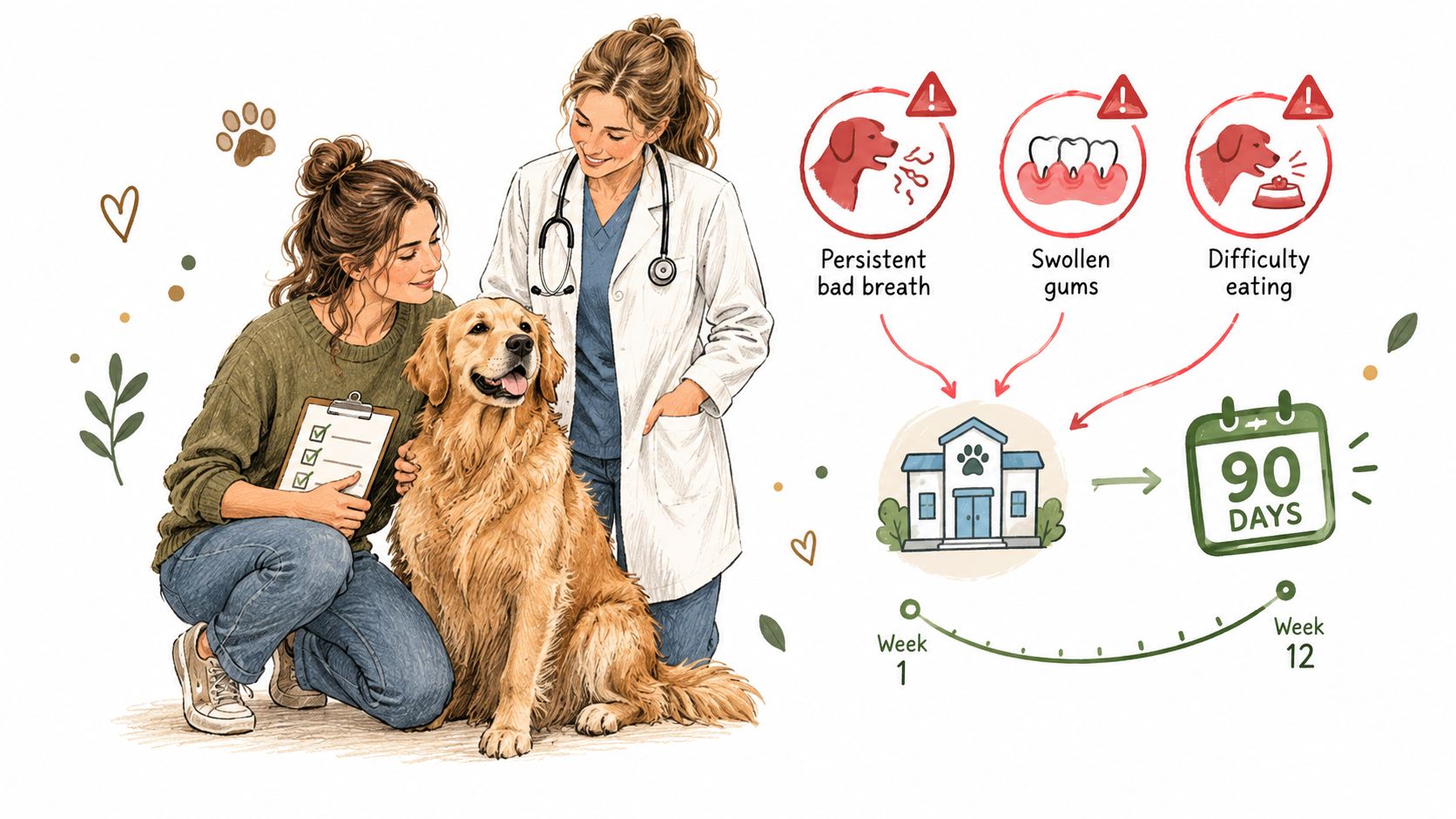
Book a veterinary oral examination without waiting for a home routine to work if you see:
- Persistent foul breath after 2 to 4 weeks of consistent home care
- Bleeding, red, swollen, or receding gums
- Loose, fractured, or heavily discolored teeth
- Facial swelling, nasal discharge, or excessive drooling
- Dropping food, one sided chewing, pawing at the mouth, or weight loss
- A sudden change in breath, especially sweet, urine like, or extremely rotten odors
Professional treatment may require anesthesia, dental radiographs, scaling above and below the gumline, and treatment of painful teeth. That's not upselling by default. It's how a vet reaches disease you physically cannot reach at home. If you're tempted to handle heavy deposits yourself, read this first on how to remove tartar from dog teeth at home and its limits.
Your 30, 60, 90 Day Plan
Days 1 to 30 are for desensitization. Practice lip lifting, toothpaste licking, finger contact, and brief brushing of a few teeth. Do your weekly mouth check and stop escalating if you find pain or bleeding.
Days 31 to 60 are for consolidation. Aim for daily brushing, add one adjunct that fits your dog, such as a VOHC accepted chew, a powder, or a water additive, and book an annual dental examination if one isn't scheduled. Adding one tool at a time tells you what's helping and what your dog rejects.
Days 61 to 90 are for maintenance and honest reassessment. Breath should be milder, gums should look calmer, and sessions should feel routine. If odor remains strong despite consistent effort, you've crossed the vet line. Don't restart the clock with a new herb.
Consistent light maintenance wins. A dog who accepts a short brush most days will have a cleaner, more comfortable mouth than a dog subjected to perfect care for three weeks followed by nothing.
PetScy makes veterinarian formulated dental products for daily home routines, including options designed to support fresher breath and oral hygiene alongside regular brushing and veterinary care. If your dog needs a lower friction addition to the routine you're building, explore the dental range at PetScy and choose the format he'll accept.