










How to Remove Tartar from Dog Teeth at Home Safely
Your dog is lying beside you, panting after dinner, and you've just noticed a brown crust along the back teeth. You grab a toothbrush, search for “how to remove tartar from dog teeth at home,” and hope there's a safe trick that will make the buildup disappear tonight.
There isn't. Hardened tartar needs professional veterinary removal, but that doesn't mean home care is pointless. The useful job at home is stopping soft plaque from becoming more tartar, reducing the bacterial film around the gumline, and keeping the mouth stable between veterinary cleanings. That distinction is the difference between practical prevention and risky DIY scraping.
Table of Contents
- Why At-Home Tartar Control Is Really Plaque Control
- Brushing Your Dog's Teeth the Right Way
- Comparing Chews, Water Additives, Powders, and Wipes
- Building a Weekly Home Dental Routine
- Warning Signs You Need a Professional Cleaning
- Preventing Tartar From Coming Back
Why At-Home Tartar Control Is Really Plaque Control
Your dog's tooth may show a brown or yellow ridge, but the useful home-care target is the film that forms before it. Tartar, also called calculus, is plaque that has mineralized. Brushing disrupts fresh plaque. It does not dissolve or safely scrape away firmly attached calculus, especially when deposits reach below the gumline. AAHA's dental-care guidance identifies daily brushing as the strongest home method for reducing plaque.
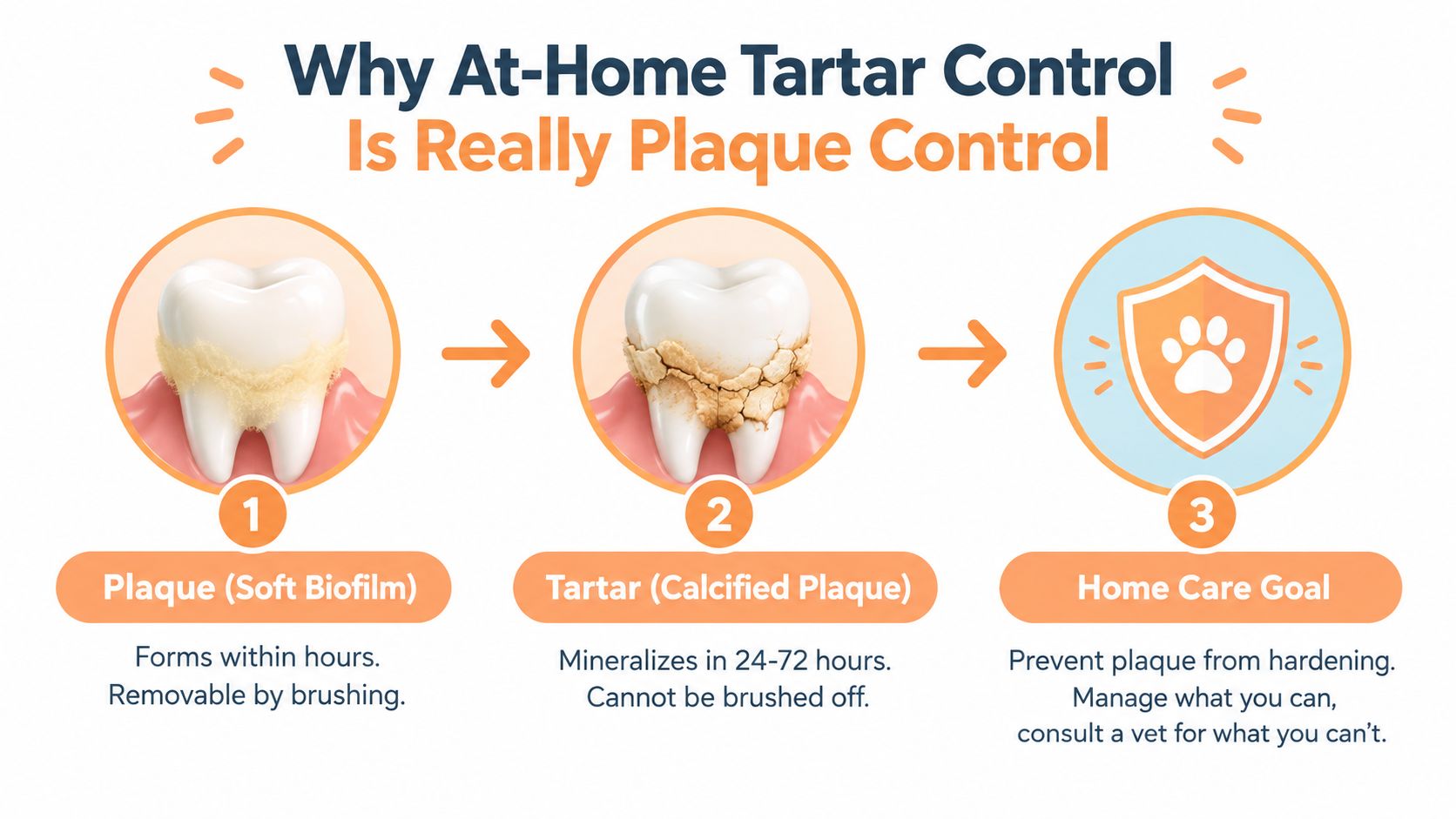
Tartar is more than a cosmetic coating. Its rough surface irritates the gums and gives bacteria more places to cling. A home routine can disrupt the soft biofilm before it hardens, slow new buildup, and help maintain healthier gums. It cannot remove thick, bonded deposits or treat periodontal disease below the gumline.
The practical rule: If you can feel a hard ridge with a fingernail, stop trying to remove it yourself. Skip metal scalers, household tools, and forceful scraping. They can damage the tooth surface or gums while leaving disease beneath the gumline untouched.
Dental disease is widespread in dogs. AAHA's dental toolkit reported tartar in about 70% of mature dogs. Veterinary summaries commonly cite 80% to 90% of dogs over age 3 with some component of periodontal disease, as described in Cornell's overview of canine periodontal disease. The same source reports an increase of more than 12% since 2006, based on data from 2.1 million dogs, while only about 14% of dogs receive annual veterinary dental care. These figures support consistent prevention, not DIY scaling.
For a clear visual explanation of soft plaque versus hardened tartar, use the Mouthology guide on tartar prevention. Rank home methods by effect: brushing first, a validated dental additive or chew next, and professional cleaning for deposits already bonded to the teeth.
Brushing Your Dog's Teeth the Right Way
A stubborn terrier may accept a toothbrush long before it accepts a full mouth inspection. Start with brushing, because it is the home method that physically disrupts plaque on accessible tooth surfaces. A veterinary review identifies toothbrushing as the gold-standard daily plaque-control method, while also explaining that home care prevents new buildup rather than replacing professional scaling. See This veterinary review of canine home dental care for the evidence behind that approach.
Start with equipment your dog can tolerate
Choose a dog-safe enzymatic toothpaste. Human toothpaste is unsuitable for dogs, especially formulas containing ingredients that may harm them or foaming agents that can upset the stomach. Use a soft-bristle pet brush or a silicone finger brush sized for the muzzle. For a small terrier, a compact angled brush is usually easier to control than a large, flat one.
During the first few days, leave the brush aside. Put a small dab of toothpaste on your finger and let your dog lick it. Pair the taste with a calm word and a tiny reward. At this stage, familiarity matters more than cleanliness.
Work on the outer surfaces first
Lift the lip gently instead of forcing the mouth open. Hold the brush at roughly a 45-degree angle toward the gumline, then use small circular strokes along the outer surfaces of the canines, premolars, and molars. These cheek-side surfaces are the practical priority because plaque collects there quickly and they are easier to reach.
Leave the inner surfaces for later. A dog's tongue naturally disturbs some plaque there, and struggling for access can make a resistant dog afraid of the entire routine. Keep early brushing sessions short, around one to two minutes, and stop while your dog remains calm.
Purdue Extension recommends brushing at least 3 times per week, with daily brushing as the goal, in its guide to canine dental care. Correct daily brushing can reduce plaque on accessible crown surfaces by roughly 50% to 70%. It cannot reach every area below the gumline, so it protects against future buildup without treating hidden periodontal disease.
Use a gradual desensitization ladder
For a nervous dog, spread the introduction across about two weeks:
- Day 1: Touch the muzzle briefly, then reward.
- Day 3: Lift the lip for a moment without inserting anything.
- Day 7: Touch the outer teeth with the brush for about five seconds.
- Day 14: Build toward full passes across the outer surfaces.
Use a calm marker such as “good,” followed by a reward, so your dog can predict what comes next. Do not pin the head, pry the jaws apart, or chase your dog around the room with the brush. A peaceful two-minute routine builds progress. A forced session can undo it.
Comparing Chews, Water Additives, Powders, and Wipes
A stubborn terrier may reject the brush, yet accept a chew or wipe. Use that cooperation, but rank these tools fairly. Home dental products disrupt plaque and slow new buildup. They do not reliably scrape established tartar from every tooth or replace professional care.
Brushing remains the strongest home method. VOHC-accepted dental chews show more modest trial results, reducing plaque by about 18% to 33% and calculus by about 20% to 37%. Use them as a practical fallback or supplement, not as tartar erasers.
| Product Type | Plaque Reduction | Best Frequency | Best Fit Dog | Main Limitation |
|---|---|---|---|---|
| VOHC-accepted dental chews | About 18% to 33% plaque and 20% to 37% calculus in trial settings | Usually daily, according to product directions | Dogs that chew safely and tolerate supervision | Add calories and miss some tooth surfaces |
| Water additives | Modest plaque support, depending on formula and use | Daily | Dogs that refuse brushing but drink normally | Provide no direct scrubbing |
| Dental powders | Support plaque control through daily food dosing | Daily | Dogs that reject mouth handling | Results depend on consistent use |
| Finger wipes | Mechanical removal of soft surface debris | Daily or as tolerated | Dogs that accept brief handling | Limited reach on back molars and below the gumline |
Dental chews are my first fallback for a dog that chews steadily and safely. Choose the correct size, look for the VOHC seal, supervise the session, and include the calories in the daily food plan. A chew has a real mechanical effect, but its reach and results remain below brushing.
Water additives suit dogs that will not allow mouth handling. Add them daily only if your dog continues drinking normally. Check the bowl after introducing the product. A dog drinking less has given you a clear reason to stop and ask your veterinarian about another option.
Powders work best for dogs that eat reliably but refuse a brush. They require consistent dosing and cannot physically remove a thick deposit. Finger wipes provide a quick mechanical compromise. Wipe the front teeth and gum margins first, where access is easiest, but do not expect dependable contact with the rear molars.
Choose one tool your dog accepts instead of buying several products and using none consistently. For help selecting a breath-focused product without mistaking fresher breath for tartar removal, read this guide to dog breath fresheners.
Building a Weekly Home Dental Routine
A stubborn terrier that refuses a brush still needs a plan. Build the routine around mechanical cleaning, then add one tool your dog accepts consistently. Start with brushing on Monday, Wednesday, and Friday evenings. Daily brushing is the stronger target, but Purdue Extension supports brushing at least 3 times weekly, which gives reluctant owners a workable starting point.
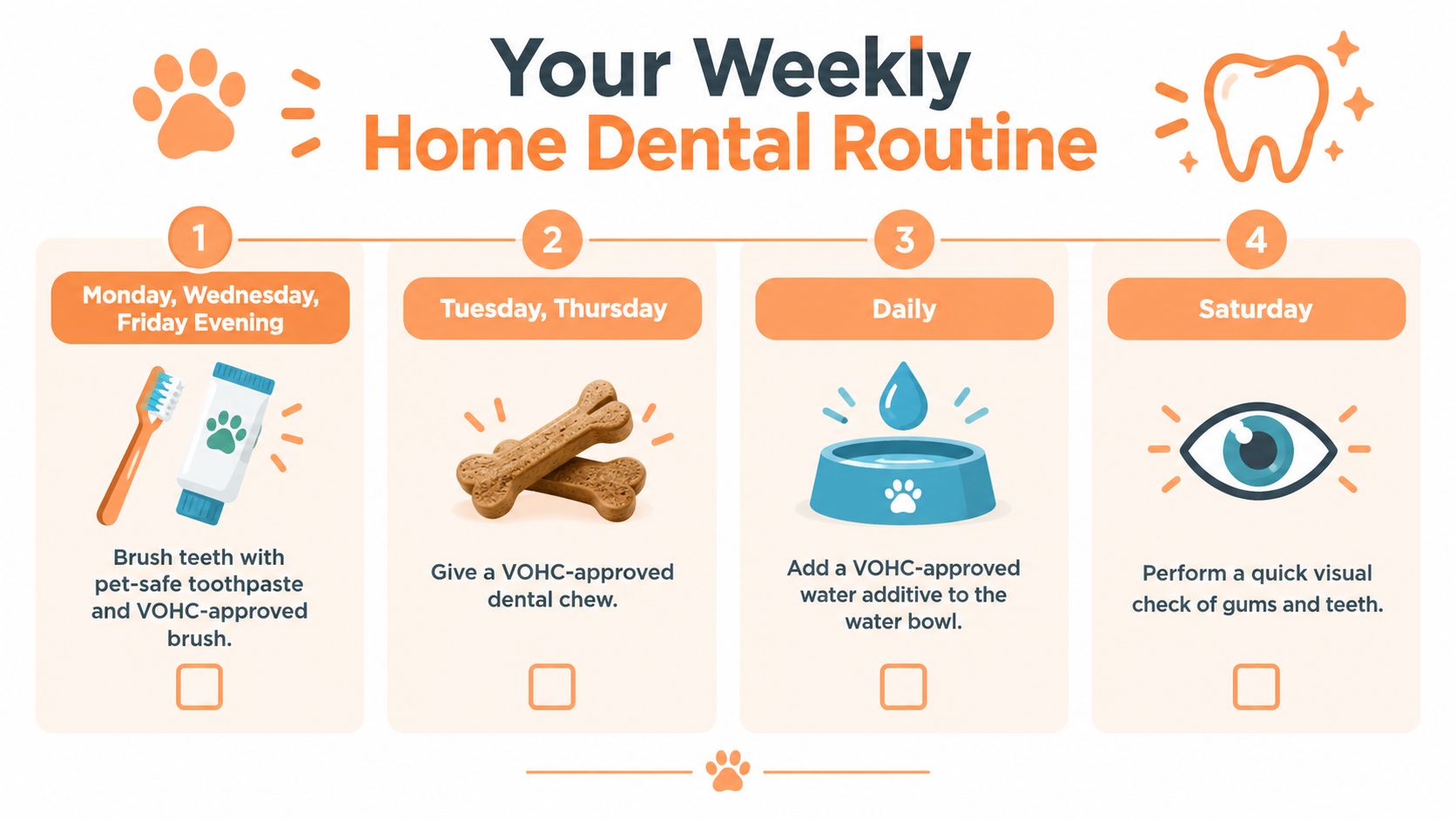
Use a VOHC-accepted chew on alternate days if your dog chews safely. Use a suitable water additive daily only if drinking stays normal. On Saturday, check gum color, the canines, and large molars, then note any breath change. This schedule disrupts plaque between brush sessions. It does not remove bonded calculus.
| Day | Main task | Practical cue |
|---|---|---|
| Monday | Brush | Do it after the evening meal |
| Tuesday | Dental chew | Offer it after exercise, when your dog is calmer |
| Wednesday | Brush | Keep the session brief and predictable |
| Thursday | Dental chew or wipe | Choose the option your dog accepts |
| Friday | Brush | Repeat the same brush and toothpaste |
| Saturday | Visual check | Record gum appearance and breath |
| Sunday | Additive and rest | Keep the daily water routine consistent |
Small dogs deserve closer monitoring because crowded teeth give plaque more places to remain. If a small breed accepts brushing, work toward as many as 5 brush sessions per week, while keeping each session comfortable. Senior dogs often manage better with shorter sessions, a softer brush, and an additive that requires no mouth handling.
For an anxious dog, use a fallback ladder. Try a brief wipe after one meal, then a dental powder with another if your veterinarian agrees the ingredients suit your dog. The PetScy dental powder guide explains how powder can fit an at-home routine. It supports plaque management, but it cannot remove hardened calculus.
One accepted tool used consistently beats a cupboard full of ignored products. Keep the brush in the same place, use the same verbal cue, and record only useful observations: “brush accepted,” “breath unchanged,” or “gum looks red.” Those notes show whether the routine is helping and make changes easier to discuss with your veterinarian.
Watch the brushing technique in action before copying it:
Warning Signs You Need a Professional Cleaning
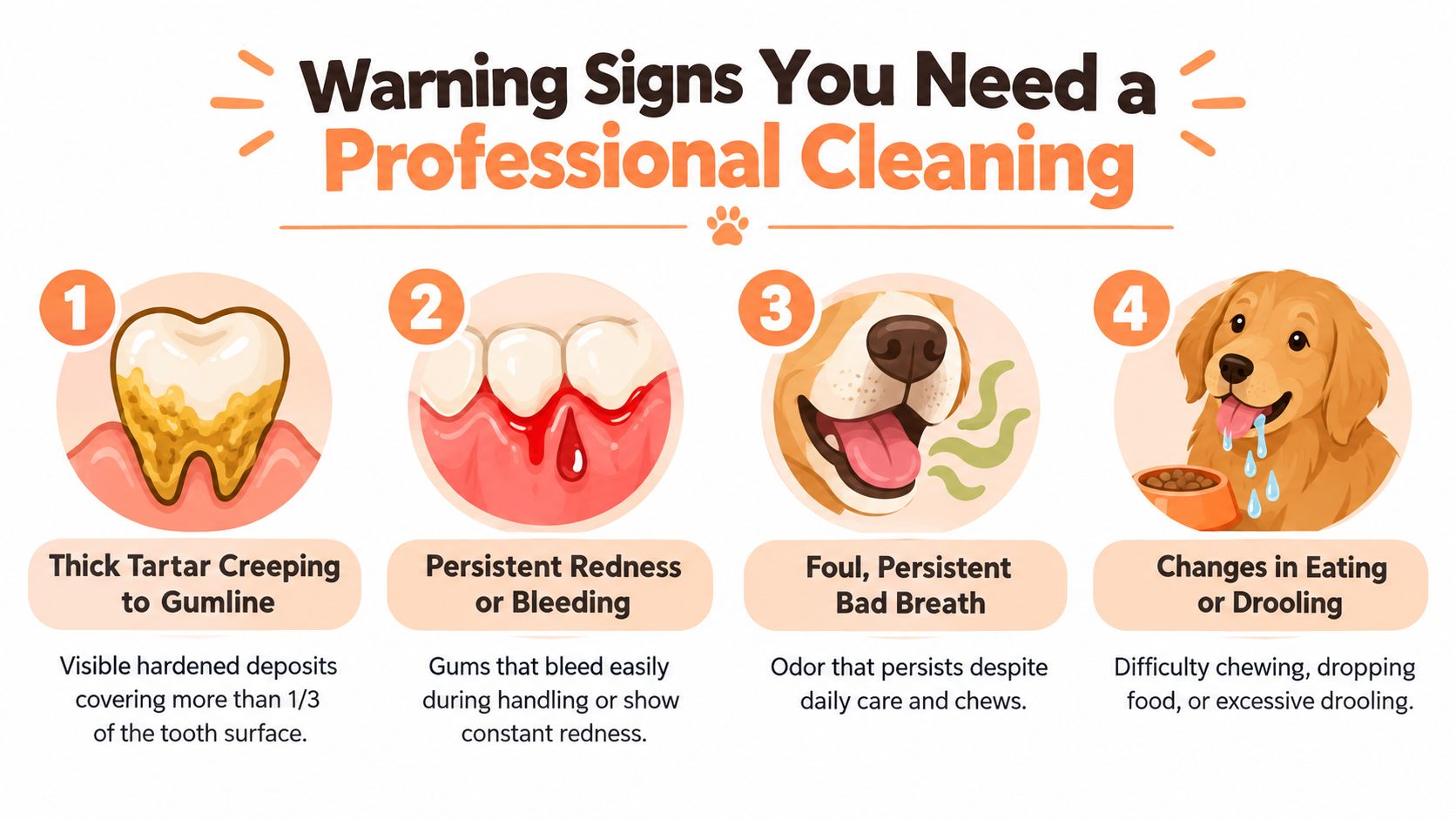
A stubborn terrier may keep eating while a tooth hurts. Home care has a firm boundary: it disrupts plaque and slows new buildup, but it cannot safely remove thick, attached calculus or treat disease below the gumline. Arrange a veterinary examination when those problems appear.
Look for the mouth signs you can see
Thick yellow or brown buildup along the gumline is the clearest handoff point. Check the canines and large rear teeth closely. Brushing may clean around a deposit, but it will not detach hardened calculus.
Persistent bad breath also needs attention. If the odor remains after a consistent brushing routine, look for disease below the gumline, a damaged tooth, or another oral problem. Breath fresheners can cover the smell while leaving its cause untreated.
Red, swollen, or bleeding gums signal inflammation. Mild irritation can follow a new routine when the brush is too forceful, but repeated bleeding is not a reason to press harder. Stop aggressive handling and arrange an examination.
Treat behavior changes as pain signals
Dogs often hide oral pain. Watch for dropped kibble, chewing on one side, reluctance to eat hard food, food falling from the mouth, pawing at the face, unusual drooling, or a loose or broken tooth. Facial swelling deserves prompt attention because it may indicate infection around a tooth root.
Don't wait for your dog to stop eating. Many dogs continue eating despite substantial dental pain, changing how they chew rather than refusing food.
A professional cleaning commonly includes anesthesia, an oral examination, scaling, polishing, and dental radiographs when indicated. Radiographs show problems beneath the gumline, where a home brush cannot reach, and reveal that the visible crown is only part of the tooth. Brushing targets plaque. Formed calculus generally requires professional cleaning.
Avoid anesthesia-free scraping services. A conscious dog cannot reliably tolerate a complete examination or cleaning below the gumline, and scraping may damage enamel while leaving hidden disease untreated. After the veterinarian restores the mouth, consistent home plaque control can slow the next buildup cycle.
Preventing Tartar From Coming Back
A professional cleaning resets your dog's mouth, but it does not stop new plaque from forming. Start home care as soon as your veterinarian confirms the mouth is comfortable. Make brushing the main habit, then add tools your dog will tolerate.
Diet can affect plaque buildup, but food alone will not solve tartar. Dental diets such as Hill's t/d and Royal Canin Dental are made to create mechanical cleaning on accessible tooth surfaces as dogs bite. They do not clean below the gumline or remove calculus that is already attached. Mechanical plaque disruption remains the priority, as noted earlier.
Choose chews according to the claim you need. A product accepted for plaque control is not automatically accepted for calculus control. VOHC acceptance offers a better screening tool than broad packaging promises because it identifies products with tested dental claims.
| Tool | Plaque Reduction | Tartar Control | Recommended Weekly Frequency |
|---|---|---|---|
| Toothbrushing | Strongest home option on accessible crown surfaces with correct daily brushing | Prevents new plaque from mineralizing, but does not remove established calculus | At least 3 times, with daily as the goal |
| VOHC-accepted dental chew | Moderate reduction in trial settings | Moderate calculus reduction in trial settings | Follow the product directions, often daily |
| Water additive | Supportive and formula-dependent | Helps maintenance rather than removing bonded tartar | Daily if your dog continues drinking normally |
| Dental powder | Supportive plaque-management option | Does not scrape off established deposits | Daily according to the label |
| Dental diet | Provides mechanical action on biting surfaces | Limited to accessible surfaces and prevention | As directed by your veterinarian |
| Finger wipe | Removes soft surface debris through rubbing | Little effect on hard, attached calculus | Daily or as tolerated |
A practical target is three to four brushings each week, daily additive use, and appropriately selected VOHC chews according to the label and your dog's calorie needs. In a 2024 study of unscaled dogs, weekly brushing combined with a daily water additive was the only tested home regimen that partly removed deposits and improved periodontal health. It still did not clear established tartar. Stack routines instead of expecting one product to carry the whole job.
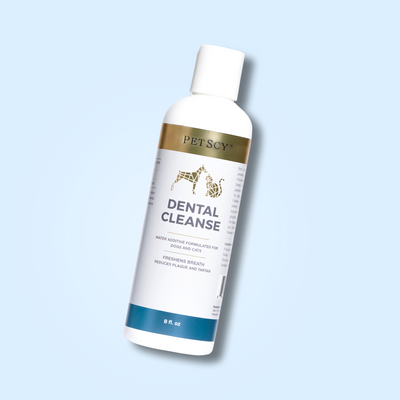
For dogs that refuse a brush, water additives provide a useful fallback, not an equal substitute. PetScy's Dental Cleanse water additive is one option to compare for daily breath and oral hygiene support. Follow the label, watch that your dog continues drinking normally, and keep brushing or veterinary care in the plan whenever possible.
Some dogs will still need future professional cleanings despite consistent home care. Mouth shape, crowded teeth, age, and individual susceptibility can speed plaque accumulation. Choose the routine your dog accepts and repeat it consistently. A reliable, modest routine beats a cabinet full of products used sporadically.
If hard brown buildup has already formed, arrange a veterinary dental assessment instead of scraping it at home. For plaque and breath support between cleanings, visit PetScy to compare dog dental powders, water care, and finger wipes, then select the option that fits your dog's daily routine.