









Salmon Oil for Dogs Benefits Dosing and Safety Guide
You're brushing your dog and finding more flakes than usual. Maybe your dog is scratching through the night, the coat looks dull, or an older companion has started moving stiffly after rest. Salmon oil often appears as a simple answer, but the useful question isn't “How many teaspoons should I give?” It's how much EPA and DHA does the product provide, and does that amount fit the problem you're trying to address?

Table of Contents
- Introduction to Salmon Oil for Dogs and What It Can Do
- How Salmon Oil Works Inside Your Dog's Body
- Proven Benefits for Skin Coat Joints and Beyond
- Salmon Oil Compared to Other Fish and Plant Oils
- Dosing Guidelines by Weight and EPA Plus DHA Goals
- Safety Side Effects and When to Be Cautious
- How to Choose a High Quality Salmon Oil Product
Introduction to Salmon Oil for Dogs and What It Can Do
Salmon oil for dogs is mainly a delivery system for two long-chain omega-3 fatty acids, EPA and DHA. These fats can become part of cell membranes and influence inflammatory signaling, which helps explain why veterinary research has focused on skin irritation, coat quality, joint comfort, and other specific outcomes.
That doesn't make salmon oil a universal treatment. A dog with fleas, a bacterial skin infection, food allergy, pancreatitis, or significant arthritis may need diagnosis and targeted care. Oil may support a treatment plan, but it shouldn't replace a veterinary examination when itching, hair loss, pain, digestive changes, or mobility problems persist.
The evidence is strongest when the goal is clearly defined. Veterinary research has found measurable skin and coat improvements with marine fish oil, while joint studies have used their own EPA and DHA protocols. Other questions, especially digestive complaints, require more caution because positive results in one condition don't automatically transfer to another.
This guide focuses on a practical decision framework. You'll learn what EPA and DHA do, which benefits have the clearest support, why the timeline can stretch across several weeks, how to calculate a dose from a label, what side effects to watch for, and how sourcing affects product quality and sustainability.
The practical starting point: choose the health goal first, then assess the product's combined EPA+DHA content, safety profile, and quality controls.
How Salmon Oil Works Inside Your Dog's Body
A teaspoon of salmon oil can look generous on a label while supplying only a modest amount of the omega-3s used in veterinary research. The useful comparison is not oil volume alone. Treat the oil as the package, and EPA plus DHA as the contents that determine the dose for a specific goal.
EPA and DHA in the cell membrane
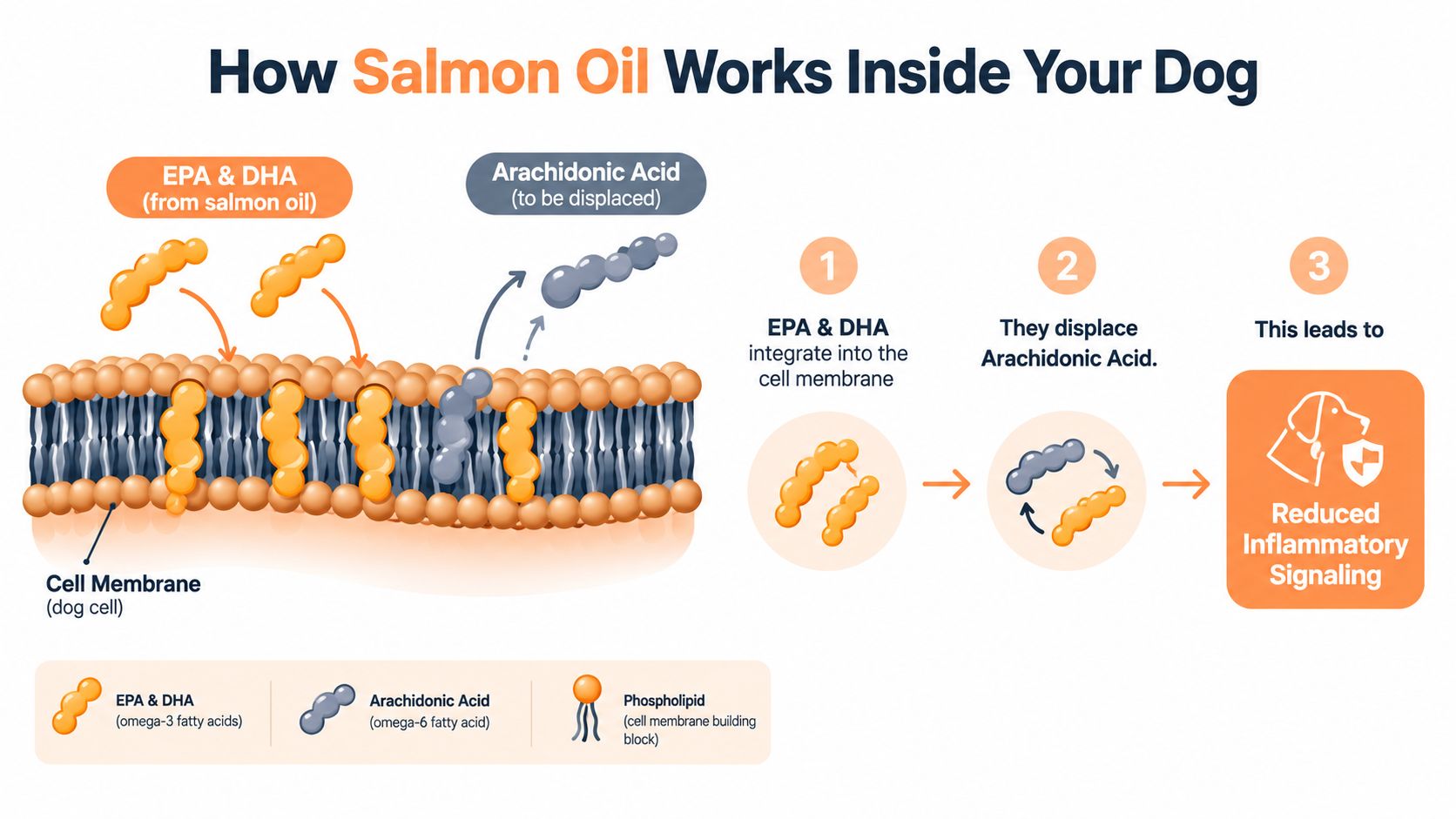
After digestion and absorption, EPA and DHA can enter tissues and become part of cell membranes. These membranes help cells communicate. The fatty acids available there influence which compounds the body produces when inflammatory signals are released.
A kitchen analogy helps. Arachidonic acid can provide ingredients for one group of inflammatory signals, while EPA changes the available ingredients and supports compounds with different effects. DHA also contributes structural support, especially in nervous tissue and cell membranes. This process does not switch inflammation off. It changes the balance of messages cells send.
Core concept: Salmon oil does not simply “lubricate” your dog's joints or skin. EPA and DHA become biological building materials that can influence how inflammation is communicated.
Dose follows from that mechanism. A small amount of omega-3 may not match the support seen with the EPA and DHA amounts used in veterinary studies. Measuring only by spoonful can therefore mislead. Two products with the same oil volume may deliver very different quantities of the active fatty acids, depending on their formulation and verified label information.
Why the Omega-3 Index matters
Blood fatty-acid testing provides another way to see whether supplementation changes omega-3 status. In one canine trial, 16 weeks at 68 ± 19 mg EPA+DHA per kg per day raised the Omega-3 Index from 1.4% ± 1.0% to 3.3% ± 1.1%, alongside improvements in pain and quality-of-life scores. The figures come from the canine omega-3 trial report.
The index cannot identify the cause of itching or stiffness. It can show that measurable fatty acids reached the bloodstream, linking the product label and calculated EPA+DHA dose to a biological change. That makes verified EPA+DHA content more useful than judging a salmon oil by its total volume.
Proven Benefits for Skin Coat Joints and Beyond
A dog with itchy skin may scratch less after several weeks of an appropriate omega-3 plan, while a dog with joint disease may need a different dose and a longer trial. These outcomes should be assessed separately. Salmon oil is not judged by the amount of oil in a spoon, but by the EPA and DHA supplied and the condition being treated.
Skin and coat support
Skin and coat research has a longer veterinary history than broad wellness claims. A veterinary review reported that marine fish oil at 1 g per 4.54 kg of body weight per day for 6 weeks helped dogs with pruritic skin disease, with significant improvements in itching and skin-and-coat character. Improvements could begin as early as 7 weeks after dietary intervention. The Journal of the American Veterinary Medical Association review provides the study context.
Controlled research has also described less scaling, greater coat luster, and reduced transepidermal water loss in dogs receiving substantial amounts of long-chain omega-3 fatty acids. EPA and DHA can be viewed as building materials for the skin barrier. When that barrier holds moisture more effectively, the skin may become less dry and the coat may appear healthier.
The response takes time. Another controlled canine study found the greatest haircoat and skin-quality improvement after about 8 weeks. An average dose of 20.4 mg EPA+DHA per kg per day improved haircoat and skin quality. These findings support allowing a proper trial, not assuming that every itchy dog will respond. Parasites, infections, environmental allergies, and food reactions still require their own evaluation.
Owners seeking a focused explanation can read about whether omega-3 may help dogs with itching.
Joint comfort
Joint studies use different endpoints and often higher EPA+DHA amounts than skin studies. In a randomized study, about 48 mg/kg EPA plus 32 mg/kg DHA for 84 days improved discomfort, lameness, and joint severity compared with placebo, as summarized in the veterinary omega-3 dosing evidence.
This protocol does not mean salmon oil repairs cartilage or cures arthritis. It may support a healthier inflammatory response and improve comfort within a broader plan involving weight management, controlled exercise, medication, physical rehabilitation, and veterinary monitoring.
Beyond skin and joints
Reproductive research has examined a narrower outcome. In a 2025 peer-reviewed study of nine stud dogs, daily supplementation providing 180 mg DHA per 7 kg of body weight for 90 days improved frozen-thawed sperm motility, membrane integrity, and viability. The effect persisted for 3 months after supplementation stopped. These findings apply to that reproductive setting, not automatically to every dog or health goal.
Digestive claims require restraint. A 2026 review found that gastrointestinal diseases do not appear to benefit from omega-3 supplementation, possibly because inflammation-related malabsorption limits the response. Salmon oil may suit some dogs, but a general anti-inflammatory effect is not enough evidence to assume it will improve every digestive complaint.
Salmon Oil Compared to Other Fish and Plant Oils
Salmon oil is one source of EPA and DHA, not the only one. The better comparison asks what fatty acids the product supplies, how clearly the label reports them, how the oil is protected from oxidation, and whether the supply chain is responsibly documented.
Plant oils create the most common source of confusion. Flaxseed oil mainly supplies ALA, a shorter-chain omega-3. Dogs may convert ALA into EPA and DHA, but that conversion isn't a dependable substitute for providing the long-chain fatty acids directly. Salmon oil, pollock oil, and other marine oils provide EPA and DHA closer to the forms used in canine studies.
| Source | EPA+DHA Profile | Key Consideration |
|---|---|---|
| Salmon oil | Direct marine source of EPA and DHA | Check the actual EPA and DHA amounts rather than judging by oil volume |
| Wild Alaskan pollock oil | Direct marine source of EPA and DHA | Review fishery traceability, purity testing, and oxidation controls |
| Generic fish oil blend | EPA and DHA can vary by fish species and concentration | “Fish oil” alone doesn't tell you the active dose or source |
| Flaxseed oil | Primarily ALA, not a direct EPA+DHA source | It isn't a like-for-like replacement for marine omega-3s |
Quality changes the comparison
Fish oils can oxidize, and contaminated products may expose dogs to unwanted substances. A reputable manufacturer should provide clear EPA and DHA quantities, batch or third-party testing information, storage guidance, and source details. If a label lists only “salmon oil” without active fatty-acid amounts, you can't reliably compare it with another product.
Sustainability adds another tradeoff. Global fish oil production has fallen by more than one-third since 1986, with climate change, warmer oceans, and El Niño events contributing to declining fish populations and affecting pricing and sourcing consistency, according to this industry analysis of omega-3 supply.
That doesn't make salmon oil automatically unsuitable. It means responsible buying requires more than a species name. Look for traceability and stated sustainability practices, and consider whether the manufacturer explains how it manages purity, freshness, and supply changes.
Dosing Guidelines by Weight and EPA Plus DHA Goals
If your dog weighs 20 kg, a teaspoon-based rule can still miss the point. Two products may contain the same volume of salmon oil but provide very different amounts of EPA and DHA. Start with the label. Find the EPA and DHA amounts per serving, then add them to identify the active daily dose.
Published canine research has used dermatology ranges of 0.99 to 43 mg/kg EPA and 0.66 to 30 mg/kg DHA. Osteoarthritis studies used higher ranges of 48 to 100 mg/kg EPA and 20 to 32 mg/kg DHA, as summarized in this review of omega-3 dosing in dogs.
Turn the label into a daily amount
Use two calculations:
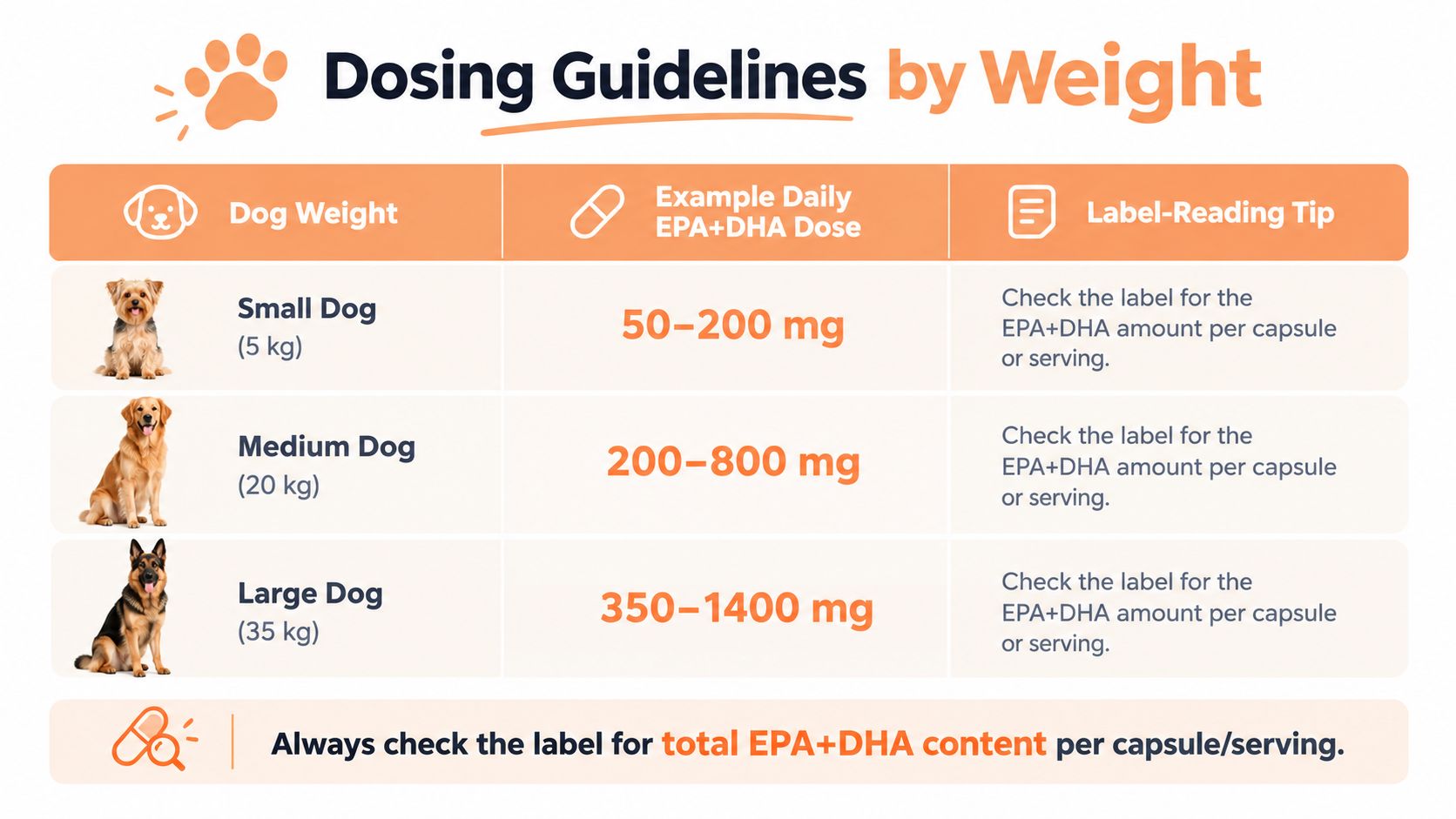
EPA per serving + DHA per serving = combined EPA+DHA per serving
Target mg/kg per day × your dog's weight in kg = daily EPA+DHA target
For example, a target of 10 mg/kg per day equals 50 mg per day for a 5 kg dog, 200 mg for a 20 kg dog, or 350 mg for a 35 kg dog. These figures demonstrate the calculation, not universal treatment recommendations. The appropriate target depends on whether you are supporting general nutrition, skin, joints, or a diagnosed condition.
The dermatology protocol used about 39 mg/kg EPA plus 26 mg/kg DHA, while the joint protocol used about 48 mg/kg EPA plus 32 mg/kg DHA. Those dose-specific findings are detailed in the benefits section.
Introduce the oil carefully
Begin with a conservative amount, especially if your dog has a sensitive stomach. Give salmon oil with food and monitor stool quality, appetite, vomiting, and other unusual changes. If your veterinarian has set a therapeutic target, increase the amount only according to that plan.
Judge the intended result over an appropriate period. Skin and coat changes may take around 7 to 8 weeks, while the cited joint study assessed outcomes over 84 days. Record scratching, licking, coat condition, rising from rest, walking, and play. A baseline makes gradual improvement easier to recognize.
For label checks and weight-based comparisons, use this fish oil dosage chart for dogs.
Safety Side Effects and When to Be Cautious
Salmon oil is often tolerated, but “natural” doesn't mean risk-free. The most common problem is loose stool, particularly when a dog receives more fat or omega-3 than it can comfortably handle.
A 2026 review notes that very high doses may affect bleeding, wound healing, and immune function, while gastrointestinal diseases don't appear to benefit from omega-3 supplementation, possibly because inflammation-related malabsorption limits the response. The PubMed review also reported few adverse effects overall, but that shouldn't be interpreted as permission to use the highest possible dose.
Ask before supplementing
Speak with your veterinarian before adding salmon oil if your dog:
- Takes medication: Review possible interactions, particularly when treatment affects clotting, immunity, or inflammation.
- Has a planned procedure: Ask whether supplementation should be paused before surgery or dental work.
- Has a bleeding concern: A high omega-3 intake may be inappropriate without professional guidance.
- Has digestive disease: Don't assume the oil will help because it may support skin or joints.
- Has a fish sensitivity: Check the full ingredient list and stop if your dog develops a suspected reaction.
If loose stools continue, vomiting appears, appetite falls, wounds heal unusually slowly, or you notice unexplained bruising or bleeding, stop the supplement and contact your veterinarian. The safest principle is to use the lowest effective EPA+DHA amount for the specific goal, rather than treating a larger dose as automatically better.
Product quality matters too. Independent veterinary guidance warns against fish oil from an unreliable source because contamination, including heavy metals, is a potential concern. Clear testing and traceability reduce uncertainty, but they don't replace veterinary advice for a medically complex dog.
How to Choose a High Quality Salmon Oil Product
A bottle may contain plenty of oil yet provide little useful omega-3. Start with the active-ingredients panel. A reliable label lists EPA and DHA separately, gives the amount per serving, identifies the fish source, and explains storage. Compare products by their combined EPA+DHA, not by the total oil volume.
Check these quality signals:
- Freshness protection: Packaging and instructions should address oxidation, light, heat, and storage after opening.
- Independent verification: Third-party testing can help confirm identity, potency, and contaminant controls.
- Traceable sourcing: Wild-caught origin and fishery details are useful when clearly documented.
- Responsible standards: NASC membership or comparable practices may add confidence, but the label still needs careful review.
- Usable format: Choose a pump, capsule, or measured serving you can give consistently with food.
Evidence also affects how you judge a product. As noted earlier, the Omega-3 Index increased from 1.4% to 3.3% after 16 weeks of supplementation. Haircoat and skin changes may become clearer after about 8 weeks, so assess the product over an appropriate period rather than expecting an immediate result.
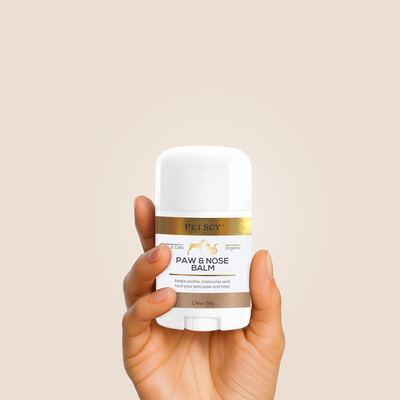
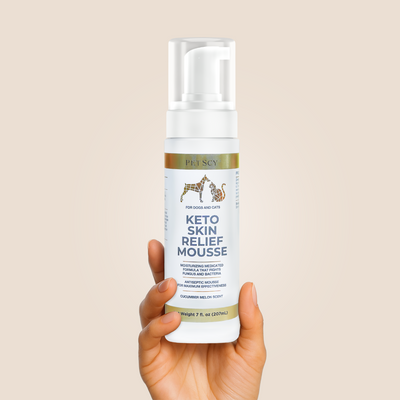
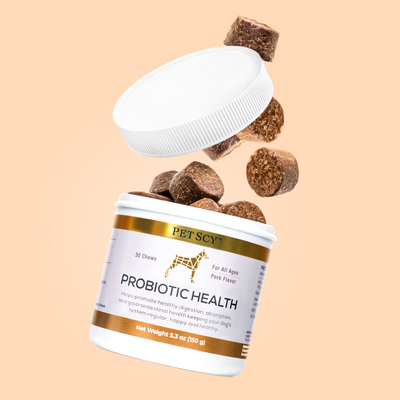
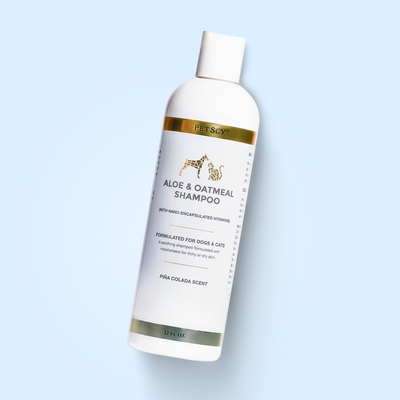
PetScy offers fish oil for dogs made with wild-caught Alaskan pollock and salmon, alongside veterinarian-formulated supplements and topical care products. For a personal keepsake celebrating your dog, this personalized dog blanket guide explains how photo blankets can turn a favorite image into a practical comfort item.
Use this guide to the best fish oil considerations for dogs as another buying framework. Before starting, record your dog's goal, weight, medicines, and the label's EPA+DHA amount.
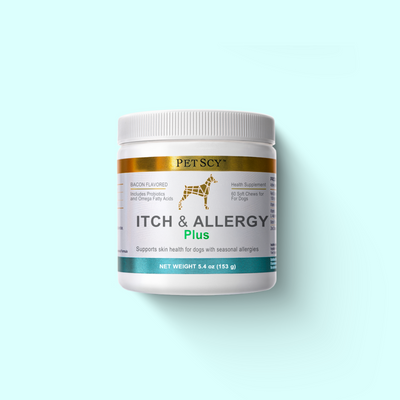
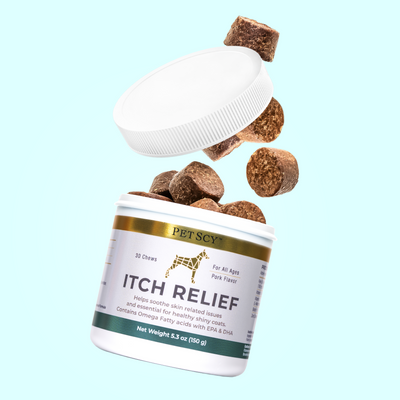
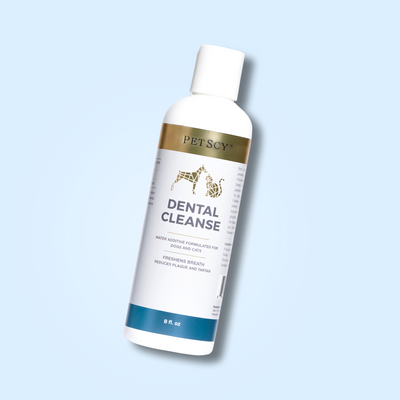
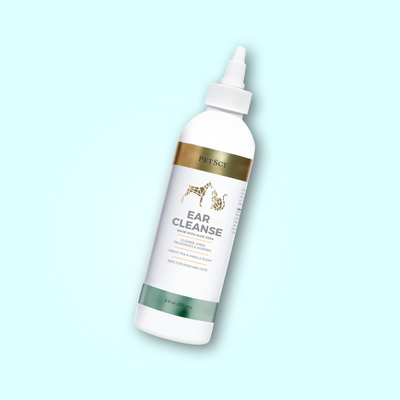
PetScy also offers veterinarian-formulated dog supplements, including fish oil with EPA and DHA, plus products for itching, skin and coat care, joints, digestion, dental hygiene, and calming support. Visit PetScy to compare serving information and options for your dog's needs.