










Seasonal Allergy Relief for Dogs That Actually Works
When your dog is awake at 11 p.m. and still can't settle, seasonal allergies stop feeling like a small problem. You see the paw licking, the sudden scratching at the flank, the face rubbing on the rug, and that restless loop where your dog lies down, pops back up, and starts chewing again. You may have already tried a new shampoo, changed treats, or rinsed paws for a few days, only to get partial relief and then another flare.
That pattern is familiar in veterinary practice. Many dogs don't have one dramatic allergy day. They have waves. The itch comes back around the same months, seems better for a while, then returns hard enough to disrupt sleep, walks, and family routines.
Seasonal allergy relief for dogs works best when you stop treating it like a random itch problem and start treating it like a management problem with layers. You want to recognize likely triggers, lower the amount of allergen your dog carries on the skin, support the skin barrier itself, and know when home care has reached its limit.
Table of Contents
- The Itchy Dog Problem You Can Probably See Right Now
- What Seasonal Allergies in Dogs Actually Are
- Signs to Watch For Before Things Get Worse
- Why Allergy Season Is Not Just Spring
- Cutting Down Allergen Exposure at Home and Outdoors
- Diet, Omega-3s, and Supplements Worth Considering
- Baths, Wipes, and Topical Care That Soothe
- When Home Care Is Not Enough and What Comes Next
The Itchy Dog Problem You Can Probably See Right Now
You might be watching a dog who looks mostly normal from across the room, then falls apart once you pay attention. The paws are damp from licking. The ears keep flicking. Your dog scratches during dinner, then stops eating to chew at the front feet. By bedtime, the sides of the body are rubbing against the couch like your dog is trying to crawl out of the itch.
That's one reason allergies frustrate owners so much. The signs often build in pieces. One week it's only paw licking after walks. The next week there's a sour skin smell, more head shaking, and a pink rash in the groin. It doesn't always look dramatic at first, which makes it easy to second-guess yourself.
Why this feels so hard at home
Owners usually come in feeling like they missed something obvious. They didn't. Allergic skin disease can look messy and inconsistent in real life. A bath may help for two days. A diet change may seem promising, then do nothing. One ear clears up while the paws get worse.
Seasonal itch rarely behaves like a one-product problem. It behaves like a threshold problem. Once your dog crosses that threshold, several body areas can flare at once.
That's also why spring-only advice often disappoints. Some dogs do start flaring when plants bloom, but plenty of dogs keep cycling through itchy periods outside the classic spring story. If your dog gets bad every year in late summer or fall, that pattern still fits seasonal allergy disease.
What relief usually requires
A calmer dog usually comes from stacking a few sensible steps together:
- Better trigger recognition so you stop guessing at what's driving the flare.
- Lower exposure so fewer allergens stay on the coat, paws, and bedding.
- Barrier support so the skin is less easy to inflame.
- Timely escalation so infections and chronic skin changes don't get a head start.
That's the practical path most itchy dogs need.
What Seasonal Allergies in Dogs Actually Are
Seasonal allergies in dogs usually fall under canine atopic dermatitis, the main medical condition behind many recurring itch-and-redness flares. Estimates suggest it affects 3 to 15% of the general dog population, although major veterinary references also note that the true prevalence isn't well established because many estimates aren't based on epidemiology. In a large U.S. study of 31,484 dogs seen for skin problems, 4.7% were diagnosed with atopic or allergic dermatitis, which shows this isn't a rare dermatology issue (review of canine atopic dermatitis data).
Think of the skin like a brick wall
A useful way to picture this is to imagine your dog's skin as a brick wall. The skin cells are the bricks. The fats and barrier materials between them are the mortar. When that mortar is strong, it's harder for outside irritants to get in. When it's weak, allergens can work their way through the surface more easily.
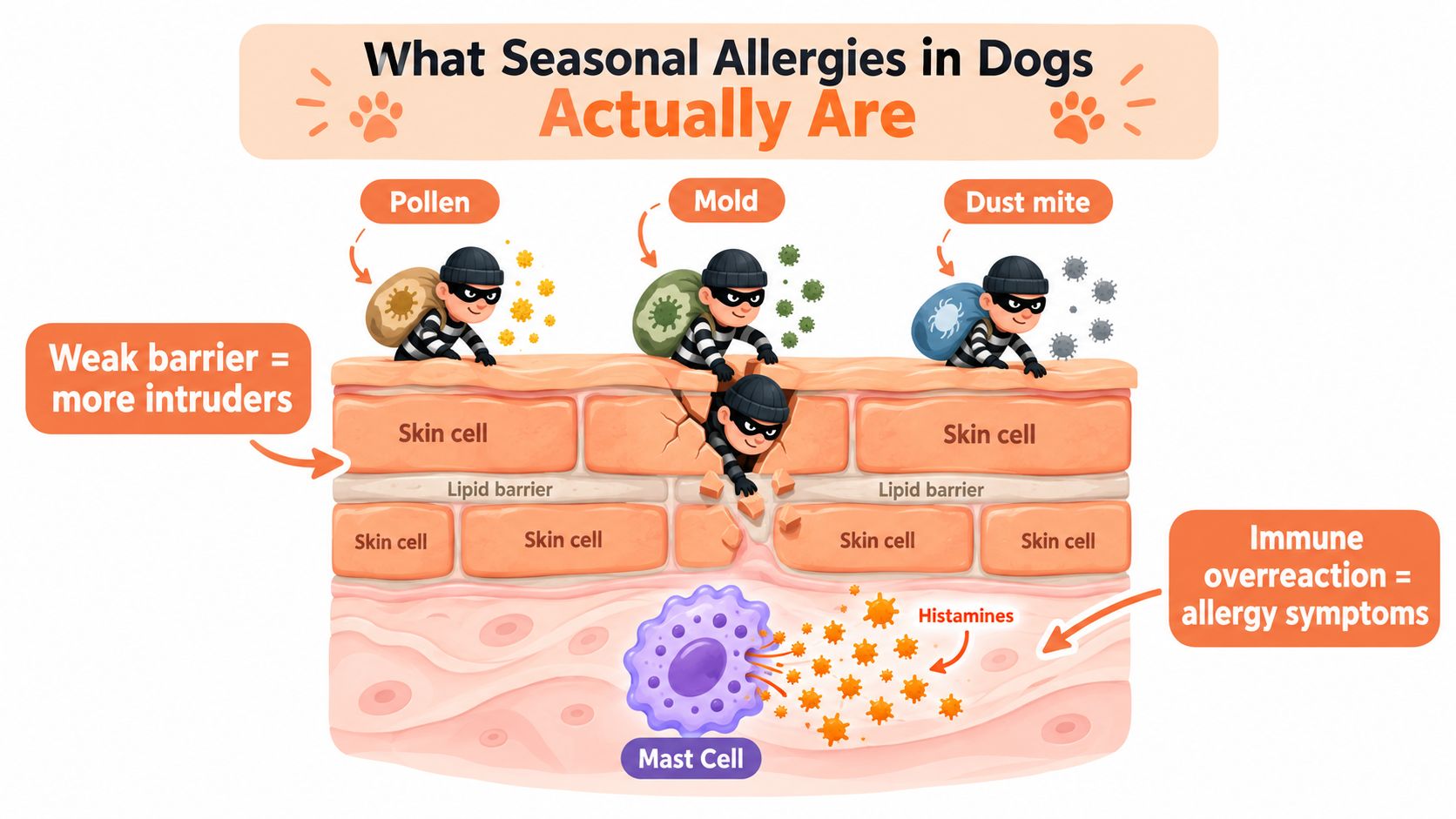
Once allergens get past that outer layer, the immune system can overreact. Instead of ignoring harmless environmental proteins, the body treats them like intruders. That overreaction drives itch, redness, licking, ear inflammation, and secondary infections.
What counts as a seasonal trigger
In dogs, seasonal pruritus is most consistent with atopy, and common flare triggers include environmental allergens such as house dust mites and pollens, as well as flea or other insect bites. The AAHA guidance also notes that house dust mites are the most important allergen source for canine atopic dermatitis worldwide (AAHA allergic skin disease guidance).
That last point clears up a common confusion. A dog can look “seasonal” even when the food hasn't changed and even when outdoor pollen isn't the whole story. Indoor allergens and insect exposure can push the same dog over the edge.
Seasonal allergies are not the same as food allergies
Food allergy reactions usually don't follow a neat time-of-year pattern. Seasonal flares point more strongly toward environmental triggers. That doesn't mean food can never matter. It means the calendar itself is a clue.
Practical rule: Ask, “Does this happen during certain parts of the year, or is it steady all year?” That simple question often separates environmental suspicion from food suspicion.
Another helpful idea is the flare threshold. Two dogs can walk through the same yard and sleep on the same couch, but only one gets itchy. That's because the total picture matters: how sensitive the immune system is, how strong the skin barrier is, and how much allergen exposure stacks up at that moment.
Signs to Watch For Before Things Get Worse
The earliest allergy signs are often small enough to dismiss. A dog licks the feet a little more. The ears seem waxier. There's some face rubbing after coming in from outside. Then, over days, the pattern becomes obvious.
This is easiest to catch if you check the dog by body region instead of waiting for one dramatic symptom.
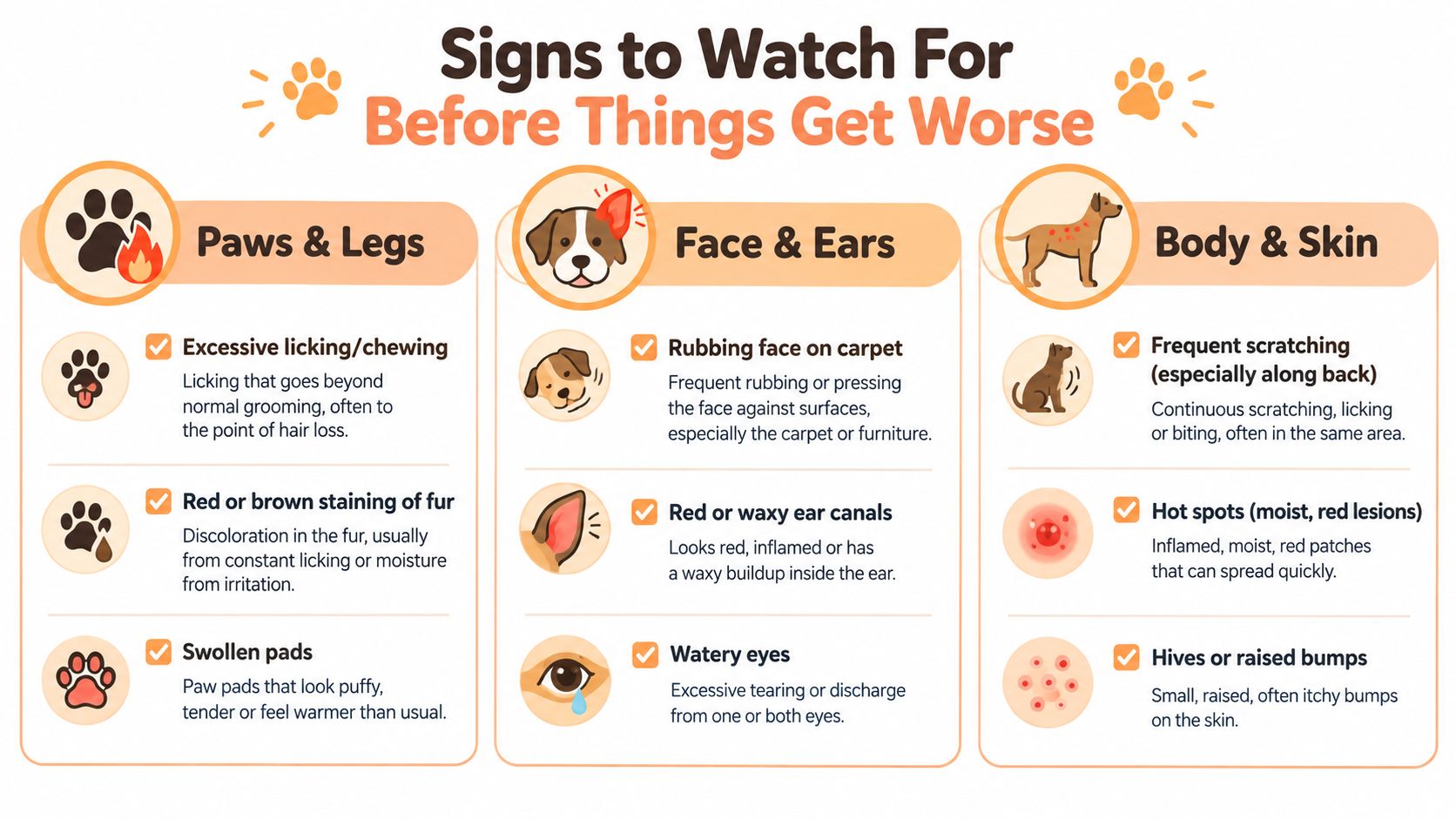
Paws and legs
The paws are often the first giveaway. Look for constant licking, nibbling between the toes, or reddish-brown saliva staining on light fur. Some dogs also seem fussy when you touch the feet after a walk.
The lower legs may get pink, irritated, or greasy, especially if your dog has been licking there for several days.
Face and ears
Dogs with allergic flares often rub the muzzle on carpet edges, couch corners, or bedding. Some squint more or wake up with mild eye discharge. The ears may be itchy before they become painful.
Watch for:
- Head shaking that keeps repeating through the day
- Ear odor that smells musty or sour
- Head tilt or ear rubbing against furniture or the floor
If you want a simple overview of how allergy signs can overlap, PetScy has a readable guide on whether your dog may have allergies.
A quick visual can also help you compare what you're seeing at home with common allergy patterns:
Belly, armpits, back, and skin texture
The thin-skinned areas often flare fast. Check the groin, armpits, and lower belly for redness or moist hot spots. On the back half of the body, some dogs show a strong scratch reflex. You touch the lower back and the rear leg starts pumping like a bicycle.
Later changes tell you the problem has been simmering longer than you realized:
- Dull coat that feels rougher than usual
- Musty odor from yeast overgrowth
- Thickened skin that starts to look leathery or darker
If the itch is waking your dog up, interrupting meals, or making walks turn into nonstop chewing stops, you're past the “watch and wait” stage.
Fleas, mites, skin infections, and food reactions can mimic seasonal allergy signs. That's why pattern tracking matters. Keep a one- to two-week log of what body parts flare, what days are worse, and whether baths or paw rinses help. That history is often more useful than a single photo taken on the worst day.
Why Allergy Season Is Not Just Spring
Your dog may look much worse in April. Then October arrives, and the paw licking, ear rubbing, and belly rash return as if spring never ended.
That pattern is common. Analysts at Trupanion found allergy-related claims rose in two parts of the year, with one peak in late spring or early summer and another in October (Trupanion allergy claims data). So a fall flare does not automatically mean a brand-new problem. It often means the same allergic dog is reacting during a second seasonal wave.
The dog allergy calendar looks more like two hills
A lot of owners are told to treat seasonal allergies like a short spring event. In real life, many dogs move through the year in phases. Tree pollen may start the itch cycle, grass can keep it going, and weed pollen or outdoor mold can push the skin over the edge again in fall. Meanwhile, indoor dust, humidity, and time spent on bedding can keep the skin irritated between outdoor peaks.
Skin behaves a bit like a bucket that slowly fills. One trigger may not cause much by itself. Several smaller triggers together can overflow into obvious itching.
| Season or months | Dominant outdoor allergens | Typical flare pattern |
|---|---|---|
| Spring | Tree pollens often begin the outdoor cycle | Early paw licking, face rubbing, ear irritation |
| Summer | Grass exposure often becomes more important | Ongoing itch, belly and foot contact reactions |
| Fall | Weed pollens and outdoor mold become more relevant for some dogs | Second major flare window, often mistaken for a “new” problem |
| Winter or indoor months | Fewer outdoor triggers, but indoor allergens may still matter | Some dogs improve, others keep itching if indoor triggers dominate |
Use that table as a map, not a verdict. Your dog's pattern can shift with local weather, travel, yard plants, time at daycare, and how healthy the skin barrier is that month.
Why pollen counts do not predict every dog
Public pollen apps can be helpful, but they are only one piece of the puzzle. Some dogs react more to what sticks to their coat and paws than to the number on a forecast. Others flare when already-inflamed skin meets a smaller exposure that would not matter on a better week.
Research summarized in the same Trupanion review noted modest seasonal differences in allergy test positivity, including more autumn positives for some grass and weed allergens. It also described a prospective study that did not find a clear link between weekly pollen counts and how itchy dogs were. That matches what many vets see in practice. Two dogs can walk the same block on the same day and come home with very different skin reactions.
So the most useful question is often not, “How high is today's pollen count?” It is, “What combination of exposures and skin stress tends to set off my dog?”
Seasonal allergy control works best as a year-round plan with two likely flare windows, not a spring-only project.
Keep a simple month-by-month log for a full year. Mark bad skin weeks, ear flares, travel, yard changes, rainy periods, and what helped. That record usually gives you a more useful allergy calendar than any general forecast.
Cutting Down Allergen Exposure at Home and Outdoors
Exposure control works best when you think in terms of total allergen load. You probably can't remove every trigger. You can often lower the amount sitting on your dog's skin, fur, bedding, and sleeping areas enough to make the itch easier to control.
Indoor habits that usually matter most
For many dogs, the biggest wins come from simple repeatable cleaning habits.
- Wash bedding hot and often. Bedding collects saliva, skin debris, pollen, and dust. Clean it regularly and dry it thoroughly before use.
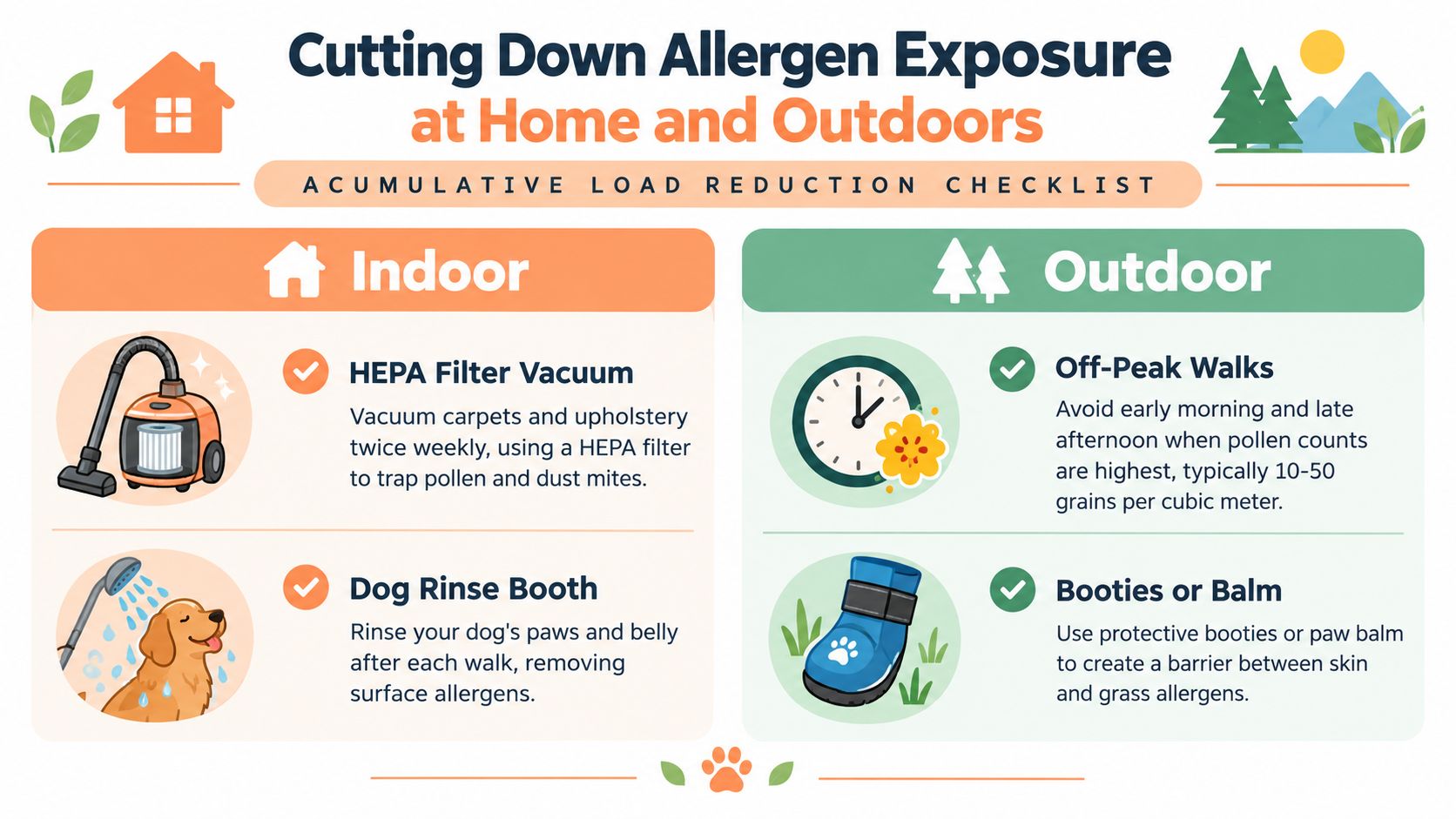
- Vacuum soft surfaces well. Carpets, rugs, and upholstery hold onto particles that dogs lie in every day. A sealed system with strong filtration is more helpful than quick pass-through vacuuming.
- Control indoor moisture. Damp air supports mold growth and can make indoor allergens harder to manage.
- Keep sleeping areas simple. Fewer fabric layers usually means fewer places for allergens to build up.
If you're trying to improve the whole house environment, this guide on how to reduce allergens in your home gives a useful overview of air quality basics like filtration and humidity control.
Outdoor routines that keep allergens off the dog
The goal outside isn't perfect avoidance. It's reducing what comes back into the house on the dog.
A good routine often looks like this:
- Choose lower-contact routes. If tall grass triggers obvious foot chewing, pick paved or gravel paths when the dog is flaring.
- Rinse the paws and belly after walks. This removes what settled on the skin and fur before your dog licks it off.
- Dry damp skin quickly. Moist fur and skin folds can turn a simple flare into a yeast or bacterial problem.
- Skip lawn exposure during obvious trigger periods. Freshly mowed or heavily overgrown areas can be rough on sensitive dogs.
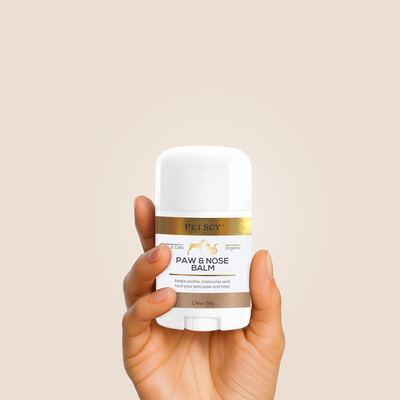
Some owners also use booties or paw balm for dogs that react strongly to grass contact. That won't solve whole-body allergy disease, but it can reduce direct skin contact on a body part that often bears the brunt.
Where to start if you feel overwhelmed
Don't try to do everything at once. Start with the steps that usually give the most return:
| Effort level | Usually high impact steps |
|---|---|
| Low | Post-walk paw and belly rinse, regular bedding washing |
| Moderate | Better vacuuming, limiting tall-grass exposure, closing windows during heavy outdoor exposure periods |
| Higher | Air filtration upgrades, humidity control, broader home environment changes |
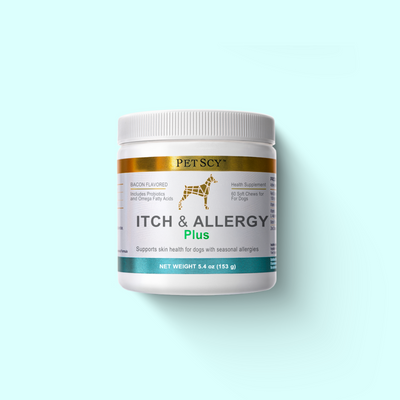
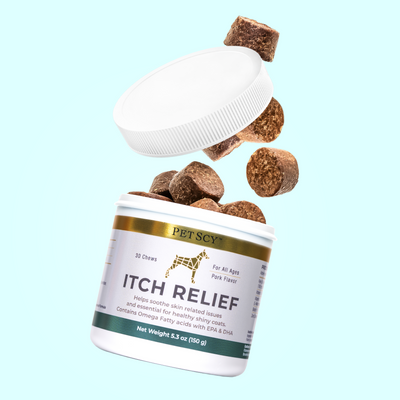
One option some owners add alongside these basics is a skin-support supplement such as PetScy Itch & Allergy Plus Chews, which the company positions for seasonal and environmental sensitivity support. Used realistically, a product like that fits as one layer in a broader plan, not as a stand-alone fix.
Diet, Omega-3s, and Supplements Worth Considering
Owners often get pulled in ten directions. Fish oil, probiotics, quercetin, coconut oil, local honey, colostrum, postbiotics, skin chews, elimination diets. Some of these ideas are reasonable. Some are mostly hopeful. The safest way to sort them is by asking one question: does this support the skin and inflammation picture, or is it being sold as a shortcut?
The options worth taking seriously
Omega-3 fatty acids are the most practical nutrition add-on to discuss with your veterinarian for allergic skin disease support. They make sense because the skin barrier relies on fats, and allergic skin is often inflamed and dry at the same time. They won't act overnight, but they can be useful as part of a long-term plan.
If you're comparing products, a guide to the best fish oil for dogs can help you think through sourcing, form, and what to ask before buying.
A diet review can also matter, especially if your dog's history doesn't look cleanly seasonal. In that case, your veterinarian may discuss a novel protein or hydrolyzed protein diet trial to separate environmental allergy from food-driven itch.
The options that are plausible but often overpromised
Many supplements have a reasonable theory behind them. That doesn't mean they reliably change real dogs in a meaningful way.
- Quercetin gets called a “natural antihistamine,” but owner-led trials are hard to judge because other things usually change at the same time.
- Coconut oil may make the coat feel better short term, but “shinier” and “less allergic” are not the same outcome.
- Local honey is a popular idea, but popularity isn't proof.
- Colostrum and gut-support products may fit some plans, especially when the dog has digestive issues too, but they shouldn't distract from skin-focused care.
Don't judge a supplement by the first few days. Most skin support strategies need consistent use and a stable routine around them, or you can't tell what's helping.
A better way to decide
Bring your vet a short list instead of a shopping bag. The useful questions are:
- Could food be part of this, or does the history still fit environmental allergy best?
- Is fish oil appropriate for my dog's overall health and current diet?
- Will this supplement support the main plan, or just add another variable?
- What should I stop while we test one new thing at a time?
The biggest mistake here is adding five products at once. That usually creates confusion, not clarity.
Baths, Wipes, and Topical Care That Soothe
Topical care helps because allergies happen on the skin, not just inside the body. When you wash allergens off the coat and support the outer barrier, you reduce one of the things the immune system keeps reacting to.
Build a repeatable bathing routine
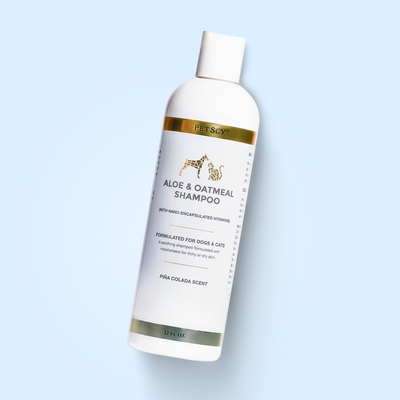
Use cool to lukewarm water, not hot. Hot water can leave already irritated skin feeling worse. Choose a fragrance-free soothing shampoo or a veterinary product selected for the skin problem your dog has right now, especially if there's oiliness, odor, or yeast concern.
Leave the shampoo on for several minutes before rinsing. That contact time matters. A rushed wash often cleans fur but does very little for the skin.
During bad seasons, some dogs do well with regular baths spaced through the week. Between baths, rinse-off moisturizers or leave-on conditioners can help keep the skin from drying back out.
Target the places where allergens collect
The whole dog may be itchy, but some zones trap the most trouble:
- Between the toes where saliva, pollen, and yeast can build up
- Armpits and groin where skin rubs skin
- Face folds and muzzle where wiping needs to be gentle but consistent
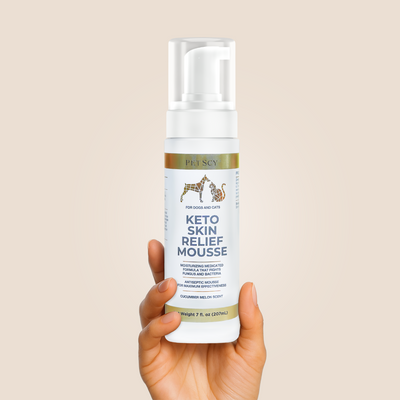
For those zones, wipes or mousse are often easier than full baths. If you're shopping for foot and skin-fold care, PetScy's guide to antiseptic wipes for dogs explains where these products tend to fit in a home routine.
Think barrier support, not just “itch relief”
A useful topical plan does two jobs at once. It removes what landed on the dog, and it helps the skin hold itself together better afterward. Leave-on products with ingredients aimed at moisturizing and barrier support can be helpful, especially for dogs with dry, flaky, or repeatedly irritated skin.
Paw care is part of that same logic. Wipe after walks, dry carefully, and use paw balm or protective booties if grass contact clearly worsens the feet. Small steps done consistently are usually more valuable than dramatic treatments done once.
When Home Care Is Not Enough and What Comes Next
There's a point where good home care stops being enough. You should escalate if the scratching stays intense for more than a few days, if your dog develops hot spots, if the ears keep flaring, or if the skin starts changing color, thickening, crusting, or losing hair.
Those signs often mean the allergy isn't acting alone anymore. Infection may have joined the picture, or the flare may be stronger than a home routine can control.
What your veterinarian needs to sort out
A proper visit isn't only about stopping the itch that day. It should help answer what else is hiding under the itch. Flea allergy, mites, bacterial skin infection, yeast overgrowth, and food-triggered disease can all imitate or amplify seasonal patterns.
Your veterinarian may recommend skin and ear testing such as cytology, plus a treatment plan built around what's present, not what seems most likely from online reading.
A dog can have seasonal atopy and a secondary infection at the same time. If you only treat the allergy and miss the infection, the dog stays miserable.
The usual treatment ladder
Owners are often surprised that common over-the-counter allergy ideas don't work very well in dogs. A systematic review found no conclusive evidence for type 1 antihistamines as monotherapy, and later clinical guidance reported that cetirizine at 1 to 3 mg/kg/day was poorly effective or no better than placebo in controlled studies. The same review found stronger evidence for oclacitinib at 0.4 to 0.6 mg/kg twice daily for 14 days and then once daily, and it also identified allergen-specific immunotherapy as one of the few interventions likely to prevent or delay recurrence of flares (systematic review and clinical guidance summary).
In practical terms, that means the treatment ladder may include:
- Topical prescriptions when skin areas are localized
- Prescription itch control when the dog is too uncomfortable to wait on home care alone
- Treatment for ear, yeast, or bacterial infection when those are present
- Allergy testing and immunotherapy discussion for dogs with repeating yearly patterns or poor control
Another piece owners feel quickly is cost and complexity. In 2025, Elanco reported that pet owners said they were spending $173 more on average and using two additional treatments to manage itch during allergy season (Elanco 2025 report). That matches what many families experience. Relief often takes layering, not one miracle product.
What a good long-term plan looks like
The right plan usually ends up being boring in a good way. You lower exposure where you can. You keep the skin cleaner and better moisturized. You use nutrition support thoughtfully. And you don't wait too long to treat infections or severe itch.
If your dog flares every year, think year-round management, not spring rescue. The goal isn't just getting through one bad week. It's keeping the next flare smaller than the last one.
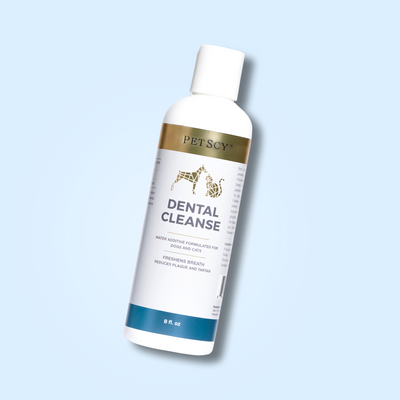
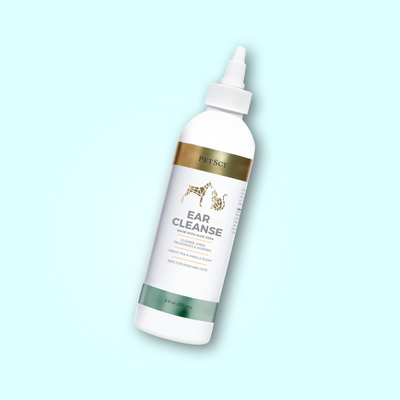
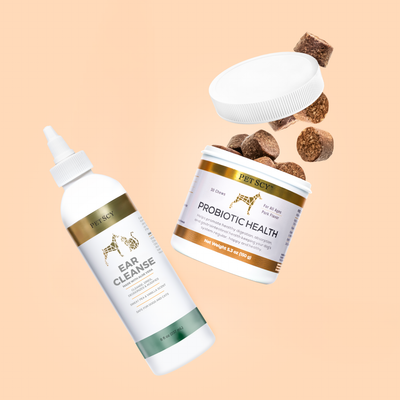
If your dog needs ongoing support for itch, skin, paws, or ears, PetScy offers veterinarian-formulated supplements and topical care products that fit into the kind of layered plan described here. You can browse fish oil, allergy support chews, shampoos, wipes, mousse, and paw care tools to build a more consistent routine before the next flare gets ahead of you.