


















Vet-formulated and Science-backed Across the Catalog.
Does “vet-formulated” automatically mean clinically proven? Many dog owners read that label as a promise that a product has been tested for every advertised outcome. In reality, veterinary involvement, scientific rationale, manufacturing quality, and demonstrated clinical efficacy are related, but they aren't interchangeable.
That distinction matters across a modern canine wellness catalog. The global pet supplements market was estimated at USD 2.76 billion in 2025 and projected to reach USD 4.65 billion by 2033, with dogs representing 63.1% of revenue in 2025, according to Grand View Research's pet supplements market analysis. A separate forecast places the market at USD 3.14 billion in 2025 and USD 5.47 billion by 2034, also from the same market source. As more owners compare products for digestion, itching, dental hygiene, mobility, and calming support, understanding evidence levels becomes more useful than trusting a label at face value.
Table of Contents
- What Vet-Formulated and Science-Backed Really Mean
- The Formulation Process Behind PetScy Products
- Quality Controls and Third-Party Testing Standards
- Real Product Examples and Health Outcomes
- Where the Evidence Is Strong and Where It Is Evolving
- How to Use Supplements Safely and Track Results
- Common Misconceptions About Quality Seals and Efficacy
What Vet-Formulated and Science-Backed Really Mean
Vet-formulated usually describes professional input into a product's design. A veterinarian or animal nutrition professional may help assess ingredient selection, intended use, dosing logic, palatability, and safety considerations. That involvement is valuable, but it doesn't by itself prove that the finished product has demonstrated a clinical benefit for every dog or every symptom.
Science-backed describes the reasoning and evidence behind the ingredients or formulation. The evidence might include a peer-reviewed clinical trial, a controlled biomarker study, pharmacokinetic research, safety data, or a mechanistic explanation for how an ingredient could support a biological process. Those forms of evidence don't carry equal weight. A controlled clinical outcome is generally more directly relevant to a dog owner than a laboratory mechanism alone.

Read the label as a starting point
A useful interpretation is:
- Veterinary formulation: A qualified professional contributed to product design or review.
- Scientific support: Research provides a rationale for an ingredient, strain, dose, or biological target.
- Clinical efficacy: Dogs receiving the product showed meaningful improvement under defined study conditions.
- Manufacturing quality: The company controls identity, purity, consistency, storage, and production processes.
These statements answer different questions. Veterinary formulation asks who helped design the product. Scientific support asks why the formula might work. Clinical efficacy asks whether it produced an observable outcome. Manufacturing quality asks whether the contents match the label and remain safe and consistent.
That separation also belongs within a broader health plan. Owners who want a practical overview of why routine examinations, prevention, and treatment matter can consult this resource on the importance of pet medical care. Supplements should support, not replace, diagnosis and veterinary care.
Practical rule: Treat “vet-formulated” as evidence of professional involvement, not as a guarantee of a specific result.
A responsible catalog should therefore explain what each product is intended to support, identify meaningful active ingredients, avoid disease-cure language, and acknowledge uncertainty where research is limited. Vet-formulated and science-backed across the catalog is most credible when it describes a transparent process rather than serving as a blanket promise.
The Formulation Process Behind PetScy Products
A thoughtful supplement formula begins with a question: what biological or practical problem is this product designed to address? Ingredient selection should follow that question, not the other way around. Veterinary nutritionists can assess whether an ingredient is appropriate for dogs, whether the proposed amount is plausible, and whether its form is likely to be useful in the finished product.
From ingredient list to intended function
Formulators typically consider several layers at once:
- Biological purpose. An ingredient should have a defined role, such as supplying EPA and DHA, supporting stool quality, or contributing to daily oral hygiene.
- Evidence quality. Research may support an ingredient directly in dogs, indirectly through mechanism or biomarker data, or only weakly through preliminary findings.
- Safety and interaction risk. A product must fit the dog's age, health status, current diet, and medications.
- Practical delivery. The dose has to fit a chew, powder, oil, wipe, or water additive without making routine use unrealistic.
- Stability and palatability. Active ingredients must remain suitable through storage, and dogs must accept the format consistently.
Marine omega-3s illustrate why ingredient names alone aren't enough. In a controlled canine study of Alaskan-origin fish oil, the Omega-3 Index rose from 1.68% at baseline to 2.7% after 6 weeks, while EPA and DHA concentrations also increased, as reported in the Journal of the American Veterinary Medical Association study. The useful formulation question is therefore not “does this contain fish oil?” It is “how much EPA and DHA does it provide, and does that amount suit the intended use?”
Why exclusion matters
Good formulation includes rejecting ingredients that lack a clear purpose, have poor support, create unnecessary overlap, or introduce avoidable safety concerns. It also means resisting the temptation to add a long list of fashionable compounds when a shorter formula would communicate its purpose more clearly.
For digestive products, the evidence calls for restraint. An independent review found that probiotics can alter gut microbiota composition and fecal parameters, but effects in acute gastrointestinal disease were very limited and possibly clinically unimportant, while chronic gastrointestinal disease showed no major added benefit beyond diet. The review also noted that the underlying studies were small and often carried moderate-to-high risk of bias, as detailed in this peer-reviewed review of probiotics in dogs.
That doesn't make probiotics irrelevant. It means a digestive chew should be positioned around specific support goals, with strain identity, dose, storage, and realistic expectations made clear. The same discipline applies to allergy, joint, dental, calming, ear, and topical products. A formula is more trustworthy when each component has a documented reason to be there.
The result should be a chain of reasoning that owners can follow: intended need, selected ingredient, appropriate form, safety review, quality testing, and honest claim. That chain is more informative than a broad “advanced formula” statement.
Quality Controls and Third-Party Testing Standards
Manufacturing quality answers a basic but important question: does the product consistently contain what the label says, without unacceptable contamination? It doesn't answer whether the product will resolve a particular health problem. Owners need both kinds of information, but they should keep them separate.
The NASC Quality Seal is a useful example. The NASC Quality Seal requirements relate to practices such as third-party audit, adverse-event monitoring, label compliance, and random independent testing. These controls can indicate that a company has established systems for manufacturing and oversight. They don't constitute direct efficacy proof for a specific product, symptom, or condition.
A practical quality checklist
When reviewing a supplement, look for clear answers to these questions:
- Who tests the product? A credible company should identify independent testing rather than relying only on “lab-tested” wording.
- What gets tested? Useful testing may address identity, potency, microbial contamination, heavy metals, or other relevant contaminants.
- Are raw materials and finished products evaluated? Testing only one stage may leave gaps in the quality system.
- Can the company explain its documentation? A Certificate of Analysis can help verify a batch's specifications, although owners should understand what the document covers.
- Are ingredient amounts disclosed? Proprietary blends can make it difficult to determine whether an active ingredient is present at a meaningful amount.
- Is sourcing transparent? Traceability supports accountability from supplier to finished product.
A recognized quality program also doesn't turn a weak ingredient claim into a proven treatment. A product can be manufactured carefully and still have limited clinical evidence for the outcome advertised. Conversely, an ingredient may have promising research but be poorly handled in production. Quality assurance and efficacy evidence need to be layered together.
What testing can and can't tell you
Third-party testing can support confidence in identity, purity, and consistency. It may help detect whether a fish oil contains the declared fatty acids or whether a finished product meets specified microbial limits. It cannot, by itself, show that a dog with chronic itch will improve, that tartar will disappear, or that a mobility formula will change an individual dog's function.
For owners comparing fish oil products, PetScy's educational guide to fish oil for dogs is a starting point for thinking about the active EPA and DHA content rather than treating “fish oil” as a complete description.
A strong quality claim should be specific enough to verify. A vague seal from an unfamiliar organization, an unwillingness to discuss testing, or a label that hides every meaningful dose deserves caution. The best signs are not flashy promises. They're identifiable standards, understandable documentation, and claims that stay within the evidence.
Real Product Examples and Health Outcomes
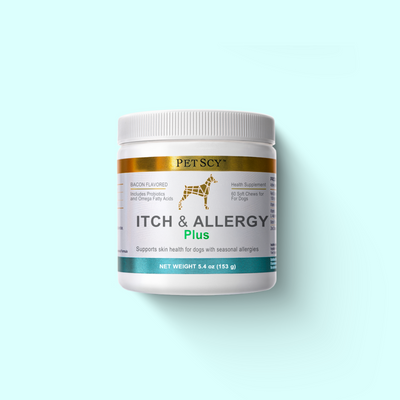
Product categories become easier to evaluate when you connect the formula to an outcome without pretending that every dog responds identically. Consider an allergy-focused chew. A formula may combine skin-supporting nutrients with probiotics, but that doesn't prove it will resolve chronic atopic dermatitis. The condition can involve environmental triggers, barrier dysfunction, secondary infection, and immune responses that differ between dogs.
The evidence for probiotic allergy support is especially mixed. A systematic review and meta-analysis found no significant overall improvement in canine atopic dermatitis severity or itch scores from probiotics, with CADESI-4 at P=0.08 and PVAS at P=0.85, as reported in this 2025 review of probiotics for canine atopic dermatitis. The practical implication is clear: owners should ask which strain, dose, symptom profile, and treatment plan apply, rather than assuming that any probiotic is an allergy treatment.
For dental care, daily consistency matters because oral disease can remain hidden without a detailed examination. A review found periodontal disease in about 9.3% to 18.2% of dogs during visual assessments in primary-care practices, compared with 44% to 100% when anesthetized dogs received more detailed examinations. A later randomized anesthetized dog study reported periodontal disease in 98.6% of dogs older than 1 year, with 39% at stage 1, 59.6% at stages 2 to 4, and fractured teeth in 50.9% of patients, according to this peer-reviewed canine oral health research.
PetScy Product Outcomes at a Glance
| Product Category | Key Active Ingredients | Mechanism of Action | Expected Timeline | Evidence Level |
|---|---|---|---|---|
| Allergy and skin support | Probiotic blend and skin-supporting ingredients | May support gut balance and skin function, depending on strain and individual response | Monitor over a sustained trial, with veterinary review for persistent itch | Mixed, strain-specific evidence |
| Fish oil | EPA and DHA | Raises circulating omega-3 exposure and supports a mechanistic basis for skin, joint, and inflammatory support | Biomarker changes can occur during supplementation, while visible outcomes vary | Controlled canine biomarker evidence |
| Dental care | Oral hygiene ingredients and physical cleaning formats | Supports debris removal, breath freshness, and daily plaque control | Requires consistent routine use | Preventive rationale, with clinical outcome strength varying by product |
| Digestive support | Probiotic strains | May influence gut microbiota and fecal parameters | Judge stool quality and tolerance during a defined trial | Limited or inconsistent clinical evidence for broad disease claims |
| Joint support | Joint-support nutrients and omega-3s | Supports cartilage, mobility, and inflammatory pathways | Individual response varies and should be tracked alongside veterinary assessment | Ingredient and mechanistic support, with product-specific proof required |
Owners considering digestive products should also review this guide to probiotic supplements for digestive balance. The key is to evaluate observable outcomes, not to assume that a polished label equals a guaranteed health change.
Where the Evidence Is Strong and Where It Is Evolving
Evidence isn't a single yes-or-no category. It forms a spectrum, and the most useful question is whether the available research matches the ingredient, dose, dog population, and outcome being discussed.
Omega-3 supplementation has a particularly clear mechanistic foundation in dogs. Controlled research has shown that EPA and DHA exposure can increase measurable omega-3 biomarkers and alter fatty-acid patterns in plasma and synovial fluid. That supports formulas that identify EPA and DHA as active endpoints, rather than relying on the broad phrase “contains fish oil.”

Dental care has a strong preventive rationale because periodontal disease is common in clinical settings, especially when examinations go beyond a quick visual check. However, evidence for a particular water additive, powder, chew, or wipe still depends on that product's ingredients, delivery method, and outcome data. A general oral-health rationale isn't the same as proof for every formulation.
Probiotics need strain-level thinking
Probiotic research is often over-simplified because labels emphasize total organisms while hiding the distinctions that influence results. A strain is not interchangeable with every other strain, and a promising finding in one digestive context may not translate to allergy, behavior, or chronic disease.
The same caution applies to calming products. Owners can explore supportive options in a broader plan, but a chew shouldn't replace trigger management, behavior modification, or veterinary evaluation for severe anxiety. PetScy's guide to calming treats for anxious dogs can help frame calming support as one part of a wider routine.
Emerging ingredients deserve proportionate language. Preliminary research can justify further study and careful formulation, but it doesn't establish standardized dosing or long-term safety for every dog. The honest position is not that evolving evidence is useless. It's that owners should expect more uncertainty and monitor outcomes more carefully.
How to Use Supplements Safely and Track Results
Start with the label directions and your veterinarian's advice, especially when your dog has a diagnosed condition, takes medication, or uses more than one supplement. Dose selection should account for body weight, the product format, the active ingredient amount, and overlapping ingredients from other products.
Introduce one new product at a time when possible. That makes it easier to identify intolerance, changes in stool quality, or a genuine improvement. A gradual introduction may also be easier on dogs prone to digestive upset.
Build a simple observation record
Record a baseline before starting. Useful observations include:
- Skin: Scratching, paw licking, redness, odor, and coat condition.
- Digestion: Stool consistency, frequency, appetite, and vomiting.
- Mobility: Ease of rising, stair use, walking comfort, and willingness to play.
- Behavior: Settling, vocalization, pacing, and reactions to known triggers.
- Oral health: Breath odor, visible debris, chewing comfort, and gum appearance.
Use the same descriptions each time rather than relying on memory. If there's no meaningful change, if symptoms worsen, or if a new reaction appears, contact your veterinarian rather than increasing the dose independently.
Fat-soluble nutrients and overlapping formulas deserve particular care. A dog receiving a complete diet plus multiple products may already consume some of the same nutrients, so a veterinarian should review the full list. Storage also matters. Heat, moisture, light, and an opened container can affect product stability, especially for oils and moisture-sensitive ingredients.
Track the dog, not just the product. A supplement is useful only if the dog's comfort, function, or daily routine improves without creating new problems.
Supplements work best alongside balanced nutrition, dental examinations, parasite prevention, appropriate exercise, and regular veterinary assessments. If your dog has persistent itching, repeated gastrointestinal signs, painful mobility changes, bad breath, or anxiety that interferes with daily life, investigate the underlying problem instead of treating supplementation as a substitute for diagnosis.
Common Misconceptions About Quality Seals and Efficacy
The most common mistake is treating every form of evidence as if it answers the same question. It doesn't.
| Claim or credential | What it can support | What it doesn't prove |
|---|---|---|
| Vet-formulated | Professional involvement in design or review | A guaranteed outcome for every dog |
| NASC Quality Seal | Audited quality systems, monitoring, label compliance, and testing practices | Clinical efficacy for a symptom or condition |
| GMP-compliant production | Controlled manufacturing processes | That the active ingredient improves a health outcome |
| Third-party testing | Identity, potency, and selected purity checks | Real-world benefit in an individual dog |
| Peer-reviewed clinical evidence | An outcome under defined study conditions | That every product with a similar ingredient will work the same way |
This distinction is especially important because NASC membership and its Quality Seal indicate quality and oversight practices, not direct proof that a formula resolves itching, bad breath, or joint stiffness. A quality seal can reduce uncertainty about production. It can't eliminate uncertainty about response.
Clinical efficacy requires evidence connected to the actual question. Did researchers study dogs? Was the ingredient or finished product identified? Was the dose disclosed? Were outcomes measured consistently? Were the findings strong enough to matter in daily life? Those questions deserve more attention than a broad “science-backed” badge.
A sensible purchasing framework layers the evidence:
- Confirm the intended use.
- Identify the active ingredients and amounts.
- Check manufacturing and testing information.
- Look for research that matches the intended outcome.
- Discuss interactions and suitability with your veterinarian.
- Track your dog's response instead of assuming success.
That approach lets owners appreciate professional formulation without surrendering critical judgment. A label can signal a careful process, but the meaningful decision comes from matching the product, evidence, and dog.
PetScy offers veterinarian-formulated supplements and topical care products for needs including allergy and skin support, digestive balance, dental hygiene, calming, fish oil, ear care, and joint support. Visit PetScy to review the catalog, compare product purposes and quality information, and choose a routine you can discuss with your veterinarian and monitor responsibly.