









Dog Allergies Chewing Feet: A Practical Relief Guide
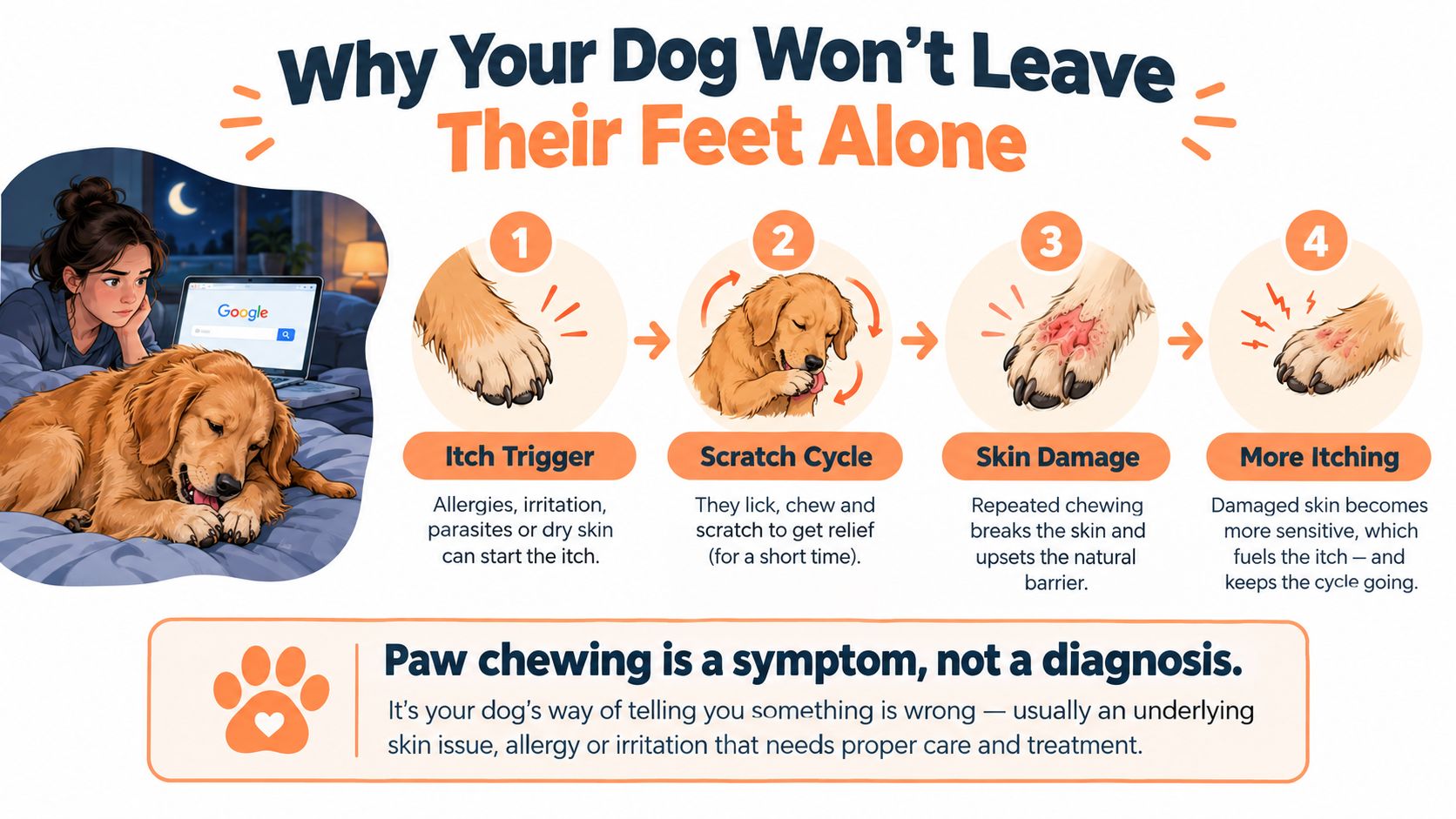
At 11 p.m., your dog is gnawing between their toes, the fur is damp with saliva, and you're searching “dog allergies chewing feet” while wondering whether to reach for an allergy chew, a paw balm, or the emergency clinic. That panic is understandable, but the first decision is simpler: paw chewing is a symptom, not a diagnosis.
Allergies are one possible explanation. So are infection, parasites, a foreign object, contact irritation, injury, and, after medical causes have been excluded, a compulsive habit. Use a triage-first approach. Look at the pattern, inspect the paw, provide safe support, and know when home care has reached its limit.
Table of Contents
- Why Your Dog Won't Leave Their Feet Alone
- The Five Real Causes of Paw Chewing
- Reading the Signs Allergy vs Infection vs Injury
- At-Home Care That Actually Helps
- Why Blood Tests Won't Tell You What Your Dog Ate
- When to Stop Guessing and Call the Vet
Why Your Dog Won't Leave Their Feet Alone
Dogs chew their feet because something feels wrong there. The original problem may be itch, pain, irritation, or contamination, but the chewing itself can create a second problem. Saliva keeps the skin wet, repeated friction damages the surface, and the weakened barrier becomes more vulnerable to microbial overgrowth. That produces more inflammation and more discomfort, so the dog chews again.
The cycle can start with allergic skin disease. Canine atopic dermatitis, or CAD, is a recognized allergic skin disorder associated with inherited susceptibility, environmental allergens, impaired skin-barrier function, and abnormal immune responses. Common triggers include pollen, molds, dust mites, and animal dander. A peer-reviewed review of canine atopic dermatitis estimates that CAD affects approximately 3% to 15% of dogs, while Cornell's practical estimate reaches 10% to 15%. Those figures describe disease prevalence, not the proportion of allergic dogs that chew their feet.
Paws are particularly exposed. They contact grass, soil, flooring, outdoor residues, and cleaning products, and particles can remain between the toes. A dog may also lick after a walk to groom, but frequent or intense chewing deserves a closer look.
Start with the pattern, not the product
Check whether the chewing affects one paw or several. Note whether it began suddenly or developed gradually, whether it follows outdoor exposure, and whether your dog also scratches the ears, face, elbows, or abdomen. Allergy-related skin disease often affects several of those areas, and the Merck Veterinary Manual's overview of canine allergies identifies the feet, face, ears, front legs, and abdomen as commonly affected sites.
That pattern narrows the possibilities, but it doesn't prove an allergy. A single swollen paw after a walk is a different triage problem from symmetrical chewing of several paws with recurring ear irritation.
The five causes most owners need to separate are environmental allergy, food-associated dermatitis, contact irritation, secondary yeast or bacterial infection, and behavioral licking. Most persistent cases involve one primary trigger plus a complication, so treating only the visible chewing often fails.
The Five Real Causes of Paw Chewing
The word “allergy” gets used too quickly. In practice, I'd sort persistent paw chewing into these five categories before recommending a remedy.
Environmental atopy is a strong possibility when several paws are involved and the dog also scratches or rubs other typical areas. Pollen, molds, dust mites, and animal dander can provoke itch, and signs may appear more strongly after outdoor exposure. Seasonal timing can be a clue, but it isn't proof.
Food-associated dermatitis can look almost identical to environmental atopy. Paw chewing, ear problems, and itchy skin don't identify the ingredient by themselves. A casual protein switch or a consumer sensitivity test won't establish the diagnosis. A strict veterinary-directed elimination diet followed by controlled reintroduction is the useful test, as explained in the veterinary review of food allergy diagnosis.
Contact irritation starts where the paw touches the irritant. Grass, lawn products, de-icers, floor cleaners, and residue on outdoor surfaces can inflame the skin between the toes. Rinsing and drying the feet after exposure can help, but worsening redness or lesions mean the dog needs an examination.
Yeast or bacterial overgrowth often follows barrier damage. Moist, irritated tissue can develop odor, staining, swelling, discharge, or pain. The infection may then keep the dog chewing even after the original environmental exposure has ended. A veterinarian can distinguish these causes with cytology rather than guessing from appearance alone.
Behavioral or boredom-driven licking comes last, not first. Consider it only after injury, parasites, irritation, allergy, and infection have been reasonably excluded. Dogs can develop a self-reinforcing habit, but labeling a painful paw as behavioral delays proper treatment.
| Cause | Key clue | Primary test | First-line action |
|---|---|---|---|
| Environmental atopy | Several paws, itch in other typical areas, recurring pattern | Veterinary skin history and examination, with testing when indicated | Reduce exposure and follow a veterinary allergy plan |
| Food-associated dermatitis | Persistent or recurring signs that may include ear or gastrointestinal symptoms | Strict elimination diet followed by controlled reintroduction | Follow the diet without treats, scraps, or flavored extras |
| Contact irritation | Signs linked to a surface or product | Exposure history and paw examination | Remove the irritant, rinse, dry, and monitor |
| Yeast or bacterial overgrowth | Odor, staining, moisture, swelling, discharge, or pain | Skin or ear cytology | Veterinary-directed antimicrobial treatment |
| Injury or behavioral licking | Sudden localized pain, or persistent habit after medical causes are excluded | Hands-on examination and, when needed, further diagnostics | Address the injury first, then assess behavior |
Household allergen control can support a broader plan, especially when dust or cleaning residues may be contributing. A practical Birmingham allergen reduction guide can help owners think through the indoor environment without pretending that cleaner floors diagnose canine atopy.
For more background on the behavior itself, see PetScy's guide to why dogs keep licking their paws. The useful takeaway is straightforward: identify the category before buying a remedy.
Reading the Signs Allergy vs Infection vs Injury
A close paw examination tells you more than another internet search. Choose good lighting, keep your dog calm, and separate each toe gently. Check the spaces between the toes, the nail beds, and the underside of the paw. Look for redness, swelling, moisture, hair loss, erosions, pustules, discharge, a painful lump, or a torn nail.
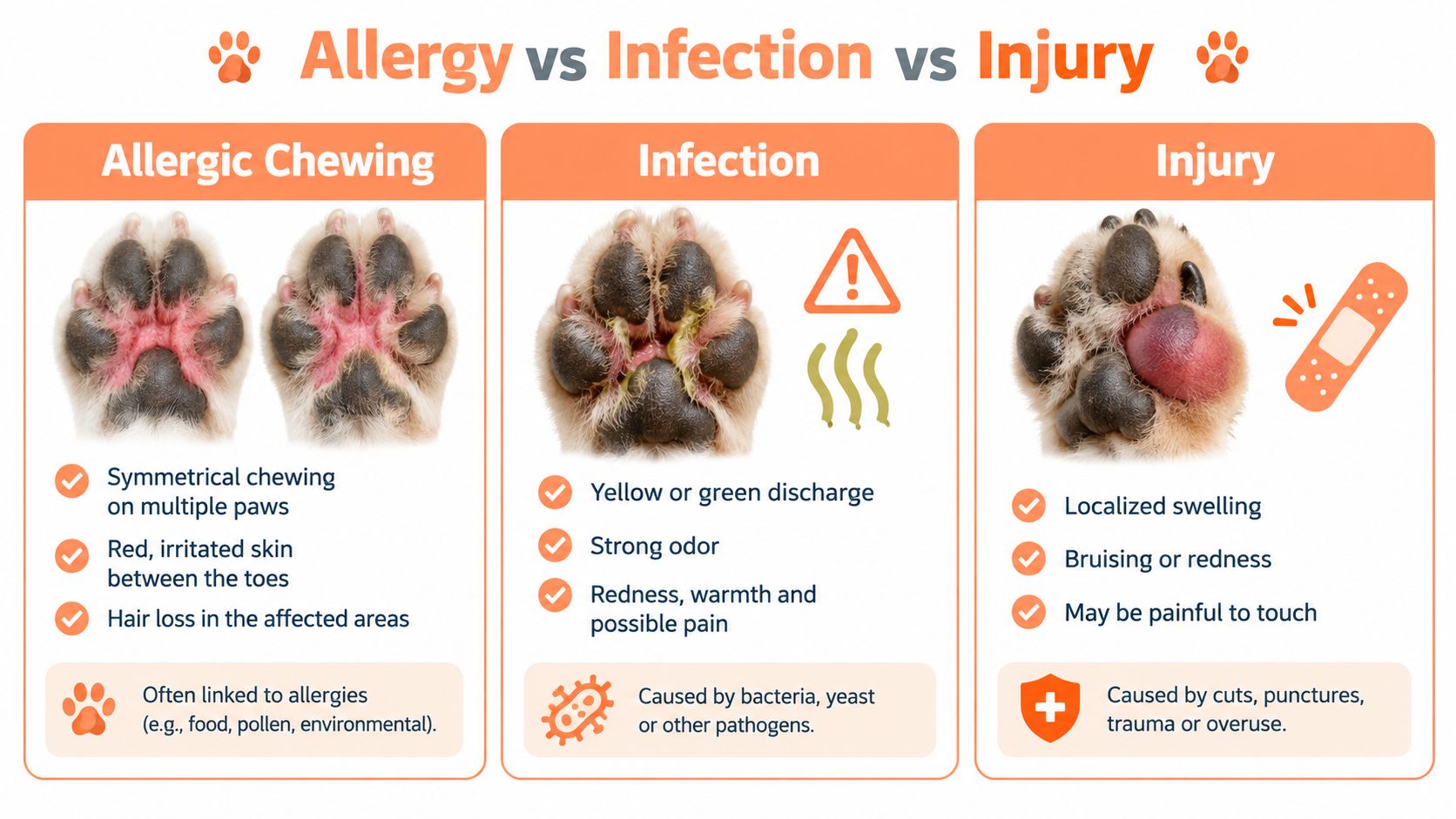
Allergic chewing often affects more than one paw and may appear fairly symmetrical. The skin between the toes can look pink or red, and hair may thin from repeated licking. The skin may remain intact, and there may be no strong odor. That pattern supports allergy, but it doesn't confirm it.
Yeast involvement deserves attention when you notice brown or rust-colored staining on the fur or nails, greasy skin, or a musty, corn-chip-like smell. Bacterial infection can produce more obvious swelling, moisture, pain, pustules, or yellowish discharge. Some dogs have both yeast and bacteria, which is why visual inspection alone is an unreliable way to choose treatment.
One paw changes the urgency
A dog that suddenly focuses on one paw is not presenting the classic pattern of generalized allergic itch. Look for a cut, torn nail, puncture, splinter, grass awn, thorn, or painful area between the toes. Limping, guarding the leg, or pulling away when you touch the paw moves the case toward injury, a foreign body, or an interdigital lesion.
Odor is useful, but don't treat it as a diagnosis. A strong smell tells you that the paw environment has changed, often because of moisture or microbial overgrowth. It doesn't tell you which organism is present or which medication is appropriate.
Practical rule: Several itchy paws suggest a skin problem. One suddenly painful paw demands an injury check.
The AAHA guidelines for allergic skin disease support a proper dermatologic work-up when allergy is suspected, including evaluation for parasites and secondary infection. That matters because a dog can have an allergic trigger and an infection at the same time.
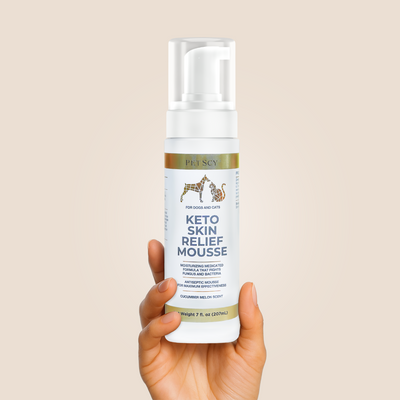
If you're considering cleaning products, compare their intended use with the condition of the skin. PetScy's information on antiseptic wipes for dogs is a starting point for understanding topical care, but raw, swollen, draining, or painful paws still need veterinary assessment.
At-Home Care That Actually Helps
Home care is appropriate for mild irritation when the paw is intact, your dog is comfortable walking, and there are no signs of infection or a lodged object. It should reduce exposure and stop self-trauma while you arrange veterinary advice if the problem persists. It should not become an excuse to postpone care for a deteriorating paw.
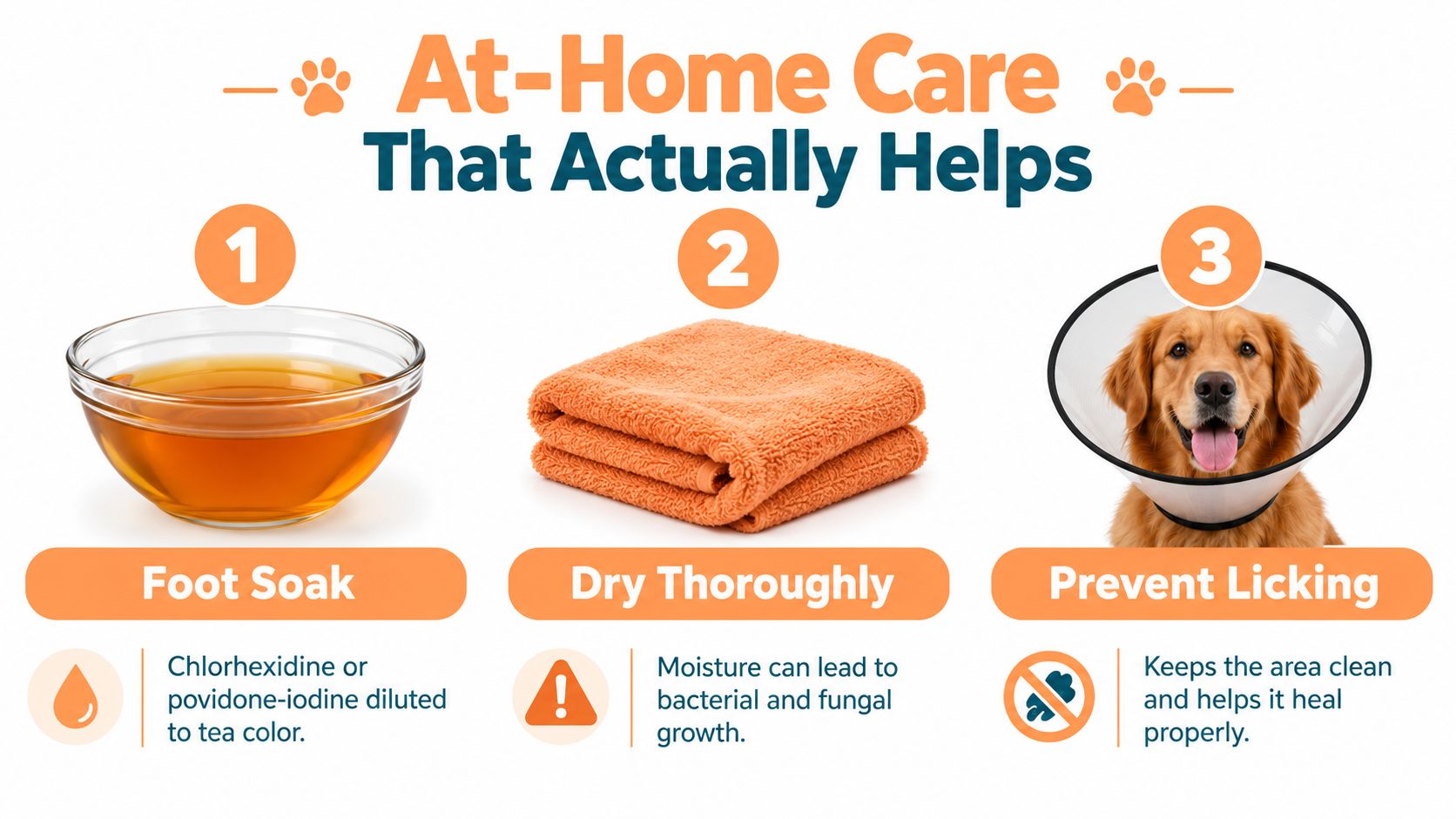
Start with a simple after-walk routine. Rinse the feet with clean water when your dog has walked through grass, dusty areas, de-icers, or treated surfaces. Separate the toes and dry thoroughly, especially around the nail beds and between the pads. Moisture left behind can worsen an already irritated paw.
Use gentle support, not aggressive remedies
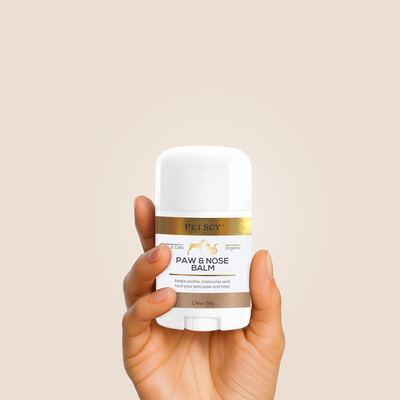
A veterinarian may recommend a paw soak using chlorhexidine or povidone-iodine diluted to a tea-like color. Don't use concentrated antiseptic solutions, and don't soak an open or severely painful lesion without professional direction. A suitable balm can support dry or cracked skin, but it won't clear an infection or identify an allergen.
Preventing licking is often the most important step. Use an Elizabethan collar or a properly fitted inflatable collar when your dog immediately returns to chewing after cleaning. The aim is to give the skin uninterrupted time to dry and recover, not to punish the dog for an involuntary response.
A sensible starter routine looks like this:
- Inspect first. Check every paw before applying anything. Stop if you find a puncture, swelling, discharge, bleeding, a mass, or a foreign body you can't easily remove.
- Rinse after exposure. Use clean water to remove surface irritants, then pat dry rather than rubbing already tender skin.
- Block the chewing. Use a collar when supervision isn't enough. Remove it only when you can reliably prevent renewed biting.
- Record the pattern. Note which paws are affected, what the skin looks and smells like, whether outdoor exposure changes the behavior, and what products you used.
- Arrange an appointment if it doesn't settle. Home care should produce a clear trend toward less chewing and less redness. Continued chewing, spreading hair loss, odor, swelling, or pain means the plan isn't solving the cause.
Don't put vinegar on raw skin. Don't apply over-the-counter hydrocortisone without veterinary guidance, and never use tea tree oil on a dog's paws. Avoid human creams that your dog can lick, because “natural” doesn't automatically mean safe.
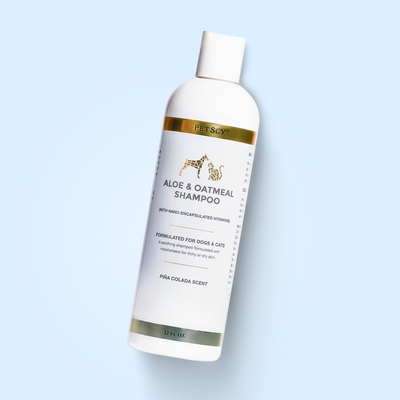
If household products may be contributing, guidance on safe cleaning for UK pet owners can help you reduce avoidable residues. For broader seasonal management ideas, review PetScy's seasonal allergy relief guidance for dogs, while keeping symptom support separate from diagnosis.
Why Blood Tests Won't Tell You What Your Dog Ate
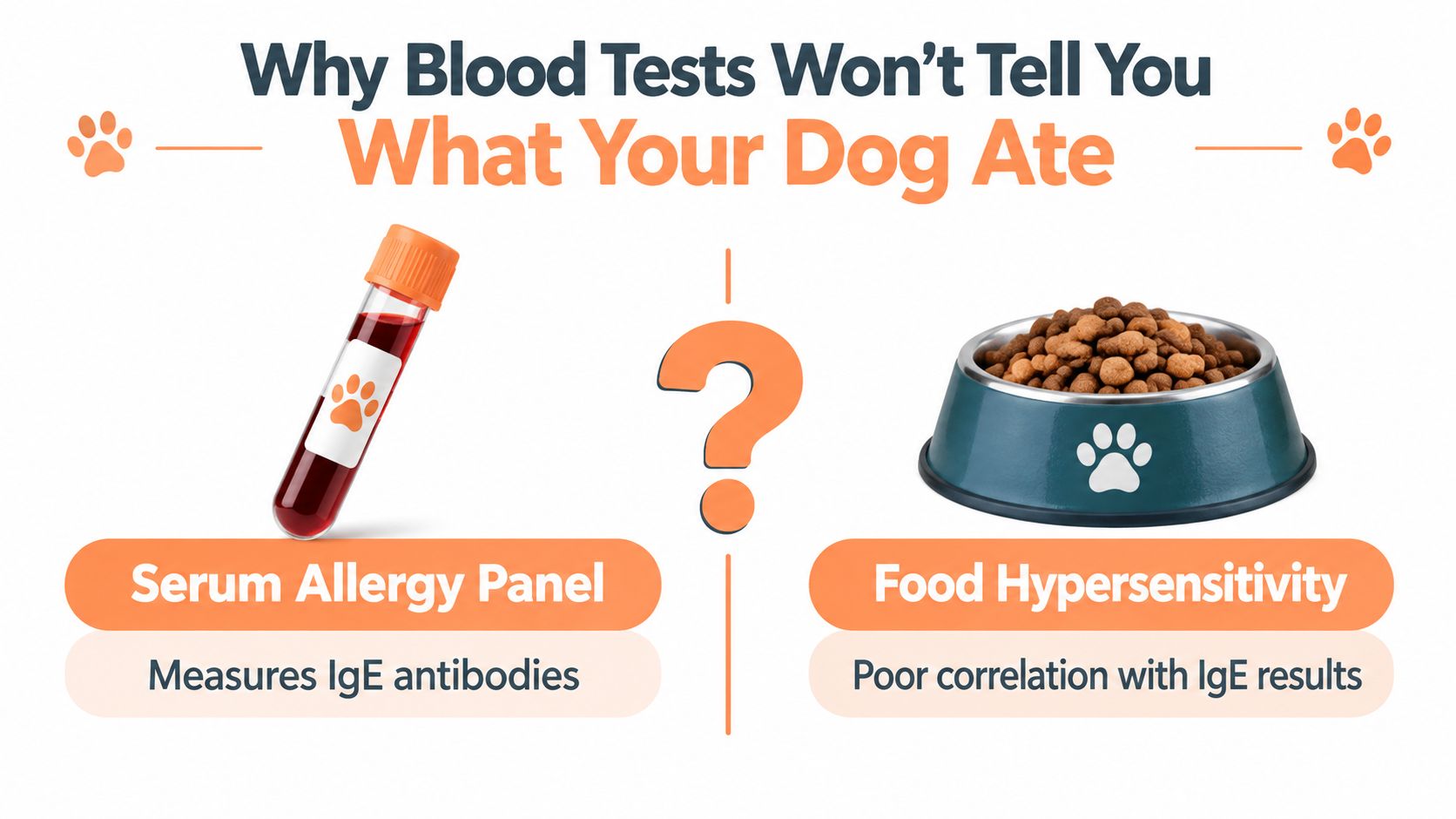
Many owners assume a blood allergy panel can identify the food causing itchy paws. That assumption sends families toward an expensive answer that may not answer the right question.
Serum allergy tests measure immune markers associated with allergic responses, but food-associated dermatitis and environmental atopy can look alike in the clinic. A positive result doesn't reliably establish that a particular food causes your dog's skin signs. Consumer sensitivity tests are not a substitute for a controlled veterinary work-up either.
Intradermal skin testing has a role in evaluating environmental allergens for selected dogs, but it doesn't replace a food trial. The practical test for suspected food-associated dermatitis is a strict elimination diet using a veterinary-selected novel or hydrolyzed protein, followed by controlled reintroduction. The review of canine adverse food reactions describes food trials lasting at least 8 weeks, with some guidance allowing up to 3 months.
The diet has to be genuinely strict
Trial contamination is the common failure point. A dog may receive treats, table scraps, flavored medication, dental chews, supplements, or food from another pet and still appear to be “on the diet.” If the skin improves, controlled reintroduction matters because improvement alone doesn't prove which ingredient was responsible.
A food trial makes more sense when signs are perennial, when ear disease keeps returning, or when gastrointestinal signs accompany the skin problem. Strong seasonality may point more toward environmental exposure, but seasonality alone isn't diagnostic. Your veterinarian should decide whether the history justifies a diet trial and help select an appropriate food.
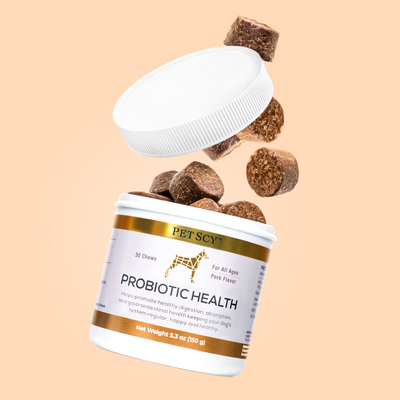
Supplements and topical products can support skin comfort during a veterinary-directed plan, but they don't identify the trigger. If your dog has a smelly, swollen, or painful paw, diagnose the infection or injury before investing energy in dietary theories.
When to Stop Guessing and Call the Vet
Call the veterinarian when the paw is swollen between the toes, hot, draining, bleeding, foul-smelling, or painful. Yellow or green discharge, a spreading area of hair loss, a hot spot, limping, sudden one-paw chewing, or a visible wound also move the case out of the home-care category.
Behavioral changes matter. Lethargy, reduced appetite, reluctance to walk, or unusual irritability can signal that the problem is more painful or extensive than the paw initially appears. Recurrent ear disease alongside paw chewing also deserves a proper allergy and infection assessment rather than another product trial.
Don't wait for a perfect photograph or a definitive online checklist. Persistent chewing that continues despite consistent cleaning, drying, and lick prevention needs examination, especially when the skin is no longer intact. The longer a dog traumatizes the paw, the more difficult it becomes to separate the original trigger from the secondary infection.
What the appointment may involve
Your veterinarian will begin with a physical examination and a detailed history. Be ready to describe the onset, whether one or several paws are affected, outdoor exposures, food changes, previous medications, ear symptoms, and what you have already applied.
Testing may include:
- Cytology: A tape impression or surface sample can help identify yeast and bacterial overgrowth.
- Skin scraping: The veterinarian may check for mites or other parasitic causes when the history and examination support it.
- Parasite review: Flea control and exposure history remain part of an itch investigation.
- Diet discussion: A structured elimination diet may be recommended when food-associated dermatitis is plausible.
- Further examination: A painful mass, foreign body, torn nail, or persistent lesion may require a closer paw-focused work-up.
Tell the clinic: “The chewing started on this date, it affects these paws, it is worse after these exposures, and I've already tried rinsing, drying, and preventing licking.”
That sentence gives the veterinary team useful information quickly. Bring the product names, diet details, photographs of the paw at its worst, and a record of whether your dog is limping or waking at night. Don't describe the problem only as “allergies.” Say what you observed, because paw chewing can arise from infection, parasites, injury, contact irritation, or allergic disease.
The right goal isn't to stop the chewing at any cost. It's to identify why the dog is chewing, protect the damaged skin, and treat the cause before the cycle becomes chronic.
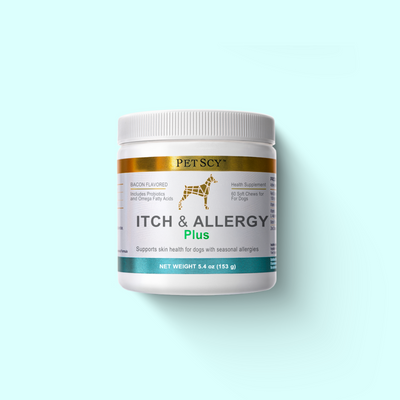
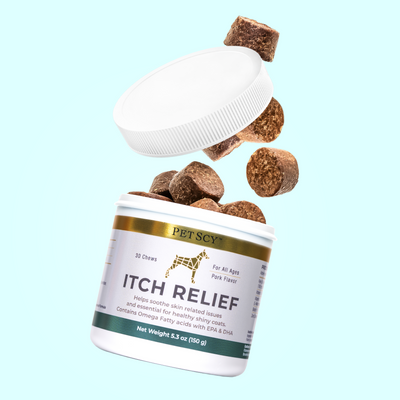
If your dog has mild seasonal itch without open lesions, explore PetScy's veterinarian-formulated supplements and topical paw-care options as supportive tools, not substitutes for diagnosis. Visit PetScy to review options such as Itch & Allergy Plus Chews and Paw & Nose Balm, then contact your veterinarian promptly if chewing, odor, swelling, pain, or discharge continues.