










Dog Probiotics After Antibiotics: A Practical Guide
Yes, dog probiotics after antibiotics are generally safe and may support digestive balance, but they should be separated from antibiotic doses, chosen by defined strains, and monitored rather than treated as a guarantee against diarrhea. In one controlled canine trial, hyporexia occurred in 41%, vomiting in 77%, and diarrhea in 100% of dogs during the first treatment period, yet the probiotic didn't significantly change the odds of diarrhea (controlled canine trial).
The familiar scene comes after the final tablet. The medication bottle goes into a drawer, then your dog has softer stools, less enthusiasm for food, or a stomach that seems unsettled. You want to do something useful, and a probiotic looks like a simple next step.
That instinct is understandable, but the right question isn't whether probiotics are a guaranteed fix. It's whether a specific product, used for a defined period and monitored alongside veterinary advice, makes sense for this particular dog.
Table of Contents
- Why Dog Owners Reach for Probiotics After Antibiotics
- What the Evidence Shows About Post-Antibiotic Probiotics
- How to Time Probiotics Safely Around Antibiotics
- Choosing the Right Probiotic Approach for Your Dog
- Monitoring Stool, Appetite, and Warning Signs at Home
- When to Stop Guessing and Call the Veterinarian
Why Dog Owners Reach for Probiotics After Antibiotics
The final antibiotic dose is often followed by a new concern: softer stools, reduced appetite, or a dog who seems less energetic. Owners understandably look for something practical to do. Probiotics appear to offer a simple way to support digestion, but they are not a guaranteed reset for every dog.
Digestive upset can occur during antimicrobial treatment or after it ends. In a randomized, controlled, crossover trial of dogs receiving antimicrobial treatment, gastrointestinal signs were common in the study setting. The probiotic tested did not produce a statistically significant difference in diarrhea compared with the comparison treatment (trial findings).
The response depends on several variables, including the antibiotic, probiotic strain, dose, timing, underlying illness, diet, and the dog's existing microbiome. Better stool is a meaningful outcome. A changed microbiome test alone isn't the same thing as recovery.
The practical reason for the search
Owners usually want to help a dog whose appetite, stool quality, or energy has changed after medication. Start with symptom monitoring rather than buying several supplements.
A dog with mild, improving softness and normal hydration may need observation and a consistent diet. Ongoing diarrhea, vomiting, poor appetite, or another medical condition calls for veterinary assessment, whether or not a probiotic is used.
Practical rule: Treat a probiotic as supportive care, not as a substitute for finding out why your dog is unwell.
Choose a product with clearly identified strains, set a defined trial period, and judge it by the dog's clinical response. A supplement that coincides with better stool may be useful for that dog. It does not prove that the microbiome has fully returned to its previous state.
What the Evidence Shows About Post-Antibiotic Probiotics
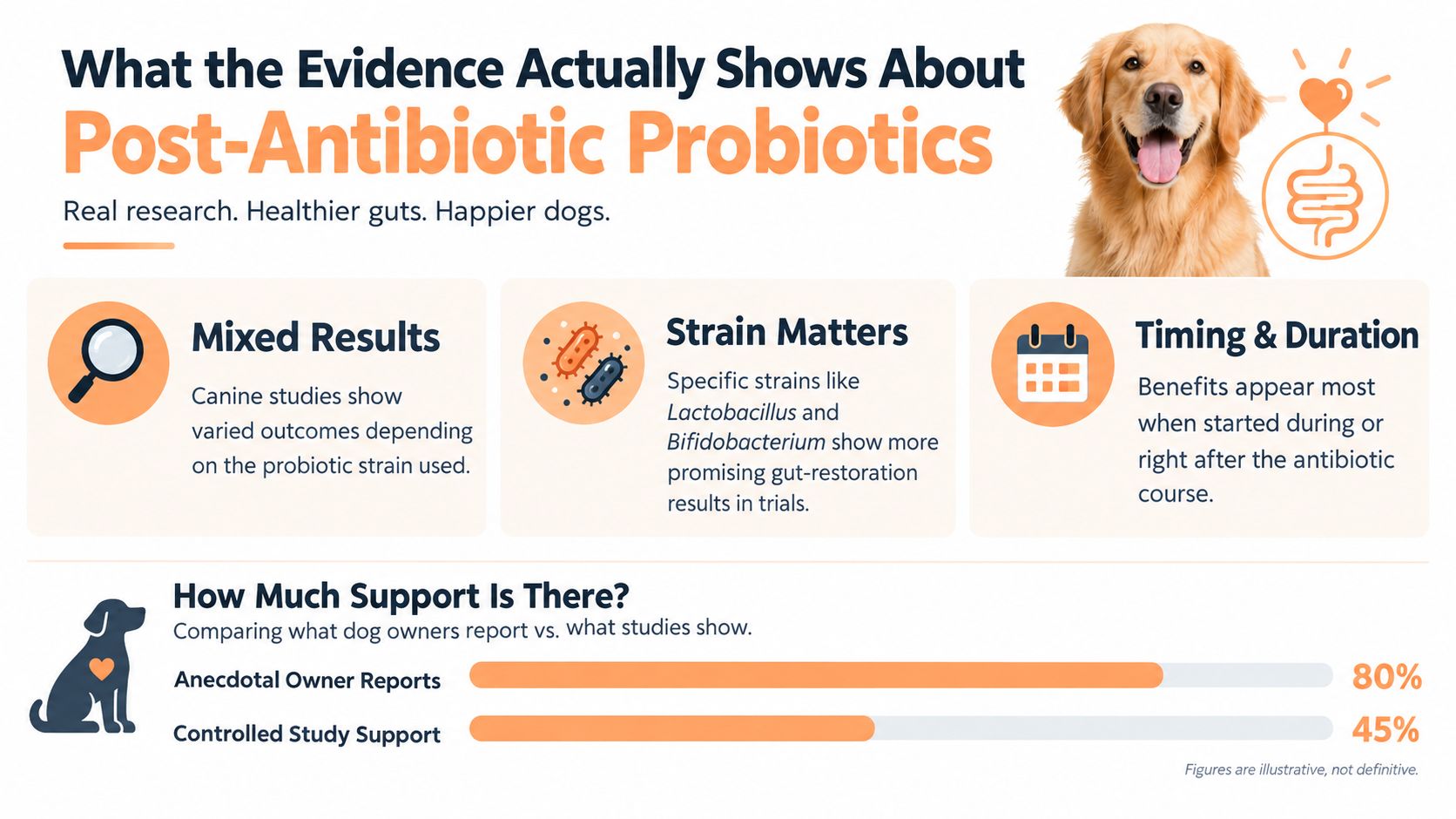
A probiotic may support recovery after antibiotics, but it cannot guarantee normal stools or restore every dog's microbiome. Antibiotics can alter intestinal microbial communities, while the response depends on the drug, probiotic strain, illness, diet, and the dog's starting microbiome. Studies also measure different outcomes, so a laboratory change does not always translate into a visible clinical benefit.
A small 2025 study followed 14 healthy dogs given cefovecin after castration. Seven dogs received a probiotic complex daily for two weeks, while seven received no probiotic. The probiotic group had significantly higher microbial diversity and enrichment of the butyrate-associated genus Butyricicoccus. The non-probiotic group showed a significant change in community composition, including a significant increase in Clostridioides, which the researchers identified as associated with antibiotic-induced dysbiosis (2025 canine microbiome study).
The result is useful, but narrow. These were healthy, young dogs exposed to one antibiotic regimen, and the sample was very small. The study supports possible microbiome stabilization, not a promise that every dog will avoid diarrhea or recover sooner.
Microbiome change versus clinical improvement
A veterinary evidence review found small studies, moderate-to-high risk of bias, and insufficient evidence for consistent reductions in stool frequency or diarrhea duration (veterinary evidence review). A dog may therefore show a microbial shift while still having loose stools at home.
A separate 148-dog randomized placebo-controlled trial involving acute uncomplicated diarrhea reported a resolution ratio of 1.6 for a probiotic paste compared with placebo. Additional antimicrobial treatment fell from 15% to 4%. That finding is encouraging for the studied population and formulation, but it does not establish a post-antibiotic recovery rate for every dog (randomized canine diarrhea trial).
Use symptom improvement as the immediate measure. A probiotic supplement guide for digestive balance may help explain product considerations, but it does not replace veterinary advice or a clearly identified strain and dose.
How to Time Probiotics Safely Around Antibiotics
A dog coming home on antibiotics often looks better before the gut fully settles. That is where timing matters. Keep the prescription on schedule, and do not delay, skip, or split doses to make room for a probiotic.
Before adding anything, check whether the situation needs veterinary review instead of home support:
- Vomiting: Repeated vomiting needs veterinary guidance, especially if your dog cannot keep water down.
- Blood or melena: Red blood or black, tarry stool is a reason to contact the veterinary practice promptly.
- Dehydration: Tacky gums, weakness, or reduced drinking should not be managed with a supplement alone.
- Systemic illness: Fever, marked lethargy, abdominal pain, or a dog that seems significantly worse needs assessment.
- Persistent diarrhea: Ongoing or worsening diarrhea calls for a review of the diagnosis, medication, hydration, and diet.
A workable dosing routine
For live bacterial products, one practical approach is to give the probiotic about one hour after each antibiotic dose. That timing was used in a randomized crossover study involving enrofloxacin and metronidazole, and it offers a sensible buffer when a label does not specify another schedule. It is a dosing rule, not a guarantee of better results, and the best interval can still vary by product and drug.
If the antibiotic goes with breakfast, move the probiotic to a later meal or a suitable snack. If the label gives a different schedule, follow that or confirm it with your veterinarian.
Keep the antibiotic schedule fixed. Adjust the probiotic around it, never the other way around.
Read the label like a nurse
Look for a defined strain or strain combination, a stated viable count through expiry, storage instructions, and veterinary quality controls. A generic “good bacteria” claim tells you less than a label that identifies what is inside the product.
Track stool consistency, stool frequency, appetite, hydration, and any new adverse effects each day. Symptom monitoring and microbiome change are not the same thing, and the dog's comfort is the measure that matters at home.
For practical expectations around response time, see PetScy's guide to how long probiotics take to work in dogs.
Choosing the Right Probiotic Approach for Your Dog
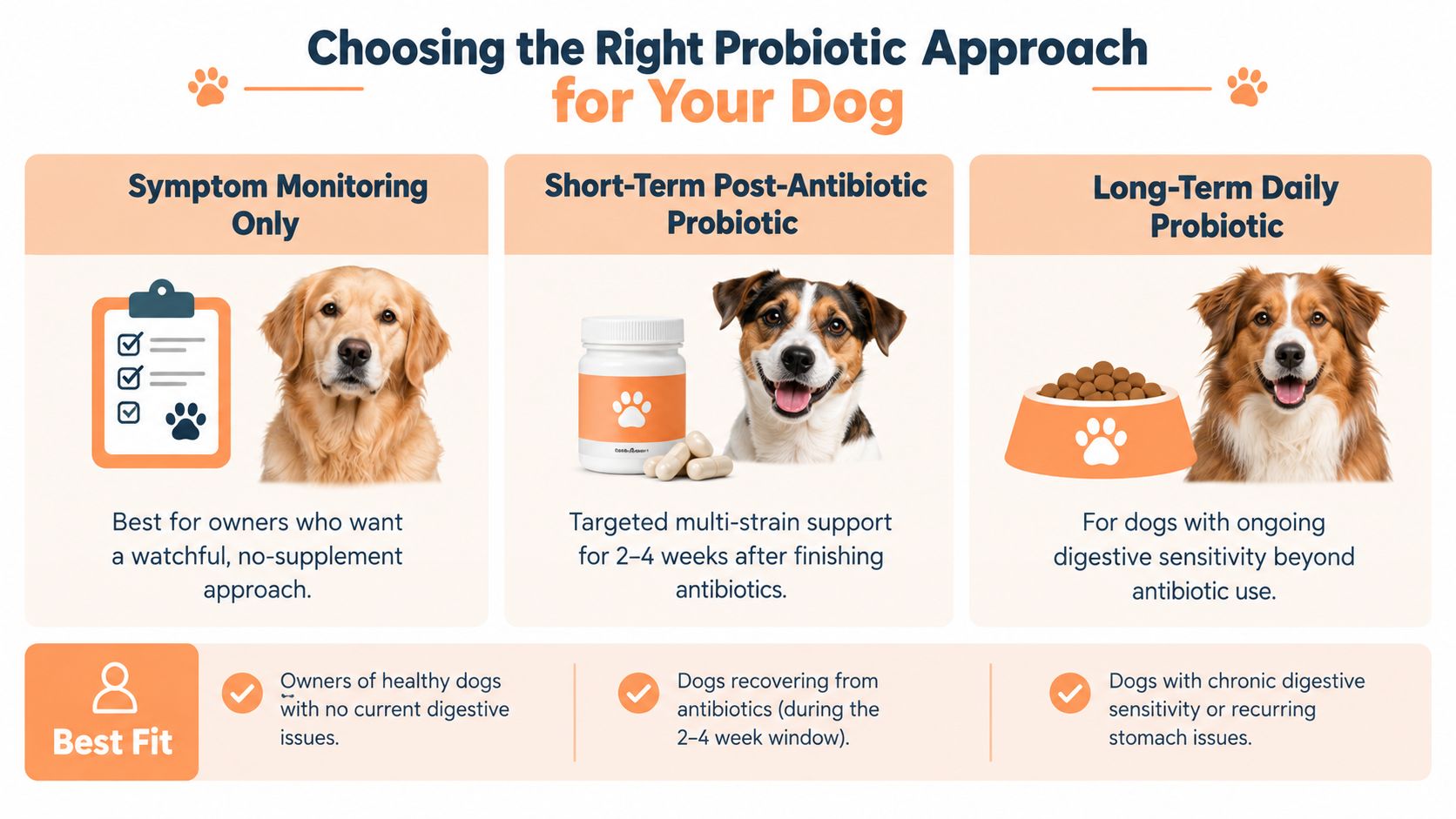
There isn't one correct strategy for every dog. Start by deciding what you're trying to improve: a mild stool change, recovery after a medically necessary course, or a longer-standing digestive problem.
| Approach | When it may fit | Main trade-off |
|---|---|---|
| Symptom monitoring only | Your dog is bright, drinking, eating reasonably, and signs are mild or improving | You must observe carefully and contact the veterinarian if the trend changes |
| Short-term probiotic support | You want a defined trial after discussing the product with your veterinarian | The product may support balance without changing diarrhea or recovery time |
| Veterinarian-guided ongoing care | Digestive sensitivity continues beyond the antibiotic episode or another condition is suspected | Long-term supplementation can distract from finding the underlying cause |
Compare products, not slogans
A generic “probiotic for dogs” label doesn't tell you whether the product has been studied in a relevant canine situation. Prefer strain transparency, viable counts through expiry, clear storage instructions, and a format your dog will reliably accept.
Avoid combining several products just because each promises a different benefit. Without clear dose and strain information, you won't know which product helped, which caused gas or softer stool, or whether the total amount is appropriate.
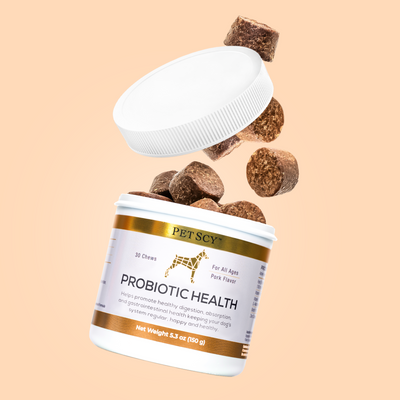
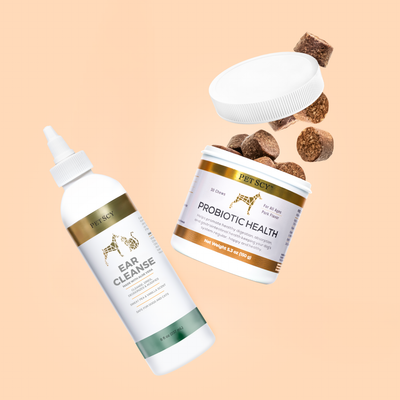
PetScy's Probiotic Health Chews are one commercially available option intended to support digestive health and gut balance. They should be considered alongside other transparent products and your veterinarian's recommendation, particularly for dogs with ongoing symptoms.
Use outcomes you can actually see
A stool that firms, a returning appetite, and normal hydration are practical outcomes. A microbiome-focused plan may be worthwhile in selected cases, but owners shouldn't assume that a laboratory measure of diversity automatically means the dog feels better.
Choose one change at a time. Give the plan a defined reassessment point, and don't continue indefinitely without asking whether the dog still needs it. More detail on product comparisons is available in PetScy's guide to probiotics for dogs with diarrhea.
Monitoring Stool, Appetite, and Warning Signs at Home
A short daily record is more useful than relying on memory. Write down what happened, when it happened, and whether the overall trend is improving, stable, or worsening.
Use the same checklist each day
- Stool: Record consistency, urgency, mucus, unusual color, and whether the stool is becoming more formed.
- Frequency: Note how often your dog passes stool compared with their usual pattern.
- Appetite: Record whether the normal meal was eaten, partly eaten, or refused.
- Hydration: Watch drinking, gum moisture, urination, and general strength.
- Behavior: Check energy, comfort, sleep, willingness to walk, and signs of abdominal pain.
- Medication and supplements: List every dose, including the antibiotic, probiotic, treats, and any diet change.
This record helps separate a single abnormal bowel movement from a sustained pattern. It also gives your veterinary team a clearer history if the dog needs an examination.
A dog that is improving slowly is different from a dog that is deteriorating. Track the direction, not just one stool.
Know when monitoring has ended
Contact your veterinarian promptly for persistent or worsening diarrhea, repeated vomiting, blood in the stool, dehydration, fever, marked lethargy, abdominal pain, or poor appetite. Use a lower threshold for puppies, senior dogs, critically ill dogs, immunocompromised dogs, and hospitalized patients because evidence for probiotic safety and effectiveness is limited in these groups.
Short-term studies generally report few substantial adverse effects, but that doesn't make every product appropriate for every patient. If your dog develops more gas, softer stool, or another change after starting a supplement, record the timing and speak with the veterinary practice rather than automatically increasing the dose.
For a general way to assess changes over time, the AloeCure probiotic progress guide offers a useful monitoring framework. Apply it to your dog's actual clinical signs, not to a promise that a supplement must work.
When to Stop Guessing and Call the Veterinarian
Home monitoring is reasonable only when your dog is otherwise stable and the signs are mild or improving. A probiotic doesn't replace diagnostic evaluation, fluids, nutritional support, or treatment directed at the actual cause of diarrhea.
Call the veterinarian if your dog has persistent or worsening diarrhea, blood or black stool, repeated vomiting, dehydration, fever, marked lethargy, abdominal pain, or poor appetite. Contact the practice sooner for a medically vulnerable dog, even when the digestive signs seem modest.
Don't extend supplementation without a reassessment point just because the product appears harmless. Ongoing signs may reflect parasites, dietary indiscretion, inflammatory disease, medication complications, or another problem that requires a different plan.
The sensible plan is straightforward: give the prescribed antibiotic correctly, separate a live probiotic according to veterinary or product guidance, choose a transparent formulation, and record stool, appetite, hydration, and behavior. Use probiotics to support recovery, not to postpone care when the dog's condition is getting worse.
PetScy offers veterinarian-formulated supplements, including Probiotic Health Chews designed to support digestive health and gut balance in dogs. Visit PetScy to review the available digestive-support options, then discuss the most appropriate choice with your veterinarian if your dog remains symptomatic after antibiotics.