









How Dog Seasonal Allergies Treatment Works
Your dog was fine all winter. The first warm week arrives, and the paws go back in the mouth, the face rubs the rug, and someone is awake at 2 a.m. You wipe the feet, try an antihistamine, and wait for the pollen to fall. The itch often stays anyway.
That is the everyday problem behind dog seasonal allergies treatment. Pollen can open the flare. Parasites, food reactions, and secondary infection often keep the skin angry after the counts drop. What follows is a way to sort a true seasonal rhythm from a flare that has picked up something else, to see which decisions belong in the clinic, and to place gentle home support where it fits.
A leaky roof is a fair picture. Pollen is the rain. A worn skin barrier and surface microbes can keep the house wet after the storm passes. Recurring environmental itch is managed over time. It is not fixed by one bath, one antihistamine, or one chew. If the skin is moderate, severe, persistent, or infected, the clinic visit comes before any supplement is treated as the main fix.
Table of Contents
- Why Seasonal Itch Keeps Coming Back
- What Dog Seasonal Allergies Really Mean
- Signs That Need More Than an Allergy Label
- How Veterinarians Treat Seasonal Allergy Flares
- Choosing At-Home Support That Fits the Plan
- Treatment Examples for Common Allergy Patterns
- Your Next Step After the Next Flare
Why Seasonal Itch Keeps Coming Back
Take a common spring dog. In January the coat is quiet. By April the same dog chews the toes after every walk, rubs the muzzle on the sofa, and paces the hallway before dawn. Many owners decide to wait the season out. Waiting rarely ends the cycle, because the trigger that started the itch and the problem that is feeding it are often different.
Pollen can light the match. Fleas, a food reaction, or yeast and bacteria can keep the fire going after outdoor exposure eases. Rain explains the first wet ceiling. Damaged flashing explains why the stain is still there in June.
You can use that split in three plain ways.
- Sort the calendar. Write down whether licking lines up with outdoor pollen, and whether it fades when that exposure drops.
- Split the jobs. Diagnosis, parasite control, and infection care belong with a veterinarian. Barrier-friendly bathing and adjunct chews come after those steps, not instead of them.
- Watch the skin, not only the date. Odor, pustules, and ear debris mean the phrase "seasonal allergies" is an incomplete label.
Fleas are easy to dismiss when you never see one on the dog. One bite can restart scratching long after the trees quiet down. A practical walk-through of pet and home steps, such as the FullScope Pest Control pet flea guide, shows why parasite pressure belongs in the first look, even in a dog that "only itches in spring."
Practical rule: If your dog is still miserable after pollen drops, do not stack another over-the-counter antihistamine and call the season finished. Book the exam.
From there the decisions get clearer. Name the condition, catch red flags, understand what a veterinarian may prescribe, match a chew or topical to one job, and judge the plan on repeated checks. One bath will not reset a chronic, relapsing itch.
What Dog Seasonal Allergies Really Mean
The usual clinical frame for this pattern is canine atopic dermatitis, a recurring reaction to environmental allergens. It is estimated to affect about 10 to 15% of dogs, and it is not pinned down by one allergy test. Veterinarians combine the history and the exam with a search for other causes of itch, including parasites, food reactions, and secondary infections, as described in the Merck Veterinary Manual chapter on atopic dermatitis in dogs.
A jacket, not a pollen-only label
Healthy skin works like a well-sealed jacket. It keeps everyday allergens, moisture swings, and microbes from bothering the dog as much. Allergic skin is a jacket with worn seams. The same grass, dust, or mold gets through more easily, and the dog licks, scratches, and rubs.
A seasonal pattern is common, and it is easy to over-read. Cornell's Riney Canine Health Center notes that canine atopic dermatitis may be seasonal in 40 to 75% of cases, yet it can become year-round. Spring timing alone does not prove a simple pollen allergy. Indoor dust and mold can overlap the same weeks. Wiping paws helps, and so does a cleaner house. Owners who want a room-by-room routine can reduce dust and indoor allergens while the veterinarian sorts the diagnosis.
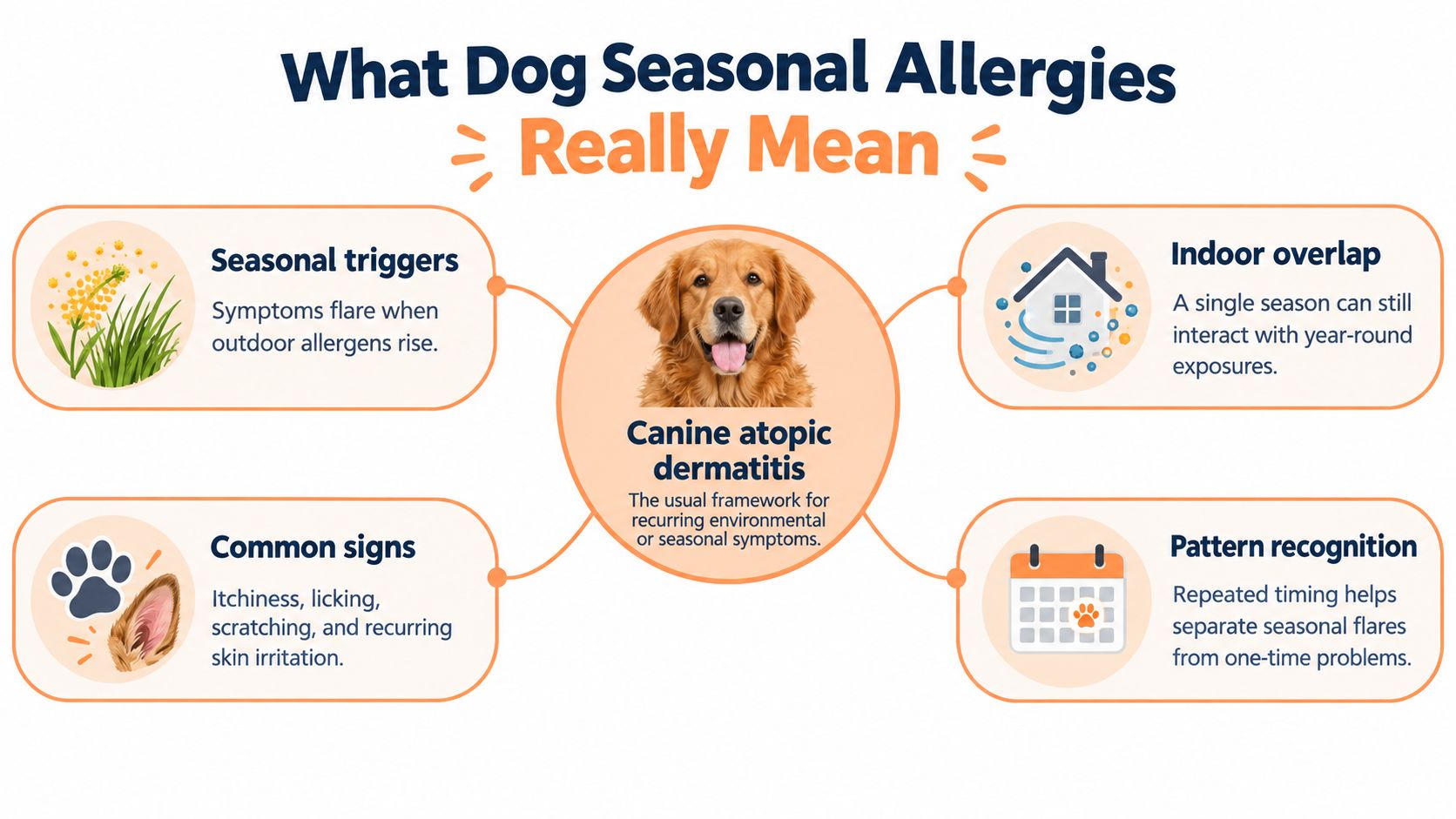
Veterinary guidance aims at five jobs at once, not a single product.
- Reduce itch so the dog can sleep and stop damaging the skin.
- Support the skin barrier so everyday contact is less irritating.
- Control bacterial or yeast infection when smell, debris, or sores show up.
- Identify flare factors such as fleas, food, or ears.
- Avoid relevant allergens when that is realistic, not as a fantasy of a pollen-free life.
Allergen-specific immunotherapy is the main disease-modifying route. Medicines such as corticosteroids, ciclosporin, oclacitinib, or lokivetmab are mainly for symptom control, chosen by severity and the individual dog. That is concept, not a shopping list. The point is that dog seasonal allergies treatment is ongoing care of a relapsing condition, not a one-time cure.
Signs That Need More Than an Allergy Label
A dog who stops itching when the first frost arrives gives you one kind of clue. A dog who keeps chewing through November gives you another. Pollen can start a flare, yet parasites, food reactions, and skin infection often keep the itch going after pollen counts drop. Before you settle on the seasonal label, run a short check on timing, body map, and red flags.
What to write down this week
Start with when the signs began and whether they ease once pollen season passes. Then map the skin. Paws, face, armpits, groin, and ears are the zones that keep showing up in allergic dogs. A dog who scoots and chews only the tail base is telling a different story than a dog who licks all four feet every April.
Ordinary itch looks like repetitive licking or face rubbing without a strong smell. Amplifiers leave different evidence.
- Yeasty or foul odor: Often points to yeast or bacterial overgrowth on skin already weakened by scratching.
- Redness or pustules: The barrier is already broken, and infection may now drive the itch on its own.
- Head shaking or ear debris: Ear disease adds its own itch and needs its own treatment.
- Sudden worsening: A routine that helped, then stopped helping, is a reason to recheck.
A flea allergy works like a smoke alarm that keeps ringing after the toast is cleared. One bite can light up the skin for days, and you may never see the insect. If the scratching continues after you have ruled fleas out, read about why dogs scratch without fleas before assuming the diagnosis is settled.
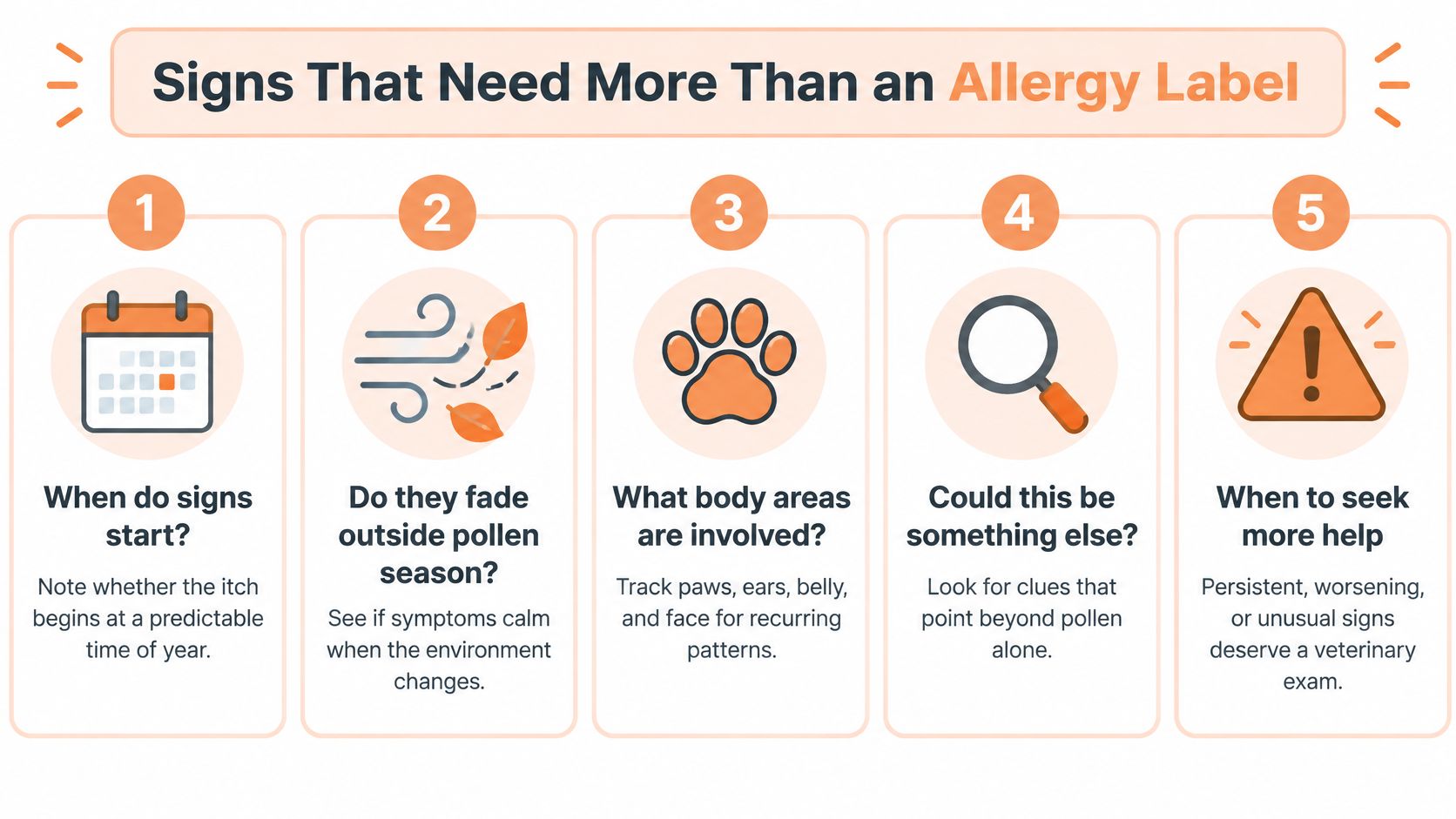
At the clinic, a veterinarian may look at cells from the skin or ear (cytology), tighten parasite control, or suggest a food-elimination trial when signs ignore the calendar. Those steps come before another bottle from the pet aisle.
A seasonal flare can damage the barrier and leave infection behind after pollen falls. The calendar improves. The dog does not.
Keep a one-page log. Date, body areas, smell or discharge, diet changes, and what you already tried. That page beats a new guess every time.
How Veterinarians Treat Seasonal Allergy Flares
The 2023 AAHA allergic skin disease guidelines put the order of work in a clear sequence. Confirm and control fleas, other ectoparasites, secondary bacterial or yeast infection, and otitis externa before you judge an itch medicine. Those problems amplify pruritus. Leave them in place and a good drug can look useless.
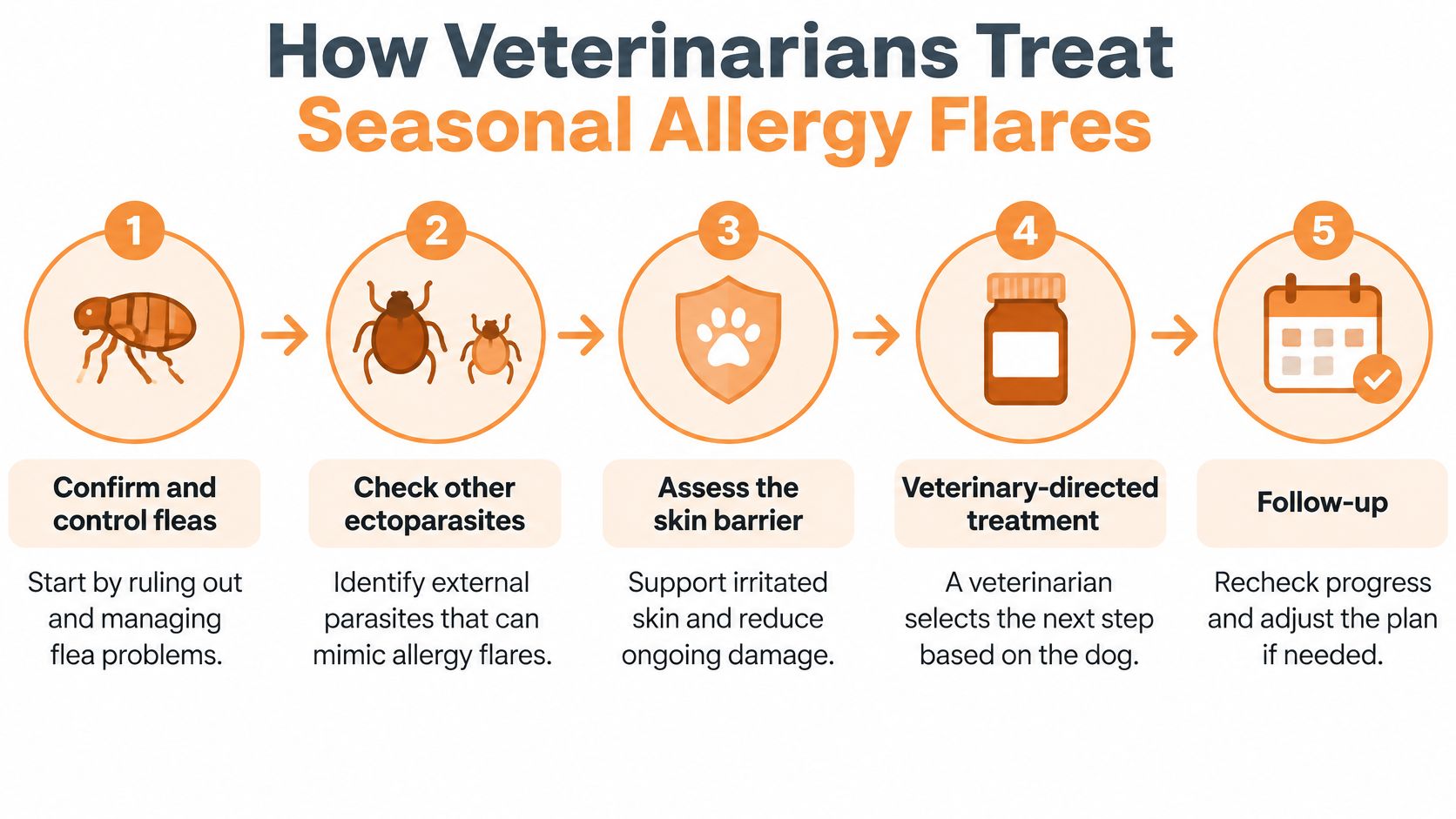
Choosing a medicine for this dog
After flare factors are handled, the drug follows severity and the patient.
Oral glucocorticoids can quiet a short flare quickly. They are a tool for a defined burst, not a casual daily habit.
Oclacitinib targets Janus kinase pathways involved in itch. In allergic dogs, improvement is often noticed fast, sometimes within a day, with broader skin scores judged over later visits. Speed of comfort and healing of lesions are not the same event.
Lokivetmab is a monoclonal antibody aimed at canine interleukin-31, a cytokine tied to itch signaling. In a blinded dose-finding study, 0.5 and 2.0 mg/kg reduced itching versus placebo for at least one month. In a separate group of 162 dogs, two monthly doses were reported safe over 42 days, with more than 50% itch reduction in 64% of cases and more than 50% dermatitis reduction in 66%, according to completed work summarized by the University of Minnesota Clinical Investigation Center. Those figures are benchmarks, not a promise for every dog. Allergen load, infection, and lesion severity all change the result. Direct comparisons with oclacitinib suggest broadly similar itch and lesion changes through 28 days, with limited head-to-head evidence.
Cyclosporine is a later option when first-line antipruritics are not enough. Maximal benefit may take about 4 to 6 weeks, so owners should not abandon it on day ten. Allergen-specific immunotherapy is the longer disease-modifying path. It is not an overnight switch.
Bathing and localized skin care sit in the same plan. They lower allergen load, surface microbes, and inflammatory debris while the epidermal barrier recovers.
Reported success for commonly used systemic therapies in severely affected dogs is generally about 70 to 80%, with response and safety depending on the individual dog and on veterinary oversight, as noted in the Merck guidance cited earlier. Supplements do not replace these steps when disease is moderate or severe.
Score itch the same way at each recheck. A drug that "didn't work" is sometimes a drug that was judged once, on a bad afternoon, while an ear infection was still in place.
Choosing At-Home Support That Fits the Plan
A dog can improve after the first cool week and still keep scratching because yeast in an ear fold or a missed flea dose is doing the later work. Home products help most when each one has one assigned job inside the veterinarian's plan, like bandages and kitchen cleanup helping while the actual diagnosis is still being treated.
| Approach | Best used for | Does not replace |
|---|---|---|
| Allergy-support or itch chews | Daily itch comfort and skin-barrier support between visits | Diagnosis, infection treatment, or immunotherapy |
| Omega-3 oil | Coat moisture and longer-term skin lipid support | A fast antipruritic during a severe flare |
| Gentle bath or hydrating shampoo | Rinsing pollen and calming dry coat | Cytology or a prescription ear plan |
| Antiseptic or antifungal wipes and light mousse | Surface care on dry, irritated skin between baths | Treatment of deep or widespread infection |
| Ear cleanse | Routine hygiene when ears are itchy or waxy | Care of a painful, debris-filled ear infection |
| Paw and nose balm | Cracked, dry skin on contact points | The rest of an allergy workup |
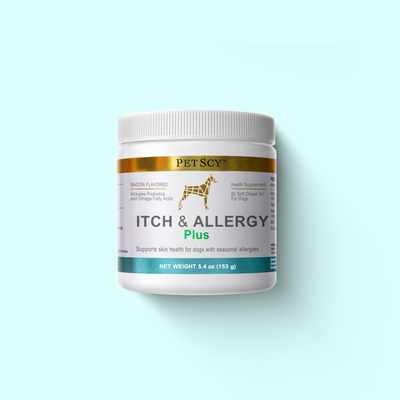
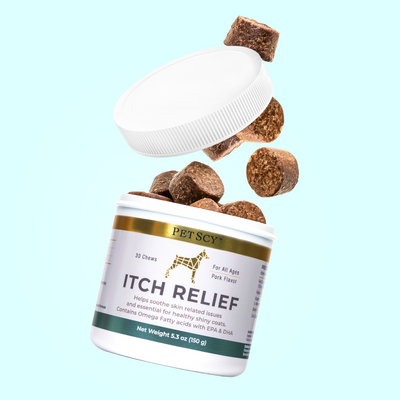
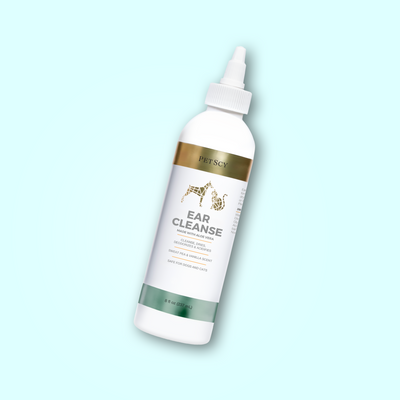
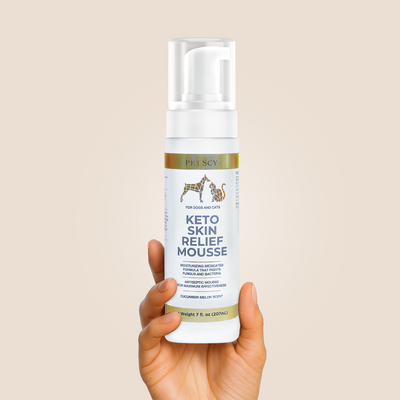
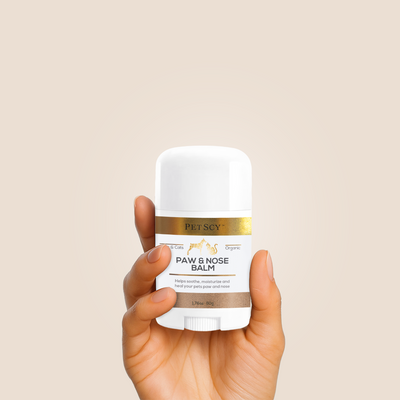
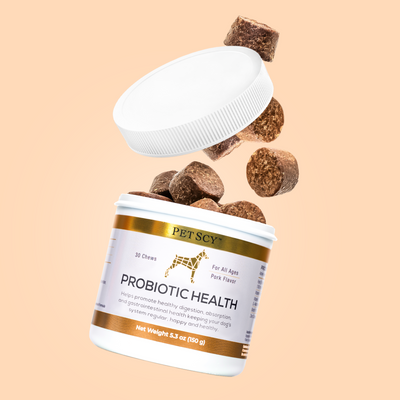
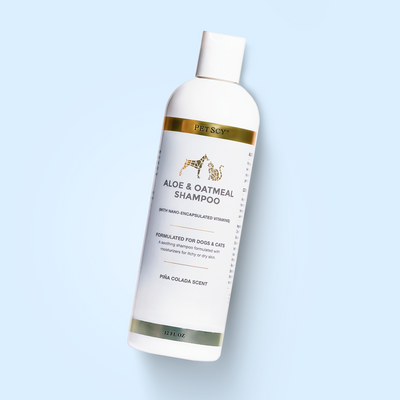
PetScy fits that adjunct lane: U.S.-made, veterinarian-formulated, National Animal Supplement Council member, with third-party testing referenced on the site, subscription ordering, free shipping, and a money-back guarantee. Its products map to separate chores rather than one promise. Itch & Allergy Plus Chews pair a probiotic blend with skin-supporting ingredients, Itch Relief Chews target itch and irritation, and Fish Oil supplies EPA and DHA from wild-caught Alaskan pollock and salmon. For surface care, Keto Skin Relief Mousse is a light option for dry, irritated skin, Keto Skin Wipes are antiseptic, antimicrobial, and antifungal, Aloe & Oatmeal Shampoo hydrates coat and skin, Paw & Nose Balm moisturizes cracked areas, and Ear Cleanse covers routine hygiene. Bundles such as Allergy & Skin Support, Itch & Allergy, and Yeast & Ear group those chores.
Where air and floors still matter
A chew cannot filter a living room. Households reducing airborne dander and dust alongside skin care can find an air purifier for pets and pair it with the bathing and wipe routine already agreed on. Broader home habits are covered in this guide to home habits that lower allergen exposure. Choose the lane that matches the dog, then reassess at the recheck instead of judging on one rough afternoon.
Treatment Examples for Common Allergy Patterns
Three dogs can share a zip code and need three different plans. "Seasonal" describes when a flare starts, not everything that keeps it alive, so treat these sketches as pattern-recognition practice rather than doses to copy.
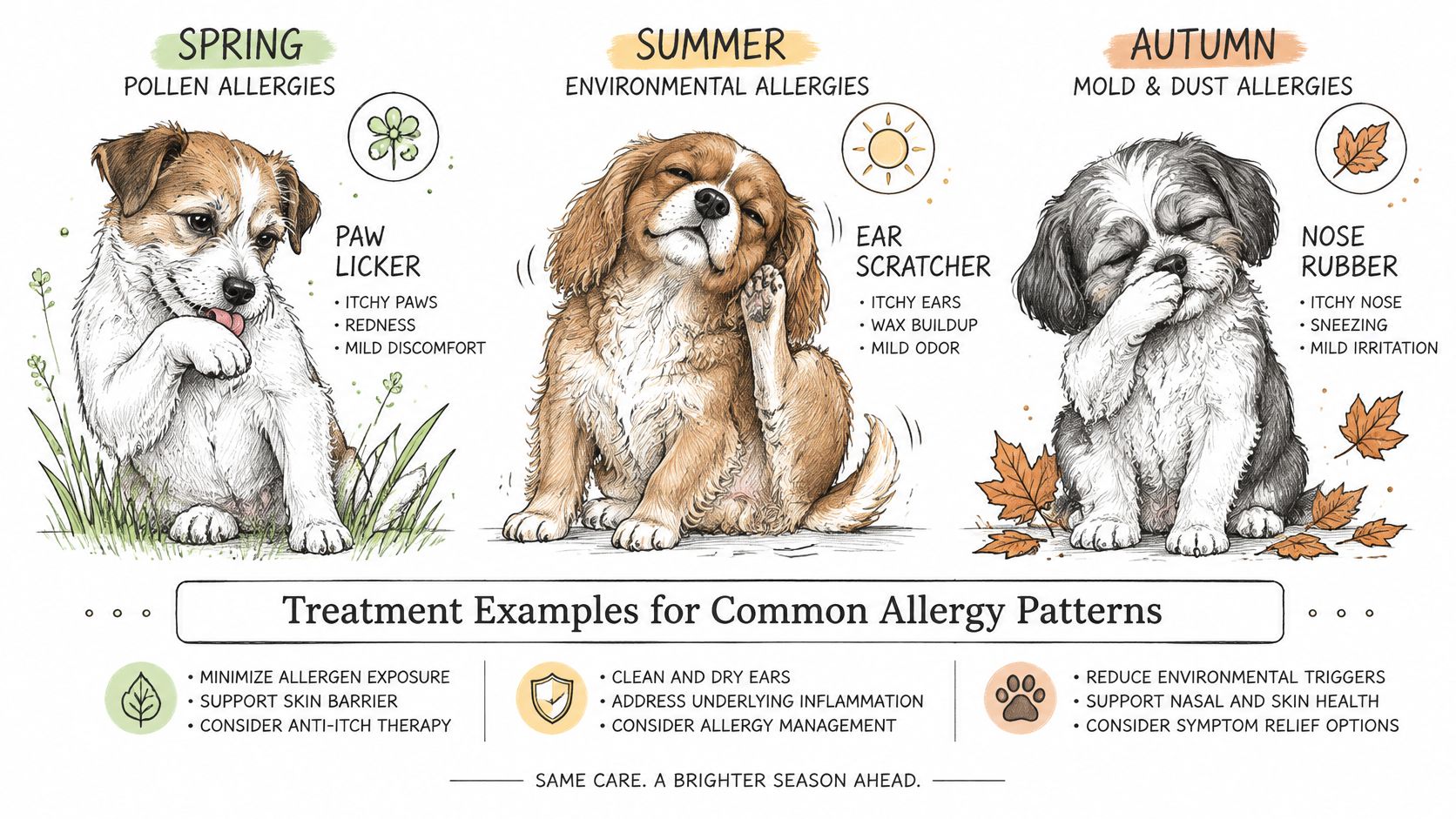
The mild spring paw-licker
April arrives, and this dog starts licking the front feet. No odor, no sore, and the rest of the year stays quiet. Environmental cleanup, a gentle bath on a set day, and an omega-3 plus an allergy-support chew as adjuncts are reasonable while a veterinarian already knows the dog. If licking spreads to the face or groin, the home plan stops being the whole plan. Owners comparing fish oil for coat and itch support can read more on fish oil for itchy skin and still keep the clinic in the loop.
The face-rubber who starts to smell
Last year this dog rubbed cheeks for a few weeks. This year the skin is red and the odor is obvious. The first move is an exam for secondary infection and a hard look at parasites, not a verdict on a chew.
Until cytology and parasite control are done, you cannot tell whether an adjunct "failed." Pollen may have opened the door, but yeast or bacteria may be what keeps the itch going now.
The dog who is miserable every year
Severe itch that returns on a schedule is where fast symptom control and a longer disease-modifying talk belong together. A veterinarian may reach for a rapid antipruritic now and discuss immunotherapy for the years ahead.
One trial gives a sense of the timing, not a guarantee. The JAVMA oclacitinib trial summary describes 436 dogs with allergic dermatitis and moderate-to-severe pruritus given oclacitinib at 0.4 to 0.6 mg/kg twice daily or placebo for 28 days. The same summary reports improvement within 24 hours, with 70.5% of treated dogs showing at least a 50% reduction from baseline across pruritus, dermatitis, and owner scores by day 7, versus 23.2% on placebo. It also describes a separate 112-day study of 299 atopic dogs: 66% treatment success for itch by day 28 versus 4.0% on placebo, and dermatitis scores down 48.4% in treated dogs versus 1.7% in placebo dogs on days 14 to 28.
Fast itch relief and slower lesion healing are different wins. Score the same itch question each week and let the veterinarian recheck the skin.
A short clinic-style overview of seasonal signs can help you decide which of these three dogs sounds most like yours.
Your Next Step After the Next Flare
A dog's paws can settle as pollen fades, then the ears start to smell and the licking returns. That pattern is the clue: pollen may open the door, while fleas, food reactions, yeast, or bacteria keep the itch alive in the hallway. "Seasonal" names the trigger on the calendar. It rarely explains the whole dog.
Write a one-page flare note before the next visit: first day of licking or face rubbing, body areas, ear odor, redness or pustules, and anything already tried. Add one line on diet changes and parasite prevention dates, because those details change what the veterinarian checks first. The page works like a handoff between your kitchen and the exam room.
If odor, sores, ear debris, or round-the-clock itch show up, book the visit rather than testing another jar. Parasites and infection need diagnosis and treatment before any skin support gets a fair trial. With milder signs in a dog already under care, choose one lane from the comparison, such as an itch-support chew or a barrier-friendly bath, and give it a defined window.
How to read the next two weeks
Quiet nights and fewer paw breaks count as progress. Redness that spreads, a new ear smell, or broken skin counts as a reason to recheck with the clinic. Keep the same itch score each week so you and the veterinarian are describing one dog, not two memories.
Comfort that holds only while pollen is low, then collapses with the first ear odor, is a signal to reopen the workup rather than proof the plan is finished.
Recurring environmental itch stays a veterinarian-guided plan with adjunct skin care beside it. PetScy makes veterinarian-formulated chews and topical care for dogs dealing with seasonal itch, including allergy-support chews, fish oil, skin mousse, wipes, shampoo, ear cleanse, and paw balm. Match one product to the job your log shows, and let the clinic handle infection, parasites, or severe disease.