










How to Reduce Dog Allergies at Home and Long Term
Your dog is licking the same paws again, scratching through the night, or shaking their head while you search for a shampoo or chew that might finally help. You may also be wondering whether the dog is bringing allergens into the bedroom or whether something in the diet is keeping the itching going. The fastest way to waste time is to treat every itchy dog as if they have the same problem.
A useful plan is layered and ordered: identify the cause, reduce exposure, care for the skin without irritating it, then add supportive or medical treatment as needed. No single bath, supplement, diet change, or air filter can replace that sequence. The aim is lasting control, not a one-product cure.
Table of Contents
- Why Dog Allergies Need a Layered Plan
- Getting the Diagnosis Right Before You Treat
- The Bathing Question Most Advice Gets Wrong
- Controlling the Home Environment Without Losing Your Weekend
- Grooming, Topicals, and Supplements as Daily Support
- Medical Options That Actually Change the Course
- Monitoring Progress and Knowing When to Call the Vet
Why Dog Allergies Need a Layered Plan
Canine allergic skin disease can involve flea allergy, food allergy, environmental atopic dermatitis, and secondary bacterial or yeast infections. More than one can be active at once. Fleas may trigger intense itching, while damaged skin can become infected; an infection can then add odor, redness, and discomfort that make the original allergy harder to judge.
That's why similar symptoms don't point to one reliable solution. Paw licking, scratching, face rubbing, recurrent ear irritation, and red skin can occur with different causes. A shampoo may remove material from the coat but won't identify a food trigger. A supplement may support skin health but won't clear an infection. A diet change won't prevent flea bites.
Put the layers in the right order
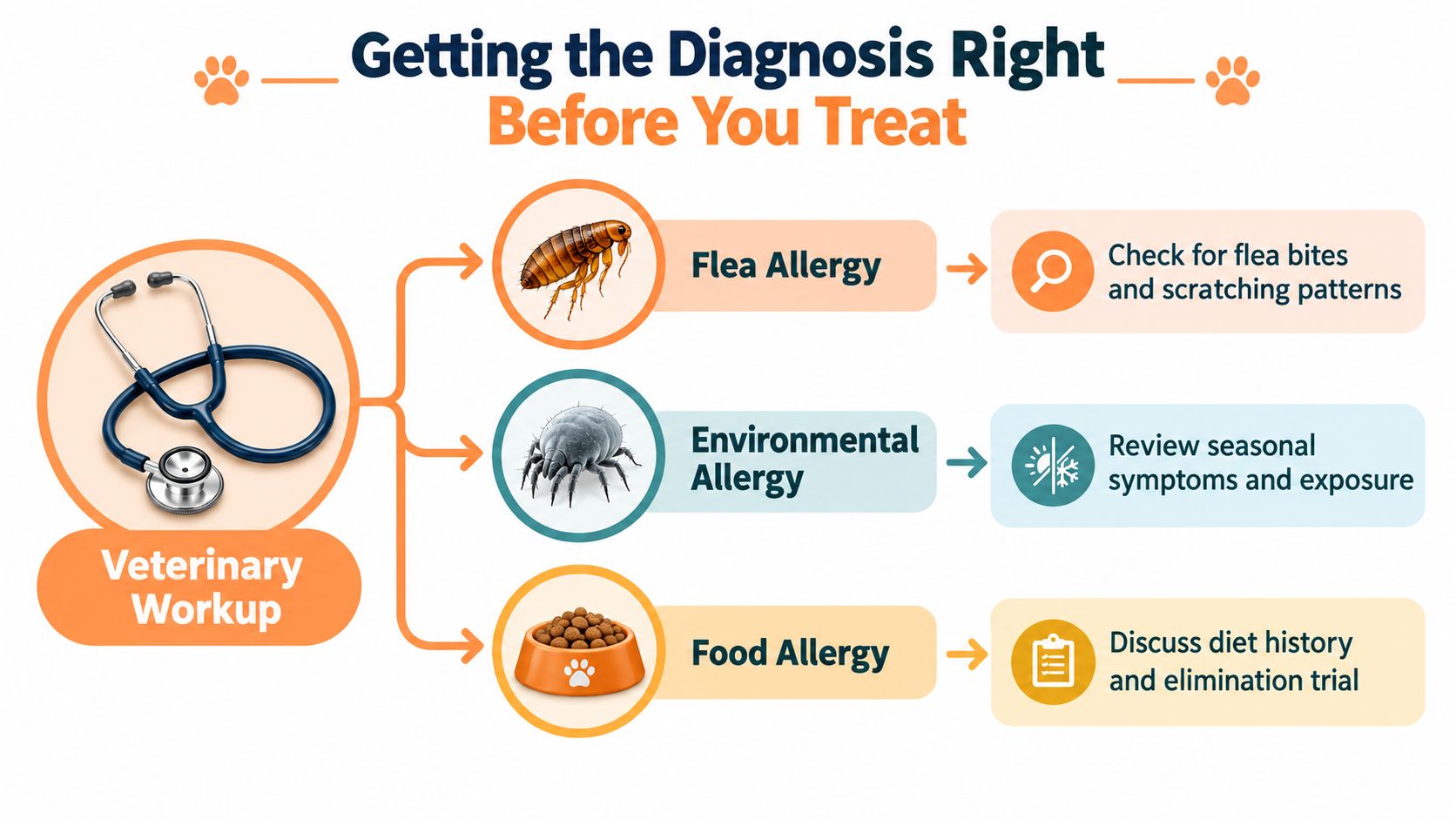
Start with a veterinary workup. The veterinarian can check for parasites, infection, ear disease, and signs that help distinguish food allergy from environmental atopy. If food allergy is suspected, a strict elimination diet and a planned food challenge are more useful than switching foods at random.
Next, reduce the exposures you can control. That means reliable flea prevention, a cleaner sleeping space for people who react to dog allergens, and practical cleaning and grooming habits. Choose bathing frequency and products based on your dog's age and skin condition, not on the assumption that more washing is always better.
Then decide whether supportive care is enough or whether medical treatment is needed. Supplements and topical products belong in the support layer, not in place of diagnosis or treatment. Atopic disease can require ongoing veterinary management, so a plan should be reviewed when symptoms persist, return, or change.
The practical takeaway is simple: stack small, appropriate steps instead of searching for one cure-all. Each layer addresses a different part of the problem, and the sequence helps you avoid spending months on products that can't solve the actual cause.
Getting the Diagnosis Right Before You Treat
When a dog itches, it's tempting to assume the cause is obvious. It often isn't. The 2023 AAHA guidelines for allergic skin disease recommend assessing flea allergy, food allergy, and atopic dermatitis as distinct contributors, while also checking for secondary bacterial or yeast infections and ear disease. A physical examination alone can't reliably distinguish food allergy from atopy.
Use the appointment to get a working diagnosis and a plan for testing it. Ask whether the vet has ruled out fleas and infection, whether the ears need attention, and what signs would justify a diet trial or referral to a veterinary dermatologist. If your dog scratches despite no visible fleas, this guide to possible causes of scratching without fleas can help you prepare useful observations for that conversation.
Test the likely causes, not every product
For suspected food allergy, AAHA recommends a strict elimination diet lasting 4–12 weeks, followed by a food challenge to see whether symptoms return. Treats, table scraps, and flavored medications can undermine the trial, so ask your vet how to keep the diet consistent. A challenge matters because improvement on a new diet alone doesn't confirm the diagnosis.
For flea allergy, year-round prevention is recommended for every in-contact animal. In severe infestations, environmental treatment may also be needed. If the dog has a secondary infection, treating the allergy without addressing the infection can leave itching and discomfort unresolved.
Allergy testing has a specific role. Serum or intradermal testing doesn't diagnose atopy by itself; it's most useful when a veterinarian is planning allergen-specific immunotherapy. This distinction can save owners from treating a test result as an explanation before the clinical workup supports it.
Bathing frequency also needs a diagnosis-led approach. Washing reduced recoverable Can f 1, the principal dog allergen measured in a 1999 study, by 84% in hair samples and 86% in dander samples, with a modest reduction in airborne Can f 1; levels on the coat began to return, and the study concluded that washing at least twice weekly was needed to sustain the reduction (Journal of Allergy and Clinical Immunology study). That supports bathing as exposure control, but not as a substitute for identifying why the dog is itchy.
The Bathing Question Most Advice Gets Wrong
A bath can lower allergen on a dog's coat, but washing more often is not automatically better. Set the schedule around the goal: household exposure control, a veterinarian-directed skin-care plan, or routine grooming. Skin tolerance matters as much as frequency.
The 1999 study cited earlier also measured shampoo washing directly. Can f 1 fell from an average of 21.8 ng/mL before washing to 5.8 ng/mL afterward, and low levels lasted for three days. That makes bathing a repeatable exposure-control measure, not a one-time fix. A veterinarian should help set the schedule when frequent washing could aggravate dry or sensitive skin.
Choose frequency by purpose and skin condition
If your veterinarian prescribed baths for a skin condition, follow that schedule and use a mild or emollient shampoo suited to your dog. A 2025 veterinary dermatology paper advises limiting baths for puppies and young dogs, ideally to less than weekly unless cleanliness or disease calls for more frequent washing. It also recommends minimally irritating cleansers and thorough rinsing (veterinary dermatology guidance). If bathing leaves the skin dry or irritated, ask your vet to review the cleanser, frequency, and diagnosis instead of washing more often.
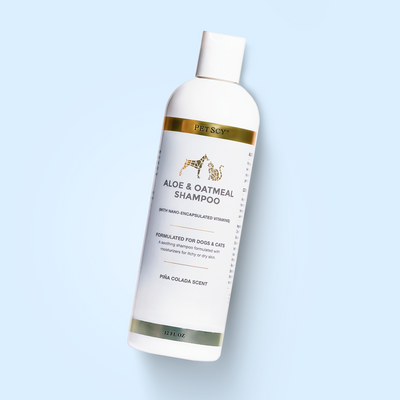
For routine grooming, brush before wetting the coat, then rinse thoroughly so shampoo residue does not remain. Dry the paws and skin folds, where moisture can collect. A hydrating shampoo such as Aloe & Oatmeal Shampoo may work for some dogs, but stop using it if your dog's skin reacts.
When someone at home reacts to dog allergens, a more frequent schedule may be appropriate. The earlier-cited study found that washing at least twice weekly was needed to sustain reduced coat allergen. Treat that as an exposure-control option to discuss with your veterinarian, not a universal rule for every dog.
Between baths, wipe paws and coat after outdoor exposure to remove pollen, dust, or debris. Ask your veterinarian whether antiseptic wipes for dogs suit localized care, especially if you notice redness, odor, or recurring irritation.
If you are demonstrating a calm, gentle bath routine, this video offers a visual example:
Controlling the Home Environment Without Losing Your Weekend
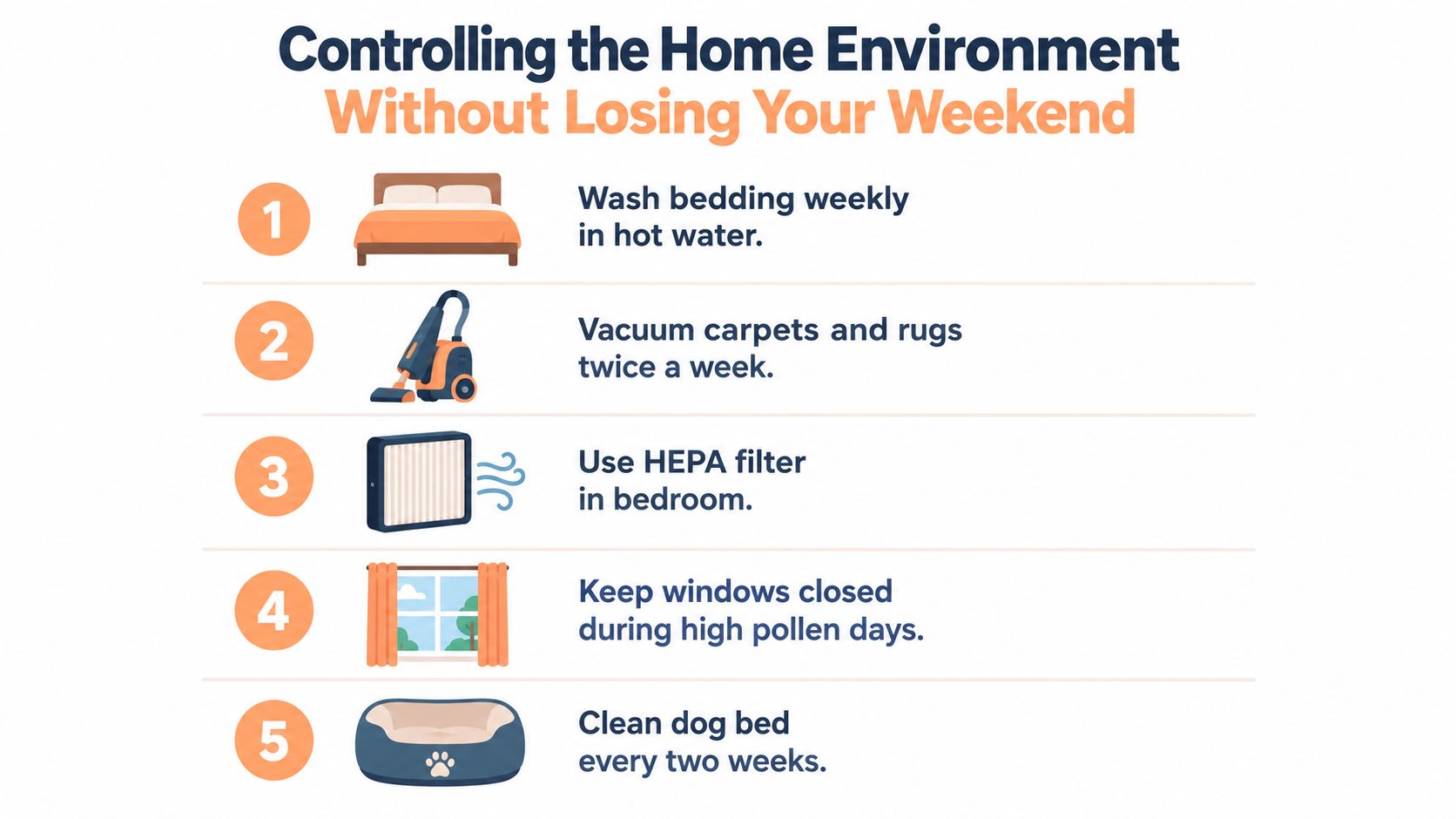
You don't need to turn the house into a cleaning project that never ends. Pick the places where allergens collect and where exposure matters most. If a person in the home reacts to dog allergens, make the bedroom the first priority: keep the dog out, use a HEPA air cleaner, and wash bedding regularly. This creates a lower-exposure room, not an allergen-free home.
Spend effort where allergens gather
HEPA-filtered vacuuming and damp cleaning help manage dust and dander on surfaces. Carpets, curtains, bedding, and upholstered furniture can hold allergens, so reduce those soft furnishings where practical and keep the remaining ones clean. If you're choosing an air cleaner, this guide to air purifiers for pet dander offers a starting point for comparing options.
No single change removes all dog allergens. A review of home exposure-control measures recommends combining bedroom exclusion, HEPA filtration, cleaning, and regular dog washing, while noting that allergens accumulate in fabrics and that bathing and cleaning can be difficult to sustain (review of environmental exposure controls). A practical goal is to lower exposure consistently, not to promise a completely allergen-free space.
A practical order of work is:
- Start in the bedroom: Keep the dog out and run a HEPA air cleaner in the room.
- Clean soft surfaces: Vacuum carpets and rugs with a HEPA-filtered vacuum, and wash bedding and pet bedding regularly.
- Use damp cleaning: Wipe hard surfaces instead of dry dusting, which can redistribute debris.
- Limit pollen entry: Keep windows closed on high-pollen days and wipe paws or coat after outdoor time.
- Make changes you can keep: Prioritize the bedroom and the surfaces your dog uses most rather than attempting a whole-home overhaul.
Don't rely on the label “hypoallergenic” as your environmental plan. The review notes that evidence doesn't support hypoallergenic dog breeds as a dependable way to avoid allergen exposure. A consistent set of manageable changes beats an ambitious cleaning routine that collapses.
Grooming, Topicals, and Supplements as Daily Support
Once fleas and infections have been assessed, supportive care can make the daily routine more comfortable. Keep the goal modest: protect the skin barrier, remove debris, and soothe limited irritation where appropriate. If the dog has persistent redness, open skin, odor, or ear problems, ask the veterinarian to reassess rather than adding another product.
| Situation | Daily Support Moves | Role |
|---|---|---|
| Paw licking after outdoor time | Wipe paws with a damp cloth, dry between the toes, and record when licking occurs | Removes surface debris and helps reveal exposure patterns |
| Dry or mildly irritated skin | Use a gentle, veterinarian-appropriate shampoo or topical moisturizer | Supports comfort and skin care, but doesn't diagnose the cause |
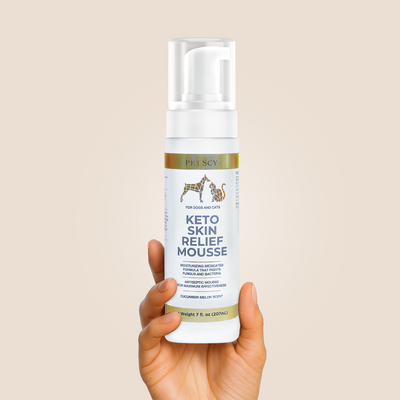
| Itchy, localized skin or a hot spot | Ask the vet whether a targeted mousse or wipe is suitable | Local support only; worsening or recurrent lesions need veterinary review |
| Ongoing seasonal discomfort | Discuss omega-3 fish oil or a skin-support supplement with your vet | May support skin and coat health as an adjunct |
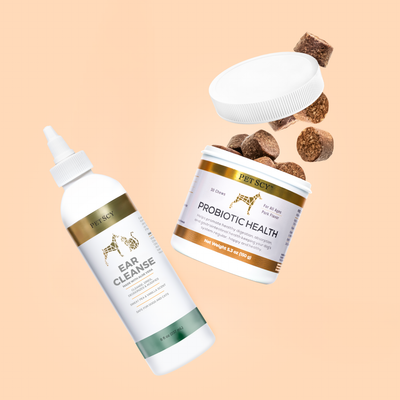
| Ear irritation or odor | Arrange an ear examination before relying on home products | Ear disease can require diagnosis-specific treatment |
Keep the routine simple
A gentle bath can remove surface material, while a topical product may be easier for a localized area between baths. Don't layer several new products at once. If the skin worsens after a new cleanser, wipe, or mousse, stop and contact your vet for advice.
Omega-3s, including EPA and DHA from fish oil, are commonly used as supportive nutrition for skin and coat health. They don't eliminate environmental triggers or treat an active infection. If food allergy is being investigated, don't add unapproved treats or supplements during the diet trial; ask the veterinarian whether the product fits the protocol. For more on choosing fish oil for an itchy dog, see this guide to fish oil for dogs with itchy skin.
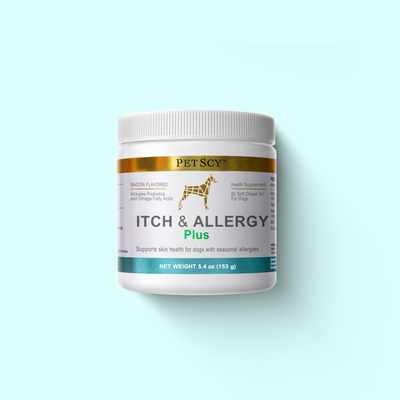
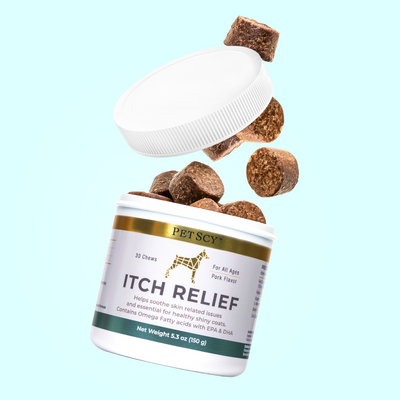
Probiotics and skin-support chews may suit some dogs as part of an ongoing care plan, but they shouldn't delay flea control, infection treatment, or allergy diagnosis. PetScy's Itch & Allergy Plus Chews combine probiotics and skin-supporting ingredients, while Fish Oil provides omega-3 EPA and DHA; both are supportive options, not substitutes for veterinary care.
Practical rule: Add one supportive product at a time, follow the label and your veterinarian's advice, and track whether the dog's comfort changes over the following weeks.
Medical Options That Actually Change the Course
Home care helps manage exposure and support the skin, but some dogs need treatment directed at the underlying condition. The medical plan should match the diagnosis, not just the visible itching. A veterinarian may treat secondary bacterial or yeast infections, control itch during a flare, or investigate food allergy and environmental atopy.

Diet trials need strict follow-through
When food allergy is suspected, the elimination diet is a diagnostic process, not a casual food switch. Follow the veterinarian's chosen diet without treats, table scraps, or unapproved flavored products, then complete the planned food challenge. If symptoms return after reintroducing a food, the challenge helps confirm whether that food is a trigger. If they don't, the vet can reconsider the diagnosis and next steps.
Immunotherapy is a long-term option
For confirmed environmental atopy, ask whether allergen-specific immunotherapy (ASIT) is appropriate. A veterinary dermatologist selects relevant allergens using the dog's history, geography, and testing, then builds a maintenance regimen through injections or a sublingual option. It isn't fast relief. Veterinary guidance reports roughly 60–80% clinical success in atopic dogs, while Merck cites approximately 70% effectiveness; improvement may not appear for six months, and it can take up to a year to judge efficacy (Merck Veterinary Manual on canine atopic dermatitis). Success generally means better symptom control, fewer relapses, or reduced need for rescue medication, not a cure.
Antipruritic medication can help control itching while the longer-term plan takes effect. Antibiotics or antifungal treatment may be needed when the veterinarian identifies a secondary infection. Drug choice depends on the dog's diagnosis and health, so don't copy another dog's prescription or change a medication without veterinary guidance.
For atopic dogs, lifelong management with periodic reassessment is the goal. If the current plan isn't controlling symptoms, revisit the diagnosis and treatment rather than escalating supplements or bathing on your own.
Monitoring Progress and Knowing When to Call the Vet
A plan only works if you can tell what changed. Keep a simple log of scratching, paw licking, ear rubbing, sleep, and coat condition. Note bath days, diet changes, new products, and prescribed treatments so you can give your veterinarian a clear timeline.
Use this quick checklist:
- Track the pattern: Note which areas itch and whether signs follow outdoor exposure, a product change, or a diet change.
- Watch the skin and ears: Record new redness, odor, discharge, hot spots, hair loss, or open skin.
- Call the vet promptly: Arrange an appointment for recurring ear problems, worsening itch, painful or broken skin, or signs that don't improve with the agreed plan.
- Don't wait through a severe flare: Sudden worsening, significant discomfort, or restlessness that disrupts sleep deserves veterinary advice.
If symptoms are mild and the dog is otherwise comfortable, tighten up the routine and record what happens, but don't use that as a reason to postpone care when warning signs appear. Durable relief comes from a correct diagnosis, realistic home changes, skin care your dog tolerates, and medical treatment when needed.
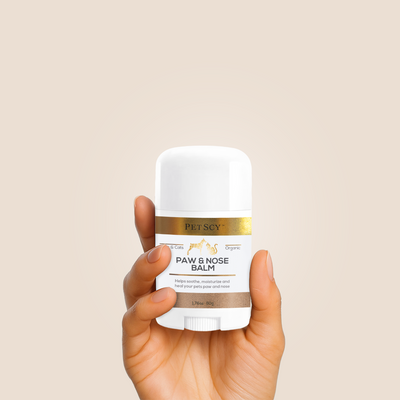
PetScy offers veterinarian-formulated supplements and topical care, including Itch & Allergy Plus Chews, Fish Oil, and skin-care products that can support a broader allergy plan. Visit PetScy to explore the options, and discuss any new supplement or topical with your veterinarian before adding it to your dog's routine.