










How Often Should I Clean My Dogs Ears
If you're wondering, “How often should I clean my dog's ears?”, the answer probably isn't “every week.” A fixed schedule sounds tidy, but it can irritate a healthy ear and create the problem you're trying to prevent. Most dogs don't need routine cleaning unless their ears are dirty, waxy, exposed to moisture, or prone to recurring disease, according to PDSA's veterinary guidance on cleaning dog ears.
The safer approach is to learn your dog's normal ear environment, then clean only when the condition calls for it. Clean, dry ears need very little interference. Floppy, allergy-prone, hairy, or frequently wet ears may need a more deliberate maintenance plan, while painful or inflamed ears need veterinary assessment rather than increasingly aggressive home cleaning.
Table of Contents
- Why Fixed Ear Cleaning Schedules Fail
- Matching Frequency to Your Dog's Risk Profile
- The Safe Technique for Flushing and Wiping
- Reading the Signs of Trouble Versus Normal Wax
- Choosing the Right Solutions and Avoiding Harmful Hacks
- Building a Sustainable Ear Care Routine
Why Fixed Ear Cleaning Schedules Fail
A weekly ear-cleaning chore may seem as routine as brushing teeth or clipping nails. The comparison fails because a healthy ear canal maintains its own protective environment. Cerumen, or earwax, traps debris and supports the canal's natural defenses. Repeated flushing, rubbing, or leaving moisture behind can disrupt that balance.
That disruption can create a self-perpetuating problem. An owner spots a small amount of normal wax, scrubs harder, sees irritation, and concludes that the ear needs cleaning again. The canal becomes more sensitive, the dog scratches or shakes its head, and damaged skin is more susceptible to inflammation.
Practical rule: A healthy ear should look comfortable, dry, and free of concerning debris or odor. Recent scrubbing is not the measure of good care.
Veterinary teaching material recommends adjusting flushing to the dog's tolerance, otoscopic findings, and cytology. It also advises flushing no more than twice weekly, as summarized in this veterinary ear-cleaning guidance. That limit is not a routine goal for healthy ears. It marks the frequency of treatment-level cleaning, which should follow a defined plan rather than an automatic calendar.
Assess the ear's condition today. Visible dirt, accumulating wax, moisture after swimming, or a history of recurrent inflammation may justify a veterinarian-approved cleaning plan. A normal ear without debris usually needs no intervention. During treatment for an infection, follow the veterinarian's directions. Cleaning may be required daily at the start, while later maintenance may be advised every 1–2 weeks, according to Cornell's canine ear-cleaning guidance.
Cleaning harder does not calm an irritated ear. It usually feeds the irritation.
Matching Frequency to Your Dog's Risk Profile
Ear anatomy and daily exposure should determine cleaning frequency. Upright ears with good airflow and little wax may stay comfortable with no routine cleaning. Long, dangling flaps hold warmth and moisture near the canal, while dense hair can make inspection and drying harder.
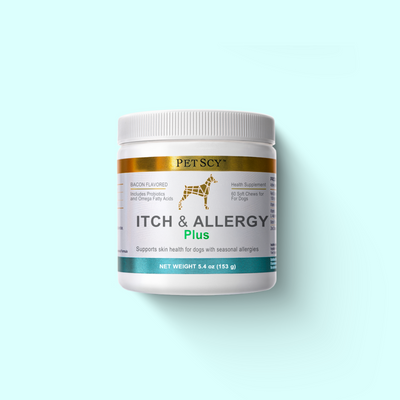
Swimming creates another risk. Water left in the canal changes its local environment, so frequent swimmers may need cleaning after bathing or swimming when their ears are healthy and the product is veterinarian-approved. Allergies and atopic dermatitis also matter. Ongoing skin inflammation can increase itch, wax, and recurrent otitis. For owners managing seasonal itch elsewhere, this guide to seasonal allergy relief for dogs may help explain the broader problem. Persistent ear symptoms still require veterinary attention.
Ear Cleaning Frequency by Risk Category
| Dog Profile | Recommended Frequency | Primary Triggers |
|---|---|---|
| Healthy dog with upright, low-wax ears | Only when dirt or debris appears | Visible buildup, unusual moisture |
| Healthy dog with floppy or hairy ears | Individualized maintenance, sometimes weekly | Wax, poor airflow, dampness |
| Dog that swims often | After bathing or swimming when advised | Trapped water and moisture |
| Dog with allergies or recurrent ear infections | A veterinary-directed plan, sometimes weekly maintenance | Itch, inflammation, wax, odor |
| Dog with an active ear infection | Follow the treatment schedule from the veterinarian, potentially daily at the start | Discharge, inflammation, medication needs |
UK charity guidance ranges from cleaning every 1–2 months to weekly cleaning for dogs with dangling ears or frequent infections. Treat the table as a starting point; your veterinarian's examination is the prescription. Copying another dog's routine can irritate healthy tissue or delay treatment for an infected ear.
Use the ear itself to judge whether the plan is working. After cleaning, it should remain comfortable, dry, and free from increasing redness, scratching, odor, or discharge. If those signs appear or worsen, stop following the calendar and ask your veterinarian to reassess the ears. A dog with an active infection may need a treatment schedule that differs sharply from long-term maintenance, so adjust frequency only with veterinary direction.
The Safe Technique for Flushing and Wiping
Cleaning is safest when you're lifting debris from the visible area rather than probing into the canal. You'll need a veterinarian-approved ear cleanser, cotton balls or gauze pads, a towel, and a calm setting. Don't attempt a deep clean if your dog cries, pulls away sharply, or reacts as though the ear is painful.
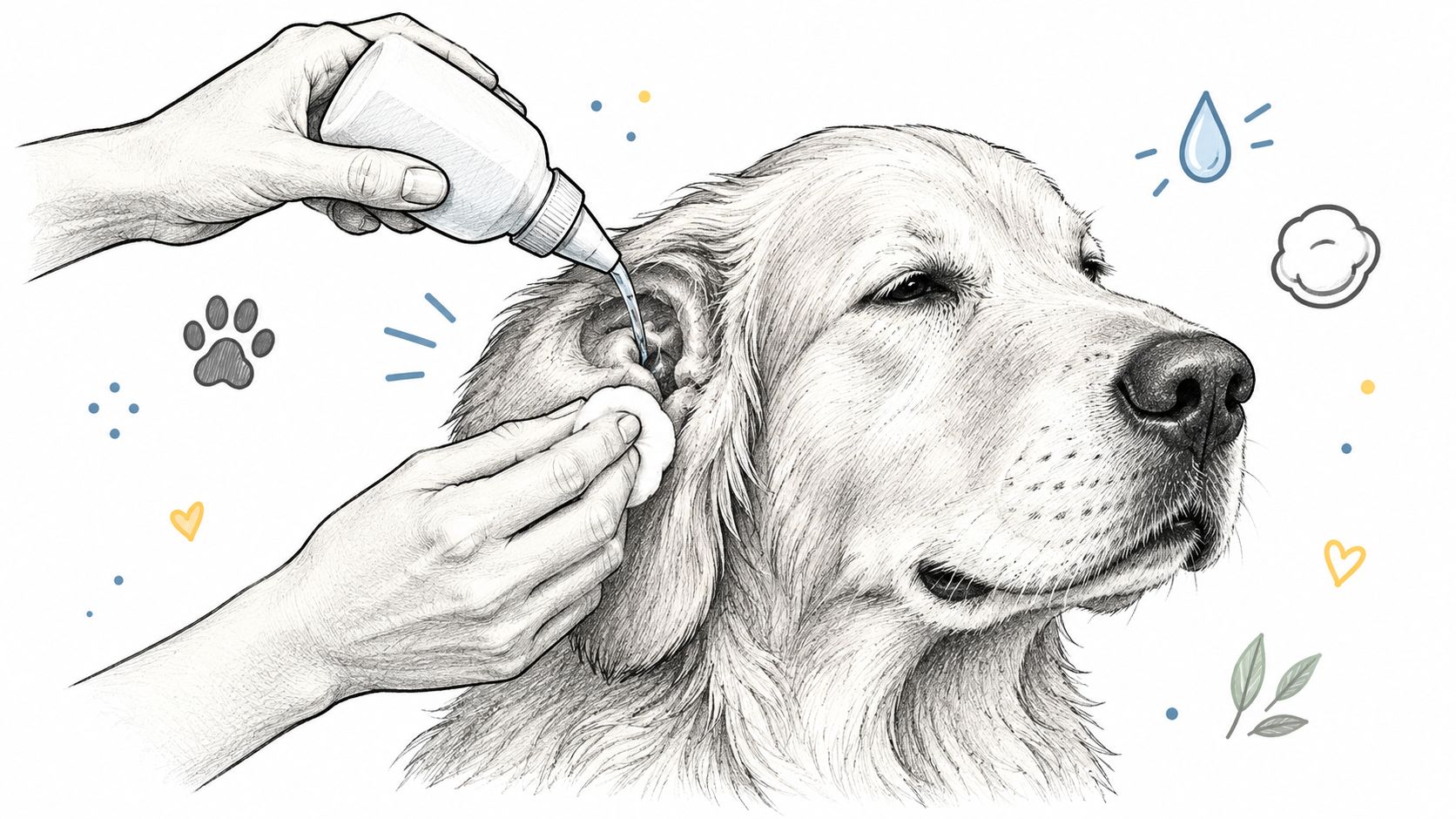
A gentle home-cleaning sequence
- Inspect first. Lift the ear flap and check for marked redness, swelling, discharge, bleeding, or a strong odor. Those findings can mean cleaning should stop before it starts.
- Apply the cleanser as directed. Place the solution into the ear opening without forcing the nozzle deep into the canal. Keep the bottle tip clean and avoid touching it to skin or debris.
- Massage the base. Close the ear flap gently over the opening and massage the base of the ear. You should feel the soft movement of fluid in the canal. This helps the solution reach the horizontal portion without using an instrument to scrape it.
- Let your dog shake. Shaking helps bring loosened material toward the opening. Protect nearby furniture with a towel, and don't try to restrain the head through this part of the process.
- Wipe what you can see. Use a cotton ball or gauze pad to remove fluid and debris from the ear flap, folds, and canal entrance. Replace the pad as it becomes dirty.
A cotton swab doesn't belong inside the canal. It can push wax farther inward or injure delicate tissue, and you can't reliably judge how close you are to the eardrum. For a product-specific overview of wiping options, see this guide to antiseptic wipes for dogs, but don't use surface wipes as a substitute for veterinary treatment of a painful or infected canal.
The massage should be firm enough to move fluid, never forceful enough to cause discomfort. Stop if your dog shows pain, and don't keep flushing in an attempt to remove material you can't see.
For a visual demonstration of the handling sequence, watch the video below.
Afterward, keep the outer ear dry and observe your dog. Temporary head shaking can happen after fluid is applied, but ongoing discomfort, worsening redness, or renewed discharge isn't a reason to repeat the cleaning. It's a reason to get the ear examined.
Reading the Signs of Trouble Versus Normal Wax
Normal wax isn't a failure of hygiene. A small amount of pale yellow to light brown, slightly sticky material can be part of a healthy ear's protective coating. The surrounding skin should look comfortable, without pronounced redness, swelling, or tenderness, and your dog shouldn't be persistently scratching or shaking its head.
Problem discharge tends to come with a pattern rather than a single color. Dark brown, greasy material with a musty odor can fit a yeast-associated picture, while pus-like discharge, severe redness, and a sweet or foul smell are more concerning for bacterial involvement or a mixed infection. These visual clues can guide concern, but they can't identify the cause reliably at home.
Stop cleaning when the ear is telling you to stop
Pay attention to behavior as much as appearance. A dog that flinches when the ear is touched, cries during cleaning, repeatedly rubs the side of its head, or shakes its head often may be experiencing pain or active inflammation. Crusting, blood, marked swelling, or a rapidly worsening smell also moves the situation beyond ordinary maintenance.
A dirty-looking ear and an infected ear may need completely different responses. More cleanser can't replace an examination.
Veterinarians use an otoscope to assess the canal and eardrum, then may examine a sample of the debris with cytology. That matters because yeast, bacteria, parasites, foreign material, and inflammation can produce overlapping signs while requiring different treatment. Cleaning an infected ear without targeted medication may remove surface debris temporarily, but it doesn't address the underlying cause and can prolong handling of an already painful canal.
A dog with a head tilt, balance problems, circling, or unusual eye movements needs prompt veterinary attention. Those signs may indicate that disease has extended beyond a simple outer-ear problem.
If your dog has recurrent episodes, don't treat each flare as a standalone cleaning task. Ask the veterinarian whether allergies, ear anatomy, moisture exposure, or another underlying condition is keeping the inflammation active. In dogs with atopic dermatitis, long-term maintenance may be appropriate, but the plan should be based on examination findings rather than guesswork.
Choosing the Right Solutions and Avoiding Harmful Hacks
Household ingredients aren't automatically gentle because they're familiar. Hydrogen peroxide, rubbing alcohol, vinegar, and witch hazel can sting or irritate inflamed tissue, dry the canal, and worsen discomfort. Peroxide can also leave moisture behind after its bubbling stops, which undermines the goal of keeping the ear environment stable.
Essential oils deserve the same caution. A dog's ear canal is not a place to experiment with concentrated botanical products, and “natural” doesn't mean safe for topical use. Owners looking into broader guidance on household ingredients and pet safety can consult protecting pets with ArtNaturals, but an ear cleanser should still be selected with veterinary input.
What belongs in the cabinet
Choose a veterinarian-formulated, ear-specific cleanser rather than a kitchen remedy. The right product depends on whether the goal is routine debris removal, drying after water exposure, soothing irritated skin, or supporting a treatment plan. A cleanser that suits a healthy ear may not be appropriate when the eardrum is damaged or the canal is severely inflamed.
Avoid products that make strong promises without explaining their intended use. Read the label, follow the application directions, and ask the veterinary team whether the solution is suitable for your dog's current ear condition. This overview of dog ear-cleaner solutions can help you understand the role of a dedicated cleanser, but it shouldn't replace diagnosis.
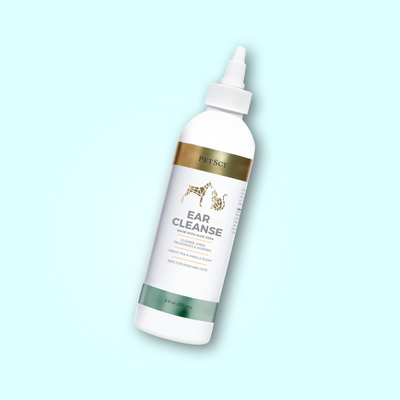
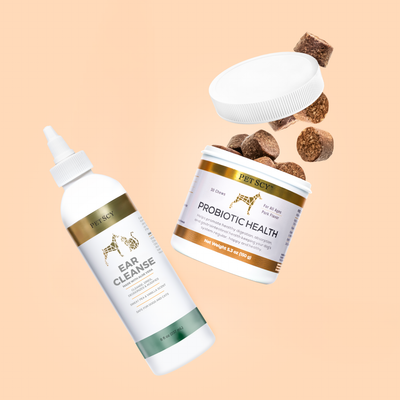
PetScy's Ear Cleanse is one veterinarian-formulated option designed for gentle ear cleansing, hygiene support, and removal of buildup. Its product guidance describes weekly use for routine maintenance and odor control, but that schedule still needs to fit the individual dog. A dog with clean, dry ears may not need it, regardless of the routine interval the label offers.
Never combine multiple ear products during an active problem unless your veterinarian has told you to do so. Residue, overlapping ingredients, and repeated handling can make it harder to determine what is helping or irritating the canal. Don't use leftover prescription drops from an earlier infection, either, because the current problem may have a different cause or an eardrum that hasn't been assessed.
The safest product is the one matched to the dog's condition, used with a light hand, and stopped when the ear needs professional evaluation.
Building a Sustainable Ear Care Routine
A sustainable routine starts with observation, not a calendar. Check your dog's ears during brushing, cuddling, or drying after a bath. A check does not automatically require cleaning. Overcleaning can irritate the canal and create the cycle of redness, sensitivity, and repeated handling you are trying to prevent.
Use the look, smell, and feel test
- Look: Healthy visible tissue is generally clean, dry, and free from marked redness, swelling, bleeding, or unusual discharge.
- Smell: A sudden strong, musty, sweet, or foul odor deserves attention, especially when it returns after cleaning.
- Feel: Gentle handling should not cause pain, flinching, or an attempt to pull away.
- Respond: Clean only when you see relevant debris or moisture, or when a veterinarian has prescribed a specific plan.
- Escalate: Arrange an examination for persistent odor, discharge, pain, repeated scratching, or head shaking.
A brief check builds a baseline for your dog. That baseline is more useful than copying another dog's routine because it shows what has changed in this individual ear.
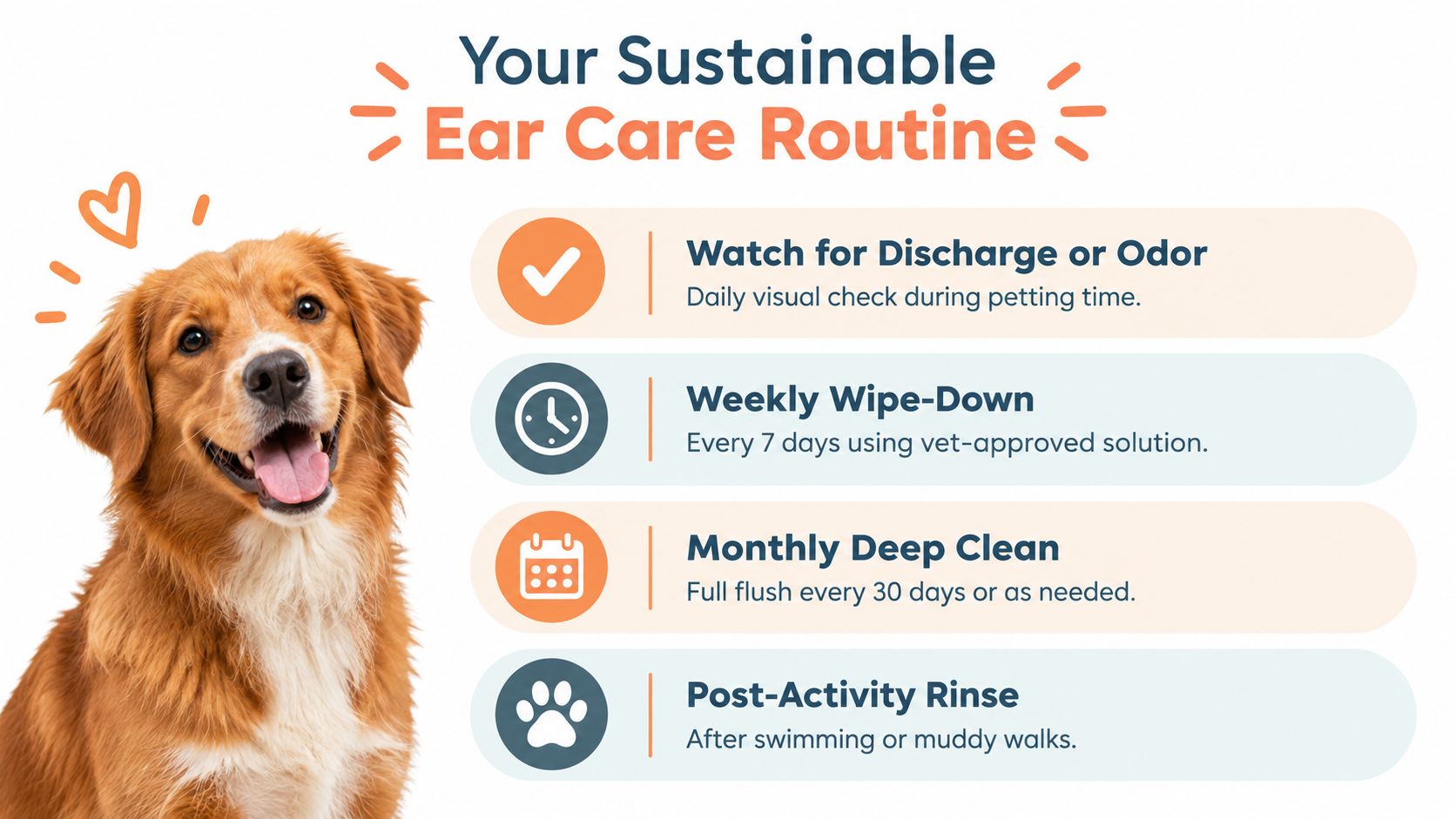
Dry the outer ear after swimming or bathing, and inspect more closely during allergy flares. Note what precedes buildup, such as moisture, itching, or a change in diet or environment. Dogs with recurring infections may need a veterinary maintenance plan. Dogs with normal, comfortable ears may need observation alone. Recheck the ears 48 hours after cleaning. If odor, redness, or discomfort returns sooner each time, that pattern matters more than a fixed interval.
The working rule is inspect first, clean with purpose, and stop before irritation becomes routine. This protects the ear's natural environment and gives you a clear point for veterinary care.
If your dog has itchy, waxy, or repeatedly smelly ears, visit PetScy to review its veterinarian-formulated Ear Cleanse and topical-care options. Follow product directions, and contact your veterinarian for pain, discharge, marked redness, or persistent symptoms.