









Why Do Dogs Fart Smell So Bad: Causes, Fixes & Tips
Hydrogen sulfide and other trace sulfur compounds create most of the odor in dog farts, not the total volume of gas. Colonic bacteria produce these compounds when they ferment undigested protein, and hydrogen sulfide can be detected at about 0.1 µg/m³, so a small amount can smell remarkably strong.
You're sitting with your dog in the living room when a rotten-egg odor suddenly appears. Your dog looks comfortable, the fart was brief, and yet the smell seems powerful enough to clear the room. That reaction is understandable, but the chemistry is more useful than the embarrassment. Smelly gas tells you more about what bacteria produced than how much gas your dog released.
Occasional flatulence can be ordinary, especially after a meal that doesn't suit your dog. But persistent odor, a sudden change, or gas paired with digestive symptoms deserves closer attention. The key is to identify whether undigested nutrients, particularly sulfur-rich protein byproducts, are feeding the odor-producing process.
Table of Contents
- Understanding Why Dog Farts Smell So Bad
- The Science Behind Canine Flatulence Odor
- Common Dietary Causes of Smelly Dog Gas
- Practical Solutions to Reduce Smelly Dog Gas
- When Smelly Gas Signals a Medical Problem
- Building a Long-Term Plan for Digestive Health
Understanding Why Dog Farts Smell So Bad
The smell comes from chemistry, not volume
A dog's intestines contain a microbial community that helps process food. When nutrients remain undigested by the time they reach the large intestine, bacteria ferment them. That fermentation produces gases, but the gases responsible for the worst smell are present in relatively small amounts.
Most intestinal gas is comparatively bland. Hydrogen sulfide, methanethiol, and dimethyl sulfide are volatile sulfur compounds associated with the characteristic rotten-egg or sulfurous odor. Hydrogen sulfide is especially potent because its odor detection threshold is only about 0.1 µg/m³, as described in canine nutrition research on volatile compounds in dog flatulence.
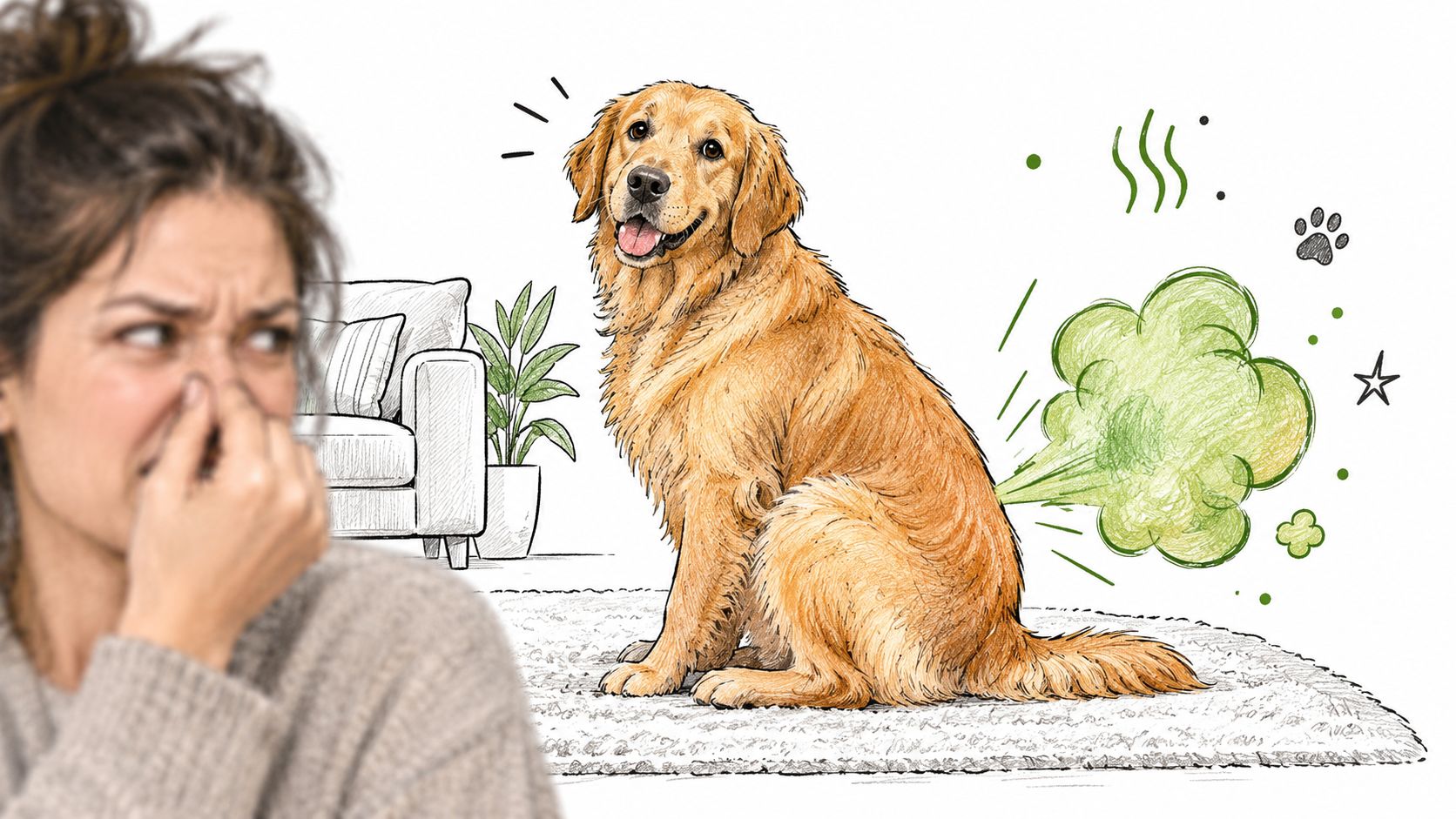
Think of the process as a kitchen with two outputs. The bulk output is mostly odorless gas. The smaller output is a concentrated chemical seasoning, and sulfur compounds act like an overpowering seasoning even when only a trace amount escapes.
Why one dog can clear the room
Protein digestion normally begins before food reaches the colon. If some protein or sulfur-containing substrate escapes digestion, colonic bacteria can break it down instead. Their byproducts include hydrogen sulfide, ammonia, indoles, and branched-chain fatty acids, each contributing to the overall odor profile.
That's why two dogs can eat similar-looking meals and produce very different results. Their activity levels, digestive efficiency, microbiome, eating habits, and individual response to ingredients may differ. In a questionnaire study of 110 pet dogs, owners reported flatulence in 47 dogs, about 42.7%, and the problem was reported more often in less active indoor dogs than in more frequently exercised dogs. The findings are reported in the canine flatulence questionnaire study.
Practical rule: Judge the problem by the odor, frequency, persistence, and accompanying symptoms, not by the size of the fart alone.
If you want a broader explanation of odor-producing digestion and general approaches to reducing unpleasant gas, these evidence-based gas odor fixes can provide useful digestive context. For a dog, however, any supplement or diet change should still be matched to the animal's health history and current food.
The Science Behind Canine Flatulence Odor
A fermentation zone in the large intestine
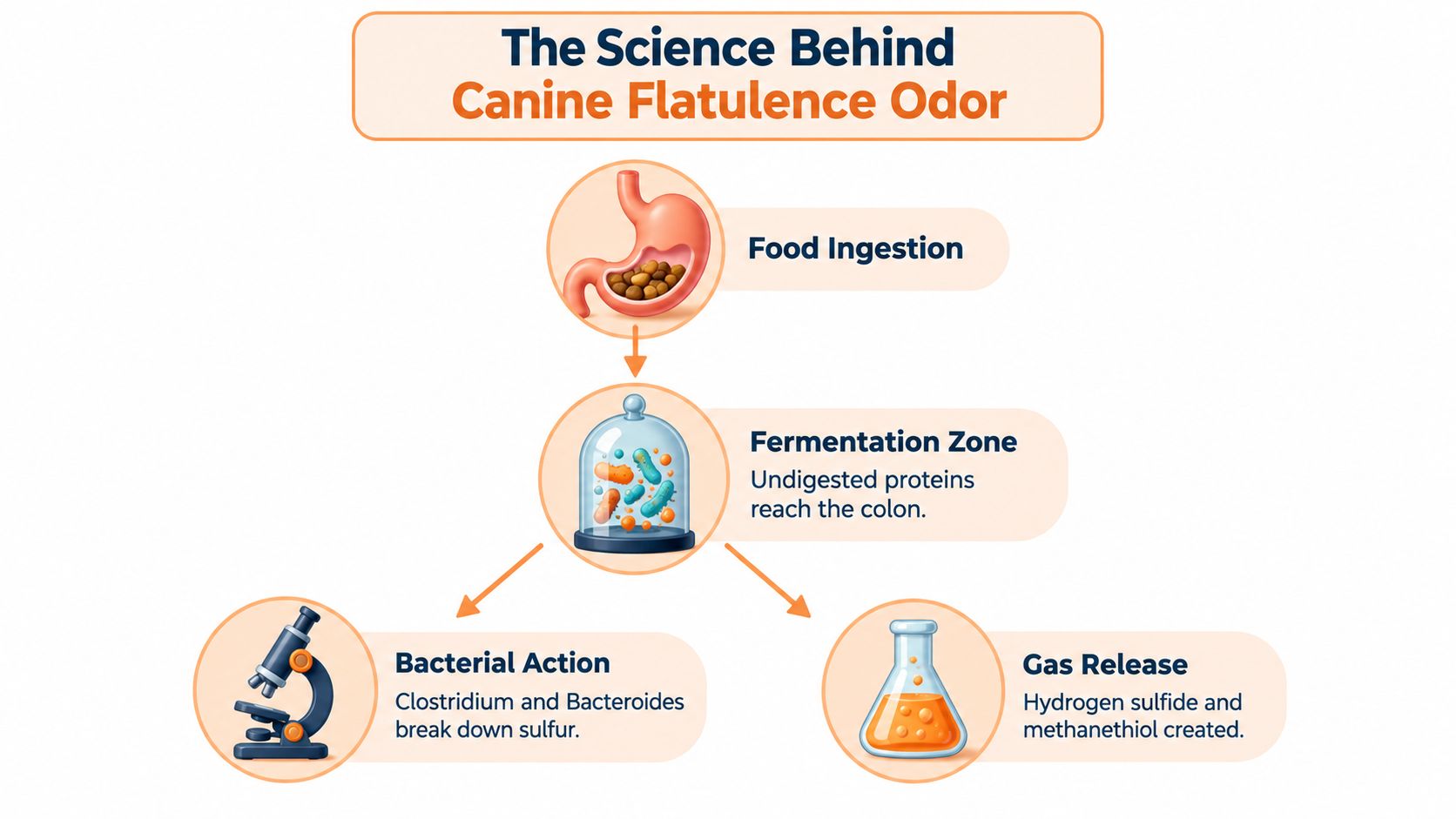
The large intestine works less like a storage container and more like a fermentation chamber. Bacteria receive the nutrients that escaped earlier digestion, then convert them into gases and metabolic byproducts. When the remaining material contains sulfur-bearing amino acids or other sulfur-rich substrates, the bacterial reaction can produce hydrogen sulfide and related compounds.
This explains why gas volume and gas odor are separate problems. Hydrogen, carbon dioxide, methane, and nitrogen account for most of the volume of canine flatus, while sulfur compounds account for much of the offensive smell. A dog may release only a small amount of gas, yet the sulfur component can dominate your perception.
Researchers studying dog fecal odor specifically measured ammonia and hydrogen sulfide because they're among the most prevalent odor components. In that experiment, adding fermentable fibers such as fructo-oligosaccharides, isomalto-oligosaccharides, or resistant starch didn't change hydrogen sulfide emissions. That result matters because it cautions against assuming that every fiber supplement will automatically solve sulfur odor. The dog fecal-odor study supports a more targeted view of the problem.
Why the odor changes from dog to dog
Your dog's intestinal bacteria aren't identical to another dog's, even when both animals eat the same food. Their microbial populations respond to the ingredients reaching the colon, and those ingredients can change with the protein source, digestibility, fiber blend, meal size, and feeding routine.
Flatulence also fluctuates over time. In an AVMA-linked experimental study, researchers described canine flatulence patterns as highly variable within individual dogs and between dogs. The mean coefficient of variation was especially pronounced for the flatulence index, showing that odor-producing gas isn't a fixed trait.
Diet can alter the chemical mixture itself, not merely the amount of gas. A 2023 canine study found higher fecal concentrations of ammonia, phenol, and indole under one dietary condition than another, demonstrating that protein source and grain inclusion can change compounds associated with unpleasant odor.
The sulfur pathway in plain language
A useful analogy is a recycling plant. Digestible nutrients are processed early and absorbed. Leftover protein reaches the colon, where bacteria recycle it into smaller molecules. If sulfur-containing material is available, hydrogen sulfide becomes one of the waste products.
That's the reason a dog's fart may smell like rotten eggs even when the release is quiet and brief. The nose detects a chemically potent trace, not a large cloud of gas.
Common Dietary Causes of Smelly Dog Gas
Dietary triggers vary, but certain categories deserve closer inspection. Legumes, dairy, high-fat foods, sulfur-rich proteins, and abrupt food changes can all shift fermentation in a direction that produces more noticeable gas or odor. Research and veterinary guidance also connect soy and other legume ingredients with increased flatulence and fecal odor compounds when oligosaccharide levels are high. The veterinary guide to stinky dog farts discusses these common dietary contributors.
The important distinction is that a category isn't automatically harmful for every dog. Grains, for example, shouldn't be treated as a universal cause. A particular recipe may be poorly tolerated because of its protein source, fat level, fiber blend, or a sudden transition, while another recipe containing grains may suit the same dog well.
Foods Most Likely to Cause Smelly Dog Gas
| Food Category | Gas Impact | Sulfur Content | Recommendation |
|---|---|---|---|
| Legumes, soy, peas, and similar ingredients | Can increase fermentation, particularly when oligosaccharides are high | May contribute indirectly by leaving more fermentable material for bacteria | Review the full ingredient list and change only with a planned transition |
| Dairy products | Can cause digestive upset in dogs that don't tolerate them well | Not necessarily the main sulfur source, but poor digestion can increase odor | Avoid if gas follows dairy treats or table foods |
| High-fat foods | May worsen digestive upset and make gas more noticeable | The primary issue is digestive disruption rather than sulfur alone | Skip greasy leftovers and rich treats |
| Sulfur-rich animal proteins | Can provide sulfur-containing amino acids for bacterial breakdown | More directly relevant to hydrogen sulfide production | Discuss an alternative protein with your veterinarian |
| Sudden diet changes | Can disturb the established fermentation pattern | May alter the balance of odor-producing byproducts | Transition gradually rather than changing food overnight |
| Fermentable fibers | May increase fermentation in some dogs | Fiber doesn't guarantee lower hydrogen sulfide emissions | Use a targeted plan instead of adding multiple fibers at once |
A simple example is a dog that eats the same complete food for months, then receives fatty leftovers, dairy, and a new treat in the same week. If gas appears, you won't know which ingredient caused it. Remove the extras first, keep meals consistent, and record changes before testing a new food.
The goal isn't to eliminate every fermentable ingredient. It's to reduce the specific leftovers that your dog's bacteria turn into an unpleasant odor.
Some pet owners also investigate digestive enzyme products, including Alta Health digestive enzyme capsules. Enzymes may be appropriate in selected situations, but they shouldn't replace a veterinary assessment when gas is persistent, severe, or accompanied by weight loss, diarrhea, vomiting, or appetite changes. For additional guidance on feeding dogs with digestive sensitivity, see this resource on dogs with sensitive stomachs.
Practical Solutions to Reduce Smelly Dog Gas
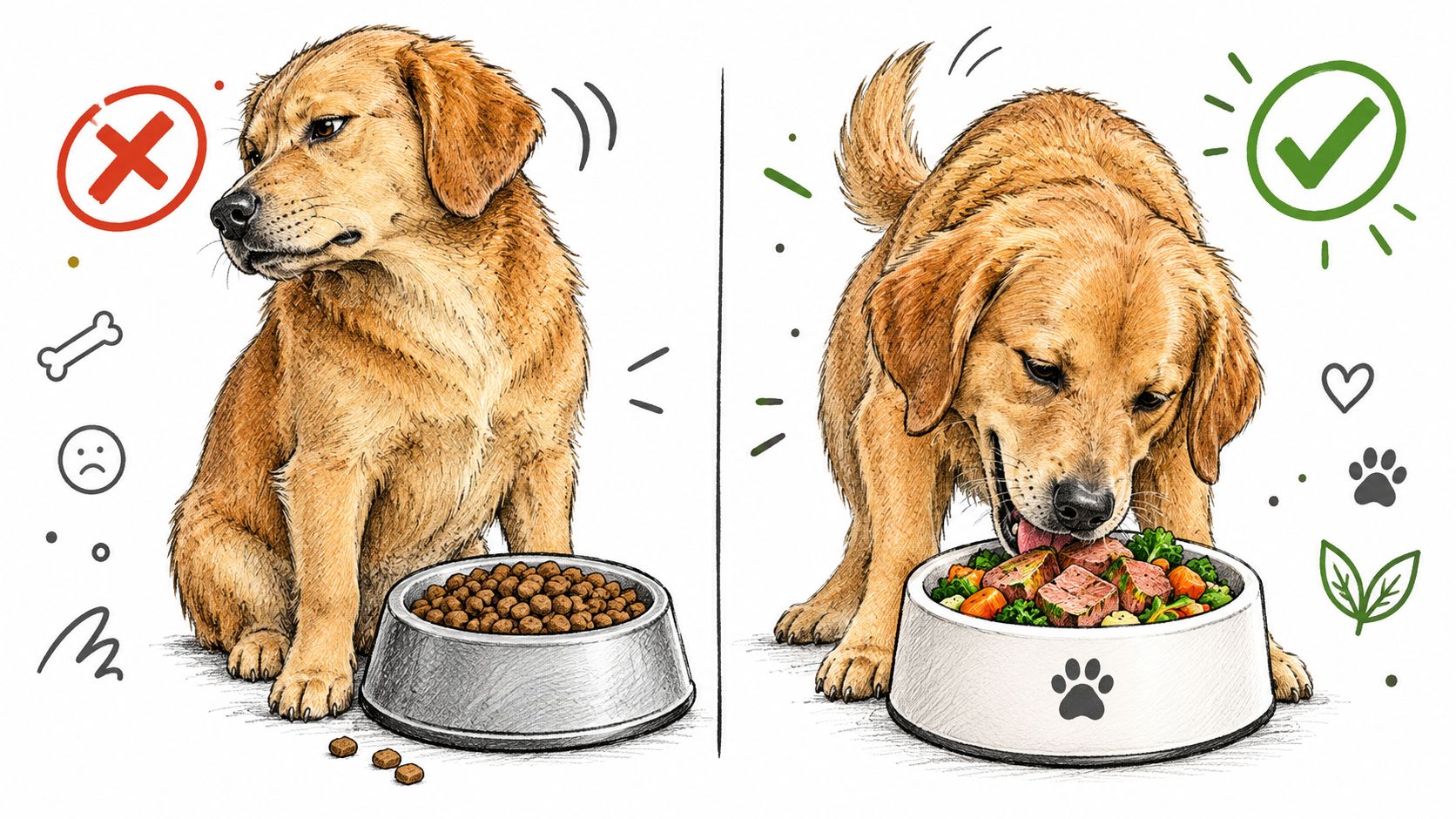
Start with the food bowl, but don't change everything at once. A controlled plan helps you determine whether the odor comes from a particular protein, legume ingredient, treat, fat level, or feeding pattern. It also prevents a series of abrupt diet changes from creating more digestive disruption.
Build a controlled food trial
- Write down the current diet. Include the main food, protein source, treats, chews, supplements, table scraps, and flavored medications. Hidden extras often make the pattern difficult to interpret.
- Remove obvious triggers. Stop fatty human foods, dairy treats, and unplanned snacks. Keep the meal routine stable so you can observe the effect of one change at a time.
- Review the ingredient panel. Look for several legume ingredients, soy, a protein your dog has reacted to before, or a recipe that appears unusually rich. Don't label an ingredient as harmful solely because it's a grain or fiber.
- Transition deliberately. If your veterinarian recommends a different complete diet, introduce it gradually according to their instructions. A sudden switch can create new gas and obscure whether the replacement food is suitable.
- Track odor separately from frequency. A dog may fart less often but still produce strong sulfur odor, or release more mostly odorless gas. Note stool quality, appetite, energy, and discomfort alongside the smell.
Consider targeted gut support
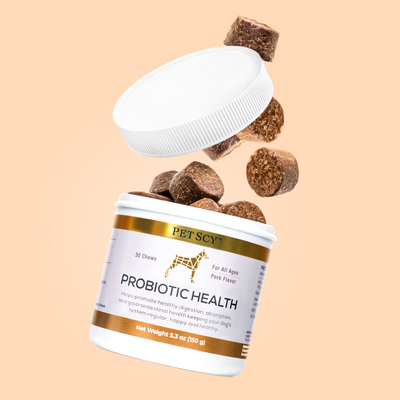
Probiotics can support digestive balance, but they're not interchangeable with one another, and they won't correct every cause of foul gas. Choose a veterinary-formulated product with clear directions, and ask your veterinarian whether it fits your dog's age, diet, medications, and health status. A supplement should complement a controlled food plan, not turn into another variable added at the same time.
For practical ideas on feeding routines and easing ordinary canine gas, review this guide to relieving gas in a dog. Slow eating, consistent portions, suitable exercise, and fewer rich extras may help some dogs, especially when swallowed air or irregular feeding contributes to the problem.
A short visual guide can also help you explain the process to family members who share responsibility for feeding.
If the odor continues despite a consistent diet, don't keep adding supplements indefinitely. Your veterinarian may need to evaluate digestion, stool quality, food sensitivity, pancreatic function, parasites, or intestinal inflammation before recommending a more specific intervention.
When Smelly Gas Signals a Medical Problem
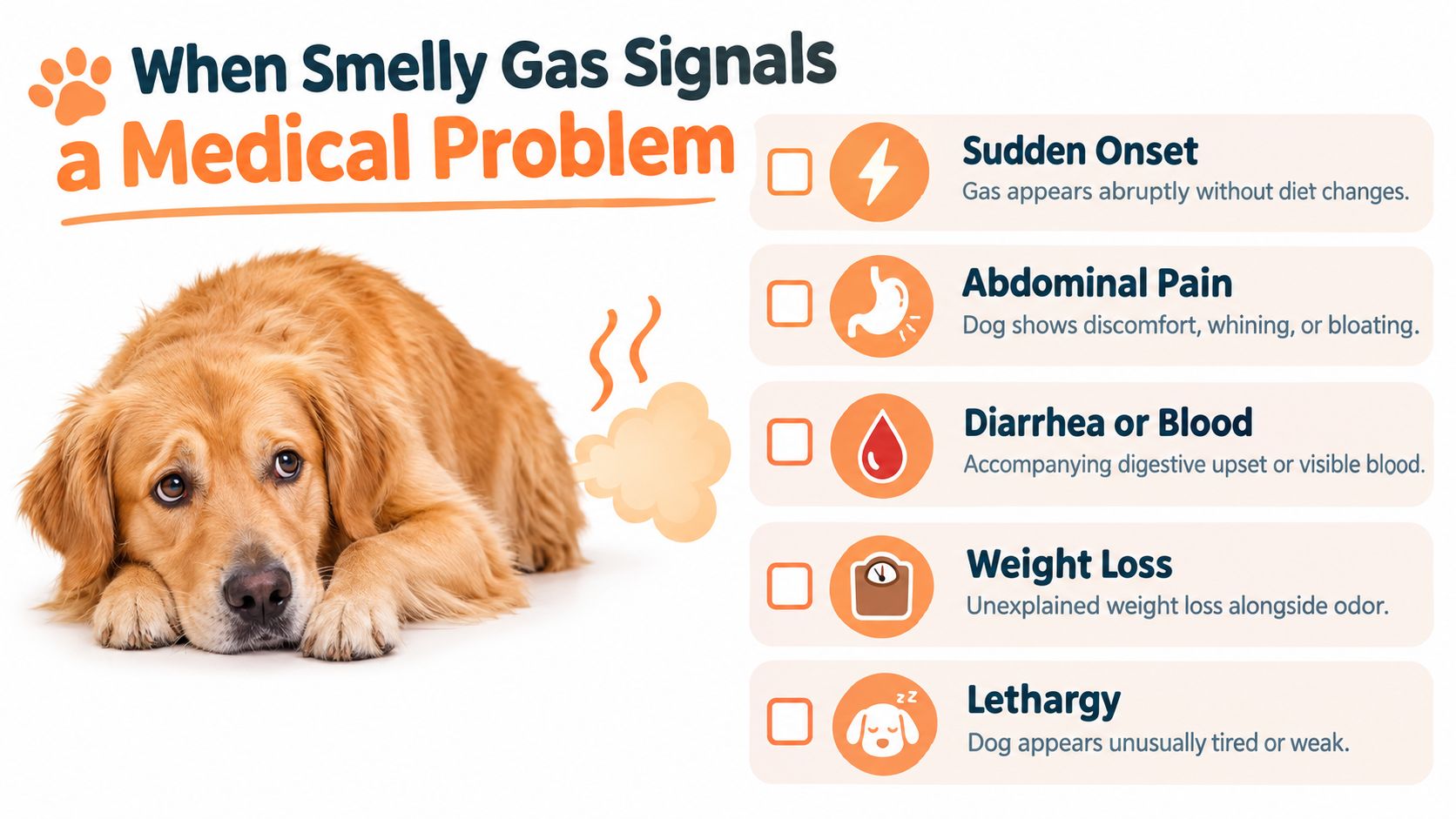
A fart that follows a new treat is different from chronic, unusually foul gas accompanied by other changes. The odor itself doesn't diagnose a condition. It becomes more concerning when it appears with poor digestion, pain, altered stool, reduced appetite, weakness, or unexplained weight loss.
Signs that warrant a veterinary call
Contact your veterinarian promptly if the gas is sudden, persistent, or paired with any of these signs:
- Abdominal discomfort: Your dog whines, arches the back, resists touch, appears bloated, or repeatedly changes position.
- Diarrhea or blood: Stool becomes persistently loose, unusually frequent, black, or visibly bloody.
- Vomiting or appetite loss: Your dog refuses food, vomits, or can't keep water down.
- Weight loss: Body condition declines without an intentional feeding change.
- Lethargy: Your dog seems unusually tired, weak, withdrawn, or less willing to move.
These signs can occur with food sensitivities, pancreatic enzyme deficiency, inflammatory bowel disease, intestinal parasites, bacterial imbalance, malabsorption, or other gastrointestinal disorders. High-fat foods can also be associated with pancreatic inflammation in susceptible dogs, so greasy leftovers are a poor choice when gas and digestive upset occur together. A veterinary overview of medical conditions that can cause dog gas explains why persistent symptoms need more than home experimentation.
Why testing matters
A dog with poor digestion may ferment more undigested food in the intestine, but the same outward symptom can have several causes. A veterinarian may need a detailed diet history, physical examination, stool testing, blood work, imaging, or a structured diet trial to distinguish a food reaction from a pancreatic or intestinal disorder.
Don't give human anti-gas medicines, leftover antibiotics, or concentrated supplements without veterinary guidance. They can mask important symptoms, interact with other treatments, or delay the diagnosis your dog needs.
Safety check: Smelly gas alone may be manageable. Smelly gas plus pain, vomiting, diarrhea, appetite loss, lethargy, or weight loss calls for professional advice.
Building a Long-Term Plan for Digestive Health
Long-term control comes from finding your dog's pattern, not chasing odor after every episode. Keep meals, treats, exercise, and supplements consistent enough that you can identify what changes the smell. A simple diary can record the food offered, stool appearance, appetite, energy, and whether the gas was frequent, sulfurous, or both.
Make the routine predictable
Feed a complete diet that your veterinarian considers appropriate for your dog. Limit unplanned table food, avoid rich leftovers, and introduce any new diet or treat in a controlled way. Regular activity may also support normal digestive routines, while fast eating can make it harder to distinguish swallowed air from fermentation-related odor.
Review the plan if the smell returns. Ask whether a new chew, supplement, protein source, or treat appeared shortly before the change. If your dog needs ongoing support, discuss probiotic supplements for digestive balance with your veterinarian rather than selecting several products at once.
Monitor the whole dog
A successful plan should improve more than the room's smell. Your dog should maintain appetite, comfortable bowel movements, normal energy, and a stable body condition. If those markers worsen, stop treating the issue as a simple diet preference and arrange a veterinary assessment.
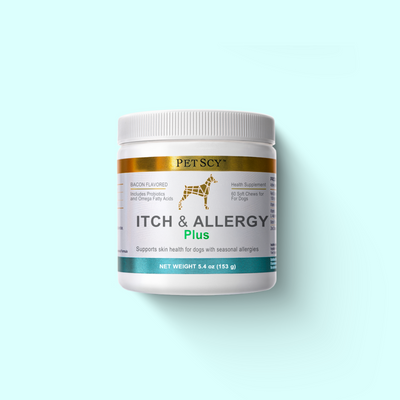
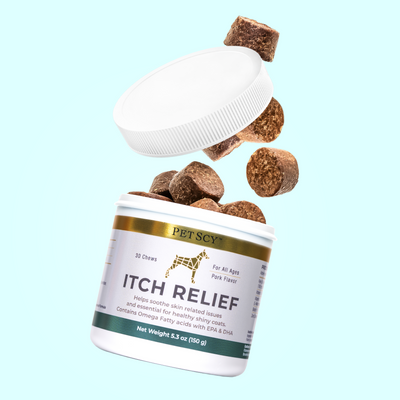
PetScy offers veterinarian-formulated products, including Probiotic Health Chews for digestive and immune support, alongside other canine wellness supplements and topical care products. Visit PetScy to review the digestive support options, then discuss the most appropriate choice with your veterinarian.
Start today by removing fatty extras and unplanned treats, recording your dog's regular food and symptoms, and arranging a veterinary visit if the odor is persistent or paired with digestive or behavioral changes. A targeted plan can address the sulfur chemistry without overlooking a medical problem.