










Wild Caught Fish Oil for Dogs: Benefits and Dosing
“Wild-caught” sounds like the deciding factor when you're choosing fish oil for a dog. It isn't. A wild-caught source may be valuable, but the practical questions are how much EPA and DHA the bottle delivers, whether the oil remains fresh, and whether the dose fits your dog's condition.
A bottle can name premium fish and still leave you unable to calculate a meaningful serving. Conversely, a well-tested oil can be useful only when you store it correctly and avoid treating a general wellness dose as a treatment for arthritis, skin disease, or kidney problems. The label, not the marketing story, tells you whether the product can support a sensible plan.
Table of Contents
- The Wild Caught Label and Hidden Quality Traps
- Understanding Omega 3 Fatty Acids for Canine Health
- Calculating the Right EPA and DHA Dose for Your Dog
- Comparing Marine Sources and Sustainability Signals
- Recognizing Potential Risks and Contraindications
- Verifying Purity Through Third Party Testing
- Best Practices for Storage and Daily Administration
The Wild Caught Label and Hidden Quality Traps
“Wild-caught” describes where the fish came from. It does not establish the oil's potency, freshness, purity, or suitability for your dog. Fish oil contains highly unsaturated fats, so oxygen, heat, and light can trigger oxidation. Oxidized oil may lose quality and develop the stale, unpleasant odor associated with rancidity. The American Kennel Club's guidance on fish oil for dogs highlights freshness, packaging, and storage as practical quality considerations.
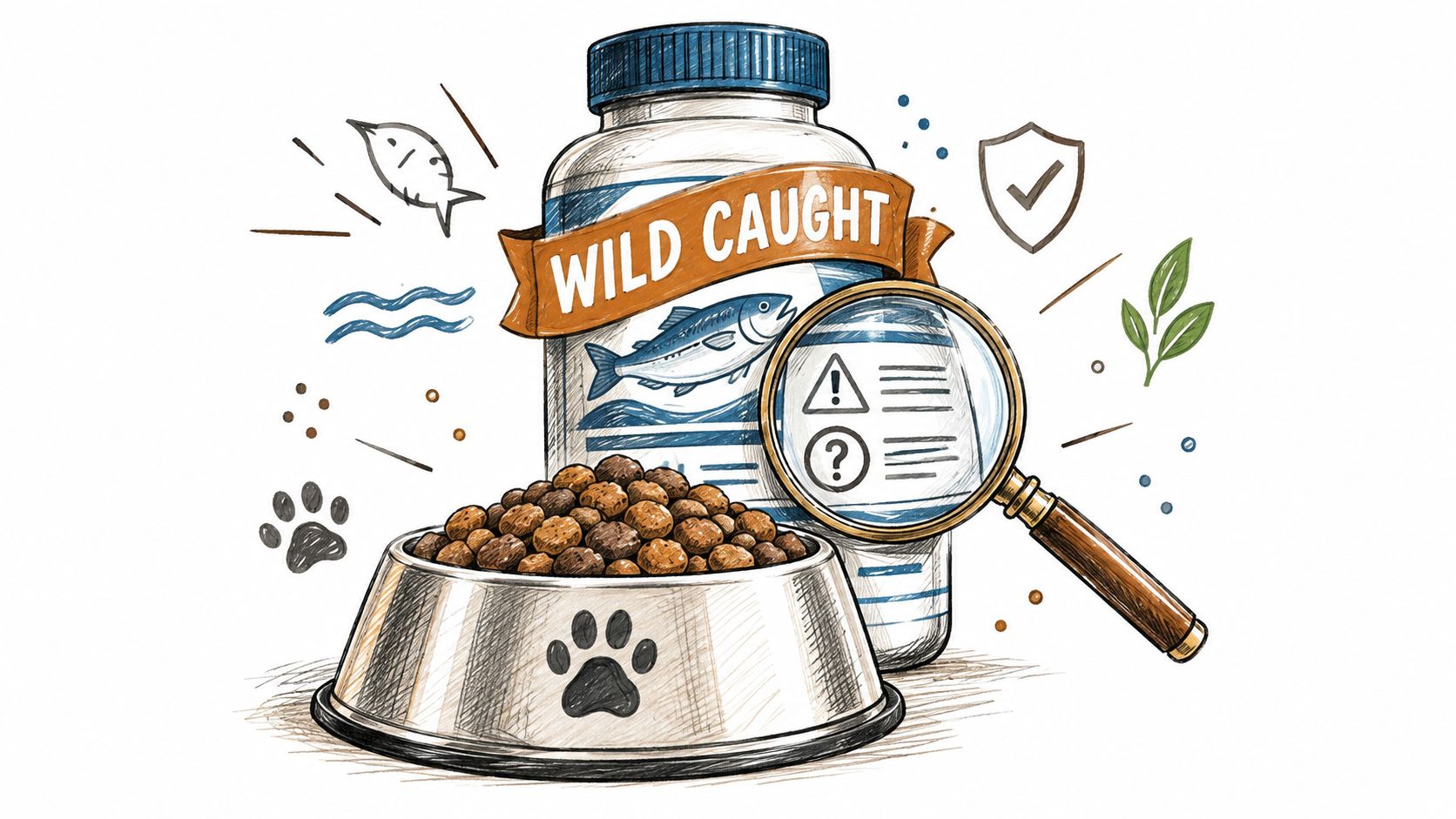
Why freshness matters more than a picturesque origin story
A strong fishy odor is not evidence of higher omega-3 content. It can signal deterioration. A clear bottle stored beside a warm window, a loose cap, or unclear storage instructions deserves caution, even when the label names Alaskan fisheries.
Choose packaging that limits exposure to light and air. Check for a clear expiration date and directions covering storage after opening. The manufacturer should be able to support freshness claims with batch-level testing. “Premium” wording alone provides little help.
Read the active ingredients
Read the separate amount of EPA and DHA per serving. “Fish oil” and “total omega-3” describe the product broadly, while EPA and DHA show the portions relevant to dose calculations. Two oils with the same volume can deliver very different amounts of these fatty acids.
For example, one concentrated product used in an osteoarthritis trial supplied 450 mg EPA, 100 mg DHA, and 27 mg ETA per mL. The example shows why measuring oil by volume alone can hide the biological dose your dog receives.
Practical rule: Use “wild-caught” as one sourcing detail within a wider label check.
A useful label identifies the fish species, serving size, and separate EPA and DHA amounts. It should also provide information about contaminant and oxidation control. Wild caught fish oil for dogs may fit a sensible nutrition plan when its contents are measurable, its freshness is supported, and its serving can be calculated for the individual dog.
Understanding Omega 3 Fatty Acids for Canine Health
“Wild-caught” describes where fish came from. It does not reveal which fatty acids are present, how concentrated they are, or whether the oil has remained fresh. For canine nutrition, the useful label details are the individual amounts of alpha-linolenic acid, or ALA, EPA, and DHA.
ALA comes mainly from plants such as flaxseed. Dogs can convert some ALA into longer-chain fatty acids, but that process does not make plant oil equivalent to marine oil when the goal is preformed EPA and DHA. Oily fish, krill, and algae oils supply those forms directly. Veterinary nutrition references identify oily fish as a principal dietary source of preformed EPA and DHA for dogs, as noted by the Merck Veterinary Manual.
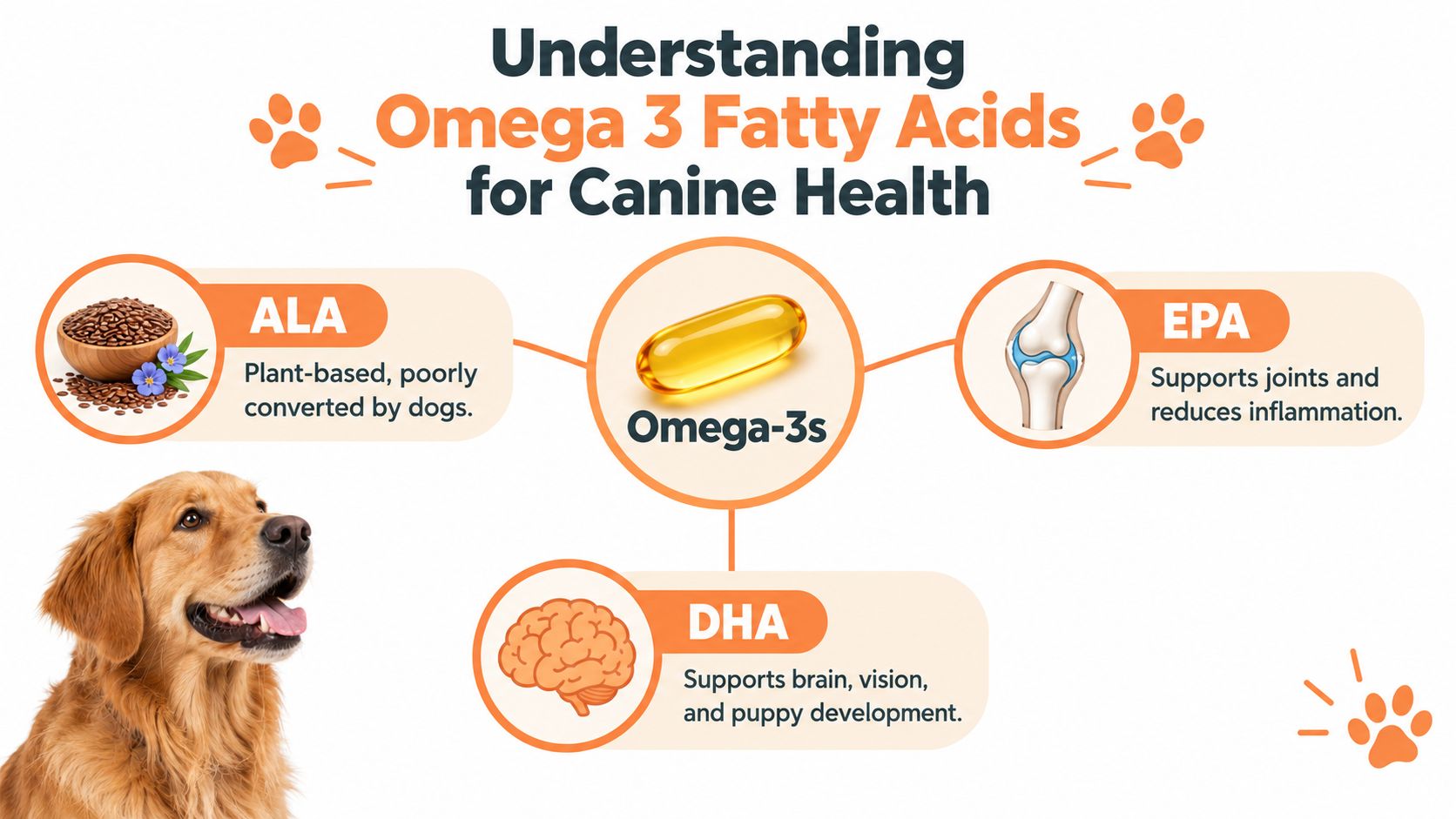
Each fatty acid has a different job
ALA is a starting material that must be converted before it can contribute to many canine nutrition goals. EPA and DHA are already in the long-chain forms used in marine-oil research. A flaxseed ingredient therefore does not automatically provide the same support as an oil that discloses its EPA and DHA amounts.
EPA is commonly associated with inflammatory pathways, including joint and skin support. DHA contributes to the structure of the nervous system and vision, so it receives particular attention during development and in discussions of cognitive health. These functions overlap, but they are not interchangeable. A product listing only “total omega-3” leaves the biologically relevant amounts unclear.
Research also calls for measured expectations. One controlled canine study found that an omega-3-enriched food raised blood concentrations of total omega-3, EPA, and DHA while lowering arachidonic acid in dogs with osteoarthritis. Another randomized trial raised blood EPA and DHA without producing a statistically significant improvement in its primary pain outcomes. A biochemical change can therefore occur without a guaranteed clinical result, as reported in Frontiers in Veterinary Science.
For broader pet-care preparation, pet health certificates explained shows how documentation can support travel and clinical decisions. Apply the same record-keeping habit to supplements by noting the product, serving, and veterinarian's recommendations.
Calculating the Right EPA and DHA Dose for Your Dog
The dose that matters is combined EPA plus DHA. Pumps, capsules, teaspoons, and total oil volume are delivery details, so begin with the Supplement Facts panel and read it in a consistent order.
A simple label calculation
- Find the serving size. Check whether the listed amounts apply to one capsule, one pump, or a measured volume.
- Record EPA and DHA separately. Add both figures to determine combined EPA+DHA per serving.
- Check your dog's body weight. A serving suitable for one dog may be inappropriate for another because dosing calculations account for body size.
- Include the complete diet. Commercial food may already provide omega-3s. Count the supplement alongside the diet's existing EPA+DHA.
- Match the purpose. General nutritional support and a veterinarian-directed therapeutic protocol require different decisions.
Label math prevents a common mistake: treating a large bottle of oil as proof of a large omega-3 dose. A smaller volume with concentrated EPA and DHA may provide more of the compounds being calculated than a larger volume of dilute oil.
Veterinary nutrition references report a maintenance allowance of approximately 30 mg of combined EPA+DHA per kg of metabolic body weight, or kg^0.75. The cited safe upper limit is 370 mg/kg^0.75. For a 10-kg dog, that upper boundary is about 2,080 mg of combined EPA+DHA per day. It is a nutritional ceiling, not a universal target, and a high-dose plan should be set with veterinary guidance.
Condition-Specific EPA and DHA Targets
| Health goal | EPA range (mg/kg) | DHA range (mg/kg) |
|---|---|---|
| Dermatology and skin support | 0.99 to 43 | 0.66 to 30 |
| Osteoarthritis studies | 48 to 100 | 20 to 32 |
These ranges come from a veterinary review summarized in the research on optimal omega-3 dosages for companion animals. They are reference ranges, not directions to choose the highest figure. Joint research may use a substantially different EPA and DHA balance from studies focused on skin support.
Use this fish oil dosage chart for dogs to organize weight-based serving information, then verify the product's actual EPA and DHA amounts. If your dog has a diagnosed condition, takes medication, follows a restricted-fat diet, or needs a high-dose protocol, ask your veterinarian to calculate the complete daily intake.
Comparing Marine Sources and Sustainability Signals
A marine source is not automatically interchangeable with another. Fish species, age, diet, processing, purification, and concentration all influence the final oil. The useful comparison is therefore not “salmon versus pollock” in isolation, but what the finished product discloses and verifies.
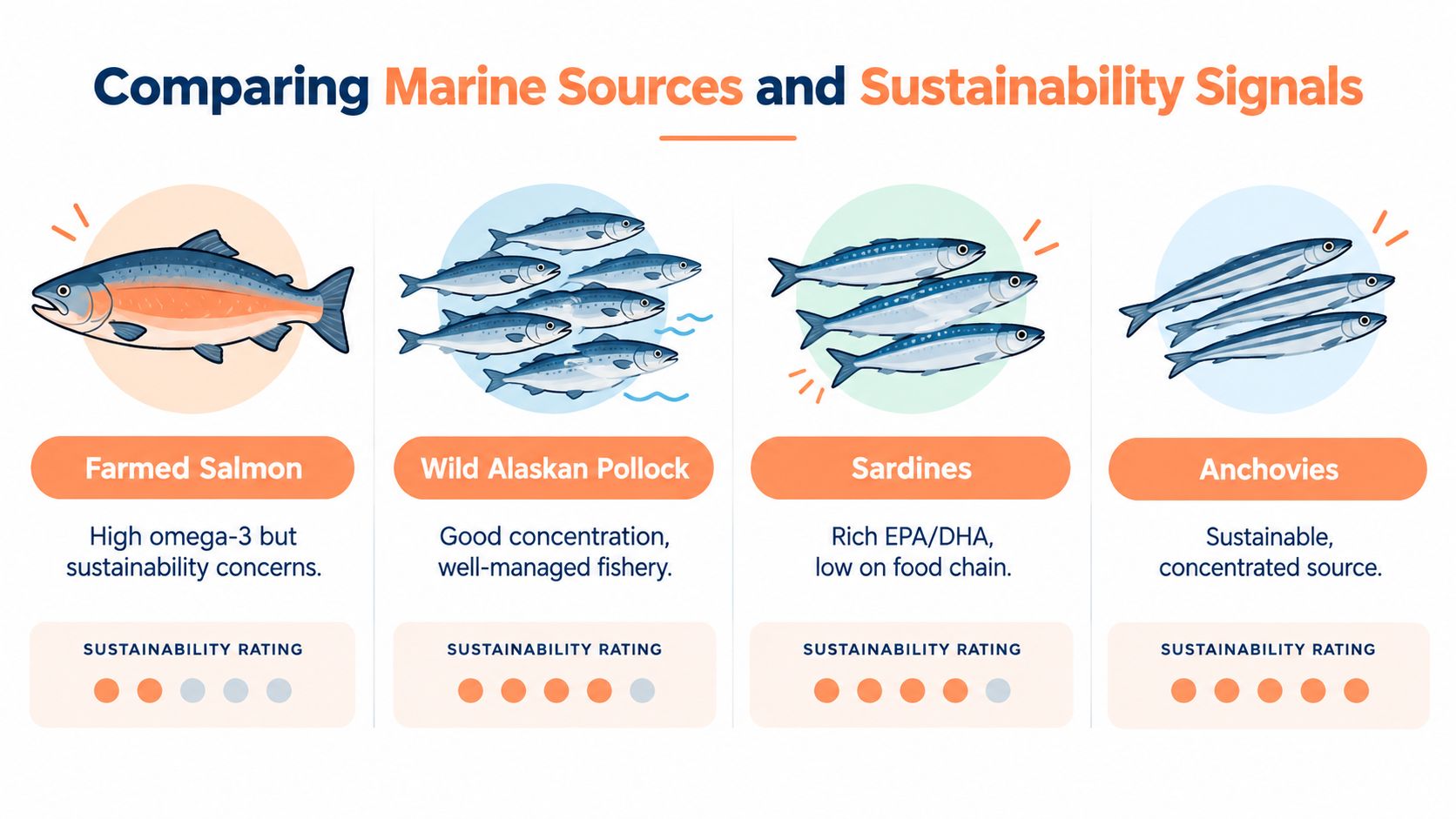
How common sources differ
| Source | What it may offer | Questions to ask |
|---|---|---|
| Farmed salmon | A marine source with EPA and DHA | How are the fish raised, and what testing supports the finished oil? |
| Wild Alaskan pollock | A named wild fishery source | Does the label identify the fishery and quantify EPA and DHA? |
| Sardines | Small oily fish that can provide marine omega-3s | Has the oil been tested for contaminants and oxidation? |
| Anchovies | Another small oily fish source | Is the concentration high enough for the intended serving? |
Small, shorter-lived fish are often discussed as a way to reduce exposure concerns associated with larger predatory species, which can accumulate environmental contaminants through the food chain. That general principle doesn't replace testing. A brand still needs to demonstrate purity for the actual batch it sells.
Sustainability claims also need detail. Look for a named species, a traceable fishery, credible management information, and a certification or documentation that explains what the claim means. “Ocean-friendly” without supporting information is a marketing phrase, not a quality standard.
Why the finished oil remains decisive
A blend of wild-caught pollock and salmon may offer a practical marine source, but the blend itself doesn't establish potency. The bottle should still state the EPA and DHA amounts, packaging safeguards, storage requirements, and testing approach. Wild origin can support a sourcing decision, while the laboratory data supports a safety decision.
You can review a more focused explanation of fish oil sourced from sustainable wild-caught fisheries, then compare that information against any product's own label and batch documentation.
Recognizing Potential Risks and Contraindications
Higher servings do not buy proportionally more benefit, and they can raise real risks, including gastrointestinal upset, altered platelet function, slower wound healing, excess nutrient demand, contaminant exposure, and interactions with medicines that affect clotting. Fish oil safety depends on the dog's condition, the product's EPA and DHA concentration, and the total daily dose. A wild-caught label does not answer those questions.
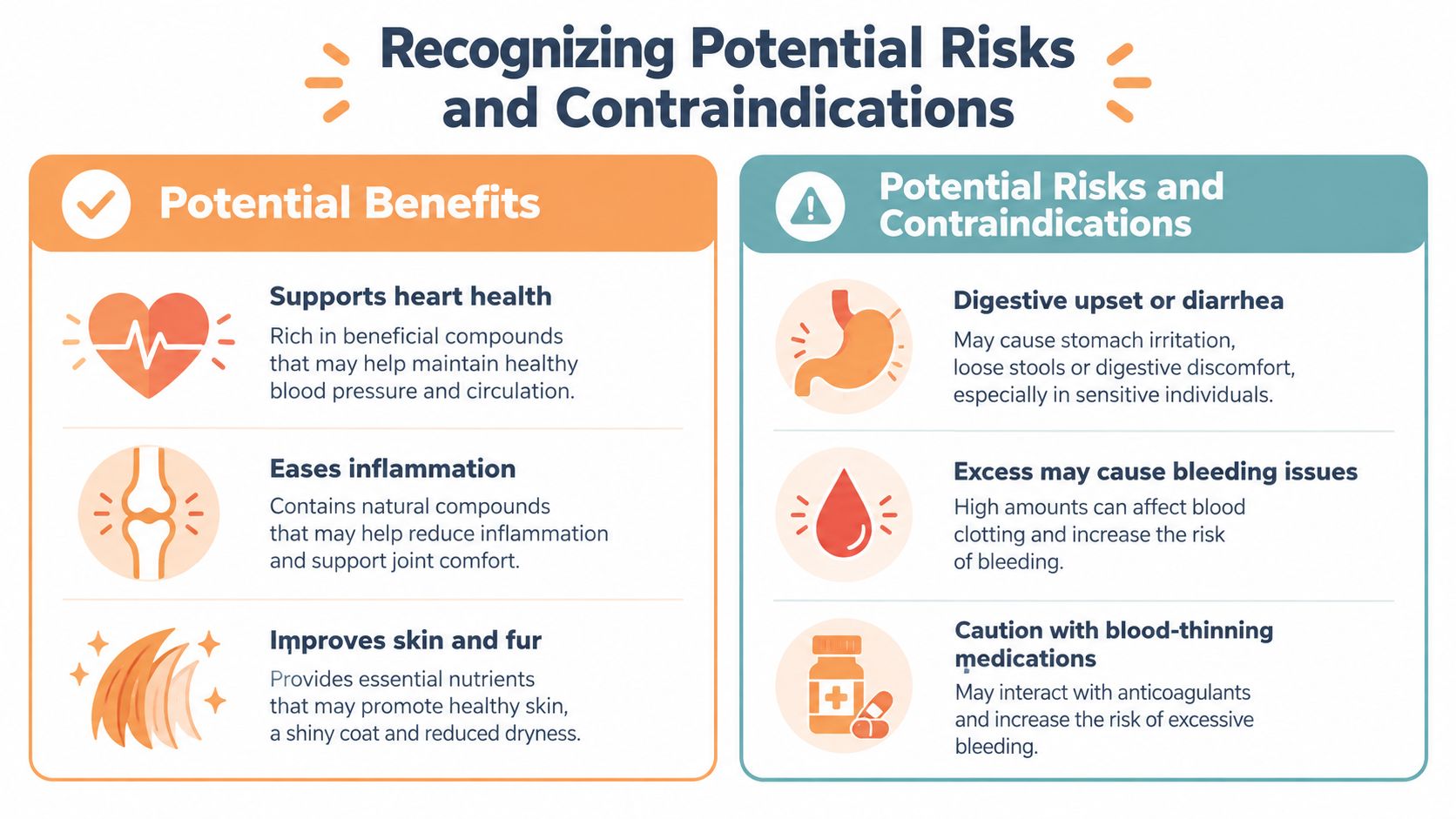
Situations that deserve a veterinary review
Speak with your veterinarian before adding or increasing a supplement if your dog has:
- Pancreatitis risk: Extra dietary fat may be unsuitable for a dog with previous pancreatitis or poor fat tolerance.
- Bleeding concerns: Fish oil can affect platelet function. Veterinary guidance matters for dogs with bleeding disorders or those taking medicines that influence clotting.
- Upcoming surgery: Your veterinarian can determine whether supplementation should stop before a procedure.
- Diabetes or a restricted diet: Oil contributes fat and must fit the dog's managed nutritional plan.
- Persistent digestive symptoms: Vomiting, diarrhea, reduced appetite, or marked lethargy deserves evaluation rather than being treated as a normal adjustment.
The dose also matters when interpreting side effects. A study in dogs with osteoarthritis reported mild diarrhea and vomiting in some dogs. Another trial described mild inappetence and a possible pancreatitis-related event. These observations do not predict a reaction in every dog, but they show why gradual introduction and individual monitoring are sensible (Journal of Veterinary Internal Medicine).
The vitamin E connection
EPA and DHA are highly polyunsaturated fats, so processing them increases the body's need for antioxidant protection. A dose-response study found lower alpha-tocopherol, a form of vitamin E, in dogs receiving the highest EPA+DHA intake. The finding supports matching the dose to the dog's purpose rather than treating a larger serving as a shortcut to better results.
Freshness belongs in the safety calculation too. Oxidized oil adds an avoidable oxidative burden, while a high dose may increase antioxidant demand. Introduce the product gradually, monitor stool quality and appetite, and assess the actual EPA and DHA supplied before increasing the serving.
Verifying Purity Through Third Party Testing
A trustworthy label should be supported by evidence that the product contains what it claims and excludes contaminants at acceptable levels. Third-party testing matters because the manufacturer shouldn't be the only party evaluating its own oil.
What credible verification should cover
Ask whether the product has documentation for:
- EPA and DHA content: The measured amounts should align with the label.
- Heavy metals and environmental contaminants: Testing should address the risks relevant to the raw material.
- Oxidation markers: Peroxide values and related measures help evaluate freshness.
- Batch identity: A certificate should correspond to the lot in your possession, not merely a generic product sheet.
- Manufacturing oversight: Facility controls and documented procedures add context to a single test result.
The National Animal Supplement Council seal can signal that a company participates in industry quality practices and accepts oversight requirements. It isn't a substitute for reading the label or requesting batch information, but it is a useful trust signal when combined with transparent testing.
For practical guidance on choosing a liquid formula and interpreting serving information, VitzAi.com supplement guidance can provide additional context. Use it as general education, then confirm the exact product's analysis and suitability with your veterinarian.
A manufacturer that publishes certificates of analysis, identifies its testing laboratory, and explains its storage controls gives you something concrete to evaluate. You can also review what third-party testing for product verification should mean in practice. If a brand offers only broad promises such as “pure” or “clean,” without measurable support, treat those words cautiously.
Best Practices for Storage and Daily Administration
Good administration starts with a measured serving and ends with attention to the bottle. Fish oil is easy to add to food, but careless handling can undermine freshness and make it difficult to identify the cause of digestive changes.
Build the routine gradually
Give the oil with a meal rather than on an empty stomach. Food can improve tolerance and helps distribute liquid oil through the diet. If your dog is selective, mix it into wet food or a small portion of a familiar meal before serving the rest.
Use a written routine:
- Record the product and serving. Note the EPA+DHA amount, not just the oil volume.
- Start conservatively. Follow the product label or your veterinarian's plan, especially if your dog has a sensitive stomach.
- Observe appetite and stool quality. Loose stool, vomiting, or refusal to eat means you should stop and seek veterinary advice if symptoms persist or are severe.
- Reassess the total diet. Include EPA and DHA already present in the food when discussing long-term use.
- Review the plan after a health change. New medication, surgery, pancreatitis, or a diagnosis may change whether supplementation remains appropriate.
Capsules can be hidden in food, while liquid oil can be measured directly. Neither format is naturally superior. The better option is the one that lets you provide a consistent, verifiable serving without forcing your dog to eat an entire meal that has become unappealing.
Protect the oil from deterioration
Keep liquid oil refrigerated after opening when the label instructs you to do so, and close the container promptly after measuring. Store capsules away from direct sunlight, heat, and moisture. Don't continue using a product that develops a strongly unpleasant odor, changes appearance unexpectedly, or passes its expiration date.
Daily check: A precise serving in a fresh product is safer and more useful than an approximate serving from an oil you can't verify.
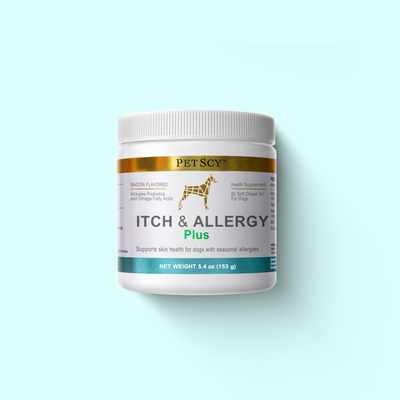
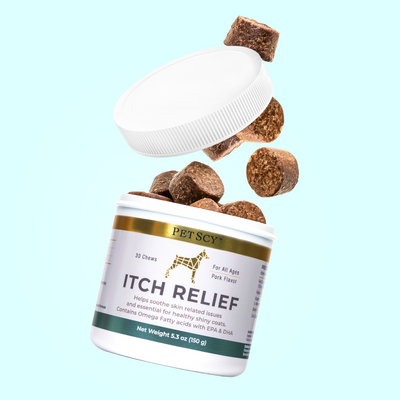
PetScy offers a fish oil formula made from wild-caught Alaskan pollock and salmon with EPA and DHA, alongside other veterinarian-formulated canine supplements. Whether you choose that product or another brand, use the same standard: read the active amounts, verify quality documentation, and match the serving to your dog's needs.
If you're evaluating wild-caught fish oil for dogs, visit PetScy to review its EPA and DHA fish oil alongside its broader canine wellness range. Use the product information to start a measured conversation with your veterinarian about freshness, dosing, and your dog's specific health goals.